for quality writing

Ken Borland


Archive for the ‘Uncategorized’


Lower Sabie to Letaba 0

Posted on May 06, 2014 by Ken

Lilacbreasted Roller

Driving from Lower Sabie to Letaba is one of the lengthiest routes (160km) one can hope to fit into a day in Kruger National Park, but the eastern sweetveld plains you travel through are richly rewarding.

This is prime birding country, travelling through the open savanna grasslands between Lower Sabie and Satara, heading into the Olifants rugged veld and then into the Mopane-dominated woodland around Letaba. Several of the roads also flirt with the Lebombo Mountains in the east, all of which adds up to numerous different habitats and a lengthy bird list.

The central grasslands around Satara are known as big-game country – there is plenty of grazing and therefore plenty of predators, whose kills attract the vultures.

And the king of the South African vultures – the Lappetfaced – is best found in this area and mine was duly spotted on the tar road (H1-4) between Satara and Olifants. It was an archetypal sighting as well – attending a kill, looking like the Red Skull with its featherless head and neck and malevolent, massive bill.

The Red Skull

On the other side of Olifants, as the Mopane becomes more and more prevalent, Kori Bustard, another of Kruger’s “Big Five” birds, was spotted and other quintessential grassland birds seen between Lower Sabie and Letaba were Steppe Eagle, Rufousnaped Lark, Pintailed Whydah, White Stork, Wattled Starling (particularly common around Satara), Blackshouldered Kite and Swainson’s Francolin.

It’s also great raptor country and, apart from the vulture, resident Blackshouldered Kite and the migratory Steppe Eagle (in the Mlondozi/Muntshe area), Bateleur, Brown Snake Eagle, Whitebacked Vulture and Wahlberg’s Eagle were also seen.

But there are enough different habitats on the route to throw up all sorts of interesting things, and Jacobin Cuckoo, Carmine Bee-Eaters dashing around like the Red Arrows, Melba Finch (in the mixed woodland of the Trichardt Road heading into the Lebombo), Namaqua Dove, Natal Francolin and Helmeted Guineafowl were all spotted.

Late summer in the central savannas of Kruger Park are a time of feast and even the smaller birds were cashing in: just north of Lower Sabie there were a handful of Crested Francolin on the tar road, gorging themselves on a swarm of mayfly-like insects.

Crested Francolin enjoying an insect swarm along the H10

Aquatic habitats along the route further boost the tally; as you leave Lower Sabie you cross the Sabie River and from that causeway Wiretailed Swallow, Greenshank, Common Sandpiper, Pied Kingfisher and Brownthroated Martin were seen.

Temporary pans on the basalt produce Wood Sandpiper, while there was even water in the watercourse at Tshokwane and a Threebanded Plover in attendance.

A typical temporary pan on the basalt plains in central Kruger Park attracts a pair of elephant

The Mazithi Dam on the side of the road just north of Tshokwane was full and a Grey Heron was perched on a half-submerged log of dead tree, with a couple of Hippo for company down below.

Grey Heron and Hippo at Mazithi Dam

Turning off east shortly thereafter, one travels along the Trichardt Road (S37), which takes one through highly nutritious grasslands and mixed woodland as it skirts the Lebombo Mountains, eventually coming to the Sweni River and Sweni Hide, where Malachite Kingfisher was spotted.

There is unsurprisingly plenty of game along the route from Lower Sabie to Letaba as well, with 14 species of mammals, including Hippo, Elephant, White Rhino and Buffalo, seen along the way.

Sightings list

Little Swift

Blackeyed Bulbul

Impala

Blue Wildebeest

Wiretailed Swallow

Greenshank

Common Sandpiper

Pied Kingfisher

Brownthroated Martin

Hippopotamus

Blacksmith Plover

Egyptian Goose

Redbilled Buffalo Weaver

Lilacbreasted Roller

European Roller

Elephant

Lesser Grey Shrike

Sabota Lark

Redbacked Shrike

Yellowbilled Hornbill

Longtailed Shrike

Arrowmarked Babbler

Plains Zebra

Giraffe

Grey Hornbill

Waterbuck

Grassveld Pipit

Woodland Kingfisher

Spotted Flycatcher

Glossy Starling

Marabou Stork

Slender Mongoose

Brown Snake Eagle

Grey Lourie

Laughing Dove

Warthog

Brownhooded Kingfisher

Blue Waxbill

Southern Greyheaded Sparrow

Grey Duiker

Steppe Eagle

Crested Francolin

Jacobin Cuckoo

Whitebacked Vulture

European Swallow

Rattling Cisticola

Carmine Bee-Eater

Bateleur

Rufousnaped Lark

Pintailed Whydah

Wood Sandpiper

White Rhinoceros

Burchell’s Starling

Cape Turtle Dove

European Bee-Eater

Forktailed Drongo

Threebanded Plover

Greater Blue-Eared Starling

Grey Heron

Melba Finch

Malachite Kingfisher

Vervet Monkey

Buffalo

White Stork

Wattled Starling

Marsh Terrapin

Blackshouldered Kite

Lappetfaced Vulture

Namaqua Dove

Kori Bustard

Swainson’s Francolin

Natal Francolin

Wahlberg’s Eagle

Hamerkop

Chacma Baboon

Helmeted Guineafowl

Red Toad


Crocodile Bridge to Lower Sabie 0

Posted on April 02, 2014 by Ken

The open savanna grassland between Crocodile Bridge and Lower Sabie not only provides plenty of game on the sweetveld, pan-dotted basaltic plains, but many of the typical “bushveld” birds of Kruger National Park.

Arriving at Crocodile Bridge at mid-morning in March almost guarantees you a hot welcome and so it was that, upon my arrival from Mlawula in Swaziland, I entered one of the southernmost gates of Kruger in sweltering 35° heat.

Crocodile Bridge is acknowledged as one of the hottest, most humid places in South Africa and arriving towards mid-day meant most birds were keeping quiet trying to conserve energy.

But just two kilometres from the entrance gate there are two significant spots that provide reward.

The first is the Gezantfombi Dam (more on that later) and the second is the turnoff for the Nhlowa Road (S28), one of the best birding drives in Kruger Park, particularly in late summer when the relatively water-impervious basalt allows numerous pans to survive around the stunted Knob-thorn and Marula trees.

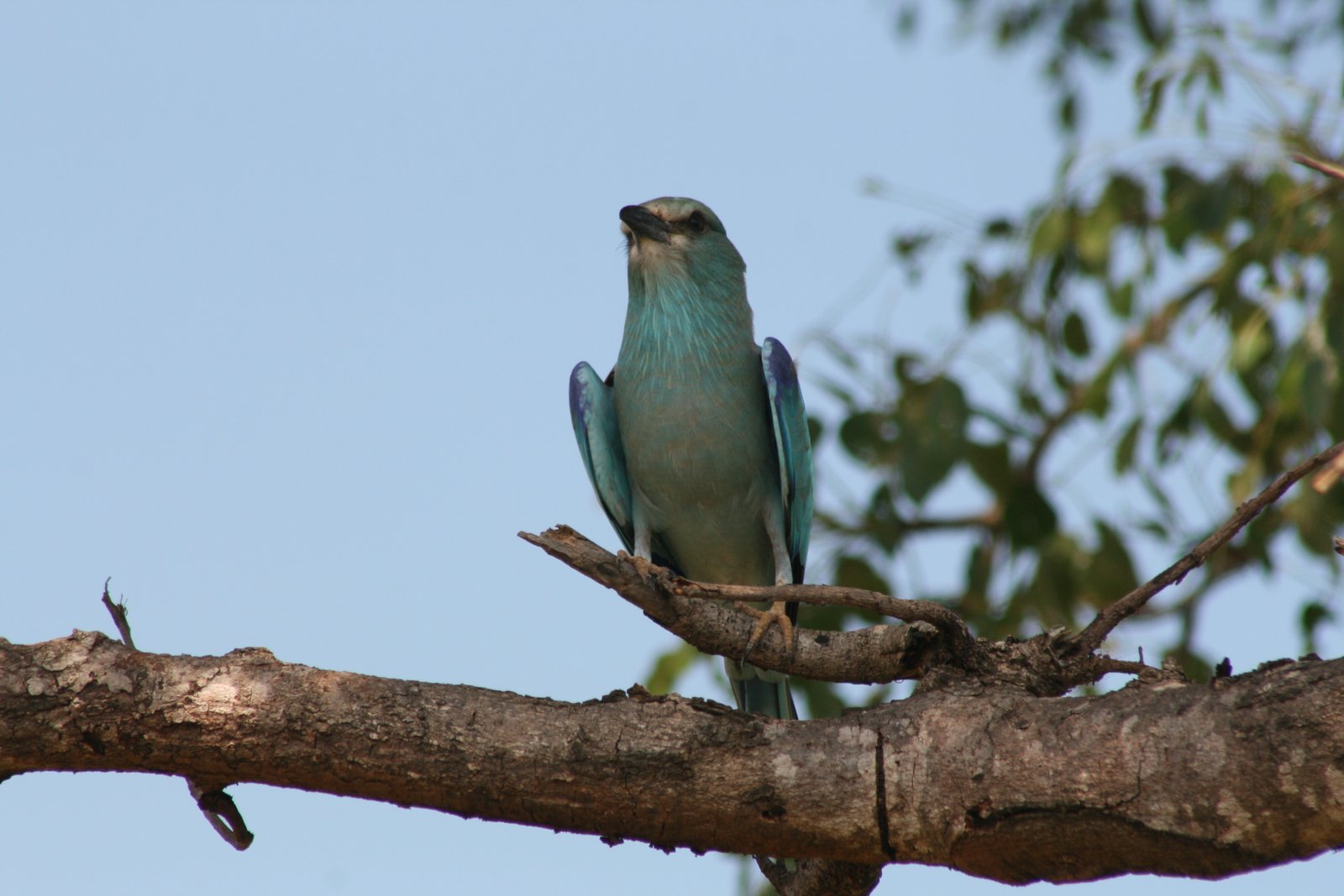
European Roller – front-on view

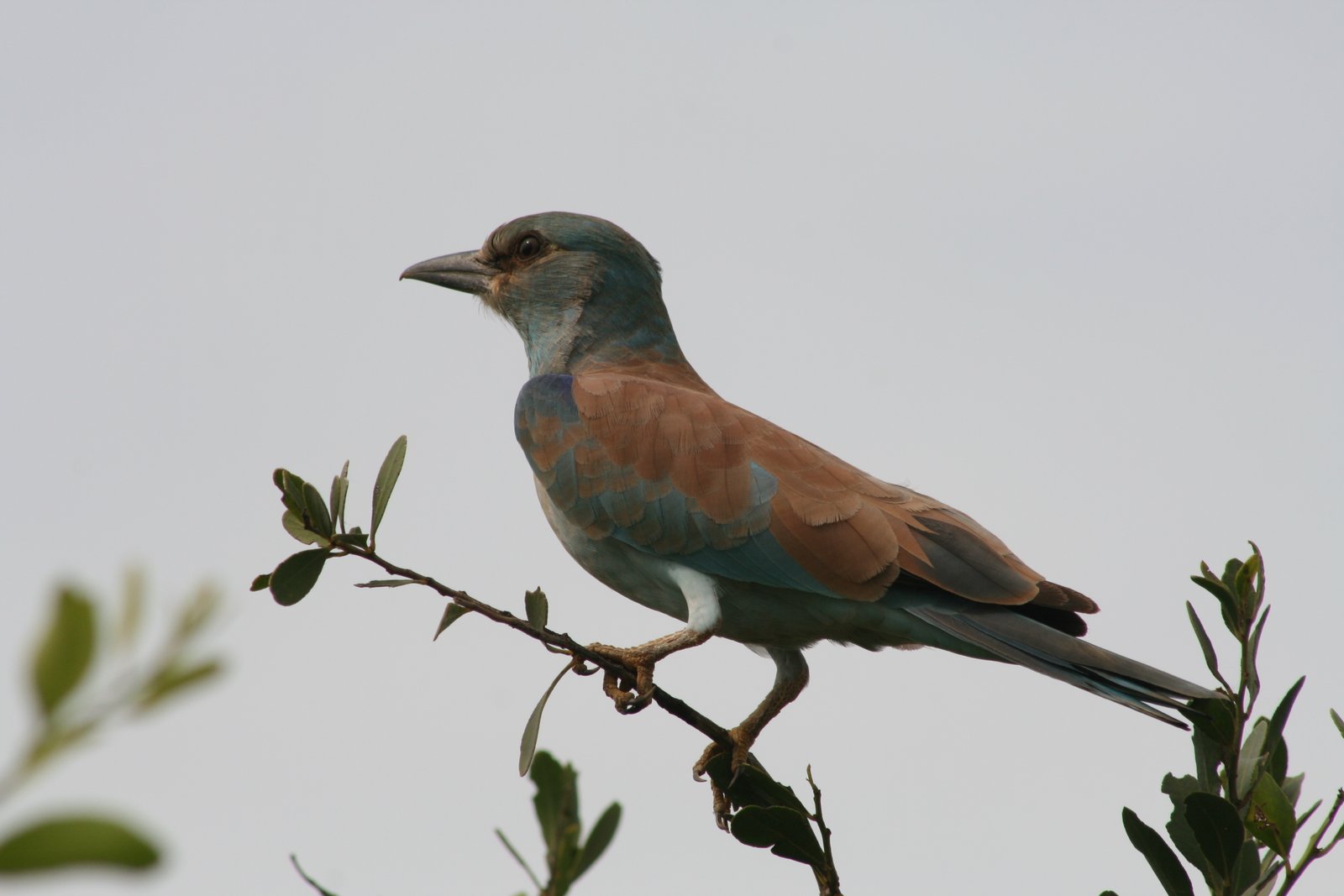
and side-on view

Turning east on to the Nhlowa Road, towards the Lebombo Mountains, both Lilacbreasted and European Rollers were quickly seen, followed by another pleasing migrant in the Lesser Grey Shrike.

Most of the typical Bushveld birds were all there, with the long grass and numerous perches proving ideal habitat for Shrikes, which included Redbacked and Longtailed as well as the Lesser Grey.

Sabota Lark, Yellowbilled and Grey Hornbill and Arrowmarked Babbler were all there too.

After travelling 17 of the 24km towards Lower Sabie, you reach the Ntandanyathi Hide, a spacious, solid wooden structure that overlooks a section of the Nhlowa River.

Three Bushveld beauties were waiting there for me in Woodland Kingfisher, Greenbacked Heron and Crested Barbet.

In temperatures around 35°, birding around water is one of the better options and Gezantfombi Dam had earlier produced European Bee-Eater, Redbilled Buffalo Weaver, Common Scimitarbill and Cardinal Woodpecker, while crossing into Kruger over the Crocodile River bridge had thrown up a Redfaced Cisticola, locally common and always good to see, as well as Southern Red Bishop and Brownhooded Kingfisher.

The thorn trees around the parking lot where you complete the formalities of getting into Kruger had some friendly Blue Waxbill, tame Southern Greyheaded Sparrows and, surprisingly, a Steelblue Widowfinch, which is an uncommon resident in the park.

Between the gate and Gezantfombi Dam, one gets a taste of the thick thorn thicket known as Gomondwane Bush that characterises the tar road between Crocodile Bridge and Lower Sabie, and this is prime habitat for the Whitecrowned Shrike, another localised bird, which was sharing a tree with the ubiquitous Rattling Cisticola.

A pod of Hippopotamus was keeping cool in Gezantfombi Dam, while Elephant, Plains Zebra, Greater Kudu, Giraffe, Waterbuck and Slender Mongoose were all spotted along the open grassland savanna of the S28.

Nearing the tar road, and with the temperature now up to 37°, Marabou Stork were soaring on the thermals and there was also a Brown Snake Eagle flying about. Fantailed Cisticola were chip-chip-chipping at lower levels above the grassland.

All that hot air had to lead to something and, sure enough, a huge storm hit while I was setting up camp at Lower Sabie. Trying to hammer your tent pegs into the concrete-like hard ground of the badly redesigned campsite while a deluge is falling from the heavens is not the ideal way to end your first day of birding in Kruger Park, but it could not detract from the thrill of being back in the bushveld.

Sightings list

Southern Red Bishop

Redfaced Cisticola

Brownhooded Kingfisher

Blue Waxbill

Southern Greyheaded Sparrow

Steelblue Widowfinch

Impala

Blue Wildebeest

Whitebacked Vulture

European Swallow

Whitecrowned Shrike

Rattling Cisticola

Burchell’s Starling

Cape Turtle Dove

European Bee-Eater

Forktailed Drongo

Hippopotamus

Blacksmith Plover

Egyptian Goose

Redbilled Buffalo Weaver

Common Scimitarbill

Cardinal Woodpecker

Lilacbreasted Roller

European Roller

Redbilled Quelea

Elephant

Lesser Grey Shrike

Sabota Lark

Redbacked Shrike

Yellowbilled Hornbill

Longtailed Shrike

Arrowmarked Babbler

Plains Zebra

Greater Kudu

Giraffe

Grey Hornbill

Waterbuck

Grassveld Pipit

Woodland Kingfisher

Greenbacked Heron

Crested Barbet

Spotted Flycatcher

Glossy Starling

Marabou Stork

Slender Mongoose

Brown Snake Eagle

Fantailed Cisticola

Grey Lourie

Laughing Dove

Ever-smiling De Villiers still plays for fun 0

Posted on March 27, 2014 by Ken


Being captain of the Springboks is a high-profile job and one that brings with it a heavy dose of pressure, but Jean de Villiers almost always carries a ready smile on his face.

Maybe it’s because he still plays sport for fun, just as he did as a laaitie in Paarl when he would spend all day during the weekends and holidays out on the fields with a rugby ball and a tennis racquet.

But that’s not to say De Villiers does not take his rugby seriously. He knows full well how the Springboks carry the hopes of the nation and also how important the success of the Stormers is to their passionate supporters.

And while the 33-year-old is a progressive thinker, he still stands by the importance of traditions, of  which there are many in rugby, such as the back seats on the Springbok bus being reserved for  senior players.

“My upbringing, the impact of my parents and family, and also my schooling have all helped to shape me into the person that I am today,” De Villiers says. “My parents, Louise and Andre, have helped incredibly with my upbringing off the field, but also on the field.

“My dad played provincial rugby [lock for Western Province] and my mother was in the provincial netball team, so I basically grew up in a house where rugby was part of our day-to-day routine and, also, grew up on a netball field and next to a swimming pool as my mom used to play and coach those sports.

“And then Paarl Gimnasium taught me something that I am still using today, which is respect, definitely. The importance that an individual has within a team situation – if you have that respect for yourself and your fellow players then it creates a good culture,” De Villiers says.

De Villiers’ exalted station in life means he also has to put up with the vicissitudes of sporting fortune, in particular the harsh treatment meted out to the Springboks by referees around the world, but he exemplifies Rudyard Kipling’s advice to treat those twin imposters of triumph and disaster just the same.

He always appears unflappable on the field, but De Villiers says that is not the real him.
“Definitely not!,” he laughs. “I try and have a clear mind on the field because I feel when you do have a clear mind you can make good decisions. There’s no use trying to argue with a referee once a decision has been made and that’s something that comes with experience and I’ve learnt over a couple of years of playing at the highest level.”

Dealing with defeat and being able to pick his team up again are two other skills De Villiers has had to develop.

“I always see defeat as a good reality check to sort of reassess your situation and to try and improve after that.

“If the culture of the team is good and everyone knows what they’re striving towards, then usually it’s not difficult to get over the disappointment of defeat,” he says.

And leadership is also something which De Villiers sees as a function of focusing on the team good.

“Leadership varies from team to team and person to person. For me, being involved in the teams that I am involved with is getting a feel for what the team’s striving towards and what the individuals are striving for and then putting all of that together and making sure that you, as captain, drive that journey forward and make it happen.”

Since De Villiers took over the captaincy after John Smit’s retirement, he has led the Springboks to 17 wins in 24 Tests and returned them to the number two world ranking.

It means there is plenty of optimism in the build-up to next year’s World Cup.

“Yes, we do have high hopes for the Rugby World Cup, but that’s still a long way off in September 2015. For us now it’s about building on that success we’ve enjoyed and getting to number one in the world,” De Villiers says.

The Springboks hammered Australia twice last year and completed an unbeaten European tour in November, but the one team they haven’t managed to beat since De Villiers and new coach Heyneke Meyer took the reins has been New Zealand.

“I think we’re very close to beating them, but the reality is that we’ve not beaten them in the last two years. In order to do so, we need to rectify one or two small little things, and I have no doubt that this year we will get there,” De Villiers says.

The former Stellenbosch University student describes himself as a “family man” and there is no doubt wife Marlie and daughters Layli (2) and Lana (9 months) are the centre of his universe.

“I think we’re very blessed to be able to tour as much as we do and it’s a great part of being a professional rugby player as you get to see the world, but it’s quite demanding with two young daughters and it does put a lot of strain on my wife Marlie, but luckily I picked a fantastic woman to share my life with,” he says, before adding that they keep him centred in his beliefs.

“Being a Christian I try and live by those sort of standards from a day-to-day basis. Also, I try to live up to the expectations of my two daughters and a lovely wife, so I would never want to disappoint those women in my life.”

Which seems highly unlikely given De Villiers’ astute world view and his insight into the society around him.

Having a wife and two daughters of my own, it really hits home when you hear about Crimes against women – it’s really sickening. I think a real man respects women and children and doesn’t try and abuse and pick fights with easy targets.

“As rugby players we have a responsibility as role-models to lead by example both on and off the field – even though we’re involved in a physical contact sport like rugby, we go home and show love and respect to our loved ones and those close to us. I think abusing a woman or child – or any form of bullying – is the act of a coward,” the Springbok captain firmly states.


Despite his workload in one of the busiest channels on the rugby field, South Africa’s most capped centre (96 Tests) is confident he can keep going until the World Cup.

“I’m really feeling good, the body is holding up considering the amount of game time I’ve had, and I feel I’m playing decent rugby.

“If I’m still the best inside centre in the country then there’s no reason why I can’t make the World Cup and, in an ideal world, I’d love that.

“But it’s up to the coach and he has to plan the group he wants to take and have all the scenarios in place. If I’m still the number one centre then I could captain the side at the World Cup, but I’m very aware of the situation,” De Villiers told French rugby publication Midi Olympique late last year.

Coach Meyer has been unstinting in his praise of his captain and has reportedly already decided De Villiers will continue in that role this year.

“Jean has been awesome, he’s a brilliant captain. He’s started every game in the last two years and he’s also been a great ambassador for the country. He has also been our main ball-carrier and he gains good ground for us,” Meyer said.

De Villiers is indeed a tremendous ambassador and role-model and well-aware of his off-field responsibilities.

“I don’t have a specific charity that I support individually but I love helping out with the Springbok charity, Boks for Books, and also the Players’ Fund is very close to my heart.

“At the DHL Stormers we’re heavily involved with Reach for a Dream and, of course, at national level too. As rugby players, we all try to contribute to the development of rugby through coaching clinics.

I have no doubts about rugby unifying people in South Africa. We could just see it by the numbers of people that rock up every weekend to watch the Springboks play. When we’re winning, you can see it by the crowd sizes – it’s all different ethnic groups and religions; all people of South Africa who take pride in the performances of the national sides and that puts a lot of responsibility on us as players.

“The 1995 Rugby World Cup was a great example of what rugby did for our nation and we’re all aware of our responsibilities moving forward in our country,” De Villiers says.


Q&A


Who do you most admire in the world?
After listening to Barack Obama at Nelson Mandela’s memorial – I was fortunate enough to be there – I must say I was impressed with him and the aura that surrounds him and he’s quite an impressive person.

How would you describe yourself?
Fun-loving, easy-going, motivated and a family man.

When last did you cry?
When I have to leave home on tour.

What is your favourite virtue?
Humility.

Your main fault?
Patience.

Your favourite qualities in others?
Love.

Your idea of happiness?
My family – being with them or just thinking about them when I am away from home.

When did you last laugh till you cried?
Watching Pat Cilliers do a cricket pitch report.

Your idea of misery?
Not having a close support structure – be it family or friends – when times are tough.

Your favourite author?
John Dobson (he wrote The Year of the Gherkin).

Mlawula Nature Reserve 1

Posted on March 03, 2014 by Ken

Lush tropical growth along the Mbuluzi River, with the hills of Mozambique in the background, makes for thrilling birding


Timing is everything in birding and so much of that is just down to sheer luck. A second or two can mean the difference between making that great sighting as a rare bird flies into a tree or missing it entirely as you move on to the next bush.

I was reminded of this in quite forceful fashion on my trip to Mlawula Nature Reserve, a dramatic venue in the foothills of the Lebombo Mountains, nestled in the north-eastern corner of Swaziland, right on the Mozambique border.

There’s a large, rustic campsite on the Simunye side of the reserve and, with a spacious lawn and plenty of trees, it’s a productive place to walk around in terms of birding.

And so it was that on a typically steamy Lowveld afternoon I was walking around the campsite and enjoying the shade of the trees. When my wife phoned!

Obviously I am always delighted to hear from the very special person who agreed to marry me, but some times are better than others.

Anyway, I’m not one of those people who tend to walk around while talking on the phone, so I stood still and took the call.

And I’m glad I did because the call ended and I was just putting my cellphone back in my pocket when I noticed something large fly into the Milkwood tree in front of me.

It was unmistakably raptorish, but fairly short and squat and lots of white was visible.

Closer inspection revealed a pale form Wahlberg’s Eagle – the one with the lovely white head and brown wings. It was only after a few seconds that I noticed the handsome bird was holding something in its powerful yellow claws – an unfortunate young  Rock Monitor was going to be supper.


A Wahlberg's Eagle ... with it's unfortunate Rock Monitor supper


The eagle hung around for quite some time, producing a memorable highlight of the second day in Mlawula.

I had awoken that day – my first morning there – to the liquid purity of the Blackheaded Oriole regaling the dawn with it’s perfectly pure notes. Along with the Gorgeous Bush Shrike whistling away and the Yellowspotted Nicator chuckling in the dense bush, and the Greyheaded Bush Shrike providing a mournful contrast, it was impossible not to feel excited about being in this exotic wilderness.

Everything was very skittish though, suggesting there was hunting there in the past and that poaching may still be a problem.

The moist savanna between the entrance gate and the camp featured typical lowveld birds: there were lots of Redbacked Shrike, swooping on their insect prey like little masked superheroes, plenty of African Hoopoe and other interesting sightings such as Crowned Hornbill, Paradise Flycatcher, Woodland Kingfisher, Plumcoloured Starling and Purplecrested Lourie.

Feeling adventurous (and hoping for Black Coucal which has been seen in the area before), I tackled the track along the Mbuluzi River towards the Mozambique border. Now you really felt as if you were in the tropics, with stifling heat and thick bush hemming you in, and eventually I could proceed no further as the road had been washed away, leaving a pile of unpassable boulders.

The third day brought a contrast as I travelled south and up into the hills where Magadzavane Lodge nestles with a commanding view; a place of great potential. From the valleys which are just over 150m above sea-level, you climb to an altitude of over 550m.

The view from Magadzavane Lodge, looking out over the Swaziland lowveld

Along the way, Bearded Woodpecker was spotted along with the more common Goldentailed, while Whitebacked Vulture added to the raptor list.

As another example of fortuitous timing, as I stopped to take a photograph of the magnificent view of hills and valleys stretched out below me, what should fly almost directly beneath me but a beautiful Crowned Eagle. It was soon joined in its majestic drifting by a Brown Snake Eagle.

A European Marsh Warbler – one of the few non-aquatic Acrocephalus species – was foraging in the clumps of bush in the grassland on the other side of the road.

But just to prove that intuition also plays a role in birding success, once back at camp I was aware of several birds making a helluva racket close to the ablution block. Going to investigate paid off as there was a young Southern African Python trying to stealthily make its way across the lawn.

A drive to the Mbuzi Picnic Site and the Mlawula River in the late afternoon brought the wonderful Longtailed Paradise Whydah, Black Widowfinch and Blackchested Snake Eagle, as well as a Fierynecked Nightjar on the way back as evening fell on the African wilderness.

The moist bushveld, with lovely tall Fever Trees along the Siphiso River, close to camp looked a good spot for birding and spending a couple of hours on the final morning there brought Yellowthroated Sparrow, White Helmetshrike, African Fish Eagle and Pied Kingfisher.

The camping facilities at Mlawula are rustic and, this deep in the African bush, things do go wrong. Baboons dug up the water pipes early on the second morning, leaving me without any water to shower or wash up. Fortunately I had a two-litre bottle of water with me for cooking and drinking, but I had to resort to bush-toilets.

Of course the bushveld also provides and dirty plates were sorted out by putting them on the ground and, 30 seconds later, a swarm of ants would be busy picking them clean.

Going with the flow can also be a wonderful experience!


Sightings list

Blackeyed Bulbul

African Hoopoe

Nyala

Impala

Emeraldspotted Wood Dove

Crowned Hornbill

Redbacked Shrike

European Swallow

European Bee-Eater

Spotted Flycatcher

Wahlberg’s Epauletted Fruit Bat

Blackheaded Oriole

Paradise Flycatcher

Greyheaded Bush Shrike

Hamerkop

Blue Waxbill

Glossy Starling

Rattling Cisticola

African Pied Wagtail

Common Sandpiper

Warthog

Southern Black Flycatcher

Speckled Mousebird

Woodland Kingfisher

Plumcoloured Starling

Chacma Baboon

Purplecrested Lourie

Whitebellied Sunbird

Lesser Striped Swallow

Wiretailed Swallow

Yellowfronted Canary

Cape White-Eye

Blackcollared Barbet

Goldenbreasted Bunting

Forktailed Drongo

Little Swift

Wahlberg’s Eagle

Rock Monitor

Chinspot Batis

Redeyed Dove

Southern Boubou

Wahlberg’s Velvet Gecko

Brownhooded Kingfisher

Jameson’s Firefinch

Goldentailed Woodpecker

Bearded Woodpecker

Leopard Tortoise

Whitebacked Vulture

Burchell’s Coucal

Longbilled Crombec

Sombre Bulbul

Blackbacked Puffback

Striped Skink

Five-Lined Skink

European Marsh Warbler

Crowned Eagle

Brown Snake Eagle

Common Waxbill

Greater Kudu

Southern African Python

Longtailed Paradise Whydah

Black Widowfinch

Southern Greyheaded Sparrow

Arrowmarked Babbler

Greenbacked Camaroptera

Terrestrial Bulbul

Natal Francolin

Blackchested Snake Eagle

Plains Zebra

Fierynecked Nightjar

Yellowthroated Sparrow

White Helmetshrike

African Fish Eagle

Pied Kingfisher


There is a large mammal in this photograph? Can you name it & point out where it is?

  • Recent Posts

  • Archives

  • Thought of the Day

    Revelation 3:15 – “I know your deeds, that you are neither cold nor hot. I wish you were either one or the other.”

    How can you expect blessings without obeying?

    How can you expect the presence of God without spending time quietly before him?

    Be sincere in your commitment to Him; be willing to sacrifice time so that you can grow spiritually; be disciplined in prayer and Bible study; worship God in spirit and truth.

    Have you totally surrendered to God? Have you cheerfully given him everything you are and everything you have?

    If you love Christ, accept the challenges of that love: Placing Christ in the centre of your life means complete surrender to Him.


↑ Top