Absorb intensity and assess the situation: Princely advice and what was lacking 0
In wonderful batting conditions, South Africa dismayed their sparse number of supporters at the ground with a naive, almost clownish batting display.
Absorbing intensity and assessing the situation were the two key phrases used by Proteas batting coach Ashwell Prince at the end of the third day of the first Test against Australia at Kingsmead on Sunday.
It was a day which ended with Australia leading by 139 runs with all 10 second-innings wickets intact. That fact alone suggests things did not go well with the bat for South Africa, who had begun the day on 27 for one in reply to Australia’s 390.
While it may seem appropriate to blame the bowlers for allowing the tourists to score so many first-innings runs, having been 124 for six at one stage, Australia’s revival was down to the conditions easing and the brilliance of Matt Renshaw in scoring a career-best 190 which was the epitome of patience and good judgement.
So the template for success with the bat was there, plain to see, and South Africa’s batsmen had seen it up close for the whole of the second day as they toiled in the field under clear blue skies and a north-easterly wind: Leave well, stick to safe shots that fit your game plan and make the bowlers bowl to you.
But the Proteas top-order ignored what had been in plain sight and tumbled to 284 all out. The fact that their first innings made it that far – a deficit of 106 – was thanks to partnerships of 52 for the ninth wicket between Simon Harmer and Keshav Maharaj (34) and 35 for the last wicket between Harmer (35*) and Anrich Nortje (16).
Those two last partnerships showed up the proper batsmen for their lack of composure and indicated that there were no demons in the Kingsmead pitch. The north-easterly blew again and batting should have been a pleasure. The pace and carry were true, the new ball moved around just a bit and off-spinner Nathan Lyon obtained bounce but not much turn.
Australia bowled full lengths at the start of the day, looking for swing with the ball being nine overs old, and Aiden Markram and David Bedingham capitalised with a series of handsome drives.
They put on 84 for the second wicket in an hour-and-a-half and all seemed right with the world.
But Australia, who have undoubtedly played smarter cricket than the hosts, then switched to back-of-a-length bowling, plugging the line just outside off-stump. Markram fell for 37 trying to punch Mitchell Starc off the back foot through the covers with little footwork; Bedingham did much the same on 49 to give Pat Cummins his first wicket. The back-foot drive is a difficult stroke to play on a pitch renown for the bounce it offers.
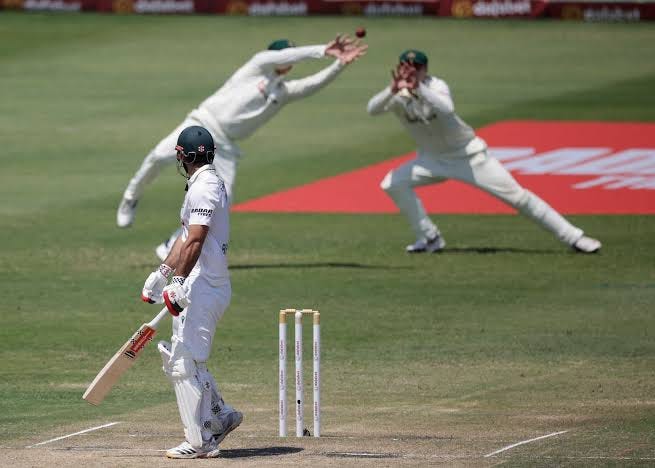
Lyon and Starc bowled particularly well to Proteas captain Temba Bavuma, who could only score three runs off 26 balls. And so he tried to relieve the pressure through a reverse-sweep, which was a reasonable option. Except when Steve Smith is at slip and, in a moment of brilliant anticipation, he moved rapidly into the likely path of the ball and made the catch.
Bavuma could maybe be sympathised with, but when Kyle Verreynne (13) did exactly the same thing two-and-a-half hours later, it seemed awfully naive and foolish, notwithstanding the psychic Smith making a sensational one-handed grab.
That was the most frustrating aspect of the Proteas’ batting display, their complete failure to learn from what had happened before. Renshaw had been widely praised for leaving so much during his epic innings; South Africa’s batsmen flashed with abandon outside off-stump.
Cummins then devoured the middle-order as both Wiaan Mulder (30) and Tristan Stubbs (32), who had combined promisingly for a 56-run fifth-wicket stand in just over an hour, tried to hook well-directed bouncers in that off-side channel. Not taking the bait would have been a far better option.
Marco Jansen lifted the mood briefly with six fours in a 26 off just 20 deliveries with powerful pulls and classy drives down the ground. But then he too picked the wrong delivery to attack. Josh Hazlewood hit the deck hard and bowled a straight line, cramping Jansen, who still tried to clear mid-on but with a more vertical bat, only managing to sky the ball to mid-off.
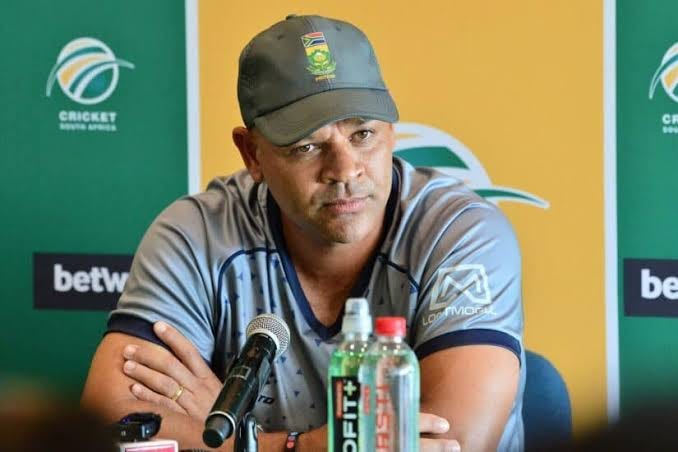
Ashwell Prince is the batting coach of the Proteas and the man who shored up their middle-order in the 2000s was careful to tread gently as a guardian of his charges.
“I don’t think there was too much aggression, it was more the timing of the dismissals, which kept hurting us. Everyone has their individual approaches and we’ve talked a lot about playing positively and being on the front foot.
“In the subcontinent we played spin well and all the sweeps are options there. As long as the guys have been training them and playing them well, then you can accept it when they get out to one. They were a couple of blinders by Steve Smith.
“It was a really good innings by Renshaw and he deserves a lot of credit. He was very patient and he took the approach of wearing the bowlers down. Everyone has their personal approach and some are more aggressive, they go after their shots more and sometimes it does not pay off.
“There’s lots to take away from today, probably the biggest learning is that the make-up of the Australian attack means they are heavily dependent on three seamers and they have a classy spinner, they come at you with a certain intensity, but that can only last for so long. Sometimes you have to absorb intensity, because it can only last so long.
“The pitch so far has been pretty good and most batsmen feel that they can play more strokes. The ball seemed to come on better today, the bounce was consistent. You could trust the bounce and pace, so the confidence is there.
“Maybe we need to be better at sensing the intensity of the bowlers and assessing the situations. Pat Cummins is astute and when he feels they have a sniff, he pushes his fast bowlers. Just when it looked like a partnership was going to wrestle the advantage our way, a wicket would fall. Every time that would energise them and the bowlers would come again,” was Prince’s carefully considered, diplomatic response.
Australia came out to bat for 25 minutes before bad light stopped play and their dominant position allowed them to be aggressive. Nic Maddinson, who had made a 33-ball duck in the first innings, shook off the pressure of being a controversial selection and hooked his first ball from Marco Jansen for four.
The comeback man added one more four and a flick for six over midwicket to reach 17 not out off 19 balls at stumps, with Travis Head on 10 not out off 15 deliveries, out of a total of 33 without loss.
Prince believes they will bring the same aggressive approach on the fourth day.
“Tomorrow we’re going to see a lot more of the same approach, they’re going to come out with a lot of aggression to try and make up time and stretch their lead as much as possible,” he said.
South Africa will need to try and prolong the amount of time Australia spend at the crease, to make their task of saving the match an easier one. To do that, Prince says they will need to attack rather than defend.
“Taking wickets will be our best approach, while trying to control the run-rate at the same time. In the first innings, Australia made a big total, but they scored it at 2.8 runs-per-over. It’s a different scenario now that they are over a hundred ahead and they can take more risks.
“So we have to be positive, we’ll probably see more spin tomorrow and some innovative field placings to put the ball in their court,” Prince said.
Innovative is one thing, but what the Proteas most require is smarter cricket.