for quality writing

Ken Borland


Absorb intensity and assess the situation: Princely advice and what was lacking 0

Posted on October 13, 2026 by Ken

In wonderful batting conditions, South Africa dismayed their sparse number of supporters at the ground with a naive, almost clownish batting display.
The Ball in Play

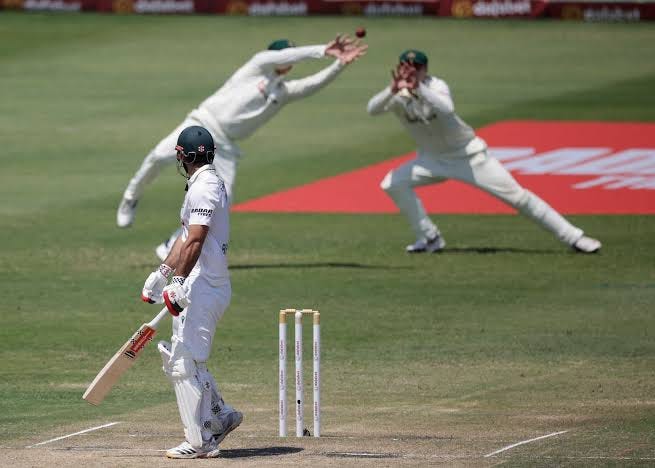
Steve Smith is about to catch David Bedingham, who has played an ill-advised back-foot drive, for one of his four catches, three of them brilliant, which gave him the world record for the most outfield catches – 223.

Absorbing intensity and assessing the situation were the two key phrases used by Proteas batting coach Ashwell Prince at the end of the third day of the first Test against Australia at Kingsmead on Sunday.

It was a day which ended with Australia leading by 139 runs with all 10 second-innings wickets intact. That fact alone suggests things did not go well with the bat for South Africa, who had begun the day on 27 for one in reply to Australia’s 390.

While it may seem appropriate to blame the bowlers for allowing the tourists to score so many first-innings runs, having been 124 for six at one stage, Australia’s revival was down to the conditions easing and the brilliance of Matt Renshaw in scoring a career-best 190 which was the epitome of patience and good judgement.

So the template for success with the bat was there, plain to see, and South Africa’s batsmen had seen it up close for the whole of the second day as they toiled in the field under clear blue skies and a north-easterly wind: Leave well, stick to safe shots that fit your game plan and make the bowlers bowl to you.

But the Proteas top-order ignored what had been in plain sight and tumbled to 284 all out. The fact that their first innings made it that far – a deficit of 106 – was thanks to partnerships of 52 for the ninth wicket between Simon Harmer and Keshav Maharaj (34) and 35 for the last wicket between Harmer (35*) and Anrich Nortje (16).

Those two last partnerships showed up the proper batsmen for their lack of composure and indicated that there were no demons in the Kingsmead pitch. The north-easterly blew again and batting should have been a pleasure. The pace and carry were true, the new ball moved around just a bit and off-spinner Nathan Lyon obtained bounce but not much turn.

Australia bowled full lengths at the start of the day, looking for swing with the ball being nine overs old, and Aiden Markram and David Bedingham capitalised with a series of handsome drives.

They put on 84 for the second wicket in an hour-and-a-half and all seemed right with the world.

But Australia, who have undoubtedly played smarter cricket than the hosts, then switched to back-of-a-length bowling, plugging the line just outside off-stump. Markram fell for 37 trying to punch Mitchell Starc off the back foot through the covers with little footwork; Bedingham did much the same on 49 to give Pat Cummins his first wicket. The back-foot drive is a difficult stroke to play on a pitch renown for the bounce it offers.

Lyon and Starc bowled particularly well to Proteas captain Temba Bavuma, who could only score three runs off 26 balls. And so he tried to relieve the pressure through a reverse-sweep, which was a reasonable option. Except when Steve Smith is at slip and, in a moment of brilliant anticipation, he moved rapidly into the likely path of the ball and made the catch.

Bavuma could maybe be sympathised with, but when Kyle Verreynne (13) did exactly the same thing two-and-a-half hours later, it seemed awfully naive and foolish, notwithstanding the psychic Smith making a sensational one-handed grab.

That was the most frustrating aspect of the Proteas’ batting display, their complete failure to learn from what had happened before. Renshaw had been widely praised for leaving so much during his epic innings; South Africa’s batsmen flashed with abandon outside off-stump.

Cummins then devoured the middle-order as both Wiaan Mulder (30) and Tristan Stubbs (32), who had combined promisingly for a 56-run fifth-wicket stand in just over an hour, tried to hook well-directed bouncers in that off-side channel. Not taking the bait would have been a far better option.

Marco Jansen lifted the mood briefly with six fours in a 26 off just 20 deliveries with powerful pulls and classy drives down the ground. But then he too picked the wrong delivery to attack. Josh Hazlewood hit the deck hard and bowled a straight line, cramping Jansen, who still tried to clear mid-on but with a more vertical bat, only managing to sky the ball to mid-off.
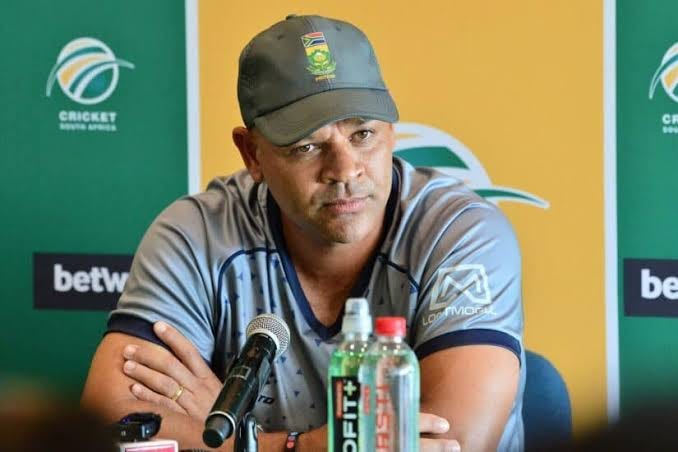
Ashwell Prince in serious mood trying to explain the Proteas’ batting woes.

Ashwell Prince is the batting coach of the Proteas and the man who shored up their middle-order in the 2000s was careful to tread gently as a guardian of his charges.

“I don’t think there was too much aggression, it was more the timing of the dismissals, which kept hurting us. Everyone has their individual approaches and we’ve talked a lot about playing positively and being on the front foot.

“In the subcontinent we played spin well and all the sweeps are options there. As long as the guys have been training them and playing them well, then you can accept it when they get out to one. They were a couple of blinders by Steve Smith.

“It was a really good innings by Renshaw and he deserves a lot of credit. He was very patient and he took the approach of wearing the bowlers down. Everyone has their personal approach and some are more aggressive, they go after their shots more and sometimes it does not pay off.

“There’s lots to take away from today, probably the biggest learning is that the make-up of the Australian attack means they are heavily dependent on three seamers and they have a classy spinner, they come at you with a certain intensity, but that can only last for so long. Sometimes you have to absorb intensity, because it can only last so long.

“The pitch so far has been pretty good and most batsmen feel that they can play more strokes. The ball seemed to come on better today, the bounce was consistent. You could trust the bounce and pace, so the confidence is there.

“Maybe we need to be better at sensing the intensity of the bowlers and assessing the situations. Pat Cummins is astute and when he feels they have a sniff, he pushes his fast bowlers. Just when it looked like a partnership was going to wrestle the advantage our way, a wicket would fall. Every time that would energise them and the bowlers would come again,” was Prince’s carefully considered, diplomatic response.

Australia came out to bat for 25 minutes before bad light stopped play and their dominant position allowed them to be aggressive. Nic Maddinson, who had made a 33-ball duck in the first innings, shook off the pressure of being a controversial selection and hooked his first ball from Marco Jansen for four.

The comeback man added one more four and a flick for six over midwicket to reach 17 not out off 19 balls at stumps, with Travis Head on 10 not out off 15 deliveries, out of a total of 33 without loss.

Prince believes they will bring the same aggressive approach on the fourth day.

“Tomorrow we’re going to see a lot more of the same approach, they’re going to come out with a lot of aggression to try and make up time and stretch their lead as much as possible,” he said.

South Africa will need to try and prolong the amount of time Australia spend at the crease, to make their task of saving the match an easier one. To do that, Prince says they will need to attack rather than defend.

“Taking wickets will be our best approach, while trying to control the run-rate at the same time. In the first innings, Australia made a big total, but they scored it at 2.8 runs-per-over. It’s a different scenario now that they are over a hundred ahead and they can take more risks.

“So we have to be positive, we’ll probably see more spin tomorrow and some innovative field placings to put the ball in their court,” Prince said.

Innovative is one thing, but what the Proteas most require is smarter cricket.

North-easterly sees Proteas’ prospects go south at Kingsmead 0

Posted on October 11, 2026 by Ken

An ill wind blew for South Africa on the second day of the first Test against Australia in Durban on Saturday. Ken Borland explains the day, with help from Wiaan Mulder and the heroic Matt Renshaw.

The Ball in Play

Matt Renshaw celebrates his tremendously well-crafted, determined century, which he took to a career-best 190.

With a north-easterly wind blowing over Kingsmead, the Proteas’ prospects went south on the second day of the first Test against Australia in Durban on Saturday.

Having been reduced to 124 for six midway through the second session of the opening day, Australia managed to stabilise their innings and reach 187 for six at stumps.

On Saturday, with a 9.30am start and the pitch having provided assistance to the bowlers through the first day, as well as the second new ball being due in 14.4 overs, South Africa would have been confident of wrapping up the Australia innings for the addition of maybe 70 runs maximum.

But those who know Durban and Kingsmead know that the wind direction here is crucial to how the pitch behaves. Never mind the mythical effect of the tide coming in or out, with the Indian Ocean just a kilometre away. When the south-westerly blows, it is the cool wind bringing moisture, clouds and rain. The grass on the pitch stands up and the ball swings and seams.

The north-easterly, however, is the warm wind, bringing clear blue skies and hot weather from the Mozambique Channel. The increased temperature sees the grass on the pitch wither and what used to be a snakepit affectionately known as the Green Mamba (a highly venomous snake found along the KwaZulu-Natal coast) becomes a batting paradise.

And so South Africa’s bowlers toiled on the second day. In their way stood Matt Renshaw, a gritty Yorkshire-born Queenslander who played with immense control and determination to score a career-best 190 in 468 minutes, off 397 balls. The epic effort lifted Australia to 390 all out, a highly-impressive comeback from 124 for six and an above-par total that means the Proteas will have to bat very well in their first innings as the pitch is expected to take more turn as the match progresses.

The lower-order stood their ground in support of Renshaw with great application.

Captain Pat Cummins scored 43 as he survived the important first nine overs of the day, extending the seventh-wicket partnership to 86.

Wiaan Mulder had Cummins caught at second slip and then bowled Mitchell Starc for nine with a beauty that pitched middle-and-leg and hit middle-and-off as the left-hander tried to flick the ball through midwicket.

It was 230 for eight, the new ball had just been taken and the Proteas once again seemed on track to have 250-odd to reply to.

Nathan Lyon averages 12.53 with the bat in Africa, but he did score 47 and share a 66-run ninth wicket partnership with Tim Paine in the infamous Newlands Test of 2018. He has caused South Africa frustration with the bat a couple of times, but on Saturday he took it to new levels and, together with Renshaw, broke a Donald Bradman record.

Renshaw made a plan to protect Lyon from strike as much as he could and executed it brilliantly. The off-spinner scored just seven of the first 50 runs they added.

When the partnership reached a hundred, the first time Australia’s ninth wicket has ever done that against South Africa, Lyon had made 17. The previous record was the 78 the great Bradman and Bill O’Reilly put on in Adelaide in 1932.

Eventually, with the tea break 15 minutes away, Marco Jansen fired a yorker into Lyon’s pads to trap him lbw for 27. The partnership had been worth 134 and had taken Australia to 364.

Wiaan Mulder took four wickets for the third time in a Test innings, showing great skill as he swung and seamed the ball.

Mulder, who finished with a four-wicket haul for the third time in his Test career, praised Renshaw’s innings, while also musing that the home side had perhaps not always deployed their fielders in the best places when the left-hander was dominating the strike.

“Renshaw played beautifully, he left really well. He was able to keep the strike, which was really important, and played the situation as well as anyone can. You have to credit him for playing the conditions as well as anyone.

“I don’t think things went wrong for us, it’s just that they played well. We executed most of our plans, maybe we could have bowled a touch fuller, but it was just a good innings to be honest. He left extremely well, with the spongy, steep bounce, sometimes he let it go over the stumps.

“He seemed to get off strike so easily. He had a very different approach to the first four balls of an over and maybe we could have been smarter with the field, that’s something we’ll have to look at. Maybe we could have made it a bit harder for him, but we bowled well and put the ball in the right areas,” Mulder said.

Renshaw, whose innings eclipsed the late Phil Hughes’s 160 as the highest score for Australia against South Africa at Kingsmead, said the aim had been to keep the home side in the field, on a hot day, for as long as possible. Hence there was little need to over-attack and Australia stretched their innings out to 137.2 overs, Renshaw eventually being caught at slip off Simon Harmer, two balls after the tea break that had been delayed for half-an-hour.

“The benefit was keeping them out in the field for as long as possible and their quicks were bowling around 30 overs. I had to play the 4+2 game and sometimes I had to think hard about how to get off strike at the end of the overs, I played some of the weirdest shots I ever have. There was a lot of thinking about how many balls I needed to face and it was tough when the field was spread, I had to try and hit twos,” Renshaw said.

The clouds were just starting to roll in when South Africa, no doubt physically and mentally fatigued from their ordeal, began their reply. The dismissal of Ryan Rickelton, driving loosely at his third ball, and edging the waft to third slip off Josh Hazlewood, looked suspiciously like the after-effects of all that frustrating time in the field.

Aiden Markram (15*) and David Bedingham (12*) found the boundary five times between them with handsome drives as they took South Africa to 27 for one before the umpires mercifully ruled bad light had ended their long day.

Pakistan’s perfect new-ball blitz bowls them back into the Test 0

Posted on December 28, 2024 by Ken

The Proteas celebrate one of Marco Jansen’s six wickets … but will they be celebrating a victory at the end of the first Test against Pakistan?

Pakistan produced a perfect nine-over blitz with the new ball late on Saturday afternoon to bowl themselves back into the contest at the end of the third day of the first Test against South Africa at SuperSport Park in Centurion.

Having seemingly dominated the contest on the first two days, the Proteas dismissed Pakistan for 237 in their second innings, which with their 90-run first-innings lead meant they needed just 148 for victory and a guaranteed place in the World Test Championship final.

But in a torrid 50 minutes before bad light came to their rescue, South Africa crashed to 27 for three, Pakistan roaring back into the contest thanks to opening bowlers Mohammad Abbas and Khurram Shehzad.

Aiden Markram, so impressive in the first innings when he scored 89, is still there on 22 not out and looking good. His captain, Temba Bavuma, faced just one delivery before stumps. Their’s will be a vital partnership on the fourth morning.

Tony de Zorzi (2), Ryan Rickelton (0) and Tristan Stubbs (1) were all trapped lbw as the Proteas slumped to 19 for three. The modes of dismissal perfectly illustrated how well Abbas and Khurram bowled: they pitched the ball up and targeted the stumps, while showing their skills by getting considerable movement off the seam.

Left-handers De Zorzi and Rickelton were both targeted from around the wicket. De Zorzi tried desperately to get outside off-stump against Abbas, but the 34-year-old master manipulator of the ball jagged a delivery so far back into the batsman, and the delivery kept a touch low, that the opener was doomed.

Rickelton tried an open stance against Khurram’s mode of attack and, stepping into the ball, tried to punch it straight down the ground. But again the movement off the deck was so much as Khurram seamed the ball past his inside edge and struck him on the pads. Umpire Nitin Menon is not known for giving easy lbws, but this was so plumb it was surprising he turned down the appeal. The jubilant Pakistanis reviewed and were rewarded.

Then, just seven deliveries before play was stopped, Stubbs was trapped lbw by Abbas, who angled the ball into the right-hander and then straightened it past the outside edge and struck him on the back pad.

Marco Jansen had earlier shone with the ball as his six for 52 in 14 overs bowled Pakistan out in 59.4 overs. But he still cut a dissatisfied figure after the effort and he admitted that, despite his third five-wicket haul and his second in three Tests, it had been a struggle.

“I’ve struggled the whole game, to be honest. I haven’t been as consistent as I should have been in terms of line and length. But the wickets are what’s important at the end of the day. You just have to try stay in the battle, not give up and not have any negative body language.

“Not everything is going to click every day, and then it’s all about how you can influence the game positively for your team. It’s tricky when that happens because you train every day to hit that off-stump line, but it’s not about how you feel, it’s about how you impact the game positively. You have to find a way to perform.

“In the first hour today, the pitch felt a lot flatter and the ball didn’t move much. Now it nipped quite a bit when we were batting, plus one or two shot up or kept low. We bowled a touch too full or too short, but 148 really should not be too much on this pitch.”

Pakistan’s success late in the day showed up how poorly South Africa had bowled in extended patches earlier in the day, and especially with the new ball when Pakistan began their second innings after tea on the second day.

Resuming on 88 for three on Saturday morning, thanks to Jansen making two strikes in an excellent spell late on Friday, Pakistan cruised into the lead by lashing 64 runs in the first 14 overs of the third day, when play began at 1.40pm due to morning rain.

Babar Azam went to fifty for the first time in 20 innings dating back to December 2022, and with Saud Shakeel also looking set for a big innings, they had South Africa firmly on the back foot. But an ill-judged, loose cut shot by Babar (50), hitting a short and wide delivery from Jansen straight to deep point, was a vital moment in the Test.

It ended a 79-run partnership for the fourth wicket and shifted the momentum.

From 153 for three after the first hour of play, Pakistan had slumped to 212 for eight by the end of the first session.

That they made it to 237 and a lead that has at least kept them in the game, was thanks to Saud. Batting with excellent judgement, ensuring that his positive intent never strayed into the recklessness that typified the dismissals of Babar, Mohammad Rizwan (3), Salman Agha (1), Aamer Jamal (18) and Naseem Shah (0), the 29-year-old scored 84 off 113 balls.

With his two wickets, Kagiso Rabada joined Dale Steyn as the leading wicket-taker in Tests at SuperSport Park with 59 scalps each. Rabada has taken his in just nine Tests, at an average of 17.96. Steyn needed 10 Tests for his 59 victims, with an average of 17.94.

It is just one of numerous statistics that show that Rabada should be treated with as least as much reverence as Dale Steyn, even though he was not at his best in the second innings.

With 121 more runs needed and seven wickets in hand, the Proteas will be mindful of withstanding a huge effort with a still-new ball from Pakistan on the fourth morning. With a deep batting line-up – Corbin Bosch scored 81 not out from number nine in the first innings – they will still be favourites to win if Markram and Bavuma can bat through the first hour.

Pakistan 3 down & still behind, but poor position does not reflect pressure SA were under 0

Posted on December 27, 2024 by Ken

Corbin Bosch’s pugnacious half-century continued his dream debut and gave South Africa a vital lead.
Photo: Phill Magakoe (AFP)

Pakistan ended the second day of the first Test against South Africa three wickets down in their second innings and still two runs behind, a poor position that does not reflect the pressure they put the Proteas under at SuperSport Park on Friday.

Babar Azam (16*) and Saud Shakeel (8*) were at the crease when bad light stopped play at 5pm with Pakistan on 88 for three. The visitors were no doubt quite happy to retire to the safety of their changeroom as it had been a disappointing previous hour for them as they failed to capitalise on an opening stand of 49 between Saim Ayub (27) and Shan Masood (28).

South Africa were most relieved to have gained a first-innings lead of 90, thanks to dream-debutant Corbin Bosch and the help of the tail, because they bowled poorly for the first 10 overs of Pakistan’s second innings.

Kagiso Rabada eventually broke the opening stand with a tremendous delivery: angled in from around the wicket to the left-handed Saim, it then seamed and bounced past his outside edge and hit the top of off-stump.

Marco Jansen was off-colour in the first innings, but he then produced an excellent spell of two for 17 in four overs late in the day. Shan was smartly taken in the slips by Tristan Stubbs, who had a rough time in the cordon on the first day, and Kamran Ghulam fell for four in similar fashion.

But Ghulam, Pakistan’s top-scorer in the first innings with 54, looked the victim of bad luck as Ryan Rickelton did superbly to scoop up an edge diving forward in the gully. TV replays suggested the ball had bounced just before he got his fingers around it, but third umpire Kumar Dharmasena gave him out.

That the Proteas had a lead as significant as 90 runs was thanks to Bosch, who scored a tenacious 81 not out off 93 deliveries, with 15 fours. He came to the crease after some poor batting by South Africa had seen them slide from 178 for four to 191 for seven, with Naseem Shah taking three wickets.

He joined Aiden Markram at the crease, with the opening batsman casting aside some near misses recently as he stroked a brilliant 89 off 144 balls. It was a defiant innings as he stuck around for four-and-a-half hours on a sporty pitch, but it was also filled with some gorgeous strokeplay as he collected 15 fours.

But when Markram finally fell, caught behind gloving a hook at Khurram Shehzad, the Proteas were 213 for eight, leading by just two runs.

But Bosch, playing positively but sensibly, took control as he continued his outstanding first-class form with the bat. He added 41 for the ninth wicket with Kagiso Rabada (13) and a delightful 47 for the last wicket with Dane Paterson (12), taking his first-class average this season to 96!

Bosch is the first player to take four wickets in an innings and score a half-century on his Test debut for South Africa, although Queenstown-born Tony Greig scored 62 and 57 and took four for 53 on debut for England, against Australia at Old Trafford in 1972. Eleven other debutants have achieved the feat in all Test cricket.

“Corbin’s innings made a huge difference. At one stage it looked like we would only have a lead of 15 to 20 runs. But now Pakistan are effectively none for three and we’ve managed to get a bit ahead in the game, even though we didn’t land the ball as we wanted this afternoon,” Markram said after the close of play.

“Corbin is having a special debut, it looks easy this Test cricket thing for him! It was a hugely valuable knock, probably worth more than a hundred. He’s really talented and he’s grafted really hard to get here. He still has a lot more to offer the Proteas.”

Markram’s impressive innings comes as a relief to himself and his many fans; since his century against India on an even more treacherous pitch at Newlands in January, he had made just one half-century in 10 innings midway through the second Test against Sri Lanka at St George’s Park at the start of this month. But through all that period, he had looked so good at the crease, almost imperious.

He made 55 in the second innings in Gqeberha and backed it up with even more on Friday.

“It was really frustrating because I felt I was moving well and seeing the ball well, but I was finding interesting ways to get out. It would have been different if I was scratching around and felt out of touch. But it still plays on you because you want to contribute to the team winning. Hopefully this can turn things around now,” Markram said after his 13th Test half-century.

“Today there was an ebb and flow to my innings. At times I got into a rhythm when I was moving well, but at other times it feels like you’re fighting with yourself. I was just trying to leave well but also balance that with the desire to score. There were certain lengths that if the bowler hit them then you’re just trying to get through it somehow. But then you need to have the intensity to score around those lengths.

“You don’t want to make it too complicated, but you get good value for your shots on the Highveld, so I like to be positive up here. If the bowlers don’t land the ball in the right areas then the pitch is nice to bat on, but if they zone in on the right spots then it becomes tough to bat. You need to spend time out there, get a feel for it, but the ball keeps nibbling around,” Markram said.

  • Recent Posts

  • Archives

  • Thought of the Day

    Colossians 3:13-14 – “Bear with each other and forgive whatever grievances you may have; forgive as the Lord forgave you. And over all these virtues put on love, which binds them all together.”

    “When the Holy Spirit lives in you, you reflect the qualities of Christ in your life. Love and courtesy are basic characteristics of the Christian life. … If Chris lives in you, you will be kind and patient toward others.

    “A person who is truly courteous is humble, … His attitude is the same regardless of whether he is talking to kings or beggars. He treats everyone alike, no matter what race, colour or creed they are. He rejoices in making the path through life easier for others to travel.

    “It is impossible to say that you love and serve God while at the same time treating your neighbour with contempt and disrespect.” – Solly Ozrovech, A Shelter From The Storm


↑ Top