for quality writing

Ken Borland


The desire to make the raft of changes fulfilled in Springbok team v Scotland 0

Posted on July 06, 2026 by Ken

Embrose Papier has stormed his way back into the Springbok starting team.

With the victory in the big game against England safely tucked away in the Done folder, Rassie Erasmus has been able to make the raft of changes that was clearly the desire of the Springbok coach for this Saturday’s Nations Championship Test against Scotland at Loftus Versfeld.

Ten of the 23-man squad that saw off England in impressive fashion at Ellis Park have been retained for the Pretoria match, but only five of them remain in the starting line-up. One of the more interesting selections is the shifting of Damian Willemse, the correct choice for man of the match against England after his outstanding display at fullback, to inside centre.

Jesse Kriel will be alongside him as he retains the No.13 jersey, while Pieter-Steph du Toit, as captain and blindside flank, and Paul de Villiers on the openside, continue to stand in for Siya Kolisi as he recovers from a hamstring injury.

Lock Ruan Nortje, whose work-rate was typically admirable at Ellis Park, is the other player to keep their starting place.

Canan Moodie moves from the bench to starting on the left wing, while scrumhalf Grant Williams, also brilliant at Ellis Park, goes in the other direction. That provides the opportunity for the long-awaited return of Embrose Papier to the Springbok fold. The form scrumhalf of the United Rugby Championship last appeared in Test rugby on November 24, 2018, as a 21-year-old against Wales at the Millenium Stadium.

Jan-Hendrik Wessels, Zachary Porthen and Ben-Jason Dixon retain their places among the substitutes.

Erasmus said Kolisi should be all right to play next week, as should Lood de Jager and Ethan Hooker. The news on Eben Etzebeth and Ox Nche is not so good.

“We want to give Eben proper time because he has had history with concussion. I don’t think he’ll play in the Nations Championship, we should target Argentina [August 8) for his return. Ox, Sacha Feinberg-Mngomezulu and Morne van den Berg should be fit three weeks before the New Zealand series.

“Scotland winning in Argentina did not have any role in our selection. We picked this team for us to make sure we go to the World Cup next year knowing who can do what, where and when under pressure. Scotland played really well, they are a good team and they beat England in the Six Nations. So it could be a tougher game this weekend.

“We didn’t necessarily look at franchise combinations, it was just who is fit to play and players we would like to see what they can do. We don’t have a lot of caps and we will be much less experienced than Scotland. But these players wouldn’t be here if we didn’t think they can do the job.

“The wear and tear on players is tough, although we’re fairly fresh now because we have lots of Japan-based players. But then someone like Siya, who didn’t play for six weeks because his franchise was out of the URC, is well-rested but then got injured.

“So this selection is more about rotation, which is not easy because you always want to win. It’s difficult if you lose because then you lose momentum and belief as well. If Saturday had gone badly, then we would have held some guys back and been more conservative in this selection, making just one or two changes,” Erasmus said.

Given how impressive Papier has been for the Bulls over several successful URC campaigns, his continued absence from the Springbok picture baffled many; there were even (inevitably?) whispers about Erasmus and him having some sort of fallout.

But the coach said he was happy the 29-year-old had forced his way back into contention through sheer performance.

“Embrose has played very well this season,” Erasmus said on Monday when asked what had changed his mind about Papier. “2018 was my first year as coach and he earned his caps then. But then guys like Faf de Klerk, Cobus Reinach and Jaden Hendrikse established themselves, even Herschel Jantjies was involved in winning a World Cup.

“So we had a bunch of really good 9s; sometimes you don’t get selected not because you’re not playing well or because you’re not Springbok class. But you could not look past the way he has played this year, there have been some injuries and some guys have lost form. I am very happy for him personally and we wanted him to play with Handre Pollard, who he is familiar with at flyhalf, which will help him,” Erasmus said.

Speaking of Pollard, there are concerns over the 32-year-old’s form and his return to the starting flyhalf position marks a crucial opportunity for him to dispel any talk of him not being on board for next year’s World Cup. In some circles, Feinberg-Mngomezulu, Manie Libbok and Willemse would be considered ahead of him in the flyhalf pecking order.

Willemse starting at inside centre last happened on September 13 last year – that landmark day when the Springboks handed the All Blacks a record defeat in Wellington. The double World Cup winner had been influential in the No.12 jersey, but then, in the 38th minute, with the Springboks trailing 7-10, Aphelele Fassi was injured and Willemse shifted to fullback.

His performance was a revelation and one of the great individual displays in Springbok history, and Willemse has been in the No.15 jersey for the next seven Tests he played in. But with the unfortunate Fassi back in the Springbok mix for the first time since then, Erasmus wants to get him back up and running. With Andre Esterhuizen concussed, Willemse has the chance to remind everyone how good he is at inside centre as well.

Other players looking to re-state their ability are Edwill van der Merwe, fresh off a hat-trick against the Barbarians, on the wing, Evan Roos at eighthman, Cobus Wiese at lock and Johan Grobbelaar and Boan Venter in the front row. Ntuthuko Mchunu, another standout star in the URC, and Porthen are extremely mobile props on the bench and they will be well-suited to an attacking Scottish side playing at altitude.

Ben-Jason Dixon did well as a replacement lock against England and will surely fill that role again at Loftus Versfeld, with Vincent Tshituka and late inclusion Elrigh Louw providing loose forward cover on the bench. Having originally been left out of the Nations Championship squad following a major knee injury that saw him miss most of 2025, Louw has more to gain than most if he can put up a barnstorming performance on his home ground.

Lions star Quan Horn will provide cover for both the fullback and flyhalf positions, Erasmus confirmed.

“Damian Willemse has done helluva well at 15 and now he has a different role at inside centre, he probably won’t have to catch a lot of box-kicks … But we wanted to give Damian de Allende a rest and we wanted to see Aphelele Fassi at fullback. Quan Horn will cover 10 and 15,” Erasmus said.

Team: Aphelele Fassi; Edwill van de Merwe, Jesse Kriel, Damian Willemse, Canan Moodie; Handre Pollard, Embrose Papier; Evan Roos, Pieter-Steph du Toit (capt), Paul de Villiers, Ruan Nortje, Cobus Wiese, Wilco Louw, Johan Grobbelaar, Boan Venter. Replacements– Jan-Hendrik Wessels, Ntuthuko Mchunu, Zachary Porthen, Ben-Jason Dixon, Vincent Tshituka, Elrigh Louw, Grant Williams, Quan Horn.
Rassie filling his team with experience as Boks try to avoid arrogance 0

Posted on July 03, 2026 by Ken

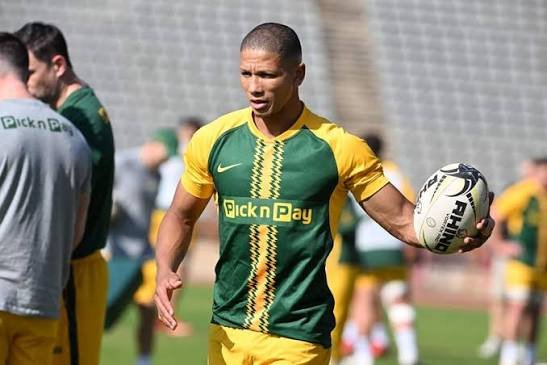
Manie Libbok makes his first start at flyhalf since last year’s Ellis Park debacle against Australia, and will have a key role to play in managing the Springboks’ game.

Springbok coach Rassie Erasmus may be downplaying the importance of winning the inaugural Nations Championship, but filling his team with World Cup winners and first-choice regulars to play England at Ellis Park on Saturday makes it clear how seriously South Africa are taking their opening Test of the year.

With only the injured Sacha Feinberg-Mngomezulu absent, the backline is probably the one Erasmus would name if it were the World Cup final on Saturday. And up front are all the formidable old names – the now-established first-choice loose trio of captain Siya Kolisi, Pieter-Steph du Toit and Jasper Wiese; Eben Etzebeth and Ruan Nortje in the second row, and Ox Nche, Malcolm Marx and Thomas du Toit in the front row.

One can probably vigorously debate whether Grant Williams or Cobus Reinach are the number one scrumhalf; but Williams has played 28 Tests already and can no longer be called inexperienced, while Reinach has not played any rugby since his injury on Stormers duty at the end of April.

Du Toit may or may not be South Africa’s best tighthead prop, but English pundits have nothing but praise for him, the 31-year-old having taken the European game  by storm during his three years at Bath. With Wilco Louw fatigued after a tough URC campaign, the Sharks-bound Du Toit gets an early chance to lay down a marker in the Springbok jersey, his mobility for a high-paced game at altitude being a plus.

It is fit and proper that Erasmus and the Springboks are taking England so seriously, in contrast to many South Africans who expect them to be filling their boots against Steve Borthwick’s visitors.

Yes, England struggled in the Six Nations, but let’s not forget that at the start of this year, it was this weekend’s clash at Ellis Park that was creating the most excitement for the early rounds of the new Nations Championship. England had risen to third in the world rankings thanks to their unbeaten run through their Autumn Internationals, including a 33-19 dismantling of the All Blacks, and them versus South Africa seemed to be a match-up between the two most in-form teams on the planet.

The momentum was lost in the Six Nations, until England nearly beat champions France in Paris. They looked back on the up again and showed that they do still have some potent weapons.

“Our mindset is just to win another Test match and I’m pretty sure England are the same. The Barbarians match was a nice warm-up and it helped get the guys into the structure, but this is now a big Test. England are always tough, their strength in numbers is really good, many of their players were in the Premiership final so their standard is very high,” Erasmus warned when announcing his team this week.

“There are not a lot of games against England in our squad and it will be all about how quickly we can get cohesion, alignment and playing together. England should have won their last game against France, they only just lost, and having been here a while, they’ve probably adapted to altitude.

“We’ll have to see how they run the ball, but they have a young and energetic side that fits an open, running game. We’ll have to get the better of them facet by facet of the game, try and win by dominating the different departments of the game.

“This is a big year for us, there are young guys there in our squad but they don’t have a lot of caps and next year is the World Cup. The priority is to keep our momentum and belief, so we’re just trying to win, we won’t be chasing bonus points. If we win all our games, we’ll win the Nations Championship.

“We just want to try and get on the front foot, get momentum, but it’s not going to be easy. Which is why we’ve chosen a more experienced side. If it goes well on Saturday, then we can use more youngsters in the next few weeks,” Erasmus said.

The double World Cup winning coach’s caution is also justified by history: the last Test the Springboks played at Ellis Park was their embarrassing 38-22 defeat to Australia on August 16 last year, while the last time they played England in Johannesburg was on June 16, 2018.

On that occasion, the Springboks won 42-39, recovering from a horror start in which they went 24-3 down. It was just Rassie’s second Test as head coach and Siya Kolisi was the first Black African to lead South Africa in a Test match. The lesson from that game was that momentum can shift very quickly at Ellis Park.

Last year’s defeat to the Wallabies provided another salient lesson and warning – it is easy, given how fast-scoring matches can be at Ellis Park, to get carried away. The Springboks were near-perfect in the opening quarter, leading 22-0 with some scintillating rugby. But then they hit a speed wobble, over-played and Australia were well-deserved winners.

Using Manie Libbok at flyhalf worked marvellously when the Springboks were in charge and on attack, but his game management was exposed when the Wallabies fought their way back into the contest. It seemed on that day that Libbok had only one gear – flat out – and their game eventually spiralled out of control, a bit like what has happened to English cricket with their Bazball.

This Saturday at Ellis Park will be the first Test since then that Erasmus is using Libbok in the No.10 jersey. The injury to Feinberg-Mngomezulu nows gives the former Stormers star the chance to show that the effective job he has done coming off the bench since then can be repeated from the start.

“I have a clear understanding what my role is. I need to go out there and lead with my voice, drive the team around the park and make sure we execute our game plan. I need to do my exits, make sure we are in the right areas and play with the right balance,” Libbok told SuperSport this week.

“It’s especially about looking after the forwards, not wasting their energy and overplaying them. I need to handle the pressure, kick at the right times and get in their territory,” Libbok said, perhaps in reference to the feeling that the Springboks had shot their bolt way too early against the Wallabies last season.

South Africa are going to have to box smart against England and it will require a much more controlled performance from them if their proud record against the Red Rose in Johannesburg is not going to go the same way as their one against Australia went to everyone’s shock last year.

England have not won at Ellis Park since 1972 and anywhere on the Highveld since 2000, while Australia’s previous win at the intimidating venue came in 1963 and they had not triumphed anywhere in South Africa since 2011.

England are a competent side across the board and the Springboks will be looking for a knockout blow via their usual weapons of physical dominance at the gainline and in the set-pieces, with a lethal backline able to both create space and take advantage of what materialises thanks to their mighty forwards.

Proteas Women make the grade – Wolvaardt 2

Posted on April 29, 2026 by Ken

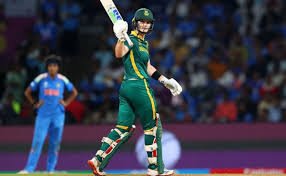
Proteas captain Laura Wolvaardt raised her bat for fifty in four of her five record-breaking innings in the series.

The Proteas Women’s performances made the grade in most departments during their 4-1 T20 series win over India, according to captain Laura Wolvaardt, but there are a couple of areas of their game which still need brushing up as they head into the 20-over World Cup in England in June.

South Africa signed off the series with a dominant performance at Willowmoore Park in Benoni, beating India by 23 runs. Wolvaardt was once again the Player of the Match as her sparkling 92 not out off just 56 balls carried the home team to 155 for six. An impressive bowling performance then restricted India to 132 for eight.

Wolvaardt took her tally of runs for the series to 330, the most in a women’s T20 rubber, making her the obvious choice for Player of the Series. The 27-year-old averaged 82.50 at a strike-rate of 168.36.

Her opening partner, Sune Luus, also enjoyed a successful series, scoring 197 runs at an average of 49.25 and a strike-rate of 138.73. But one concern for the Proteas will be that no other batter scored more than Annerie Dercksen’s 65 runs in four innings, two of which were not out.

Wolvaardt said after the fifth T20 that the lack of partnerships after the powerplay, in which they scored 49 without loss, was a concern. She faced 30 of the first 50 deliveries of the innings, reaching 50 in that time, but only 26 deliveries in the remaining 70. The Cape Town born player hit the last two balls of the innings for six to provide a crucial late boost in the company of Sinalo Jafta (16* off 8).

“Our total of 155 was somewhere around our goal in the end. The one area we lacked a bit in was partnerships. If we had one big partnership then we would have got over 165, which would have been decent. But we were about par, maybe a bit under.

“I did feel that I lost momentum a bit after the powerplay. We needed just one more big partnership, because when you lose wickets you’re also building dot balls. But I’m very happy with our batting in the powerplay and how much intent we showed.

“In all five matches that was good, and it was something that was not the best in the past. Previously we’ve been having slow starts and then some massive finishes. Now our starts are putting us in really good positions,” Wolvaardt said.

“Our death bowling has also come a long way, after we had found it tough in New Zealand. I thought it was a proper bowling effort today, the spinners were very good, Chloe Tryon and Nonkululeko Mlaba were excellent. We found a way to keep the batters quiet in the first 10 overs, they tried to force things but they just couldn’t do it. I was very impressed with the bowling.

“Taking our catches is one area we need to improve though. It’s been frustrating that in every game, one or two catches have gone down. But our play has been pretty good overall in this series, and I will now take a look at the different phases of the game more deeply.

“But we are very happy to beat India 4-1 and they are in our World Cup group as well. We now have a bit of momentum going into the tournament and it tells us that we are doing a lot of things right,” the skipper added.

While Wolvaardt was loathe to describe her performances as being the best she has ever batted, she did say she enjoyed being so fluent at the crease.

“I’m very happy with my form, although I did always have the best of the conditions because I won all the tosses. My batting had been a bit sluggish – in New Zealand I was getting like seven off the first 16 balls – and I can’t really say what changed. That’s how cricket is sometimes and it was nice to keep it going and enjoy the freedom to play positively,” Wolvaardt said.

WARNING: Global cricket is currently unsustainable 4

Posted on September 29, 2025 by Ken

Tony Irish.

“The current structure of global cricket is unsustainable and countries outside of the ‘Big Three’ (India, England and Australia) will play less and less bilateral series cricket, with some in danger of disappearing altogether from the Test cricket scene,” Tony Irish, who is an independent director of cricket’s global players’ body, the World Cricketers’ Association, has warned.

The only international cricket that really makes money now is India at home and abroad, and England and Australia tours. Any other bilateral cricket loses money. Bilateral cricket is those tours between countries playing Tests, ODIs and T20 matches.

The Future Tours Program previously ensured every team would play each other twice in a four-year cycle, home and away. But Narayanaswami Srinivasan [India], Giles Clarke [England] and Wally Edwards [Australia] deregulated everything in 2016, making bilateral tours a free-for-all. There are no rules, and therefore there is no context to so much international cricket.

It has become like Liverpool playing Arsenal and Chelsea five times a year and Bournemouth just once. But the BCCI [Board of Control for Cricket in India] don’t want more regulation and a well-structured calendar. That would mean they cannot wheel-and-deal, give and take games away from countries depending on whether they vote with them or not.

They want the status quo to continue so they can maximise their own revenues. England and Australia just go along with them and no-one stands against them.

There also needs to be a more equitable distribution of ICC revenues. India take nearly 40% of the revenues and they already get huge pots of money through the IPL and bilateral cricket.

There is huge financial inequality across the game with India at the top of the pile. India has resources of approximately $1.5 billion dollars per year; the country in 13th place gets $6 million per year yet these two teams must compete against each other. How do they expect this to be a contest? There are 108 International Cricket Council (ICC) member countries and 50% of ICC revenues go to the ‘Big Three’, 87% of bilateral revenues are retained by England, Australia and India; while countries ranked 13 to 108 get 2% of total cricket revenues. ICC revenues are those generated from ICC events i.e. world cups, and is different to bilateral revenues which are the aggregate of what all of the countries generate from their series against each other.

Why must the ‘Big Three’ take such a huge slice? The system is just so inequitable and so incoherent. The whole structure, even ICC events, is set up for them and they have won 19 of the last 22 major ICC events.

While life is obviously good for Indian cricket, and they do deserve consideration for being the biggest market in the game, the second-biggest sport in the world is in danger of becoming like gridiron or baseball, which are minor sports in all but a couple of countries.

The ‘Big Three’ are just maximising revenue for themselves now, but it’s very short-sighted because in five or six years they might have no-one else to play against. People will get bored of just watching England-versus-Australia-versus-India. It’s a bad strategy and it’s one of the reasons the players are gravitating towards franchise leagues.

The ICC held their AGM in late July and set up a working group to make recommendations to the ICC board on an improved system of playing international cricket. But Irish, who is also a former chief executive of the South African Cricketers’ Association, told kenborland.com that despite this initiative and the phenomenal interest created by the magnificent five-Test series between England and India, “bilateral international cricket for other countries is highly endangered unless structural changes are recommended by this group and those structural changes are implemented”.

“The current system is broken,” said Irish, “primarily because there is no coherent playing schedule centrally controlled by the ICC, and bilateral cricket consists of a matrix of individual deals between countries, with no rules.

“This allows the ‘Big Three’ to play more and more against each other and less and less against the smaller countries. In a landscape where the global media rights revenue pie is also getting smaller, the commercial value of series between the smaller countries is dropping and these countries will soon no longer be able to afford to play bilateral series, which includes Test matches.

“This is also happening in a system where there is an inequitable sharing of revenues from ICC events. The combined effect is that in the current system the rich get richer and the poor get poorer. The smaller countries will, in addition, struggle to retain their best players for bilateral cricket as these players can earn more playing in T20 leagues around the world than they can playing bilateral cricket for their countries.

“The ICC sees all these franchise T20 leagues purely as domestic cricket, but in reality they are not – they all use international players and because of that they compete with bilateral cricket for players. In an unregulated schedule they also compete for calendar space. For a number of the small countries, the leagues are winning this battle against bilateral cricket; and Test cricket being the longest format, and the most expensive to stage, will suffer the most.

“In South Africa, despite the Proteas being the world Test champions, the team is scheduled to play only four Test matches over the next 12 months and there is no home Test cricket in the coming season,” Irish pointed out.

Amidst this pessimistic outlook, however, the World Cricketers Association released its Game Structure Report (https://theworldca.com/wp-content/uploads/2025/03/Global-Game-Structure-Report-Final-1.pdf) in March. The report is the only holistic review of the structure of cricket and is based on over 60 detailed interviews with game stakeholders (including administrators, media and commercial partners, players, team owners and broadcasters and journalists), extensive player surveys, statistical and scheduling data, and financial and economic data. Among the recommended structural solutions are:

  1. A centrally controlled (by ICC) global calendar which includes all bilateral cricket, ICC events (eg World Cups) and T20 leagues using international players
  2. Simpler and easier to follow competition structures across all formats with credible points systems to provide context
  3. Workable windows for core international bilateral (including Test) cricket
  4. A more equitable distribution of ICC event revenues
  5. A regulatory framework across the cricket system.

“This shouldn’t be all doom and gloom because there are solutions to this. They however require structural change to the whole system and not a tinkering with the current system. The introduction of windows for bilateral cricket is part of a workable solution to ensure bilateral cricket, including Test cricket, can co-exist with T20 leagues rather than compete with them,” Irish said.

“In the current system, no top countries play during the IPL, so that effectively has its own window. The IPL is fantastic for the game, but that window will continue to grow because of the billion-dollar investments in it and its insatiable market. It’s already gone from six weeks to nine weeks and this growth cuts into the playing calendar of other countries.”

“In addition, we’re now seeing cross-ownership of teams with the IPL franchises having sides in the SA20, The Hundred, Caribbean Premier League and Major League Cricket (USA). Eventually we’ll get to the stage where T20 franchises will offer the best players contracts to play for all of their teams across multiple leagues.

“If this happens, the national Boards will lose contractual control over their most important assets, being their players. If anything should act as a warning sign to the national Boards that the system must change, it is this.

“In a restructured system, the World Test Championship could also be improved. Currently it is confusing because the points system is contrived to fit the existing matrix of bilateral deals which has some teams playing more matches than others and some countries not playing others at all.

“Very good Test teams like the Proteas and New Zealand are playing fewer and fewer Tests, which will translate into less and less domestic four-day cricket – the breeding ground of Test cricketers. A four-day domestic first-class competition is one of the biggest cost items for every national Board, but if Test cricket loses money and less and less of it is played, then it is obvious that Boards will cut back more and more on four-day domestic competitions,” Irish said.

“We believe, said Irish, “that by making these changes it would significantly improve the global cricket product and that this would result in additional annual global revenues of approximately $250 million. The Boston Consulting Group, which has done a significant amount of work on the economics of the game, believes that the global cricket industry revenues should be about double what they currently are.

“We presented the World Cricketers Association Game Structure Report at the World Cricket Connects conference at Lords in June (just before the World Test Championship final) and it was well-received by the majority of those present at the conference.

“We know however that our proposals are being met with resistance at the ICC level. I think that most countries know that the current system is either broken or that it should be significantly improved. If the ICC group looking into the global structure don’t like our proposals, then it will be interesting to see what recommendations they make to deal with the current problems.

“I don’t believe the current system can carry on much longer without some countries being forced to abandon aspects of bilateral cricket or them losing their most important assets as the game continues in the current direction of travel,” Irish said.

If we want international cricket to be a healthy product then we can’t just go on doing the same thing. Even the richer countries will eventually fall off the edge, it’s a downward spiral. It’s all going in the wrong direction, especially if you’re a smaller country, and no-one is stopping the train.

The Global Game Structure Report calls for four 21-day protected windows reserved for bilateral cricket in which no T20 leagues can be held. It would mean every country would play at least one match per format against all other teams. Promotion and relegation between two divisions would provide greater context and jeopardy.

To save bilateral cricket, we need structural change, not a little plaster. Day/night Tests, pink balls, four-day Tests – none of it has worked to meaningfully change things.

Previously, the Woolf Report was specifically about ICC governance, but India didn’t like it and so the ICC dismissed it. It was the same three countries getting their way because India don’t want to lose their bargaining chips. Remember when Haroon Lorgat stood up to them and India cut their tour to South Africa in half and CSA lost a billion Rand?

The ICC and the ‘Big Three’ seem intent on allowing such great cricketing nations as South Africa, New Zealand and the West Indies to fade into obscurity, their heroes and entertainers seen only in dusty old archival film footage.

  • Recent Posts

  • Archives

  • Thought of the Day

    Have a fulfilled life by caring about the feelings of others. Show interest in the welfare of others, listen to their problems.

    Be tolerant of people and allow for their mistakes, because no-one is perfect.

    Follow the example of Christ, who showed sympathy and understanding towards all people.


↑ Top