for quality writing

Ken Borland


Archive for the ‘Uncategorized’


SA attack finally dons their mantle as one of the most effective bowling units 0

Posted on June 15, 2019 by Ken


South Africa’s attack finally donned their mantle as one of the most effective bowling units around as they set up a comfortable nine-wicket win over Afghanistan at Sophia Gardens in Cardiff on Saturday.

Having been sent in to bat, with lots of cloud still around after a week of rain and with the pitch sporting a distinctly green tinge, Afghanistan were bundled out for just 125 in 34.1 overs. South Africa finally entered the winner’s circle with few alarms as they cruised to that target in 28.4 of their allotted 48 overs, but, given the smallness of their objective and the magnitude of their task in getting to the semi-finals, one would have hoped for a more domineering display with the bat.

Chasing down their target with a run-rate of just a run-a-ball would have taken only 21.1 overs and would have given their nett run-rate, which could potentially be crucial if they are to sneak into fourth place, a far more significant boost than the way they meandered to victory on Saturday.

Nevertheless, the clinical bowling display gave much cause for optimism.

Openers Hazratullah Zazai (22) and Noor Ali Zadran (32) adopted an aggressive approach to try and escape the pressure another high-quality new-ball spell from Kagiso Rabada put them under. The Proteas may have just started to grow frustrated – Beuran Hendricks seemed to be deviating from the excellent lines and lengths he started with – when rain stopped play with Afghanistan on 33 without loss after 5.5 overs.

After a 25-minute delay, Hazratullah eventually fell to a slog-pull off Rabada soon after South Africa decided to have a midwicket boundary rider and Chris Morris then backed up Rabada with an excellent spell of five overs for 13 runs. He trapped Rahmat Shah lbw for six but was unfortunate not to get more wickets.

A longer rain interruption then delayed play for 65 minutes with Afghanistan on 69 for two after 20 overs. When they returned, Imran Tahir and Andile Phehlukwayo donned the executioners’ robes and ripped through the middle-order as they took four wickets for eight runs.

Tahir struck with his first ball, skipper Faf du Plessis having forecast that the Afghanistan batsmen could struggle against him because they have never faced him before, Zadran being comprehensively bowled by the big-turning googly, basically the veteran bowler’s stock ball. Asghar Afghan was caught-and-bowled for 0 in the same over.

Rashid Khan scored a plucky 35 off 25 balls before he too was dismissed by Tahir, who grabbed the man of the match award with figures of four for 29 in seven overs. Morris gained some belated reward for his brilliant bowling to finish with three for 13 in 6.1 overs, but Phehlukwayo (8-1-18-2) and Rabada (8-1-36-1) were both excellent too.

Afghanistan bowled well up front and Hashim Amla and Quinton de Kock were understandably cautious. But their inability to go for the jugular in the team’s interest when there was no chance of South Africa losing the match, fed into all the old barbs about Proteas insecurity and the lack of a fearless approach.

De Kock eventually found his fluency and helped himself to eight boundaries in his 68 off 72 balls, but Amla lurched along in first gear, finishing on 41 not out off 83 balls. Andile Phehlukwayo hit the winning runs – a six straight down the ground into the River Taff – to finish on a run-a-ball 17 not out.


River Cottage 0

Posted on June 10, 2017 by Ken

Arrowmarked Babbler

River Cottage in Malelane is a beautiful establishment situated just across the Crocodile River from the southern Kruger National Park and it’s an extremely productive spot for bird and animal watching, as well as providing great value for money in terms of decent accommodation.

From their vantage point above the river, birds are constantly flying along and animals are often venturing down to the water, so many classic sightings have been made from River Cottage’s front lawn. It’s the sort of place one expects to hear the famous Fish Eagle cry at regular intervals, and the Fever Trees and other well-established riverine vegetation on their side of the river also hold plenty of birds.

Although I heard African Fish Eagle, the only one I saw was a juvenile flying around away from the water, beyond the sandbanks and scrubby vegetation of the river and towards the S110 road within the park.

But there was a proper sighting of Martial Eagle soaring over the riverine bush, as well as African Hawk Eagle on a speculative foray over the river, where the stunning Saddlebilled Stork, one of my favourite birds, was foraging in stately fashion.

At other times, there were Grey Heron waiting patiently in the Crocodile River, while Squacco, Blackcrowned Night and Greenbacked herons and African Jacana flew past and Buffalo lolled at the water’s edge. Hippopotamus and African Elephant were also spotted.

In the morning, Brownheaded Parrots would fly away from their roost in one of the Fever Trees, flying over to the fruiting trees in the park.

Just walking around the gardens of River Cottage, as was my morning routine before breakfast, provides plenty of lovely sightings.

And it’s not all just lawns and majestic trees either; there are areas of rank grass, which were seeding and produced the charming and infrequent Redbacked Mannikin.

Laughing Dove with inflated neck in territorial display

Laughing Dove with inflated neck in territorial display


Juvenile Laughing Dove

Juvenile Laughing Dove


There were lots of Kurrichane Thrush with their spotted juveniles, Laughing Dove with their young, a big group of Arrowmarked Babblers moved loudly through the trees, catching flying ants that emerged the night before after a thunderstorm, and several, very prominent Scarletchested Sunbirds.

Thickbilled Weaver were hopping around, low down, between the buildings and a pair of Whitethroated Robin were in the dark undergrowth nearby.

Thickbilled Weaver

Thickbilled Weaver

Heuglin’s Robin hopped on to the lawn and investigated around the restaurant, outside of which a loud calling turned out to be a Little Sparrowhawk on its nest – a bowl of sticks between the branches of a tall tree.

Heading back to look out over the Crocodile River again, Whitefaced Duck were flying over, Blacksmith Plover were about with their confusing immature plumages and Bronze Mannikins were having a dip in a pool of water, while a Hamerkop flew along carrying nesting material.

Where is River Cottage?

Sightings List

Redeyed Dove

Kurrichane Thrush

Kurrichane Thrush

Kurrichane Thrush

Blackeyed Bulbul

Bronze Mannikin

Grey Heron

Blacksmith Plover

Water Dikkop

Egyptian Goose

Hippopotamus

Pied Kingfisher

Hadeda Ibis

Squacco Heron

Hamerkop

Little Egret

Lesser Striped Swallow

Cattle Egret

Wiretailed Swallow

Blackwinged Stilt

Blackcollared Barbet

Speckled Mousebird

Arrowmarked Babbler

Impala

Southern Tree Agama

Whitefaced Duck

African Buffalo

Blackbacked Puffback

Laughing Dove

Yellowfronted Canary

Yellowfronted Canary

Palm Swift

Yellowfronted Canary

Scarletchested Sunbird

Striped Skink

Great White Egret

African Elephant

Woodland Kingfisher

Spectacled Weaver

Whiterumped Swift

Little Swift

Saddlebilled Stork

Glossy Starling

African Hawk Eagle

Redbacked Mannikin

Thickbilled Weaver

Waterbuck

Threebanded Plover

African Jacana

Helmeted Guineafowl

Whitebellied Sunbird

Redfaced Mousebird

Whitethroated Robin

Brownheaded Parrot

Reed Cormorant

Whitebacked Vulture

Southern Greyheaded Sparrow

Greenbacked Heron

African Pied Wagtail

African Fish Eagle

Nile Crocodile

Whitewinged Widow

Little Sparrowhawk

Natal Francolin

Blackcrowned Night Heron

Heuglin’s Robin

Martial Eagle


Bonamanzi Game Park 0

Posted on May 18, 2017 by Ken


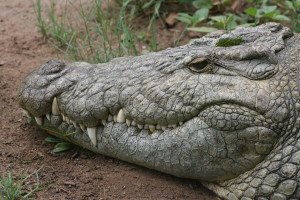
A Nile Crocodile gives me the eye

A Nile Crocodile gives me the eye

As my birding colleagues will attest, I have a predilection for taking obscure tracks and paths in the bush – blame it on my sense of adventure coupled with acute FOMO* – but my detours have often thrown up remarkable sightings.

Any road without a clear No Entry or Private sign is fair game as far as I’m concerned and when I went off on what was an adventurous track in the central forests of Bonamanzi I was richly rewarded.

Soon I heard a loud, piercing call, so I got out of the car to investigate and there, sitting on an exposed branch, preening and calling away magnificently, was an Emerald Cuckoo.

It is a bird that I have long been searching for – the colour emerald also being one of my favourite things – and because it tends to keep to the top of the canopy, it is unobtrusive and hard to spot, except when calling. So it was my lucky day in terms of getting a long-sought-after lifer and a superb sighting of a dazzling bird.

Yellowspotted Nicator was calling further down the same little road and was kind enough to keep calling so I could also track it down on foot and the other Bonamanzi specials seen – Lemonbreasted Canary, Narina Trogon and Gorgeous Bush Shrike – were all also surprisingly obliging and easy to tick off.

The Lemonbreasted Canaries, also unobtrusive birds that were only discovered in 1960, are actually best seen on the road to Hluhluwe along the western border of Bonamanzi, where I spotted them once again on the side of the road.

Gorgeous Bush Shrike was calling loudly and comfortably sighted in the bushes on the side of the road leading out of the main camp, but Narina Trogon was amongst a host of delights that came to visit me at my campsite near the swimming pool.

The procession of lovely creatures viewed from my throne (what I call my fancy campchair) started on the first night as a pair of Thicktailed Bushbabies and a Rustyspotted Genet came to visit, followed the next day by Impala, Vervet Monkey, Emeraldspotted Wood Dove, Forest Weaver, Purplebanded Sunbird, Bearded Robin and Terrestrial Bulbul.

The day after brought a pair of Narina Trogons, then another, and altogether four pairs of this sought-after forest gem visited my camp on a single day!

The late afternoon brought a carnival of birds to the campsite thanks to a swarm of mayflies that were fluttering all over as a gentle rain fell. Southern Black Tit, Yellowbellied and Blackeyed Bulbul, Forest Weaver, Plumcoloured Starling, Yellowthroated Sparrow, Yellowbreasted and Rudd’s Apalis, the Narina Trogons and Collared Sunbird were all tucking in and then an Orangebreasted Bush Shrike took to flight and joined the feast.
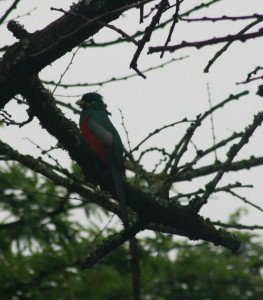
Narina Trogon

Narina Trogon in the gloomy drizzle

For those who enjoy working hard for their sightings, there are plenty of skulkers at Bonamanzi, including the usual suspects – Greenbacked Camaroptera and Redchested Cuckoo.

When I eventually spotted the Bleating Warbler it was close to a Black Cuckoo and bouncing around like a cross between a wind-up toy and a jack-in-the-box!

The Piet-my-Vrou was calling insistently in camp but was equally determined not to be seen, until my patience won the day.

The main camp at Bonamanzi – Lalapanzi – is situated in sand forest around a dam and water hole, so there is plenty to see around the chalets.

Sombre Bulbuls call from the tops of the tall trees that are all around the fancy accommodation, Hadeda Ibis congregate around the big bird baths that are spread around the lawns, and walking down to the smaller pan in front of the offices is always worthwhile. On this occasion, half-a-dozen Water Dikkop were resting and hiding in the long grass, while the Fever Trees were a hive of activity, which was unsurprising because five different species of weaver were nesting there during this early summer visit.

The Yellow Weavers were the most prolific nesters, bundles of frantic activity, but there were also Thickbilled, Southern Masked, Spottedbacked and Lesser Masked Weaver nesting.


IMG_1930[1]

Spottedbacked Weavers fluttering in display below their nests

A Diederick Cuckoo was looking a bit sheepish as I spotted him lurking on the fringes of the weaver colony, plotting skulduggery, but a Goldenrumped Tinker Barbet was getting along well with the Ploceids as they feasted on berries together from one of the bushes around the dam.

A Malachite Kingfisher was high atop one of the Fever Trees at the second, larger dam, while a juvenile Little Bittern skulked in the papyrus reeds and had me thinking of great rarities.

The southern part of Bonamanzi has a wilderness feel to it with no accommodation, only a few tracks and hiking trails, and often throws up something interesting.

Woollynecked Stork are found in the forest and a Crowned Eagle was sitting on a telephone pole at the southern boundary. Three black Impala were on the adjoining property, as was an Ostrich. Redbilled Oxpecker were with Giraffe and Impala near the Ndulalamithi Dam.
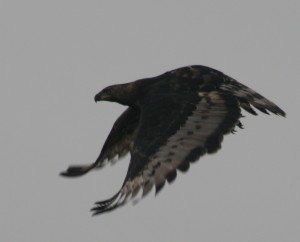
The Crowned Eagle takes to flight

The Crowned Eagle takes to flight

There is a lovely walking trail from the main camp leading 2km to a couple of hides overlooking pans. At the Leguaan pan, a Crested Guineafowl kept collecting items of food and bringing it back to its partner to eat, while a Water Dikkop was dipping itself in the water and flapping its wings in what looked like some sort of display.

The road to Hluhluwe along the western boundary also provides good birding and, apart from the Lemonbreasted Canaries, a Tambourine Dove disappeared quickly into the very thick undergrowth of the Mzineni River, with Redbilled Firefinch and Pintailed Whydah also in the vicinity of this river which flows into the northern tip of False Bay.

Telephone lines along the road are always worth examining and even some of the Rattling Cisticolas have taken to perching on them rather than the thorn bushes below, along with other typical bushveld birds such as European Bee-Eater, European Swallow, Blackeyed Bulbul, Glossy Starling and Yellowfronted Canary.

Where is Bonamanzi?

Sightings list

Nyala
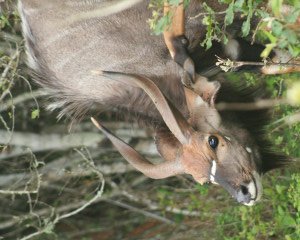
An Nyala scratches his ear

An Nyala scratches his ear

Rustyspotted Genet

Thicktailed Bushbaby

Impala

Vervet Monkey

Crowned Hornbill

Blackbellied Starling

Forktailed Drongo

Blackbacked Puffback

Southern Black Tit

Yellowbellied Bulbul

Red Duiker

Natal Robin

Brownhooded Kingfisher

Emerald Cuckoo

Plains Zebra

Yellowspotted Nicator

Whitebrowed Scrub Robin

Sombre Bulbul

Blackwinged Stilt

Water Dikkop

Wood Sandpiper

Yellow Weaver

Nile Crocodile

Thickbilled Weaver

Southern Masked Weaver

Lesser Striped Swallow

European Bee-Eater

Lemonbreasted Canary

European Swallow

Blackeyed Bulbul

Glossy Starling

Yellowfronted Canary

Rattling Cisticola

Tambourine Dove

Redbilled Firefinch

Pintailed Whydah

Woollynecked Stork

Emeraldspotted Wood Dove

Forest Weaver

Purplebanded Sunbird

Bearded Robin

Terrestrial Bulbul

Black Cuckoo

Greenbacked Camaroptera

Hadeda Ibis

Purplecrested Lourie

Plumcoloured Starling

Acacia Rat

Yellowthroated Sparrow

Yellowbilled Kite

Yellowbreasted Apalis

Narina Trogon

Cape White-Eye

Collared Sunbird

Redchested Cuckoo

Black Crake

Spottedbacked Weaver

African Pied Wagtail

Lesser Masked Weaver

Striped Skink

Egyptian Goose

African Jacana

Diederick Cuckoo

Goldenrumped Tinker Barbet
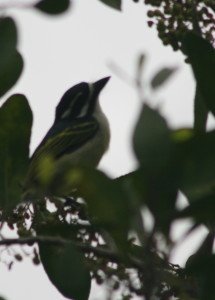
Goldenrumped Tinker Barbet

Goldenrumped Tinker Barbet

Sacred Ibis

Grey Heron

Wiretailed Swallow

Warthog

Malachite Kingfisher

Little Bittern

Spurwinged Goose

Common Sandpiper

Rudd’s Apalis

African Fish Eagle

Dusky Flycatcher

Chinspot Batis

Blue Wildebeest

Crested Guineafowl

White-Eared Barbet

Leopard Tortoise

Paradise Flycatcher

Orangebreasted Bush Shrike

Red Bush Squirrel

Squaretailed Drongo

Crowned Eagle

Ostrich

Little Bee-Eater

Redeyed Dove

Gorgeous Bush Shrike

Southern Boubou

Giraffe

Redbilled Oxpecker

*FOMO = Fear of missing out


Markram ready today to do himself justice for SA – Boucher 0

Posted on April 14, 2017 by Ken


Aiden Markram “would do himself justice” if he is chosen for South Africa today, according to Titans coach Mark Boucher, after the opening batsman produced a magnificent matchwinning century in the Momentum One-Day Cup final against the Warriors at the weekend.

Markram smashed a classy 161 off just 123 balls as he and opening partner Henry Davids, the tournament’s leading run-scorer, both scored centuries to lead the Titans to 425 for five, the highest total ever in the competition.

It was the 22-year-old Markram’s second century of the campaign, after his record-breaking 183 against the Lions at the Wanderers a fortnight ago, to go with two Sunfoil Series hundreds, and Boucher, a legend of international cricket with 147 Test and 295 ODI caps, knows what it takes to prosper at the highest level.

“Aiden would certainly do himself justice if he went up right now and he will only get better in that environment, playing alongside people like Faf, AB and Hashim. Is there a spot in the starting XI for him right now? I don’t know, but I would encourage the Proteas to have a proper look at him in the squad,” Boucher said after the Titans’ 236-run victory.

“He’s easy on the eye and he gives you bowling options. Role-definition is very important in cricket and we decided that he must bat through and he was able to give Henry the strike and just let him go.

“But Aiden is certainly not one-dimensional, he can also finish the game, he does not get stuck. He’s got the game to score runs up front, in the middle overs and to finish the innings. There are so many dimensions to his batting, he’s certainly a star of the future,” Boucher added.

The 37-year-old Davids produced a sparkling 114 off 98 balls, taking his tournament tally to 673 runs in just eight innings, a Titans record and the fifth-highest tally ever, although those ahead of him all played between 11 and 14 innings.

It’s little wonder then that his team-mates have begun to call the batsman Boucher said reminded him of Herschelle Gibbs, “red wine”, such has been the quality of cricket Davids is producing in his senior years.

“I’ve heard the ‘red wine’ name a few times, but I’ve started to know my game, I give myself more overs to get in now. I used to play big shots early on, but now I get the feel of the pitch first.

“It’s been an awesome season, in the past I would score flashy 60s or a quick 30 and then get out, but this year I’ve only made a couple of 30s, I’ve been converting, so that’s very pleasing,” Davids, who finished the Momentum One-Day Cup with three hundreds and three half-centuries, said.


http://www.pressreader.com/south-africa/the-citizen-kzn/20170403/281998967302654


  • Recent Posts

  • Archives

  • Thought of the Day

    Revelation 3:15 – “I know your deeds, that you are neither cold nor hot. I wish you were either one or the other.”

    How can you expect blessings without obeying?

    How can you expect the presence of God without spending time quietly before him?

    Be sincere in your commitment to Him; be willing to sacrifice time so that you can grow spiritually; be disciplined in prayer and Bible study; worship God in spirit and truth.

    Have you totally surrendered to God? Have you cheerfully given him everything you are and everything you have?

    If you love Christ, accept the challenges of that love: Placing Christ in the centre of your life means complete surrender to Him.


↑ Top