The Soweto Country Club, the flagship of the Sunshine Tour’s development programme, is under threat due to the continued prohibition on golf, deputy commissioner Thomas Abt admitted on Thursday.
Soweto Country Club was designed by Gary Player and built in 1974, but fell into disrepair before a major refurbishment turned it into an iconic course in South Africa’s most famous township. Sunshine Tour commissioner Selwyn Nathan spearheaded the fundraising effort that saw both local and overseas corporates, the government and golfers themselves contribute to the revamp of a 6560-metre parklands layout that holds a special place in the heart of Black golfers and the Soweto community at large. The championship course hosted the Joburg Ladies Open in March 2019, an international event co-sanctioned by the Ladies European Tour.
But now the continued success of this incredible project is in question because Soweto Country Club, like the majority of golf clubs in South Africa, is in a dire financial situation due to being closed for the last 10 weeks as government imposed a Lockdown to prevent the spread of the Covid-19 pandemic.
“Soweto Country Club is absolutely threatened,” Abt said on a Sunshine Tour virtual press conference on Thursday. “One has to tip the hat to Selwyn Nathan, who championed the revamp and got funding from various tours and businesses around the world. But the club needs a sustainable platform and maintenance of the course is critical. We’ve had to re-evaluate maintenance and reduce the number of staff employed because there are no rounds of golf, no food being sold by caterers and no beverages being bought to bring in money.
“So the sooner golf clubs can reopen the better, it’s a very unfortunate situation and we’ve had to put plans in place to try and save Soweto Country Club. It’s been a tough time for GolfRSA but they have put their best foot forward and had positive discussions with the Minister, the Department of Sport and his advisors. We’ve had constant engagement on almost a daily basis,” Abt said.
Much of that engagement has been centred around trying to get government to better understand the dynamics of how golf works in South Africa, with the decision to allow professional golf to resume not having any impact without the clubs and amateur game being allowed to follow suit.
“In our discussions we’ve been trying to understand the reasons why we can’t play golf and we’ve also tried to help them understand better how the Lockdown applies to golf and Grant Hepburn [GolfRSA CEO] has engaged them on how the sport works in this country: In order for the professional game to take place, the amateur game and their facilities have to open up first and then the pros can.
“Our country seems to have it the other way round, but the amateur game supports the professional game and that message seems to have been absorbed now. In the meantime we’ve asked our professionals not to put any pressure on facilities to open. So they’re not able to do anything just yet, but the clubs and ranges have been closed for more than 60 days so we can wait a few more days to play golf again legitimately,” Abt said.
Springbok great Bryan Habana spent enough time playing in Europe to know exactly what it would entail for South African rugby to ditch Sanzaar and move into Northern Hemisphere competitions, and the 2007 World Cup winner is not totally sold on the idea, he said on Wednesday.
There has been global speculation that the world champions will leave Sanzaar after the 2023 World Cup to play in an expanded Six Nations tournament as well as their SuperRugby franchises joining European competitions like the Pro14 and Champions Cup. There has also been talk emanating from Australia of Sanzaar excluding teams from both South Africa and Argentina and focusing on just a trans-Tasman competition with New Zealand.
Habana, who scored a South African record 56 SuperRugby tries for the Bulls and Stormers, finished his career spending five years playing for Toulon so he has intimate knowledge of European competition.
“There’s been a lot of debate about South Africa joining the Northern Hemisphere but right now nobody even knows when rugby will be back in South Africa. Probably the one thing most needed by rugby is a global season. But I suppose the one question is whether Sanzaar need SA Rugby, they have been an important part of Sanzaar for the last 25 years.
“For those in the UK and Europe it’s much easier to watch games in South Africa than those in New Zealand or Australia. But it’s important to see where the Springboks and SuperRugby teams could fit in and they would have to fit in with the Northern Hemisphere schedule. I don’t see our guys enjoying playing in 5⁰ in December/January and how are our rugby fans going to enjoy watching rugby over Christmas when they’re on holiday?” Habana said on Wednesday in a virtual press conference to announce the launch of MatchKit.co, a mobile tech platform intended to help athletes grow their commercial brands, set up by the Retroactive agency of which he is a partner.
There have also been suggestions South African teams could play in both Sanzaar and the Northern Hemisphere, expanding the current involvement of the Free State Cheetahs and the Southern Kings in the Pro14, but Habana said the workload on the players even if they were just involved in Europe would be immense.
“When Toulon won the double in 2014/15 they played more than 40 games and player welfare is important. If we’re going to add four more teams and include the Springboks in the Six Nations then that would mean even more matches. There are advantages to both hemispheres, the players would learn more about foreign conditions and that allows you to develop more as a rugby player and as a person.
“To say who has the better standard of play though is very subjective because what determines a good standard? The Northern Hemisphere has come strongly to the fore in the last few years: In the 2015 World Cup the top four sides were all from the Southern Hemisphere, but in 2019 it was very different [England, New Zealand, Wales, South Africa]. Hopefully our decision-makers will choose what is best for the game as a whole,” Habana said.
I’m sure I speak for most birdwatchers when I say it’s funny how the memory of spotting a Lifer is often permanently seared on the brain with the details of the moment immediately springing to mind.
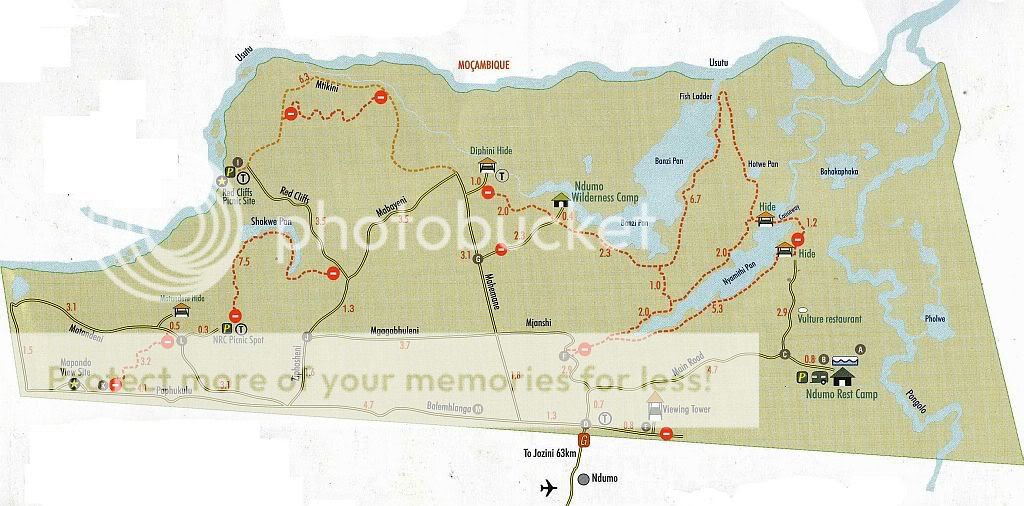
So much so that when I came across this sightings list from a February 2006 trip to Ndumo Game Reserve in northern Zululand, I could immediately picture in my mind’s eye the little loop off the Paphukulu road that goes around a corner and then crosses a dry river bed before going slightly uphill again and returning to the main road.
As one approaches the dried up river, there is a thorn tree on the other side that hangs over the bank and there, in the gathering gloom of dusk, was a massive owl perched on the edge of the branches, surprisingly exposed.
By its large size I was immediately thinking Giant Eagle Owl and a quick squizz through the binoculars confirmed the diagnostic pink eyelids of the bird now known as Verreaux’s Eagle Owl, annoyingly because those French naturalists had nothing to do with the discovery nor naming of the bird.
The Giant Eagle Owl normally spends its days perched inside a leafy tree along a watercourse and they often begin their nightly hunting forays along an open, dry riverbed.
So perhaps my Lifer Giant Eagle Owl was eager to get going with what would have been its ‘breakfast’. For which I was very grateful and shall always remember my first sighting of what is truly a magnificently impressive bird. Not for nothing are they known as the Martial Eagles of the night sky.
The Paphukulu road runs along the south-western border of Ndumo and is always a very interesting drive as the sand forest and dense thorn thicket of the central regions of the reserve grades into dry savanna woodland, a more bushveld type area dominated by Knobthorn Acacias.
On that steamy February day, there were typical savanna woodland birds present like the Eurasian Bee-Eater, Masked Weaver, Redbacked Shrike, Cardinal Woodpecker, African Hoopoe, Little Bee-Eater, Sabota Lark and Crested Francolin.
The boundary fenceposts along the Paphukulu road are always worth keeping an eye on and Pallid Flycatcher, which is found in the Acacia woodlands of Zululand but is replaced by the Marico Flycatcher in that habitat further west, was spotted as well and then further down the road an interesting-looking raptor was seen perched.
It was a medium-sized brown bird, initial thoughts revolving around a Steppe Buzzard, which often perch on these fence poles. But this bird seemed a bit bigger and then, when it turned around to show its underparts they were all-rufous brown with no hint of white on the breast.
It was an immature Jackal Buzzard, which is not often seen in the tropical north-eastern lowveld, but juveniles do sometimes wander over from the escarpment, in this case probably the nearby (less than 100km) Lebombo Mountains.
An immature Steppe Buzzard was seen later on and Sombre Bulbuls also make their way into this area, on the fringes of the thorn thicket.
Icterine Warbler was also seen in the thorn trees close to the Giant Eagle Owl spot, a good sighting because it is scarce in these parts and sparsely distributed in KwaZulu-Natal as a whole.
The next day, on a small track leading to the NRC Picnic Spot, an even more seclusive but much bigger warbler was spotted. The Olivetree Warbler is a very uncommon and often overlooked Mediterranean summer visitor and I managed to get a glimpse of one foraging in a dense grove of acacias.
Heading back from west-to-east on the Paphukulu-Balemhlanga roads, the more open knobthorn woodlands allowed one to tick other typical bushveld gems like African Cuckoo and both the Eurasian and Lilacbreasted Roller.
It’s an under-rated but always good drive. Ndumo is more famous for the Nyamithi Pan and its guided walks.
But on this occasion in mid-summer, the pan was full to the brim, meaning a much lower waterbird count. There were egrets patrolling the shoreline and Wiretailed Swallows flew overhead along with passing groups of Trumpeter Hornbills.
A full Nyamithi Pan
Closer observation of the fringes of the pan, with bushy cover now right up to the edge of the water, provided sightings of Purple and Greenbacked Heron and Water Dikkop. Where there were some muddy edges, Wood Sandpiper was seen.
African Fish Eagles were seen in the Fever Trees on the other side of the pan, while both Pied and Giant Kingfisher were present, and a Hamerkop came yelping past as Hippopotamus frolicked in the water.
The road back from Nyamithi Pan to camp takes one past the reserve’s vulture restaurant, an open patch in which carcasses of deceased large mammals like Giraffe are dumped. There’s almost always something interesting hanging around and occasionally some real specials wander into this area.
On this occasion a Lesser Spotted Eagle, a Palearctic migrant which, given its preference for savanna and open woodland you wouldn’t fancy seeing at Ndumo, was strolling around on the ground. A real raptor special.
A Reedbuck was also pottering around.
The most famous of the Ndumo guided walks is probably North Pongolo, which takes one through the climax riverine forest of the beautiful dark brown river that has flown from Utrecht in Northern Natal, crossed the Lebombo Mountains and is now close to its confluence with the Usutu and its journey to Maputo Bay.
But the fullness of the Nyamithi Pan was a hint to the conditions of the Pongolo floodplain in general and the North Pongolo forest had been flooded and was temporarily off the roster for guided walks.
So instead a guide and I went to Shokwe Pan, an ear-shaped, generally shallower pan nearly seven kilometres long and in the western portion of Ndumo.
This turned out to be an excellent move because we came across, there in the thickets below the majestic Sycamore Fig trees, an African Broadbill, one of the Ndumo specials that is especially challenging to find.
But on this occasion this largely black, grey, brown and white oddity was just sitting on its display perch and allowed us to approach close enough for me to get a photo.
African Broadbill
Other typical forest birds seen at Shokwe were Squaretailed Drongo, Collared Sunbird and Blackheaded Oriole, while Samango Monkey were enjoying themselves high in the trees, keeping their distance as they usually do.
A couple of Darter flew over and there were also a few flocks of Whitefaced Duck which passed by.
The route to and from camp, which is in the south-east of the park, to Shokwe takes you right through the centre of Ndumo and the densest, most impenetrable thickets probably anywhere in the country.
Birding is difficult but there are always surprises for the keen-eyed.
On this occasion the biggest surprise was coming around a corner and finding a thorn tree had toppled over and was blocking the road. Refusing to be denied my route through the wonderful sand forest in the middle of the park, prime birdwatching territory and known for the rare birds that are in residence, I was forced to tow the offending tree out of the road with my car!
Tree v Car … and the Car won
My determination was partly rewarded with good sightings of Crested Guineafowl, Orangebreasted Bush Shrike, Dwarf Mongoose and Scimitarbilled Woodhoopoe, while little pans secluded in the forest provided Woollynecked Stork, Common Sandpiper and Greenspotted Dove.
The woodlands on the southern, hilly side of the park are also rich in birdlife. In the thickets and rank grass under the trees one gets the beautiful Melba Finch busily going about its business, normally with a Rattling Cisticola shouting the odds nearby. Neddicky (especially where there are fallen trees), Bronze Mannikin and Common and Blue Waxbill share this habitat too and Tawnyflanked Prinia is often around as well.
Bleating Warbler prefers thicker cover and will often call from a perch two-to-three metres up a tree. While looking for this secretive little bird, the likes of Paradise, Spotted and Black Flycatchers, Redfaced and Speckled Mousebird, Longbilled Crombec, Brownhooded Kingfisher, Puffback, Blackbellied Starling, Crowned Hornbill, Southern Black Tit and Purplecrested Lourie can also be spotted in the trees.
Searching carefully in the canopies threw up African Green Pigeon and Eurasian Golden Oriole.
Birding around the main camp, set in typical Maputaland woodland, is also good and the highlights from there on this trip were a Lanner Falcon, a regionally threatened bird that happened to fly by, probably heading to nearby grasslands to forage, while I was patiently watching the sky from my camp chair, and a Grey Sunbird, an Important Bird Area trigger species, that popped in for some nectar from the flowering hedge and a drink from a birdbath.
Kagiso Rabada, the Proteas’ top strike bowler, admitted on Monday that the previous season was a disappointment, backing up the statistics which show that it was the 25-year-old’s poorest since he began playing Test cricket for South Africa.
The former No.1 bowler in the world played six Tests in the 2019/20 season and took 21 wickets at an average of 32.85, the first time since making his debut in 2015/16 that his average has dipped into the ‘mediocre’ thirties. His previously least successful season was 2017 in England when he took 16 wickets in three Tests at 28.43. His career figures of 197 wickets in 43 Tests at an average of just 22.95 are a truer reflection of the immense talent he possesses.
To make matters worse, Rabada missed the crucial fourth Test against England at the Wanderers, when the Proteas had a chance of levelling the series, having been suspended for once again provocatively celebrating in the dismissed batsman’s face. The Wanderers has been a happy hunting ground for the Central Gauteng Lions star, with 24 wickets in five Tests there, at an average of just 20.54.
Rabada did not play in an ODI over the summer, but his performance in the World Cup last year was a let-down as he took just 11 wickets in nine matches, at an average of 36.09 and an economy rate of 5.08.
“This Covid-19 has affected people from multiple points of view and there are a lot of economic challenges. But I’ve been glad to get the rest, just not in the way it came, because the last five years have gone really quickly and there’s been a huge volume of cricket. So I’ve really, really enjoyed the break, it’s allowed me to think about what I really want, which makes it easier to set goals.
“The past season was disappointing, my stats were okay but I felt really rusty and a bit out of place. But it’s never supposed to be easy at international level and next season I will just take it day-by-day and try and achieve a new set of goals. Whatever I can contribute to the team winning would be great. That means you enjoy your cricket more and I am 150% committed to South African cricket,” Rabada said on Monday.
Rabada seemed less concerned with his overexuberant celebrations that have landed him in trouble with match referees and have certainly distracted from the focus of the Proteas at key times.
“It’s just passion. I’ve identified the things I need to work on and I will address those with the people closest to me and those people who I feel should help me. People are always going to criticise you in some way and it’s important not to take that to heart. You will always have critics no matter what you do and what others say should not affect you.
“It’s up to you what you want to reflect on and it’s got nothing to do with anyone else,” Rabada, who has been helping out the World Health Organisation with his Viral Wellness initiative along with Cameron Scott and Kingdom Kome, said.