for quality writing

Ken Borland


SA A provide a little pocket of cheer by beating the Lions 0

Posted on August 03, 2021 by Ken

The SA A team – surely the Springbok shadow side – provided a little pocket of cheer for South Africans in these miserable times as they produced a superbly gutsy performance to beat the British and Irish Lions 17-13 in their match at Cape Town Stadium on Wednesday night.

The SA A side made a fantastic start to the game as their counter-attacking ability gave them a 17-3 lead in the first half-hour, but they then had to dig incredibly deep to hang on to that lead. They took it into halftime despite both scrumhalf Faf de Klerk, for a clumsy defensive effort on the line, and ubiquitous flank Marco van Staden (repeat team infringements) being yellow-carded. The Lions bashed away on the line with pick-and-goes instead of the more obvious option of a scrum, and they were kept out by magnificent defence.

Lock Eben Etzebeth was constantly in the Lions’ faces, and it was his charge-down of a strange attempted chip inside the SA A 22 by Owen Farrell that led to the opening try. The rebound was regathered by classy centre Damian de Allende, who soon passed to wing Sbu Nkosi to speed away to the tryline in the 13th minute.

The second try was down to the astonishing magic of wing Cheslin Kolbe, who fielded a kick just inside his own half, five metres from touch. He jogged at first, but hen exploded, wonderful footwork taking him through the smallest of gaps before his superb offload to outside centre Lukhanyo Am, running a great supporting line, sent his skipper over for the try.

The Lions scored the only points of the second half as powerful loosehead prop Wyn Jones, who was denied a try on the stroke of halftime, went over from close range when SA A still only had 13 men on the field. Farrell kicked the conversion and a penalty for the tourists to close within four points.

The Lions dominated the second half, but when coach Warren Gatland rewatches the second half, even he will surely be impressed by the incredible courage and determination shown by the SA A side. Even though their physical dominance began to fade as their lack of match fitness told – as predicted by stand-in coach Rassie Erasmus – they just kept putting their bodies on the line to deny their opponents.

Gatland’s men overdid the crosskick, but it might have been a plan to fit into their preparations for the first Test, but they certainly showed what a threat they can be in the wider channels. Their kicking game outside of the 22 was also excellent, and they often put the home side under severe pressure by kicking into the corners.

But SA A closed out an enthralling game in solid fashion, using their rolling maul to earn penalties and count down the clock. The tour has now well and truly kicked off and, after a thrilling dress rehearsal, in nine days time many of these players will be out on the same field for what is now sure to be a real spectacle in the first Test.

Scorers

SA ATries: Sbu Nkosi, Lukhanyo Am. Conversions: Morne Steyn (2). Penalty: Steyn.

British and Irish LionsTry: Wyn Jones. Conversion: Owen Farrell. Penalties: Farrell (2).
Leopard Creek 0

Posted on July 05, 2017 by Ken


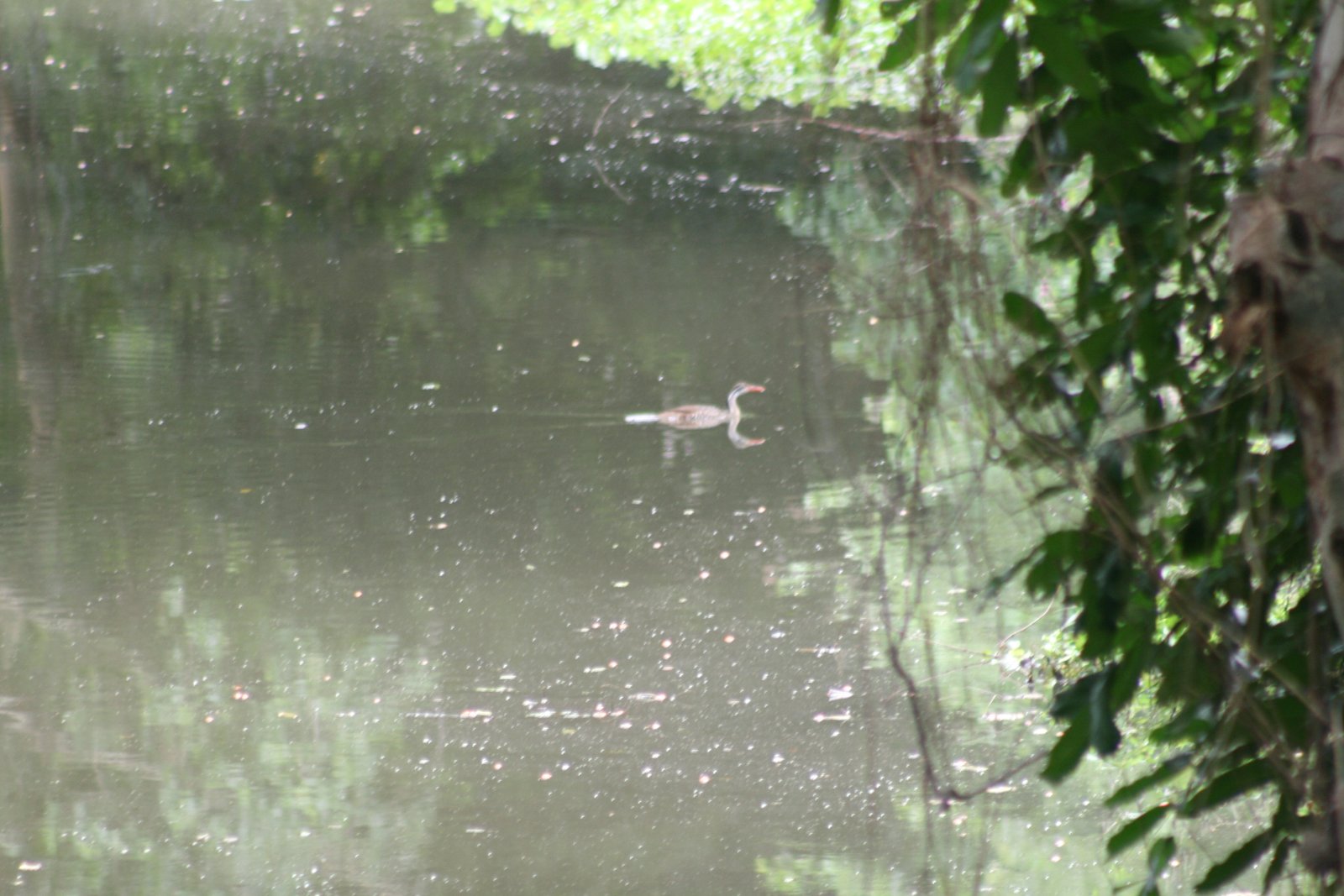
The elusive, mysterious and secretive African Finfoot

The elusive, mysterious and secretive African Finfoot

Leopard Creek has recently been rated amongst the top 100 golf courses in the world by the prestigious Golf Digest magazine and it is surely the wildest top-class golf course in the world, situated as it is alongside the Kruger National Park.

The Crocodile River forms the northern boundary between Leopard Creek and the Kruger National Park and the back nine runs along the river, offering tremendous sightings of all the animals and birds made famous by one of the largest game reserves in the world.

A channel runs off the Crocodile River and flows right in front of the clubhouse, making the verandah of this opulent building an ideal spot for bird and animal spotting. Unfortunately the clubhouse is also extremely hard to access for the rank and file visitor to Leopard Creek, but the good news is that there is a little service road that runs along this channel for a hundred metres or so, before turning up the hill to the 10th tee.

Shaded by luxuriant riverine trees, the road passes right by the water and I always make a point of taking a quiet stroll along this area. It has always seemed to me to be a perfect spot for African Finfoot – which Roberts describes as favouring “quiet, wooded streams and rivers flanked by thick riparian vegetation and overhanging trees” – the very description of my favourite part of Leopard Creek.

And so, on my eighth visit to this special place outside Malelane for the Alfred Dunhill Championship, I finally got my Finfoot.

There in this shady channel I saw the bright orange legs first as the bird stood on the bank and then went into the water, gliding stealthily to the other side of the river.

A hippopotamus was contentedly passing the day between this channel and the main Crocodile River, while a Brownhooded Kingfisher called from high up in the trees and a Malachite Kingfisher hunted from low down on fallen branches close to the water.

Heuglin’s Robin, one of my favourites, also hangs around this area.

Coming back up out on to the golf course, a series of dams is in front of you between the ninth, 18th and 10th holes, with Lesser Striped Swallow flying over and African Pied Wagtail patrolling the banks.

Heading backwards through the front nine, Blackbacked Puffback is calling away and Blue Waxbill are in a sapling on the side of the ninth fairway.

The seventh hole, a par-three, shares a dam with the fifth hole, fringed by Fever Trees, and Spottedbacked, Southern Masked and Thickbilled Weavers were all nesting in the same specimen of this archetypal tree of tropical wetlands, from which gin and tonics (no doubt consumed in large quantities on the verandah of the clubhouse) originated.

Along the stream feeding this dam, a Giant Kingfisher was eating a good-sized fish, while a Greenbacked Heron was flying upstream.

Anywhere on the course, you are likely to see Whitebacked Vultures soaring overhead and Purplecrested Louries flying between patches of thicker bush. Whitefaced Duck are also often flying over.

But the 13th is the signature hole of Leopard Creek, not just because of its great design but mostly because of the dazzling vista it provides over the Crocodile River just beneath the elevated green and Kruger Park just across the way.

Charl Schwartzel when the going was still good

Charl Schwartzel when the going was still good

While sitting there on the final day and watching Charl Schwartzel’s challenge implode in the face of young Brandon Stone’s brilliance, I was able to admire Great White Egret, Purple Heron, Grey Heron, Black Crake, Egyptian Goose, Whitefronted Bee-Eater, African Elephant and Nile Crocodile along the river.

Away from the golf course, Leopard Creek is in an area of typical dense bushveld savanna with Forktailed Drongos, sometimes even perching on low aloes, ruling the day and Spotted Dikkops, marching around the parking lot, at night.


Where is Leopard Creek?


Sightings list

Forktailed Drongo

Spotted Dikkop

Impala

Bushbuck

Whitefaced Duck

Blackeyed Bulbul

Little Swift

Hippopotamus

Brownhooded Kingfisher

Malachite Kingfisher

African Finfoot

Heuglin’s Robin

Whitebacked Vulture

Lesser Striped Swallow

African Pied Wagtail

Blackbacked Puffback

Blue Waxbill

Spottedbacked Weaver

Southern Masked Weaver

Thickbilled Weaver

Giant Kingfisher

Grey Lourie

Greenbacked Heron

Yellowthroated Sparrow

Nile Monitor

Purplecrested Lourie

Great White Egret

Purple Heron

Grey Heron

Black Crake

Egyptian Goose

Whitefronted Bee-Eater

African Elephant

Nile Crocodile

Sombre Bulbul

Pintailed Whydah


Focus on the overseas-based players as Springbok selection draws near 0

Posted on May 10, 2017 by Ken


It is a rugby truism that any coach stands or falls by his selections and Allister Coetzee’s mind will be rapidly focusing on who will represent the Springboks in the three Tests next month against France, the bulk of whom will surely be invited to the final training camp from May 20-22.

And when the first Springbok squad of 2017 is selected towards the end of the month the focus will once again be on the overseas-based players. But SA Rugby, who have done their coach precious few favours since negotiations with him began in 2015, have put him on the back foot in this regard with their new ruling that, from July 1, only players with 30 Test caps can be chosen from overseas.

If Coetzee had to just choose the most in-form team from SuperRugby then a backline could run on to Loftus Versfeld on June 10 with less than 50 caps, which a coach, on as shaky ground as he is, is highly unlikely to gamble on. The form Super Rugby backline would probably be Bosch-Mvovo-Mapoe-Odendaal-Skosan-Jantjies-Cronje.

So it seems inevitable that Coetzee will call on overseas-based players, especially amongst the backs.

Jan Serfontein is on his way to France and only has 26 Springbok caps at the moment, so he will not be eligible for the Rugby Championship. Should Coetzee pick him anyway against France knowing that he won’t be part of the plans for the rest of the year?

Willie le Roux has been playing with typical enthusiasm for Wasps and is likely to be in the picture at fullback, but Coetzee will be curbing the development of Curwin Bosch by not selecting him against France and instead letting him play in another World Junior Championship for the SA U20s.

Bosch has been one of the standout players in SuperRugby and has come through the ranks having been tipped as a future Springbok star after his exploits with the SA U20s last year. He will surely be involved in the 2019 World Cup, and could quite possibly be needed during this year’s Rugby Championship, so why not get him involved now? Let him play at fullback where he will have more time to settle at senior international level.

Bryan Habana, JP Pietersen, Morne Steyn and Ruan Pienaar are all still playing well overseas, but the general feeling amongst rugby observers is that it is time we moved on from these superstars, particularly since none of them are likely to be around for the 2019 World Cup. Nevertheless, Coetzee is a desperate coach trying to avoid the axe, so don’t be surprised if he calls on some of these elder statesmen.

While there is probably more depth at forward, veteran hooker Bismarck du Plessis is almost certain to be summoned to play the role of a general in the tight five, and playing the French at the end of their gruelling season with two of the Tests being played on the Highveld should produce open rugby and encourage Coetzee to pick players suited to a free-flowing game plan like Warren Whiteley, Siya Kolisi, Jaco Kriel, Franco Mostert, Ruan Dreyer, Malcolm Marx, Thomas du Toit, Coenie Oosthuizen, Pieter-Steph du Toit and Sikhumbuzo Notshe.

But the new 30-cap ruling on overseas players will also hurt Coetzee at forward. There is a hint of lawlessness in the way certain agents are shipping their players off overseas these days, so some tightening probably is necessary, but a hard-and-fast arbitrary number like 30 is not in the Springboks’ best interests.

Someone like Saracens tighthead prop Vincent Koch is playing unstoppable rugby at the moment, but he has only nine caps and is ineligible after July 1. If a couple of tightheads get injured during the Rugby Championship, how desperate will Coetzee be to select him? He may be forced to go back to Jannie du Plessis.

Ferocious flank Marcell Coetzee is in a similar position, stranded on 28 caps and currently out of action after another knee injury.

Instead of an inflexible rule, it should be left up to the national coach and Coetzee has already expressed his preference for locally-based players unless there is no viable option in a position, which is how it should be.

Hopefully the boring predictability of SuperRugby these days – those playing SuperBru will know this well – will give way to a thrilling Springbok resurgence next month, but there are numerous selection concerns for Allister Coetzee.

The rapid returns of Pat Lambie, Damian de Allende and Juan de Jongh to their best would help, but the lack of in-form options at scrumhalf is also an obvious worry. But let’s hope that the natural flair, tremendous tenacity and game-breaking ability of Faf de Klerk is not ignored. Not blooding Curwin Bosch will be a bad enough waste of talent.


Chilling with the golfers & the wildlife at Leopard Creek’s 13th 0

Posted on December 12, 2016 by Ken


With the Crocodile River and the Kruger National Park forming its one boundary and its excellent design, the 13th hole at Leopard Creek, outside Malelane, is surely one of the best holes in world golf.

A 505-metre par-five, an elevated tee shot has to cross a stream that splits the fairway, while avoiding a well-placed bunker on the right of the landing zone. With the fairway sloping right-to-left, and with the stream curving around to run the rest of the length of the hole down the left, any drive that goes left will land up in the water hazard.

If the first shot is successful, a big choice then awaits as to whether to take on the green, which hangs 32 metres above the Crocodile River and is protected by three bunkers and a pond, as well as thick grass behind the green.

Once on the putting surface, there is a wonderful view over the Crocodile River and into Kruger National Park, with Hippopotamus, Elephant, various antelope, Warthog and numerous different bird species almost always spotted.

Brandon Stone, who won last weekend’s Alfred Dunhill Championship at Leopard Creek with a superb 22-under-par total of 266, the second-best winning score at the event, certainly rates the 13th hole very highly.

“That’s my favourite hole in the world, without even exaggerating one little bit, it really is special. The fact is it’s not just a location; the actual hole’s design itself, I think it’s a really tricky tee-shot. You’ve got to really hit a good tee-shot to hit that fairway.

“And then if you hit the fairway it’s still not an easy par-five green to get into. I mean nine times out of 10, I’ll actually lay up; I’ve even written on my book, if it’s anything more than a six-iron, it’s not even worth going at because that green is just so tricky to hit; you just can’t even see the left side.

“So I think if I can play that hole under-par for the week, I’ll be happy, because I think a lot of other guys are going to get a little bit too greedy and it’s going to come and bite them a little bit. And then if they go over the back, something else could bite them,” Stone said before going eagle-bogey-birdie-birdie on the hole.

On the final day, I watched two three-balls play the hole and the scores amongst those six golfers ranged from Keith Horne’s eagle to a couple of sevens by Bryce Easton and Pablo Larrazabal.

It’s a classic risk-and-reward hole designed by Gary Player and although 13 golfers over the four days made double-bogey or worse, at least they didn’t fall foul of the two-metre long crocodile that was lurking inside the pool next to the green!

It was also the hole when Stone finally closed the door on Charl Schwartzel in the final round, making birdie while the defending champion wasted a superb drive by finding a greenside bunker, taking two shots to get out and finishing with a bogey that left him five behind.

As captivating as the golf is, the view from the green into Kruger National Park tears you away and even the competitors linger a bit, the joy of spotting something special undoubtedly lifting spirits in a place that is often brutally hot and was 40 degrees in the final round.

The next day, while driving through Kruger, exactly opposite the 13th, perhaps 200 metres from the river, I came across a family of Wild Dog, just showing what special potential sightings are there.


  • Recent Posts

  • Archives

  • Thought of the Day

    Revelation 3:15 – “I know your deeds, that you are neither cold nor hot. I wish you were either one or the other.”

    How can you expect blessings without obeying?

    How can you expect the presence of God without spending time quietly before him?

    Be sincere in your commitment to Him; be willing to sacrifice time so that you can grow spiritually; be disciplined in prayer and Bible study; worship God in spirit and truth.

    Have you totally surrendered to God? Have you cheerfully given him everything you are and everything you have?

    If you love Christ, accept the challenges of that love: Placing Christ in the centre of your life means complete surrender to Him.


↑ Top