SA Rugby CEO Jurie Roux said recently that every union whether provincial or international is going to join up with private equity partners either sooner or later. Rugby has been one of the slowest sports to embrace professionalism though and I can hear many fans wailing that private equity is going to ruin the game.
“Private equity in rugby will have a massive influence, it will probably control rugby. And yes, SA Rugby is in discussions with private firms, but I don’t think there’s a union that’s not talking to someone. We all live in a post-Covid world that is now a much smaller pond and there is the opportunity now for investors to buy things at much cheaper prices. Private equity is here to stay, you’ll either join early or late, but join you will,” Roux said in an online press conference earlier this month.
There is perhaps going to be understandable anxiety that rugby is going to end up in the same sort of mess as the Premier Soccer League has with the controversial sale of the famous BidVest Wits club to a little-known National First Division club, Tshakhuma Tsha Madzivhandila, based in Limpopo. Thanks to BidVest cynically pulling the plug based purely on financial considerations, 99 years of history is down the drain, a club that has won nine top-flight trophies and produced players such as Gary Bailey, Peter Gordon, Richard Gough, Sam Magalefa, Thulani Hlatshwayo and Benson Mhlongo for all intents and purposes no longer exists.
Never mind Western Province leaving Newlands, can you imagine the outrage if it was announced that the Bulls were moving to Polokwane and would henceforth be known as the Buffaloes?
But let me allay your fears by pointing out that rugby has mechanisms in place to prevent such stupid things from happening.
Before going to market, a union will split its assets between a commercial/professional arm, which will largely deal with corporate matters like sponsorships, advertising, marketing and broadcast deals, and an amateur arm which will hold assets like the stadium (whether they own it or have a rental deal) and ‘intellectual property’ like the team name.
Stakeholders can then buy shares in the commercial/professional arm. A private company can buy 25% of those shares and the union gets the cash, while the equity partner takes dividends while also hopefully driving up the commercial value of those properties.
Even though SA Rugby’s constitution now allows for private companies to own up to 74% of a union’s professional arm, as long as the ‘amateur’ administrators have done their paperwork correctly then properties like the team name or where they play should be totally protected even if the union is now a minority shareholder.
The Bulls have been amongst the first unions to really make private equity work for them, with Patrice Motsepe’s African Rainbow Capital Investments and Johann Rupert’s Remgro each owning 37% of the Blue Bulls Company. First prize to them because the influx of cash has allowed the Bulls to hire big-name coaches in John Mitchell and now Jake White, who is totally revamping the team with a host of quality additions to the player roster.
Perhaps the first thing for a union to ensure is that there is synergy between themselves and their private equity partners, so that they can work together to run a successful team.
Unfortunately there have been two unions in the news lately for getting it all wrong – the Eastern Province Rugby Football Union and the Western Province Rugby Football Union. Both those beleaguered unions seem to be suffering from a bunch of rank amateurs trying to run multimillion rand businesses.
After years of wrangling seemed to be coming to an end with the signing of heads of agreement to sell Newlands to Investec, WPRFU president Zelt Marais has unilaterally decided not to sign off on the rest of the deal, despite already taking an advance of more than R50 million from Investec. Interestingly, the WPRFU also owe Remgro R58 million for a loan. These are powerful enemies to have and one fears that the once proud union could be heading the same way as Eastern Province.
The embattled Port Elizabeth franchise just seems to lurch from one crisis to the next and fresh problems are now springing up between the company that holds the majority shareholding in the Southern Kings and the EPRFU.
Roux was not specifically talking about the Southern Kings or Western Province, but his message certainly applies to them when he said political interference tends to surface when administrators try to run their franchises as an amateur entity.
But to borrow from Saturday Citizen deputy editor Brendan Seery’s excellent Column, for every couple of Onions that have to be dished out to unions, there will be more Orchids given out to those who make private equity work.
Simply put, rugby is unable to survive this post-Covid world without them so, like the Wallabies and scrums, every union just has to find a way of making these partnerships work.
I’m sure I speak for most birdwatchers when I say it’s funny how the memory of spotting a Lifer is often permanently seared on the brain with the details of the moment immediately springing to mind.
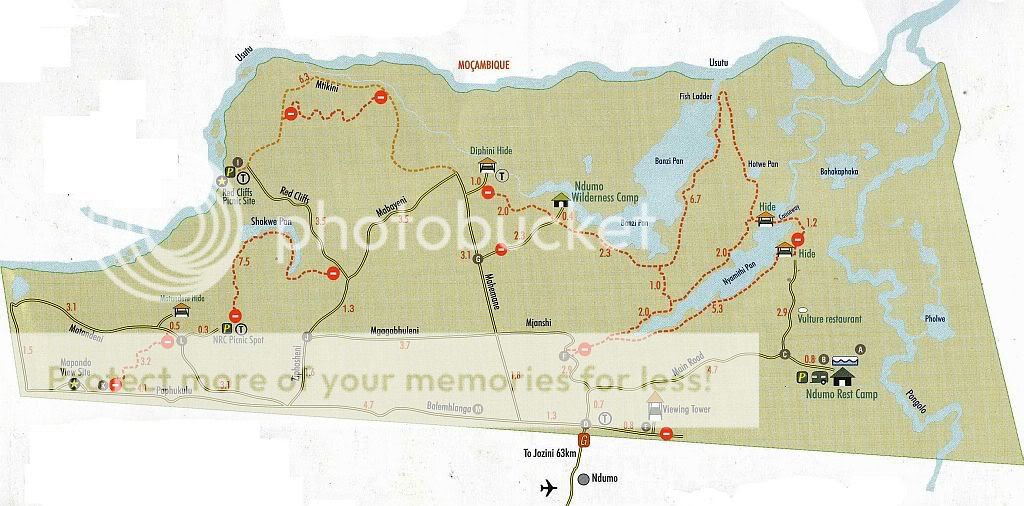
So much so that when I came across this sightings list from a February 2006 trip to Ndumo Game Reserve in northern Zululand, I could immediately picture in my mind’s eye the little loop off the Paphukulu road that goes around a corner and then crosses a dry river bed before going slightly uphill again and returning to the main road.
As one approaches the dried up river, there is a thorn tree on the other side that hangs over the bank and there, in the gathering gloom of dusk, was a massive owl perched on the edge of the branches, surprisingly exposed.
By its large size I was immediately thinking Giant Eagle Owl and a quick squizz through the binoculars confirmed the diagnostic pink eyelids of the bird now known as Verreaux’s Eagle Owl, annoyingly because those French naturalists had nothing to do with the discovery nor naming of the bird.
The Giant Eagle Owl normally spends its days perched inside a leafy tree along a watercourse and they often begin their nightly hunting forays along an open, dry riverbed.
So perhaps my Lifer Giant Eagle Owl was eager to get going with what would have been its ‘breakfast’. For which I was very grateful and shall always remember my first sighting of what is truly a magnificently impressive bird. Not for nothing are they known as the Martial Eagles of the night sky.
The Paphukulu road runs along the south-western border of Ndumo and is always a very interesting drive as the sand forest and dense thorn thicket of the central regions of the reserve grades into dry savanna woodland, a more bushveld type area dominated by Knobthorn Acacias.
On that steamy February day, there were typical savanna woodland birds present like the Eurasian Bee-Eater, Masked Weaver, Redbacked Shrike, Cardinal Woodpecker, African Hoopoe, Little Bee-Eater, Sabota Lark and Crested Francolin.
The boundary fenceposts along the Paphukulu road are always worth keeping an eye on and Pallid Flycatcher, which is found in the Acacia woodlands of Zululand but is replaced by the Marico Flycatcher in that habitat further west, was spotted as well and then further down the road an interesting-looking raptor was seen perched.
It was a medium-sized brown bird, initial thoughts revolving around a Steppe Buzzard, which often perch on these fence poles. But this bird seemed a bit bigger and then, when it turned around to show its underparts they were all-rufous brown with no hint of white on the breast.
It was an immature Jackal Buzzard, which is not often seen in the tropical north-eastern lowveld, but juveniles do sometimes wander over from the escarpment, in this case probably the nearby (less than 100km) Lebombo Mountains.
An immature Steppe Buzzard was seen later on and Sombre Bulbuls also make their way into this area, on the fringes of the thorn thicket.
Icterine Warbler was also seen in the thorn trees close to the Giant Eagle Owl spot, a good sighting because it is scarce in these parts and sparsely distributed in KwaZulu-Natal as a whole.
The next day, on a small track leading to the NRC Picnic Spot, an even more seclusive but much bigger warbler was spotted. The Olivetree Warbler is a very uncommon and often overlooked Mediterranean summer visitor and I managed to get a glimpse of one foraging in a dense grove of acacias.
Heading back from west-to-east on the Paphukulu-Balemhlanga roads, the more open knobthorn woodlands allowed one to tick other typical bushveld gems like African Cuckoo and both the Eurasian and Lilacbreasted Roller.
It’s an under-rated but always good drive. Ndumo is more famous for the Nyamithi Pan and its guided walks.
But on this occasion in mid-summer, the pan was full to the brim, meaning a much lower waterbird count. There were egrets patrolling the shoreline and Wiretailed Swallows flew overhead along with passing groups of Trumpeter Hornbills.
A full Nyamithi Pan
Closer observation of the fringes of the pan, with bushy cover now right up to the edge of the water, provided sightings of Purple and Greenbacked Heron and Water Dikkop. Where there were some muddy edges, Wood Sandpiper was seen.
African Fish Eagles were seen in the Fever Trees on the other side of the pan, while both Pied and Giant Kingfisher were present, and a Hamerkop came yelping past as Hippopotamus frolicked in the water.
The road back from Nyamithi Pan to camp takes one past the reserve’s vulture restaurant, an open patch in which carcasses of deceased large mammals like Giraffe are dumped. There’s almost always something interesting hanging around and occasionally some real specials wander into this area.
On this occasion a Lesser Spotted Eagle, a Palearctic migrant which, given its preference for savanna and open woodland you wouldn’t fancy seeing at Ndumo, was strolling around on the ground. A real raptor special.
A Reedbuck was also pottering around.
The most famous of the Ndumo guided walks is probably North Pongolo, which takes one through the climax riverine forest of the beautiful dark brown river that has flown from Utrecht in Northern Natal, crossed the Lebombo Mountains and is now close to its confluence with the Usutu and its journey to Maputo Bay.
But the fullness of the Nyamithi Pan was a hint to the conditions of the Pongolo floodplain in general and the North Pongolo forest had been flooded and was temporarily off the roster for guided walks.
So instead a guide and I went to Shokwe Pan, an ear-shaped, generally shallower pan nearly seven kilometres long and in the western portion of Ndumo.
This turned out to be an excellent move because we came across, there in the thickets below the majestic Sycamore Fig trees, an African Broadbill, one of the Ndumo specials that is especially challenging to find.
But on this occasion this largely black, grey, brown and white oddity was just sitting on its display perch and allowed us to approach close enough for me to get a photo.
African Broadbill
Other typical forest birds seen at Shokwe were Squaretailed Drongo, Collared Sunbird and Blackheaded Oriole, while Samango Monkey were enjoying themselves high in the trees, keeping their distance as they usually do.
A couple of Darter flew over and there were also a few flocks of Whitefaced Duck which passed by.
The route to and from camp, which is in the south-east of the park, to Shokwe takes you right through the centre of Ndumo and the densest, most impenetrable thickets probably anywhere in the country.
Birding is difficult but there are always surprises for the keen-eyed.
On this occasion the biggest surprise was coming around a corner and finding a thorn tree had toppled over and was blocking the road. Refusing to be denied my route through the wonderful sand forest in the middle of the park, prime birdwatching territory and known for the rare birds that are in residence, I was forced to tow the offending tree out of the road with my car!
Tree v Car … and the Car won
My determination was partly rewarded with good sightings of Crested Guineafowl, Orangebreasted Bush Shrike, Dwarf Mongoose and Scimitarbilled Woodhoopoe, while little pans secluded in the forest provided Woollynecked Stork, Common Sandpiper and Greenspotted Dove.
The woodlands on the southern, hilly side of the park are also rich in birdlife. In the thickets and rank grass under the trees one gets the beautiful Melba Finch busily going about its business, normally with a Rattling Cisticola shouting the odds nearby. Neddicky (especially where there are fallen trees), Bronze Mannikin and Common and Blue Waxbill share this habitat too and Tawnyflanked Prinia is often around as well.
Bleating Warbler prefers thicker cover and will often call from a perch two-to-three metres up a tree. While looking for this secretive little bird, the likes of Paradise, Spotted and Black Flycatchers, Redfaced and Speckled Mousebird, Longbilled Crombec, Brownhooded Kingfisher, Puffback, Blackbellied Starling, Crowned Hornbill, Southern Black Tit and Purplecrested Lourie can also be spotted in the trees.
Searching carefully in the canopies threw up African Green Pigeon and Eurasian Golden Oriole.
Birding around the main camp, set in typical Maputaland woodland, is also good and the highlights from there on this trip were a Lanner Falcon, a regionally threatened bird that happened to fly by, probably heading to nearby grasslands to forage, while I was patiently watching the sky from my camp chair, and a Grey Sunbird, an Important Bird Area trigger species, that popped in for some nectar from the flowering hedge and a drink from a birdbath.
Graeme Smith and Jacques Faul made it abundantly clear this week that after their recent dealings with the BCCI they believe Saurav Ganguly is the right man to become the next International Cricket Council chairman, but their error was in not following the correct channels for such shows of support, which is through the Cricket South Africa Board.
Shashank Manohar’s term as ICC chairman is set to expire in July and the Indian has suggested he will not stand for another stint, meaning world cricket’s top post could be up for grabs at the ICC annual general meeting in a couple of months. Ganguly, the current president of the BCCI and the man who as captain of India began their blossoming as international superpowers, has been identified as a frontrunner to replace his compatriot.
Smith, who captained the Proteas against Ganguly’s Indian team, has reason to back him because the BCCI have been supportive of accommodating South Africa in the post-Covid Future Tours Programme, most notably by agreeing in principle to playing three T20 internationals here at the end of August.
“Strong leadership is going to be the key for cricket going forward and we need people who understand the modern game. I’ve known Saurav for a long time, he is highly-resected and is in the best position to be the new president [chairman] of the ICC, a very important position. It would be great to see him get in and good for the game because he’s got the credentials and the skills to take it forward,” Smith, South Africa’s Director of Cricket, said this week.
But his statements in a remote media conference were followed hours later by this statement from CSA president Chris Nenzani:
“We must respect both the ICC protocol and our own protocol in deciding which candidate to back. There have been no candidates nominated as yet and once such nominations have been made the Board of CSA will take its decision in terms of its own protocol. At the moment we don’t want to anticipate any candidates who may be nominated for this important position to lead the game we all love.”
What that means is that the CSA Board will decide who to back for ICC chairman and Nenzani will be the person casting that vote, not chief executive Faul nor Smith. It was not quite a knee in the groin from Nenzani to Smith, but certainly a reminder that his powers are largely restricted to the field of play and not the politics of the boardroom.
But providing the BCCI continue to support South African cricket, thereby indirectly providing the board members with the gravy-rich meals they so love, there is no reason South Africa and Nenzani would not back Ganguly.
Given the current financial state of Cricket South Africa, they need as much charity as they can get and India have the deepest pockets.
SA Rugby announced this week that this coming SuperRugby season will see the local franchises teaming up with the Marvel Comics Universe, with each of them being assigned a kit based on one of the famous superheroes from the recently-passed Stan Lee’s wonderful imagination.
Goodness knows our Super Rugby teams can certainly do with some superpowers, but unfortunately this arrangement will only be for the local derbies, so it won’t really help our chances of overcoming the dominance of the New Zealand teams or keeping ahead of the Australians.
The Bulls kit will have the blue colours of Captain America, the Lions will be based on Spider-Man’s red and black, the Sharks’ kit will be inspired by Black Panther and the Stormers will be wearing Thor’s colours. Ironically, rugby’s Thor – Duane Vermeulen – has moved from the Stormers to the Bulls, via Toulon.
This all got me thinking about what a Marvel 1st XV rugby side would look like … This is a game I love to play and another variant of it often occurs during the hot midday hours in a game reserve and I choose a rugby team based on the animals in the park. You know, rhino and hippo in the front row with the honey badger at hooker, elephant and giraffe as the lock pairing. Cheetah and springbok are on the wings, lion and leopard in the loose trio, along with hyaena as the openside flank and monkey at scrumhalf. Buffalo would have quite the physical presence at inside centre, but does the elegant Sable Antelope play at flyhalf or fullback?
In our Marvel XV, Captain America, the archetypal blue-eyed boy, would be an obvious choice as skipper and flyhalf, much like our own Naas Botha. But there is another option for captain – Black Panther, being the king of Wakanda, is a great leader in his own right and his agility, immense strength and great intelligence make him the ideal eighthman.
The Beast, not Tendai the Tremendous but the blue-furred simian/feline hero of both the X-Men and the Avengers, is another agile and super-strong contender for the loose trio and would be my openside. Who better to play blindside flank than the real Iron Man?
In the second row, it is a case of putting together the classic pairing of the physically imposing number four with a more mobile, beanpole number five. Colossus of X-Men fame is not only 6’7 tall but can also transform his entire body into a type of organic steel. According to Marvel Comics, while in his armoured form, Colossus requires no food, water, or even oxygen to sustain himself, and is extremely resistant to injury. He is capable of withstanding great impacts, large calibre bullets, falling from tremendous heights, electricity, and certain magical attacks. In other words he’s pretty much like Bakkies Botha.
His lock partner would be the brilliant scientist and leader of the Fantastic Four, Reed Richards aka Mr Fantastic. He has the ability to stretch his body into any shape he chooses, so even the most wayward lineout throws would be in his grasp and his ability to steal ball at the rucks would be unsurpassed, which differentiates him from Victor Matfield.
A front row of his Fantastic Four colleague The Thing at tighthead and The Hulk at loosehead would be impossible to shift and would certainly boss the gainline, while Wolverine would bring a ferocity to the hooker position that has not been seen since the days of John Allan headbutting Sean Fitzpatrick in the first scrum of a Springboks/All Blacks Test.
For me, the sharp-witted Ant Man, with his ability to shrink through any gap or enlarge himself to block any hole, is the obvious choice for scrumhalf, while Quicksilver and the Falcon, whizzing about on his jet-powered wings, are the obvious heroes to play on the wings.
Thor, the god of thunder, would be a powerful force at inside centre that not many would get past, while Spiderman would be a nimble and superstrong outside centre, with his spider sense able to alert him of any threats to the defence.
Finally, I would like Daredevil at fullback, also imbued with super senses and tremendous agility, even though most modern coaches now seem to prefer a more conservative selection in the number 15 jersey.
I’m sure the late great Stan Lee will forgive me my misappropriation of his creations for a rugby team, but daydreams are what he sold and I have a feeling he would approve. I’m pretty sure the idea of putting them on rugby jerseys never crossed his mind though.
Colossians 3:13-14 – “Bear with each other and forgive whatever grievances you may have; forgive as the Lord forgave you. And over all these virtues put on love, which binds them all together.”
“When the Holy Spirit lives in you, you reflect the qualities of Christ in your life. Love and courtesy are basic characteristics of the Christian life. … If Chris lives in you, you will be kind and patient toward others.
“A person who is truly courteous is humble, … His attitude is the same regardless of whether he is talking to kings or beggars. He treats everyone alike, no matter what race, colour or creed they are. He rejoices in making the path through life easier for others to travel.
“It is impossible to say that you love and serve God while at the same time treating your neighbour with contempt and disrespect.” – Solly Ozrovech, A Shelter From The Storm