for quality writing

Ken Borland


Bregman living the dream thanks to sheer consistency 0

Posted on April 18, 2019 by Ken


Sport has always been a passion for the Joburg born-and-bred Stacy Bregman, and the life of an international golfer, travelling the world, is proving to be a dream come true for the 32-year-old.

Although she has won a handful of titles on the Sunshine Ladies Tour and is yet to bask in the winner’s circle on the Ladies European Tour, for sheer consistency, one can only admire Bregman’s efforts overseas, where she is certainly keeping the South African flag flying high.

Bregman is currently 12th on the LET order of merit, having already raked in over half-a-million euro in career earnings, and is heading for another impressive finish and a decent payday at the Women’s Indian Open in New Delhi, where she signed for a 69 on Friday to jump to 16th on the leaderboard.

She is in the top-10 in the stats for stroke average and greens-in-regulation, both great measures of consistent golf, but for Bregman it is the hard work she has put into her long game that is behind those impressive numbers.

“I’m very happy with today’s round on a really tough course, it’s easy to get big numbers here and yesterday my 76 was down to just one triple-bogey. I’ve been delighted with my year, all the changes I’ve made seem to be paying off because I’m playing very consistent golf since I had a bit of a restructuring to my game.

“I’ve started working with Grant Veenstra, who is making a huge difference to my game, it’s much better now because I’m a lot better off the tee now. Hitting a lot more fairways is really the key to playing better golf and getting more birdies. My putting has also been really good, so it’s all been paying off,” Bregman told The Citizen from the DLF Golf and Country Club on Friday.

Ensuring local women’s golfers have strong enough competition in South Africa to prepare them for overseas tours has previously been a concern, but Bregman feels her time on the Sunshine Tour provided her with a solid footing in Europe.

“The Sunshine Tour is a great stepping stone if you want to compete in Europe. For example the South African Open now has a lot of European golfers coming over for that and a lot of them play in the other tournaments as well. So the level of play is really going up and up as the overseas players strengthen the fields,” Bregman said.

Bregman’s game is also on the up and a maiden Ladies European Tour title could be just around the corner; her second-place finish in the French Open last month certainly showed how close she is to winning. Bregman shot a superb 66 in the final round, but was beaten to glory by two strokes by a tremendous 62 by Sweden’s Caroline Hedwall, a six-time European Tour winner who also plays on the LPGA Tour in America.

“I just need to keep doing what I’m doing, I was pretty close to winning in France and that gave me a huge confidence boost. It showed that it is possible for me to win over here, but I’m just going to try and finish the season as best I can. I can’t predict when I’m going to win, I just have to go through all the learning experiences and keep working hard,” Bregman said.

While the life of a global traveller is appealing to Bregman, her time off the course is devoted to catching up with friends and family and also contributing to rhino conservation.

“I love travelling, I could never spend my life behind a desk, but when you’re on a long stretch like I am now of 10-12 weeks then you do miss home. So off the course I spend my time with friends and family because I don’t see them often.

“As a professional golfer, it’s very difficult to find time for a hobby, but as an African I do love wild animals. Which is why I’ve chosen to support Birdies for Rhinos, they play a very big part in rhino conservation and it’s a very good cause. I really don’t like it when I read what has happened to the rhinos being poached,” Bregman said.

Bregman, together with Ashleigh Buhai (then Simon) and Kelli Shean secured South Africa’s only victory in the history of the World Amateur Team Championships when they triumphed in Stellenbosch in 2006, and she turned pro at the end of that year.

Finishing her amateur career with the world amateur title was probably not that much of a surprise given that Bregman spent her formative years working with Neville Sundelson, one of South Africa’s amateur golfing legends.

“I was good at all sports, whether with a ball or not, and I went quite high in the karate world, getting national junior colours. I played tennis as well and actually loved that more than golf at that stage, but I stopped off at Killarney Country Club one afternoon to join my friend on the driving range and Neville spotted me.

“He’s a good friend and he took me under his wing, and long story short, I chose golf because he said I had the potential to make a profession out of it. He was a great player and he passed on so much of his wisdom to me, and his time and effort made me what I am today,” Bregman said.

As one of the trailblazers for South African women’s golf overseas, Bregman is no doubt having a similarly inspirational effect on local youngsters coming through.

https://www.pressreader.com/south-africa/the-citizen-gauteng/20181020/282759177645616
Time for the Cape Cobras to learn to ‘tai’ 0

Posted on December 18, 2017 by Ken


The Kalenjin tribe of Kenya’s Rift Valley are famous for their dominance of long-distance running, numerous world and Olympic champions having come from their population of about five million, a staggering statistical anomaly that has had sports scientists scrambling to study them.

While scientists have pointed to a complex interaction between genetic and socio-economic factors for their success, the Kalenjin runners are also famous for their stoicism and endurance. It is that combined with natural abilities, that makes them world-beaters. They use the word ‘tai’ as an exhortation to keep going forward and they certainly do just that.

Much of the work on the persevering, “no gain without pain” Kalenjin has been done at the University of Cape Town and perhaps the cricket fraternity based in the city that enjoys the best standard of living in the country needs to go and study up on key traits for sporting success like determination and not blaming your failures on your opposition.

The RamSlam T20 Challenge final takes place on Saturday in Centurion and some of the Cape Cobras management and media seem to believe that they are not there due to some incredible conspiracy that involves the Titans and the weather conspiring against them. Never mind the fact that the star-studded Cobras team did not win their first three games and then threw away a winning position in their last round-robin match, where victory would have seen them hosting the semi-final against the Dolphins that was washed out on Thursday evening in Durban.

As the 2019 World Cup nears and the mental fortitude of our players is once again put under the most ruthless of microscopes, it is alarming that many of our Proteas are playing in an environment where excuse-making, blaming others and even accusing other teams of matchfixing is encouraged.

The Titans, by topping the log by miles, earned the right to prepare for their semi-final in whatever manner they saw fit, and they decided to spare their leading players the exertions of travelling to Cape Town to play on Friday, then to Durban to play on Sunday and then returning to Centurion on Monday, leaving just one day to prepare for the knockout match.

Such are the rewards for performance and they should be praised for the high standards they have brought to the competition, not tainted by slanderous allegations in the Cape that they were involved in some sort of matchfixing.

Instead of trying to bring everyone down to their under-performing standards, the Cobras, who have a wealth of talent at their disposal, should rather be focused on bridging the gap between themselves and the Titans.

In keeping with the sore-losers image they are cultivating so well in Cape Town, some of their media were quick to jump all over the Titans for only fielding five players of colour in their semi-final win over the Warriors, due to Henry Davids mangling his knee shortly before the toss.

The word from Cricket South Africa is that there will be no action taken against the Titans because the move was cleared by the head of their transformation committee, Max Jordaan, beforehand. It was a common sense decision because four minutes before the toss is hardly the time to rush someone in from outside the squad, without a warm-up.

There was no complaint from the Warriors, either, but there will always be that element in the Western Cape that knows better, watching from their vantage point behind the Mountain.

It seems there will always be the haters in South African sport when a team enjoys prolonged success.


https://www.pressreader.com/south-africa/the-citizen-gauteng/20171216/282570198460108

The Currie Cup has fallen from its perch 2

Posted on August 22, 2017 by Ken


There can now be no doubt that the Currie Cup has fallen from its perch as one of the most respected domestic rugby competitions in the world to an afterthought, something that seems to have become a burden for SA Rugby rather than a jewel in the crown.

While rugby romantics who grew up on the grand old tales of the Currie Cup and its great provincial rivalry will just have to get used to the fact that most of SA Rugby’s resources will now be poured into SuperRugby and the Springboks (and even the Pro14 seems to have jumped the queue in importance), there is one important factor that needs to be dealt with – SuperRugby franchises still get their players from the Currie Cup.

The Currie Cup is still a vital stepping stone from which so many players graduate into the next year’s SuperRugby competition, and most of the franchises will tell you they have half-an-eye on the Sanzaar tournament throughout all their Currie Cup activities.

And, as Jake White has pointed out, what happens now in the Currie Cup affects the Springboks in five years’ time.

“If you look at the kind of players who are playing Currie Cup now, with the Springboks and internationals away, we are saying that the Currie Cup is not what it used to be, and my fear is that we’re accepting mediocrity. When I was a youngster, the likes of Hennie Bekker, Schalk Burger Snr and Henning van Aswegen were playing for Western Province. How many 19-year-olds played then? None. And how many of the youngsters playing today would make that Western Province team? None.

“That’s a worrying sign because whatever is happening now, there’s no doubt it will impact where we will be in the next five years. There are a lot of factors – overseas players, spreading the talent base – but I don’t think people want to admit that the consequences are going to come back to bite us,” White told All Out Rugby.

The downgrading of the Currie Cup is a serious concern that is reflected in attendance figures, but how are people meant to get excited about a tournament that started while SuperRugby’s exciting climax was hogging all the attention? Watching second and third-string teams play is really only going to excite the family members and close friends of the players involved.

One of the biggest questions the current Currie Cup breeding ground is not answering is “Where are we going to get all our future props from?”

It is a disgrace that the Currie Cup is practically the only premier rugby tournament in the world that is still using 22-man squads, which forces most teams to choose only one prop replacement. When it happened last year it was almost forgiven because of the chaotic preparation for the 2016 Currie Cup [http://kenborland.com/2016/08/6043/], but making the same mistake again has drawn fully justified criticism from Sharks coach Robert du Preez and Nollis Marais of the Blue Bulls.

The reason for not moving with the times and having 23 players – which allows a full front row of replacements – is apparently financial. But given that it costs probably R6000 per player per match (and only the visiting team needs a flight and hotel), so with three games per weekend, that’s an extra R18 000 for the 23rd player.

With the Currie Cup being played over 14 weeks, that’s an extra cost of about R252 000. Surely SA Rugby can get that money from cost-cutting other areas that aren’t so vital for the welfare of the game?

It also avoids the unsavoury sight of uncontested scrums, which are open to abuse whenever a side is under pressure in that set-piece. The scrums are such a vital platform these days for front-foot ball and earning penalties and uncontested scrums are clearly unfair on the dominant team.

Speaking about the welfare of the game, women’s rugby in this country has taken a knock by it not being involved in the ongoing Women’s Rugby World Cup which has reached the semi-final stage in Ireland. The decision was made by SA Rugby to rather invest in the grassroots of women’s rugby, the U16 and U18 championships, to try and broaden the base, rather than sending a team to the World Cup to finish 10th.

While the reasoning is understandable, the enormous strides made by our national women’s cricket team shows that investing heavily at the elite level can also bring rewards.

SA Rugby needs to weigh up the merits of providing opportunities with the harsh economic realities of our time, but at the moment it seems the money men are calling all the shots.

Leopard Creek 0

Posted on July 05, 2017 by Ken


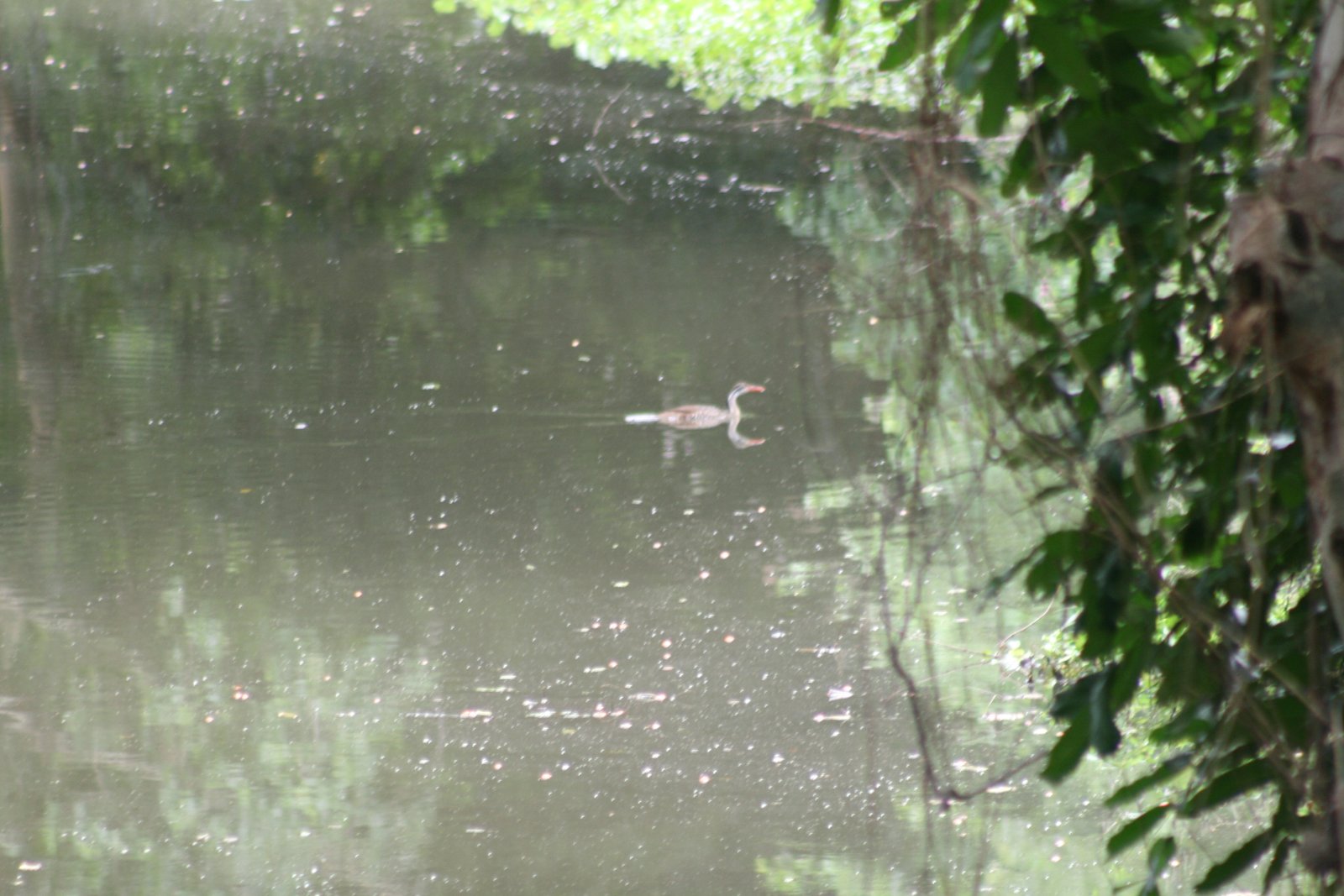
The elusive, mysterious and secretive African Finfoot

The elusive, mysterious and secretive African Finfoot

Leopard Creek has recently been rated amongst the top 100 golf courses in the world by the prestigious Golf Digest magazine and it is surely the wildest top-class golf course in the world, situated as it is alongside the Kruger National Park.

The Crocodile River forms the northern boundary between Leopard Creek and the Kruger National Park and the back nine runs along the river, offering tremendous sightings of all the animals and birds made famous by one of the largest game reserves in the world.

A channel runs off the Crocodile River and flows right in front of the clubhouse, making the verandah of this opulent building an ideal spot for bird and animal spotting. Unfortunately the clubhouse is also extremely hard to access for the rank and file visitor to Leopard Creek, but the good news is that there is a little service road that runs along this channel for a hundred metres or so, before turning up the hill to the 10th tee.

Shaded by luxuriant riverine trees, the road passes right by the water and I always make a point of taking a quiet stroll along this area. It has always seemed to me to be a perfect spot for African Finfoot – which Roberts describes as favouring “quiet, wooded streams and rivers flanked by thick riparian vegetation and overhanging trees” – the very description of my favourite part of Leopard Creek.

And so, on my eighth visit to this special place outside Malelane for the Alfred Dunhill Championship, I finally got my Finfoot.

There in this shady channel I saw the bright orange legs first as the bird stood on the bank and then went into the water, gliding stealthily to the other side of the river.

A hippopotamus was contentedly passing the day between this channel and the main Crocodile River, while a Brownhooded Kingfisher called from high up in the trees and a Malachite Kingfisher hunted from low down on fallen branches close to the water.

Heuglin’s Robin, one of my favourites, also hangs around this area.

Coming back up out on to the golf course, a series of dams is in front of you between the ninth, 18th and 10th holes, with Lesser Striped Swallow flying over and African Pied Wagtail patrolling the banks.

Heading backwards through the front nine, Blackbacked Puffback is calling away and Blue Waxbill are in a sapling on the side of the ninth fairway.

The seventh hole, a par-three, shares a dam with the fifth hole, fringed by Fever Trees, and Spottedbacked, Southern Masked and Thickbilled Weavers were all nesting in the same specimen of this archetypal tree of tropical wetlands, from which gin and tonics (no doubt consumed in large quantities on the verandah of the clubhouse) originated.

Along the stream feeding this dam, a Giant Kingfisher was eating a good-sized fish, while a Greenbacked Heron was flying upstream.

Anywhere on the course, you are likely to see Whitebacked Vultures soaring overhead and Purplecrested Louries flying between patches of thicker bush. Whitefaced Duck are also often flying over.

But the 13th is the signature hole of Leopard Creek, not just because of its great design but mostly because of the dazzling vista it provides over the Crocodile River just beneath the elevated green and Kruger Park just across the way.

Charl Schwartzel when the going was still good

Charl Schwartzel when the going was still good

While sitting there on the final day and watching Charl Schwartzel’s challenge implode in the face of young Brandon Stone’s brilliance, I was able to admire Great White Egret, Purple Heron, Grey Heron, Black Crake, Egyptian Goose, Whitefronted Bee-Eater, African Elephant and Nile Crocodile along the river.

Away from the golf course, Leopard Creek is in an area of typical dense bushveld savanna with Forktailed Drongos, sometimes even perching on low aloes, ruling the day and Spotted Dikkops, marching around the parking lot, at night.


Where is Leopard Creek?


Sightings list

Forktailed Drongo

Spotted Dikkop

Impala

Bushbuck

Whitefaced Duck

Blackeyed Bulbul

Little Swift

Hippopotamus

Brownhooded Kingfisher

Malachite Kingfisher

African Finfoot

Heuglin’s Robin

Whitebacked Vulture

Lesser Striped Swallow

African Pied Wagtail

Blackbacked Puffback

Blue Waxbill

Spottedbacked Weaver

Southern Masked Weaver

Thickbilled Weaver

Giant Kingfisher

Grey Lourie

Greenbacked Heron

Yellowthroated Sparrow

Nile Monitor

Purplecrested Lourie

Great White Egret

Purple Heron

Grey Heron

Black Crake

Egyptian Goose

Whitefronted Bee-Eater

African Elephant

Nile Crocodile

Sombre Bulbul

Pintailed Whydah


  • Recent Posts

  • Archives

  • Thought of the Day

    Revelation 3:15 – “I know your deeds, that you are neither cold nor hot. I wish you were either one or the other.”

    How can you expect blessings without obeying?

    How can you expect the presence of God without spending time quietly before him?

    Be sincere in your commitment to Him; be willing to sacrifice time so that you can grow spiritually; be disciplined in prayer and Bible study; worship God in spirit and truth.

    Have you totally surrendered to God? Have you cheerfully given him everything you are and everything you have?

    If you love Christ, accept the challenges of that love: Placing Christ in the centre of your life means complete surrender to Him.


↑ Top