for quality writing

Ken Borland


Archive for the ‘Uncategorized’


Punda Maria & Pafuri 2

Posted on July 01, 2014 by Ken

Impala ram resting on the Mahonie Loop

My favourite part of Kruger National Park is the far north – around Punda Maria and Pafuri. There is something mystical about this area, it has a very tropical feel with its diverse habitats and rich birdlife, featuring several rarities.

And so it seems entirely fitting that this area is one of two (the other being the Pilanesberg) where I have seen the mysterious Monotonous Lark, a little-known nomad that may or may not be an intra-African migrant because it only ever seems to be seen in Southern Africa in irruptions of breeding birds making their characteristic, persistent “for syrup is sweet” call. There seems to be no pattern to their movements, save for a link to above-average rainfall and even then, they’ll be present in an area in one year and totally absent the next.

It was also fitting that this mercurial bird was the last added to my list of 163 Kruger sightings on this trip.

As one heads out of Kruger Park via the Punda Gate, there is a little detour one can take to Thulamila Koppie, rising 604m above the mixed sandveld woodlands of the Punda Maria area. It’s a great vantage point to look out over the expansive plains to the east and south and it was from this spot that I watched the solar eclipse in 2002.

But the 3km drive to the top of the koppie also takes you through interesting birding habitat with the diverse vegetation featuring bushwillows, Marulas and Tree Mopanes. It’s ideal habitat for Monotonous Lark and sure enough, there they were calling away from the trees in the plain below the koppie.

The Purple Roller, a real lover of woodlands, was there as well and Crowned Hornbill was seen flying over before the turn-off to Thulamila.

The Punda Maria region is famous for its beautiful broadleafed woodlands, flourishing in an area that boasts the second-highest rainfall in the park (650mm per annum; compared to the 700-750mm in the relatively high altitudes of the rolling hills around Pretoriuskop in the south-west).

The Mahonie Loop is a fabulous drive around the hill that hosts Punda Maria camp, with a stunning diversity of trees growing in the sandveld and a concurrent multitude of birds.

Doing the loop counter-clockwise, the Dimbo stream is a profitable early spot. A pair of African Black Duck were in the shallow water, while Black Widowfinch was in the trees above.

There are plenty of Buffalo this far north and Redbilled Oxpecker was in attendance, while African Green Pigeon were enjoying the Jackal Berries. Longtailed Paradise Whydah was present on the south-western side of the loop.

Punda Maria camp is surrounded by Mopane, which is never the richest of birding habitats, so the camp provides an island of woodland habitat and is excellent for birding.

Heuglin’s Robin, resident in the thickets on old anthills, was somewhat frantically calling away and the cute Collared Sunbird were passing through as I returned from the Mahonie Loop. That night a Thicktailed Bushbaby came and visited my campsite, clambering along the trees above me at suppertime.

There is another dirt road to the east of the Mahonie Loop, the S60, which is also a beautiful route, great for birding. The S60 skirts the Gumbandebvu Hill and travels through wonderful subtropical sandveld woodland as well as mature Mopane forests, before reaching the open grasslands around Klopperfontein Drift, where many exciting sightings have been made.

White Helmetshrike is a regular on the slopes of Gumbandebvu, while the grasslands around Klopperfontein produced Western Redfooted Falcon, Dusky Lark, Amur Falcon, Martial Eagle and Browncrowned Tchagra. A Black Crake was pottering around the actual dam, where Diederik Cuckoo were also present.

Wiretailed Swallow on dead tree stump in Luvuvhu River

Beyond Klopperfontein, the undulating tar road (H1-8) takes one towards the sandstone ridges that signal the floodplains of the Luvuvhu and Limpopo Rivers, and Pafuri, probably the most famous birding spot in Kruger Park.

Pafuri is lushly vegetated with acacia woodland grading into fever tree forests and then thickening as one enters the tropical riverine forest.

The area has changed considerably, however, since my first visit in 1998. Since then the 2000 floods and elephant damage have thinned out the taller trees and thicker bushes, and lately the Nyala Drive, heading westwards, has been more profitable than the better-known drive eastwards to Crooks’ Corner.

Redbilled Helmetshrike, Longtailed Starling – a tropical African species that is rare in South Africa but far more common around Pafuri – Redheaded Weaver, Hooded Vulture, Brubru, Woollynecked Stork and screeching Brownheaded Parrots were good sightings along Nyala Drive.

Pafuri picnic site always throws up something interesting though and on this occasion Grey Penduline Tit was with the more common Tawnyflanked Prinia in the undergrowth.

There are some interesting pans north of the Luvuvhu River bridge along the H1-9 and Marsh Sandpiper was in attendance at one of these.

Sightings list

African Black Duck

Little Swift

Common Caco

Egyptian Goose

Leopard Tortoise

Forktailed Drongo

Black Widowfinch

Goldenbreasted Bunting

Redeyed Dove

Blackeyed Bulbul

Blue Waxbill

Cape Turtle Dove

Nyala

Yellowthroated Sparrow

European Swallow

Plains Zebra

Southern Greyheaded Sparrow

Yellowfronted Canary

Redbilled Oxpecker

Rattling Cisticola

Grey Hornbill

Green Pigeon

Lilacbreasted Roller

Paradise Flycatcher

Impala

Laughing Dove

Crested Barbet

Greater Kudu

Crested Francolin

Brown Snake Eagle

Bushbuck

European Bee-Eater

Longtailed Paradise Whydah

Collared Sunbird

Grey Lourie

Redbilled Woodhoopoe

Woodland Kingfisher

Grey Duiker

Blackbacked Puffback

Vervet Monkey

Emeraldspotted Wood Dove

Heuglin’s Robin

White Helmetshrike

Southern Masked Weaver

Blacksmith Plover

Threebanded Plover

Whitewinged Widow

Spotted Flycatcher

Fantailed Cisticola

Western Redfooted Falcon

European Roller

Dusky Lark

Elephant

Yellowbilled Hornbill

Tawny Eagle

Amur Falcon

Swainson’s Francolin

Longtailed Shrike

Melba Finch

Crowned Plover

Cinnamonbreasted Rock Bunting

Bateleur

Whitebacked Vulture

Hadeda Ibis

Wattled Starling

Martial Eagle

Little Bee-Eater

Browncrowned Tchagra

Redbacked Shrike

Greater Blue-Eared Starling

Thicktailed Bushbaby

Burchell’s Coucal

Buffalo

Redbilled Buffalo Weaver

Boomslang

Redbilled Helmetshrike

Natal Francolin

Longtailed Starling

Giraffe

Whitefronted Bee-Eater

Tree Squirrel

Jacobin Cuckoo

Redheaded Weaver

Southern Black Flycatcher

Slender Mongoose

Hooded Vulture

Kurrichane Thrush

Brubru

Striped Cuckoo

Woollynecked Stork

Arrowmarked Babbler

Steelblue Widowfinch

Marabou Stork

Brownheaded Parrot

Whitebrowed Scrub Robin

Cardinal Woodpecker

Warthog

Grey Penduline Tit

Wahlberg’s Eagle

Tawnyflanked Prinia

Yellowbreasted Apalis

Marsh Sandpiper

Black Crake

Chacma Baboon

Carmine Bee-Eater

Wiretailed Swallow

Pied Kingfisher

Wood Sandpiper

Brownthroated Martin

Diederick Cuckoo

Hamerkop

Redbilled Firefinch

Nile Crocodile

Common Scimitarbill

Greenbacked Heron

African Hoopoe

Crowned Hornbill

Purple Roller

Glossy Starling

Monotonous Lark


Letaba to Punda Maria 0

Posted on May 21, 2014 by Ken

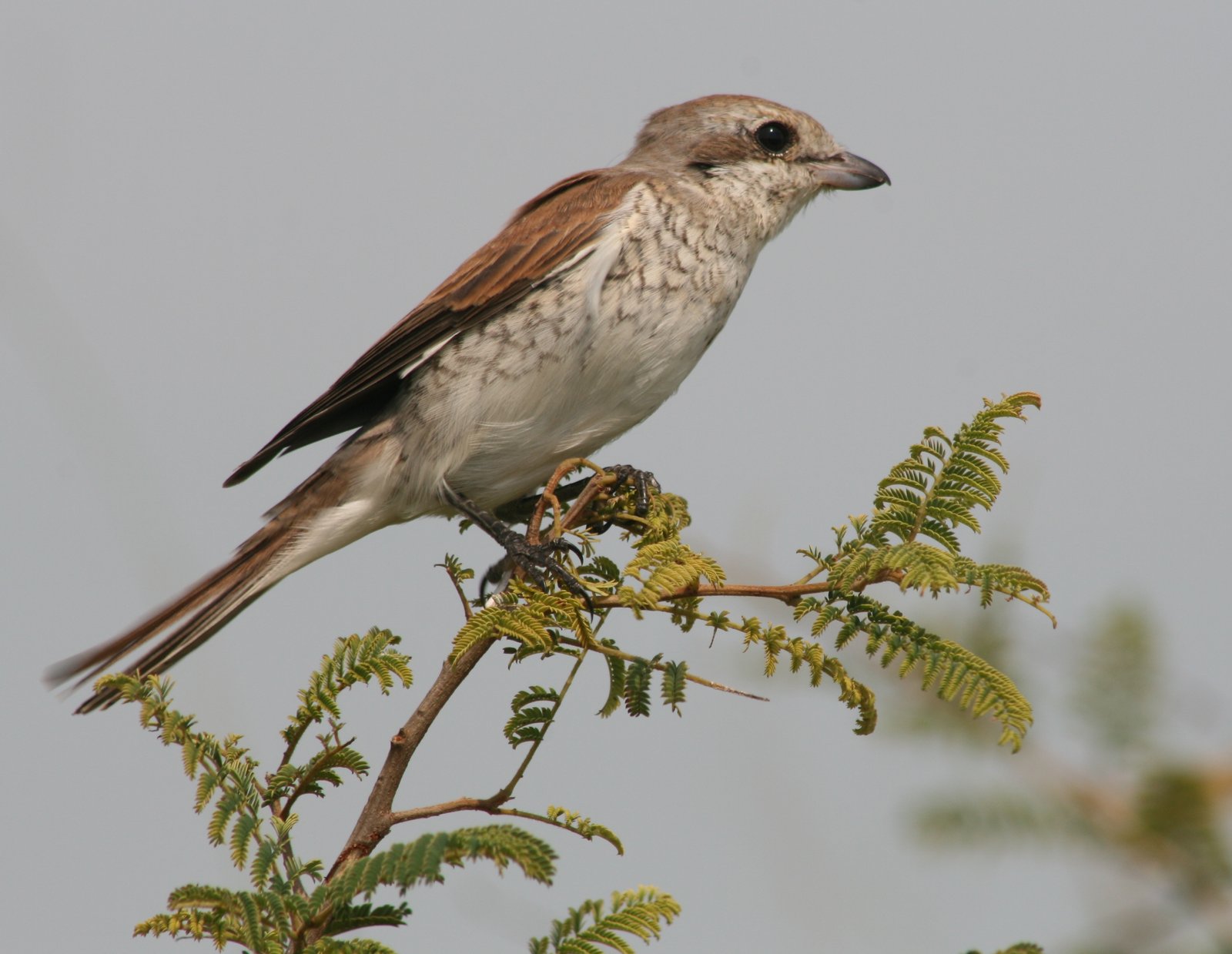
A female Redbacked Shrike

Driving the 177km from Letaba to Punda Maria in a day is a real test of endurance. The far north of Kruger National Park is often incredibly hot in summer and flat mopaneveld stretches on for miles and miles, with birds few and far between.

Generally the birdlife is concentrated along the alluvial floodplains which are well-wooded, especially in the Shingwedzi region, and the mixed woodland on shale, particularly around Punda Maria.

And so it becomes very important to focus as soon as you hit an area that looks promising for birds because, after an hour on the tar road driving through stunted Mopane grassland, you don’t want to miss the sightings that do suddenly materialise.

March 9 was a case in point. Approaching Mopani camp in the middle of the day with the temperature reading 39°, my mind was definitely straying towards the ice-cold Coke I was so lusting for as I neared the turnoff to one of the newer Kruger Park camps.

The Shipandani stream crosses that turnoff, temporarily running parallel to the H1-6, and late summer rains meant there was a fair bit of water pooled up against the culvert. With long grass on the banks and an overhanging tree, it looked a likely spot for something interesting, so I stopped to scan the area carefully, thoughts of much-needed refreshment being put to the side.

And I’m glad I did. Amidst the other more common birds hanging around, I noticed the unmistakable blue flash of a kingfisher …

There being water around, my initial thought was obviously a Malachite, but this kingfisher was too big as it returned to its perch, a dead stick on the edge of the pool. How about a Halfcollared Kingfisher, which I had never seen before in Kruger Park, but which has been uncommonly recorded … ?

But the head was not blue, but a dirty whitish-grey in colour, and then I saw the chestnut belly and so it could only be the even scarcer Greyheaded Kingfisher, only my second sighting of this beautiful bird.

On such a sweltering day, it was unsurprising that this African migrant was bathing and preening. Suitably inspired, I was soon refreshing myself at Mopani camp before pressing on for Punda Maria.

With the waterholes full, there were sporadic patches of exciting bird activity: An excellent patch of flooded grassland around the N’warihlangari waterhole, 20km north-west of Shingwedzi, provided Orangebreasted Waxbill, a very rare bird in Kruger and a special sighting, just my third anywhere.

Eurasian Golden Oriole was spotted dashing along the tree-lined Nkokodzi River heading towards Shingwedzi, a Tawny Eagle was hanging around Bowkerkop and a Striped Cuckoo was calling and moving along the Tsendze River, providing an exciting close-up sighting at the Mooiplaas picnic site just outside Mopani.

The long day began at Letaba camp, which is an excellent birding spot in its own right because it is on the sizeable Letaba River and the woodland is full of well-established trees.

Blackbacked Puffback, Paradise Flycatcher, Yellowbreasted Apalis, Dusky Flycatcher and Redwinged Starling were all seen while packing up camp, while friendly Bushbuck, Tree Squirrels and Dwarf Mongoose also came by.

Driving north out of Letaba along the H1-6, there are several kilometres of river frontage to enjoy and I was able to add Little and Whitefronted Bee-Eaters, Emeraldspotted Wood Dove, Nile Crocodile, Goliath Heron, Black Stork, African Spoonbill and Yellowbilled Kite to the growing list.

As you cross the Tropic of Capricorn, 16km north-west of Mopani, the S144 turnoff to the north-east takes you into dry Mopane scrubveld. Having seen them before in this exact area, I was thinking Redcrested Korhaan could well be the next bird to tick off and hey presto! one male started his distinctive clicking call and was then found sheltering under a bush.

The beautiful Shingwedzi camp was unfortunately closed due to most of it being washed away in the previous floods (which is why my need for a Coke was so great at Mopani!), but a Southern Black Tit was picked up at the turnoff.

The open veld north of Shingwedzi has rank grasslands growing and this is perfect habitat for the Whitewinged Widow. Even better habitat was found the following day, 3.5km north of the S59 near Punda Maria, with hundreds roosting in the long grass there.

The wonderful thing about birding in Kruger Park is, of course, the incredible variety of birds that are drawn to the bushveld. The famous reserve is the centre of activity for more than 500 bird species.

And so, just before the tropical lushness of the N’warihlangari waterhole, one drives through an area of dry, stunted savanna grasssland, overgrazed as summer gives way to autumn, and Chestnutbacked Sparrowlark, a fairly uncommon bird to look out for in the eastern half of the park, made an appearance.

Sightings list

Brownbacked Tree Frog

Blackbacked Puffback

Bushbuck

Blackeyed Bulbul

Paradise Flycatcher

Tree Squirrel

Yellowbreasted Apalis

Impala

Little Swift

Dusky Flycatcher

Redwinged Starling

Dwarf Mongoose

Lappetfaced Vulture

Little Bee-Eater

Emeraldspotted Wood Dove

European Swallow

Blue Waxbill

Common Sandpiper

Nile Crocodile

Greenshank

Goliath Heron

Wiretailed Swallow

Whitefronted Bee-Eater

Hippopotamus

Wood Sandpiper

Blacksmith Plover

Egyptian Goose

Threebanded Plover

Black Stork

Redfaced Cisticola

Pied Kingfisher

African Spoonbill

Grey Heron

Yellowbilled Kite

Namaqua Dove

Striped Cuckoo

Southern Black Flycatcher

Cinnamonbreasted Rock Bunting

Carmine Bee-Eater

Blue Wildebeest

Swainson’s Francolin

Greater Blue-Eared Starling

Redbilled Woodhoopoe

Rattling Cisticola

Cape Turtle Dove

European Bee-Eater

Crested Francolin

Forktailed Drongo

Vervet Monkey

Redbilled Quelea

Southern Greyheaded Sparrow

Lilacbreasted Roller

Wahlberg’s Eagle

Bateleur

Greyheaded Kingfisher

Natal Francolin

Tawny Eagle

Redcrested Korhaan

European Golden Oriole

Southern Black Tit

Whitebacked Vulture

European Roller

Whitewinged Widow

Elephant

Buffalo

Lesser Grey Shrike

Sabota Lark

Redbacked Shrike

Yellowbilled Hornbill

Longtailed Shrike

Arrowmarked Babbler

Laughing Dove

Plains Zebra

Greater Kudu

Giraffe

Grey Hornbill

Grey Lourie

Waterbuck

Wattled Starling

Brown Snake Eagle

Woodland Kingfisher

Glossy Starling

Fantailed Cisticola

Marabou Stork

Blackshouldered Kite

Slender Mongoose

Chestnutbacked Sparrowlark

Orangebreasted Waxbill


Meyer adds Burger, Matfield & Brussow to his plans 0

Posted on May 19, 2014 by Ken

Victor Matfield has stormed his way back into the Springbok squad

Springbok coach Heyneke Meyer on Monday added veterans Schalk Burger, Victor Matfield and Heinrich Brussow, as well as eight uncapped players, to his plans as he announced a 36-man squad to attend a national training camp in Durban from May 25 to 28.

The returns of Matfield – the second-most capped Springbok of all time with 110 Tests – and Burger (68 Tests) will provide an injury-hit South African team with plenty of experience as they head into a challenging series against Wales and another Rugby Championship campaign beyond that.

Hookers Scarra Ntubeni and Chiliboy Ralepelle, prop Frik Kirsten, locks Pieter-Steph du Toit and Franco van der Merwe, loose forwards Arno Botha and Pierre Spies, scrumhalf Louis Schreuder, utility backs Pat Lambie and Gio Aplon, and centre Jaque Fourie are all out with injury.

The 37-year-old Matfield made a controversial return to rugby this year, having last played in the 2011 World Cup, but has performed with aplomb for the Bulls, stamping his usual mark on the lineouts and also showing good work-rate.

With all the other locks in the squad – except for Flip van der Merwe – still making their way in international rugby, Matfield will be one of the adults amongst all the young, talented children and will have an important role in guiding them through the crucial year before the World Cup, which is often a fraught one for Springbok teams.

Schalk Burger can be satisfied with his return to action

Although Meyer is better off in terms of loose forward stocks, the return of Burger, who has shown glimpses of his old high-energy destructiveness for the Stormers, should be welcomed.

“Victor and Schalk have been out of rugby for a long time. They’ve really been in great form recently and the fact that they have not been with the Boks for more than two years has made them hungry for Test rugby yet again,” Meyer said.

“It’s great to welcome them back into the Springbok fold and I know both of them can still add a lot of value to the team with the Rugby World Cup in 2015 looming.

“This is a very big year for us and the players know they will have to step up a gear, be sharp and focused from the moment we get going in Durban. We have 14 very challenging matches ahead in 2014 and it’s imperative that we build on what was a good season last year.

“It’s important that we start building continuity because there are just 18 matches left until the Rugby World Cup starts. But it’s just as important to recognise continuous good form. We also have a number of players struggling with injury niggles or returning from injury which we have to assess.”

Heinrich Brussow will want to show he has the power-game to fit in with Meyer's plans

Meyer has made it clear before that he does not care for public pressure to select anyone, but the inclusion of Brussow will also be welcomed. Whether there is a place for the pocket dynamo in Meyer’s back row remains to be seen, however.

Duane Vermeulen and Willem Alberts are certainties for the number eight and seven jerseys, while Meyer is unlikely to jettison Bath’s Francois Louw (European-based players were not considered for this squad) after his superb displays for the Springboks last year.

Marcell Coetzee, Burger and Siya Kolisi are probably all ahead of Brussow in the queue as well, leaving him and Bulls rookie Jacques du Plessis, and even Cheetahs lock/flank Teboho Mohoje, to fight over scraps.

Meyer has kept the transformation police happy by selecting 10 players of colour, including six Black Africans, while the fresh blood in the squad is provided by centre/wing Damian de Allende, flyhalf Marnitz Boshoff, lock Lood de Jager, wing Cornal Hendricks, wing/centre S’Bura Sithole, flank Jacques du Plessis, lock/flank Teboho Mohoje and prop Marcel van der Merwe.

“A few new players have put up their hands, which is good to see with the first match of the season, against the World XV in Cape Town, only a few weeks away,” said Meyer.

“It’s very encouraging to see a bunch of new players emerging from Vodacom SuperRugby. This camp will provide us with a great opportunity to work with these players before the squad for the Castle Lager Incoming Series is finalised. I am looking forward to work with these players for the first time,” the coach said.

The contentious areas when it comes to the final selection of the squad for the incoming series would appear to be tighthead prop, lock, scrumhalf, centre and wing. Hooker is a worry in that only two have been named – Bismarck du Plessis and Adriaan Strauss – and while their quality is undeniable, Meyer will be terrified of one of them getting injured.

The Sharks front row of the two Du Plessis brothers and Tendai Mtawarira are certain starters, but who the back-up to old warhorse Jannie will be remains to be seen.

The Cheetahs scrum has laboured in recent weeks with Coenie Oosthuizen at tighthead and one hopes that the experiment is called off and the destructive 25-year-old is allowed to return to loosehead, particularly with the rise of the promising Frans Malherbe and Marcel van der Merwe in the number three jersey.

Flip van der Merwe, young star Eben Etzebeth and Matfield would appear to be certainties for the squad, but if a fourth lock is chosen, who will it be? Will Meyer once again call on Bakkies Botha, who seems to have regained the enthusiasm of his teen years while playing in France?

Fourie du Preez was typically influential in his five Tests last year and is surely the first-choice scrumhalf. Francois Hougaard was unimpressive when the Bulls were struggling overseas, but seems to be regaining some form in recent weeks.

Ruan Pienaar was nominated for the European Rugby Player of the Year award last month and will probably be the back-up to Du Preez.

Jean de Villiers was richly praised for both his captaincy and play at inside centre by Meyer last year, but the 2013 SA Rugby Player of the Year could be in for a move due to the return of Frans Steyn after a year of injuries.

Steyn was used exclusively in the number 12 jersey by Meyer in 2012 and it seems clear that Morne Steyn and Johan Goosen will be the Springbok flyhalves this year, so perhaps De Villiers will shift to outside centre to accommodate the 2007 World Cup winner and offer an exceptionally experienced midfield, even with Jaque Fourie likely to be out of action for the entire Test season with an ankle injury.

Willie le Roux looks set to continue as the Bok fullback, there being no other specialist contenders in the squad, while Sharks wing Lwazi Mvovo has deservedly been called up after an impressive SuperRugby campaign.

There is an abundance of outside-back talent for Meyer to choose from, with the classy JP Pietersen joined in the squad by Bulls talents JJ Engelbrecht and Jan Serfontein, the in-form De Allende and Juan de Jongh from the Stormers, Bjorn Basson, Cornal Hendricks and S’Bura Sithole.

Wing Bryan Habana, flank Francois Louw and scrumhalf Ruan Pienaar should all join the squad once they have been released from their European clubs, with prop Gurthro Steenkamp and lock Bakkies Botha also possibly on Meyer’s wish-list.

Where Meyer seems to be heading is the following final squad for the Incoming Series –

  • Fullback: Willie le Roux
  • Wings: JP Pietersen, Bryan Habana, Lwazi Mvovo, Bjorn Basson/Damian de Allende
  • Centres: Jean de Villiers, Frans Steyn, Jan Serfontein, JJ Engelbrecht
  • Flyhalves: Morne Steyn, Johan Goosen
  • Scrumhalves: Fourie du Preez, Ruan Pienaar, Francois Hougaard
  • Eighthman: Duane Vermeulen
  • Loose forwards: Willem Alberts, Francois Louw, Marcell Coetzee, Schalk Burger, Siya Kolisi
  • Locks: Flip van der Merwe, Eben Etzebeth, Victor Matfield, Bakkies Botha/Lood de Jager
  • Props: Jannie du Plessis, Tendai Mtawarira, Trevor Nyakane, Frans Malherbe/Coenie Oosthuizen/Gurthro Steenkamp
  • Hookers: Bismarck du Plessis, Adriaan Strauss

The players who can consider themselves unfortunate to have just missed out on the squad are Ryan Kankowski and Warren Whiteley, the form eighthmen in South Africa after Vermeulen, and Stormers loose forward Nizaam Carr, while Sharks scrumhalf Cobus Reinach and Bulls lock Paul Willemse are stars of the future whose time will surely come.

Springbok training squad: Willie le Roux, JP Pietersen, JJ Engelbrecht, Cornal Hendricks, S’Bura Sithole, Jean de Villiers, Jan Serfontein, Juan de Jongh, Frans Steyn, Damian de Allende, Lwazi Mvovo, Bjorn Basson, Johan Goosen, Marnitz Boshoff, Fourie du Preez, Francois Hougaard, Duane Vermeulen, Willem Alberts, Schalk Burger, Jacques du Plessis, Marcell Coetzee, Siya Kolisi, Heinrich Brussow, Flip van der Merwe, Victor Matfield, Eben Etzebeth, Lood de Jager, Teboho Mohoje, Jannie du Plessis, Frans Malherbe, Coenie Oosthuizen, Marcel van der Merwe, Bismarck du Plessis, Adriaan Strauss, Tendai Mtawarira, Trevor Nyakane.


Bulls out-muscle Stormers to stay in contention 0

Posted on May 11, 2014 by Ken

Flyhalf Handre Pollard kicked 20 of the Bulls' points in an accomplished display

The Bulls used their powerful, cohesive pack of forwards to out-muscle the Stormers and beat them 28-12 in their Vodacom SuperRugby match at Loftus Versfeld on Saturday night, to maintain their interest in finishing in the top six and making the playoffs.

The Bulls had to fight their way back from a 12-0 deficit inside the first quarter, the Stormers using clinical counter-attacking play to punish the home side’s sloppy work at the breakdown, but were in firm control once they eliminated the mistakes from their game.

A dominant scrum allowed a tremendous platform for the Bulls to set up their favourite driving plays, and the lineout was as solid as ever, and the Stormers were left to live on scraps of quality possession, while also generally trying to play from their own territory thanks to the excellence of the Bulls’ kicking game.

To put it frankly, the Stormers had their backsides handed to them and, no matter how positive the attacking intent, you can’t do much with crap ball.

The demolition job was made even more dramatic by the spectacular change in fortunes after the first quarter. The Bulls were scrappy in the first 10 minutes and the Stormers looked in control.

Schalk Burger rolled back the years to play a typically destructive role in the first quarter, but he also showed his skill and nous in setting up the opening try. Fellow flank Nizaam Carr had just made his second breakdown steal in the first 10 minutes, the Stormers quickly shipping the ball wide, and Burger cut inside before offloading beautifully to Cheslin Kolbe on the left wing. That injected the pace required and Kolbe then found centre Juan de Jongh, who sent flyhalf Kurt Coleman racing clear for a thrilling opening try.

The second try was also a direct result of the Bulls not protecting possession well enough in the ruck, with hooker Scarra Ntubeni pouncing on an unattended ball. Carr was once again involved before the ball was sent wide and De Jongh provided a strong finish to put the Stormers 12-0 ahead in the 19th minute.

But fortunately for the Bulls, these breakdown errors were not ongoing. They tidied up their act at that crucial phase and the steady stream of possession was used to batter the abrasive Stormers defence into submission. Eighthman Grant Hattingh, flank Jacques du Plessis, lock Paul Willemse and even Jono Ross carried the ball strongly and centres Jan Serfontein and JJ Engelbrecht were also willing battering rams.

While the Stormers had produced some inspired counter-attacking play off turnovers for their points, the Bulls were clinical in their own methodical way – most times they were in the opposition 22, they came away with points.

The Bulls opened their scorecard in the 23rd minute, the incisive running of Serfontein and Engelbrecht causing the Stormers to stray offsides and flyhalf Handre Pollard, who certainly had his eye in when it came to shooting at goal, slotting the first of his five penalties.

The Bulls were back in Stormers’ territory three minutes later and Pollard, who has donned the number 10 jersey with aplomb since being elevated to the starting line-up, slotted a slickly-taken drop goal.

The home side secured front-foot ball from the scrum with ease and, in the 29th minute, they really shoved the Stormers backwards to earn a penalty, Pollard converting well from the centre-spot.

The Bulls were carrying the ball with more and more confidence by this stage and, after the flood of turnovers in the opening exchanges, the momentum had definitely shifted at the breakdown (consistently getting over the gain-line will do that) and a frustrated Burger was in referee Craig Joubert’s ear more and more.

“In the first 20 minutes, we were able to carry the ball and be influential on attack, but the tide turned and then it became difficult for us. I got a bit worked up and had a few words with Craig, but I tried to calm down and I apologised to him as we went off at half-time,” Burger admitted after the game.

It was a ruck penalty against eighthman Duane Vermeulen for not supporting his own body weight that allowed Pollard to level the scores at 12-12 on the stroke of halftime and the Bulls, having shown great character in clawing their way back to level terms, will remember the second half with much fondness as they clinically shut the Stormers out of the game.

The Stormers, jailed in their own half by the pinpoint kicking of Pollard, scrumhalf Francois Hougaard and fullback Jurgen Visser, were brave and positive, but the generally poor quality of their possession and the physicality of the Bulls meant they were up against a brick wall.

The Bulls made the ideal start to the second half when Serfontein’s lovely dart from the kick-off forced the Stormers to come in from the side of the ruck, and Pollard kicked the penalty to give the home side the lead for the first time, in the 42nd minute.

Pollard stretched the lead to 18-12 in the 55th minute when Vermeulen and Ruan Botha combined to stop a rampaging Dean Greyling, celebrating his 50th SuperRugby game, but the young lock then did not roll away after the tackle.

The Stormers enjoyed a better period of possession thereafter and spent time in the Bulls half. But, in the 66th minute, substitute flank Siya Kolisi, on for Burger, tried to burst on to a flat pass but knocked on.  The ball bounced into the hands of another replacement loose forward, Jacques Engelbrecht, and he quickly fed the ball to the backline.

The resulting try not only clinched the victory but came straight from the Stormers’ own play-book.

Hougaard read the situation brilliantly, putting the grubber through behind the Stormers defence for wing Akona Ndungane to chase. The veteran wing showed great pace as he got there first, hacking the ball further forward and then winning the race to the dot-down as it crossed the try-line.

With Pollard’s conversion, the Bulls’ lead was 25-12 and the win was secure, Stormers coach Allister Coetzee saying afterwards that it was the pivotal moment in the game.

Replacement flyhalf Jacques-Louis Potgieter added a 71st-minute penalty from the halfway line as the Stormers were sentenced to their eighth defeat in 11 matches – Burger summing up their showing when he said: “We brought quite a young and inexperienced team here and we really put the Bulls under pressure at the start. It was a big effort, but the accuracy wasn’t that good.”

Coach Coetzee is right to point out the huge injury problems that the Stormers have, and bringing two very inexperienced locks – 22-year-old Ruan Botha and 20-year-old debutant Jean Kleyn – to Loftus Versfeld meant their engine room was always going to be under pressure. To make matters worse for the visitors, experienced loosehead prop Brok Harris had to be replaced for much of the match and Springbok tourist Ntubeni went off after 55 minutes. Their replacements were rookies Alistair Vermaak, on debut, and Stephan Coetzee.

The Bulls have now climbed to eighth on the log, just two points from the playoff positions, and captain Victor Matfield warned that the same confidence that saw them win the South African Conference last year with nine successive wins is returning.

“The belief is starting to grow and I’m very happy with tonight’s performance, it felt like the Bulls of old. We just squeezed them, gave them nothing and our scrum killed them.

“We kicked long and then got our line up, we were able to get the ball in the right areas and then fight for inches. It was a great effort to come from behind and then we just built our lead. I’m very confident of the future when I look at our young players,” Matfield said.


  • Recent Posts

  • Archives

  • Thought of the Day

    Revelation 3:15 – “I know your deeds, that you are neither cold nor hot. I wish you were either one or the other.”

    How can you expect blessings without obeying?

    How can you expect the presence of God without spending time quietly before him?

    Be sincere in your commitment to Him; be willing to sacrifice time so that you can grow spiritually; be disciplined in prayer and Bible study; worship God in spirit and truth.

    Have you totally surrendered to God? Have you cheerfully given him everything you are and everything you have?

    If you love Christ, accept the challenges of that love: Placing Christ in the centre of your life means complete surrender to Him.


↑ Top