for quality writing

Ken Borland


North-easterly sees Proteas’ prospects go south at Kingsmead 0

Posted on October 11, 2026 by Ken

An ill wind blew for South Africa on the second day of the first Test against Australia in Durban on Saturday. Ken Borland explains the day, with help from Wiaan Mulder and the heroic Matt Renshaw.
The Ball in Play

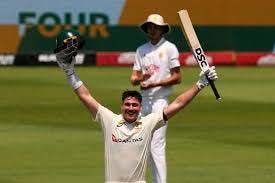
Matt Renshaw celebrates his tremendously well-crafted, determined century, which he took to a career-best 190.

With a north-easterly wind blowing over Kingsmead, the Proteas’ prospects went south on the second day of the first Test against Australia in Durban on Saturday.

Having been reduced to 124 for six midway through the second session of the opening day, Australia managed to stabilise their innings and reach 187 for six at stumps.

On Saturday, with a 9.30am start and the pitch having provided assistance to the bowlers through the first day, as well as the second new ball being due in 14.4 overs, South Africa would have been confident of wrapping up the Australia innings for the addition of maybe 70 runs maximum.

But those who know Durban and Kingsmead know that the wind direction here is crucial to how the pitch behaves. Never mind the mythical effect of the tide coming in or out, with the Indian Ocean just a kilometre away. When the south-westerly blows, it is the cool wind bringing moisture, clouds and rain. The grass on the pitch stands up and the ball swings and seams.

The north-easterly, however, is the warm wind, bringing clear blue skies and hot weather from the Mozambique Channel. The increased temperature sees the grass on the pitch wither and what used to be a snakepit affectionately known as the Green Mamba (a highly venomous snake found along the KwaZulu-Natal coast) becomes a batting paradise.

And so South Africa’s bowlers toiled on the second day. In their way stood Matt Renshaw, a gritty Yorkshire-born Queenslander who played with immense control and determination to score a career-best 190 in 468 minutes, off 397 balls. The epic effort lifted Australia to 390 all out, a highly-impressive comeback from 124 for six and an above-par total that means the Proteas will have to bat very well in their first innings as the pitch is expected to take more turn as the match progresses.

The lower-order stood their ground in support of Renshaw with great application.

Captain Pat Cummins scored 43 as he survived the important first nine overs of the day, extending the seventh-wicket partnership to 86.

Wiaan Mulder had Cummins caught at second slip and then bowled Mitchell Starc for nine with a beauty that pitched middle-and-leg and hit middle-and-off as the left-hander tried to flick the ball through midwicket.

It was 230 for eight, the new ball had just been taken and the Proteas once again seemed on track to have 250-odd to reply to.

Nathan Lyon averages 12.53 with the bat in Africa, but he did score 47 and share a 66-run ninth wicket partnership with Tim Paine in the infamous Newlands Test of 2018. He has caused South Africa frustration with the bat a couple of times, but on Saturday he took it to new levels and, together with Renshaw, broke a Donald Bradman record.

Renshaw made a plan to protect Lyon from strike as much as he could and executed it brilliantly. The off-spinner scored just seven of the first 50 runs they added.

When the partnership reached a hundred, the first time Australia’s ninth wicket has ever done that against South Africa, Lyon had made 17. The previous record was the 78 the great Bradman and Bill O’Reilly put on in Adelaide in 1932.

Eventually, with the tea break 15 minutes away, Marco Jansen fired a yorker into Lyon’s pads to trap him lbw for 27. The partnership had been worth 134 and had taken Australia to 364.
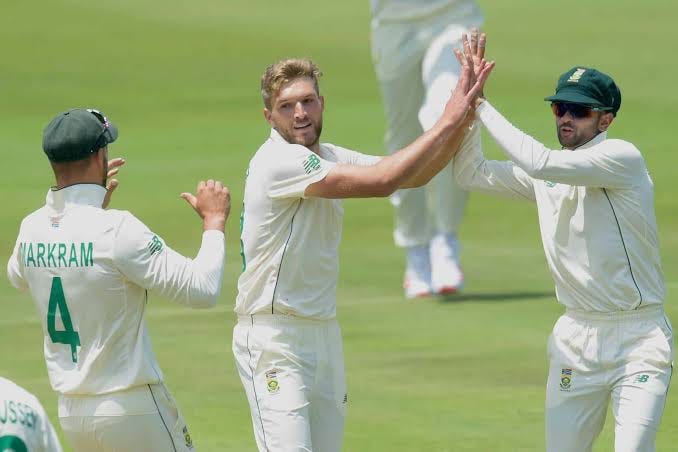
Wiaan Mulder took four wickets for the third time in a Test innings, showing great skill as he swung and seamed the ball.

Mulder, who finished with a four-wicket haul for the third time in his Test career, praised Renshaw’s innings, while also musing that the home side had perhaps not always deployed their fielders in the best places when the left-hander was dominating the strike.

“Renshaw played beautifully, he left really well. He was able to keep the strike, which was really important, and played the situation as well as anyone can. You have to credit him for playing the conditions as well as anyone.

“I don’t think things went wrong for us, it’s just that they played well. We executed most of our plans, maybe we could have bowled a touch fuller, but it was just a good innings to be honest. He left extremely well, with the spongy, steep bounce, sometimes he let it go over the stumps.

“He seemed to get off strike so easily. He had a very different approach to the first four balls of an over and maybe we could have been smarter with the field, that’s something we’ll have to look at. Maybe we could have made it a bit harder for him, but we bowled well and put the ball in the right areas,” Mulder said.

Renshaw, whose innings eclipsed the late Phil Hughes’s 160 as the highest score for Australia against South Africa at Kingsmead, said the aim had been to keep the home side in the field, on a hot day, for as long as possible. Hence there was little need to over-attack and Australia stretched their innings out to 137.2 overs, Renshaw eventually being caught at slip off Simon Harmer, two balls after the tea break that had been delayed for half-an-hour.

“The benefit was keeping them out in the field for as long as possible and their quicks were bowling around 30 overs. I had to play the 4+2 game and sometimes I had to think hard about how to get off strike at the end of the overs, I played some of the weirdest shots I ever have. There was a lot of thinking about how many balls I needed to face and it was tough when the field was spread, I had to try and hit twos,” Renshaw said.

The clouds were just starting to roll in when South Africa, no doubt physically and mentally fatigued from their ordeal, began their reply. The dismissal of Ryan Rickelton, driving loosely at his third ball, and edging the waft to third slip off Josh Hazlewood, looked suspiciously like the after-effects of all that frustrating time in the field.

Aiden Markram (15*) and David Bedingham (12*) found the boundary five times between them with handsome drives as they took South Africa to 27 for one before the umpires mercifully ruled bad light had ended their long day.
Kingsmead’s dull vibe invigorated by Nortje’s return 0

Posted on October 10, 2026 by Ken

How the 1st day of the long-awaited Test series between 2025 World Test Champions South Africa and losing finalists Australia went in Durban.

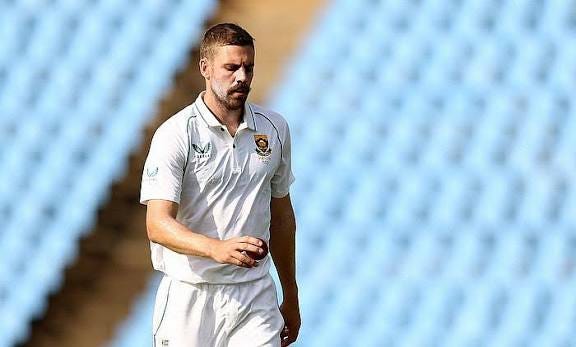
Anrich Nortje bowled with consistent pace, control and skill on the first day.

A dull (in terms of the weather) afternoon in Durban saw Australia reach 187 for six in 65.2 overs before bad light stopped play midway through the final session. Anrich Nortje, playing in his first Test since 2023, had earlier taken two wickets in three balls to plunge the tourists into deep trouble on 124 for six and have the sparse number of South African supporters in sheer delight.

Matt Renshaw (46*) and captain Pat Cummins (33*) showed great determination to keep an excellent Proteas attack out for the remaining hour-and-a-half, but the thrill of seeing a genuine fast bowler return to the Test arena, and enjoy success, had been the highlight of the day.

Having not added to his tally of 70 Test wickets at 26.71 since March 2, 2023, Nortje made a brilliant double strike that left the home side the happier of the two and also allowed him to be full of smiles in the post-play press conference.

“I thought I wasn’t going to get a wicket for the next few weeks the way every ball passed the bat,” Nortje said with the sort of hard-done-by-ness that seems to be hard-wired into fast bowlers.

But after that the 32-year-old was all smiles, delighted just to be out in the middle competing in a format he described as “the best there is”.

“It was good to get the first wicket, it got the blood flowing again, but first and foremost it’s great just to be out there, especially wearing the baggie which was getting a bit worn out just lying at home. Aiden Markram actually said it seems to be part of my game that I don’t get wickets for a while and then I get two very quickly.

“I would have liked to have finished that last spell before bad light and I enjoy the hard graft of coming back for a third or fourth spell, when you have to dig deep,” Nortje said after returning figures of 13.2-2-40-2 on Friday. The way he kept his speeds up above 140km/h spoke to his excellent conditioning.

There are many different excuses given for the poor crowd attendances at Kingsmead, ranging from it being the government’s fault for tanking the economy to the Indian Ocean’s fault for looking so inviting, but it was inexcusable that such a long-awaited series, between great rivals and the finalists of the last World Test Championship, should commence at 9.30am under the bluest of skies but with a backdrop of sheer apathy from so-called cricket lovers.

Marco Jansen and Wiaan Mulder had some unruly moments with the new ball after Australia had elected to bat first, but at least they had a plan. Visiting openers Nic Maddinson and Travis Head are both left-handers, and the tactic early on was clearly to swing the ball back into their pads, looking for lbw.

South Africa should have reviewed when Mulder did just that in the fourth over, but the Proteas declined. Hawkeye showed it was very much out.

Mulder, who moved the ball impressively, did get a wicket four overs later when a delivery swung down leg, Head (9) tried to flick it away but edged the ball on to his thigh, from which it travelled into the gloves of Kyle Verreynne.

Jansen, who also used his ability to extract steep bounce to good effect, removed Maddinson for a 33-ball duck as he threw in a fuller, wider delivery, the left-hander’s eyes lit up and he inside-edged the ball into his stumps.

The debate over Maddinson’s selection has not quite reached the halls of Australia’s government, but it is astonishing. The bare facts are that he turns 35 in December, has not played a Test since 2016 or any red-ball game since March 2025. In his previous three Tests, he batted four times and scored just 27 runs.

On the plus side, Maddinson did survive for 50 minutes in what turned into a probing examination of technique and cha​acter.

From 24 for two, the veterans, Marnus Labuschagne (37) and Steve Smith (25) took Australia to the brink of lunch with a 60-run stand. It looked like the boasting rights for the session would go to the visitors.

But with the last ball before lunch, Mulder managed to nip a delivery into Labuschagne’s pads, the South African-born player trying desperately to get outside the line of off-stump, but his review showing he had just failed (umpire’s call).

Three balls after lunch, Mulder was in the gully to snaffle an edge from Smith’s bat off Jansen, the tall left-armer having thundered a lifter into his gloves the previous delivery.

Alex Carey (14) provided some stabilisation with Matt Renshaw for the next hour, before the return of Nortje and his dramatic one-two.

Carey was removed by a beautiful delivery – perfect length, Carey did not get forward and then the ball moved away and across the left-hander, Markram taking the catch at second slip.

Beau Webster clipped his first ball through midwicket for four, but his second saw him trying to defend well outside off-stump, the delivery straightened and he was caught behind. Umpire Richard Kettleborough, who had a tough day, ruled not out probably because the bat had hit the pad, but another excellent review showed the ball had found the other edge of the bat too.

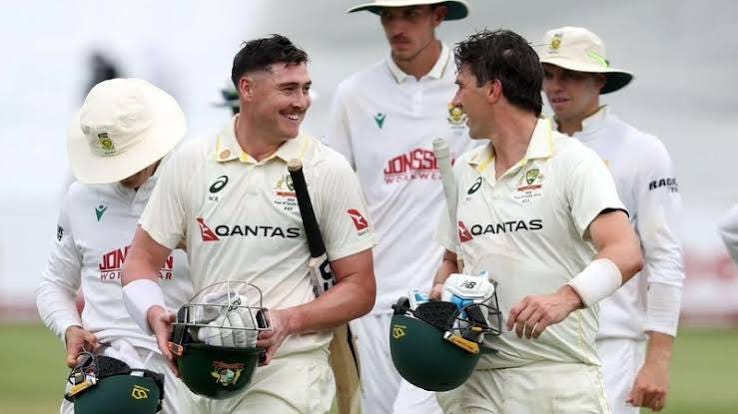
Matt Renshaw (left) and captain Pat Cummins are all smiles after their unbeaten seventh-wicket stand of 63 took Australia through to early stumps due to bad light.

How Renshaw and Cummins progress on the second morning will decide whether Australia have capitalised on a good toss to win.

Nortje has made a decision of his own during his lengthy injury absences. Just like getting a new haircut for your first day back in the office, he is modelling a slightly new action.

“After the T20 World Cup last year and the IPL, my action wasn’t looking great. When I compared it to old footage I could see how bad it was, in terms of my action, my angles and the flow of my arms.

“So I decided to make it right so I could be more consistent and help my body to prolong things. I decided that I had to change things up, I couldn’t go back to what I was doing in 2020 otherwise muscle memory would just take over again and I’d be back where I was.

“So I’ve been working on a new action, the angles of my run-up, my jump and how my arms flow. It might look the same but it’s not, technically it’s slightly different. My action is always a work in progress, I’m never 100% satisfied, but it feels better than ever and I’m very happy with where I’m at,” Nortje said.

And so he should be. As should the Proteas after a successful opening day of the series.

A bloodbath & a Steyn on SA rugby: NZ in Durban 0

Posted on August 11, 2026 by Ken

An All Blacks battering ram at Kings Park …

The last time the All Blacks played in Durban was on October 8, 2016, and the final round fixture of what had been a disappointing Rugby Championship for the Springboks began positively enough as Morne Steyn kicked two penalties to claim an early 6-0 lead.

What followed was an absolute bloodbath as New Zealand slaughtered the Springboks 57-15, inflicting the then biggest ever defeat in terms of points conceded on their greatest rivals. The visitors scored nine tries and the hosts zero, with Steyn’s five penalties being their only, sorry points.

The sense of depression over Kings Park was huge and even the famous outer fields after-match parties were relatively muted. A side note on a personal level is that it was the first Springbok Test my wife watched live, at the stadium. Although she remains a fan and will watch their games at home or at the pub, she has not returned to a stadium.

It was an ugly stain on the Springboks and coach Allister Coetzee struggled on for another year, ‘improving’ on the biggest defeat record by losing 57-0 to the All Blacks in Albany. The Rassie Erasmus era from 2018 has seen those bloody memories gradually fade and South Africa can now claim to have the upper hand in Rugby’s Greatest Rivalry, having won five of their last six meetings.

But that 57-15 scoreline is close to what I expect to happen when New Zealand play the Sharks at Kings Park.

Sharks rugby is in the doldrums, much like Springbok rugby a decade ago, having failed to make the playoffs of the United Rugby Championship last season. And coach JP Pietersen, whose 70th and final Test was at the end of 2016 against England at Twickenham, has named a largely inexperienced side. Injuries have forced his hand in many cases, but the absence of players like Bongi Mbonambi, Jaden and Jordan Hendrikse and Makazole Mapimpi is still shrouded in some mystery.

Of the 23 who will run out to face the All Blacks at Kings Park on Tuesday night, only seven can probably feel confident that they will be involved in the first-choice URC squad for the coming campaign – Vincent Koch, Phepsi Buthelezi, Emmanuel Tshituka, Vusi Moyo, Jurenzo Julius, Ivan van Zyl and Luan Gilliomee.

The 44-year-old former All Blacks legend Ma’a Nonu has been a controversial selection on the bench, having been appointed as a high-performance mentor for the Sharks last month.

But the injury curse continues to plague Pietersen as two key players were late withdrawals from the Sharks team the day before the game – young lock Emile van Heerden, who was their player of the season in the 2025/26 URC, and Springbok utility forward Vincent Tshituka.

“We’ve had a bit of a run of injuries, which is understandable considering we are midway through our pre-season. We have a few props out and there are lock issues as well. But the young boys have got youth and energy on their side and they will definitely show that and fight too. They’ll give it a good go and be competitive for the full 80,” Pietersen said yesterday.

“It’s the strongest team we could put out and it’s going to be a great test for them, youth versus experience, and it should be a great contest against a high-quality team. The occasion will be massive, facing the haka, that’s what players dream of. They can make memories.

“Ma’a Nonu’s name and what he has achieved says it all. He has helped the younger players with how they prepare for the game and their skill sets. He’s also given them a feel for what the All Blacks may give us, he’s given them a good picture.

“He’s slotted in like he has been here a long time. It will be emotional for him because it’s the first time he’ll play against the All Blacks. He’s got the experience, with our younger centres Murray Koster and Jurenzo Julius starting, and our other centres are not available,” Pietersen said.

One area where the Sharks could trouble New Zealand is in the aerial game, especially if the All Blacks back three misses as many contestables as they did in the opening tour match against the valiant Stormers.

The Sharks are used to the humidity of Durban making the ball slippery, but this time it’s a big cold front and rain which will provide even trickier conditions.

“Durban is always humid and the ball is slippery, so we are prepared for it,” Pietersen said. “I think both teams will adjust and there will be more kicking. The All Blacks pride themselves on ball-possession though, so it’s going to be interesting to see how they hold on to the ball in those conditions … “

Flanker Luke Jacobson will captain the All Blacks against the Sharks and he said they expect another aerial bombardment.

“We know how South African teams play – maul, scrum and an up-front battering. We took some awesome lessons out of the Stormers game, it gave us a great taste of what we’re going to get on this tour. We haven’t had a whole lot of time to preview the Sharks, but we know they’ll be up for the battle, they’ll be looking to play their best rugby.

“We expect to be kicked on again, the Sharks have a really good kick-and-chase game, and we’ve put a big emphasis on the outside backs and how the other players work off the ball. You also have less time in the rain and the defences will be up higher. But that’s what we train for,” Jacobson said.

The Stormers produced a top-class display against the tourists and still fell 17 points short. A powerful set-piece, a focus on lineout drives and a strong kicking game were all part of a highly-competitive showing. But the Cape Town powerhouses fielded a URC-strength side, with five Springboks in the pack.

The Sharks have a couple of internationals starting and another pair on the bench in Nonu and scrumhalf Ivan van Zyl. But they are up against what could be a shadow Test side, with the first clash against the Springboks looming on August 22.

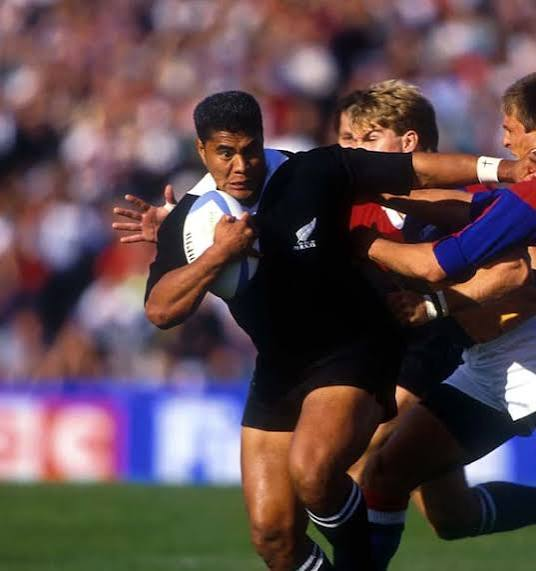
It is the first meeting between the All Blacks and the Black-and-Whites since 1992, when New Zealand were in South Africa to celebrate the return from isolation. South African rugby were in for a rude awakening during that tour and a Natal team that went on to dominate the decade locally, were beaten 43-25, with a rampant Va’aiga Tuigamala [PICTURED ABOVE] battering them relentlessly on the wing.

I was in the stands that day for my first view of the All Blacks in the flesh, having been dazzled by watching Bruce Robertson and Sid Going on TV in 1976. A great respect for the All Blacks was born that day, and I expect a callow Sharks team to be taught a lesson this evening.

3 years of ‘starving’ ends for Jantjies as he lines up for Boks again 0

Posted on July 19, 2026 by Ken

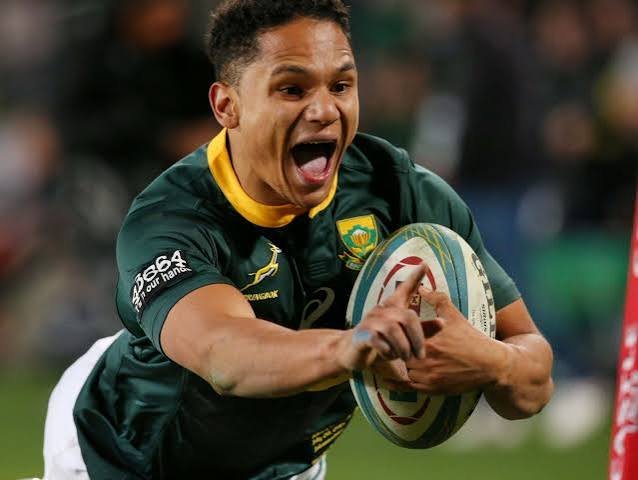
Herschel Jantjies scored his 6th Test try as he returned to the Springbok team for the first time since 2023.

When Herschel Jantjies said returning to the Springbok team that played against Wales on Saturday in Durban “felt like my debut”, it was not the throwaway line it often is when players want to express their gratitude for another chance at international level.

And Jantjies took advantage of the opportunity, coming off the bench in the 51st minute and scoring a try in the 63rd minute as South Africa won 43-0 at Kings Park.

The 30-year-old scrumhalf last played for South Africa on August 5, 2023, coming off the bench against Argentina in Buenos Aires as the Springboks won 24-13 in their first warm-up match for the World Cup.

In what Jantjies admitted was a “heartbreaking” call, he did not, however, make the World Cup squad and has been in the wilderness up until this year’s Nations Championship. Little wonder then that he likened his absence to being deprived of life-giving food.

“It’s like I’ve been starved for three years and it feels like my debut all over again this weekend,” Jantjies said during the week. “It’s been an amazing up-and-down journey since that last game against Argentina, and I also moved clubs from the Stormers to Bayonne, which was a hard decision.

“So I’m very grateful to be back. I know my game is not perfect, I know what my work-ons are, sometimes that’s even things you are good at. And the work doesn’t stop now because I am back here with the Springboks. It means I do even more work, I need to work harder to stay here and make sure I’m in contention for the Greatest Rivalry Tour against the All Blacks.

“It was unbelievably heartbreaking to miss out on the 2023 World Cup and I still remember the squad announcement when coach Rassie put the names on a board in the team room. Obviously it wasn’t lekker to not be on the list, but the guys who were in the group were next level. The guys chosen as scrumhalves were all amazing players – Faf de Klerk, Grant Williams, who can cover wing as well, Cobus Reinach and Jaden Hendrikse.

“Rassie did come to me afterwards and said I mustn’t think it’s the end of the world. I allowed myself time to grieve – but not too long – and later I understood that he meant I must work harder to bring my game and myself to the pitch,” the 2019 World Cup winner said.

Fellow scrumhalf Embrose Papier has been out of the Springbok picture for even longer and Jantjies said the Bulls star, who returned to the Green and Gold in last weekend’s win over Scotland, has been an inspiration.

“Embrose last played for the Springboks eight years ago, so he has been an inspiration – he didn’t give up, so why should I? And then to play the way he did, he had a really good game. Imagine the nerves he had, it just makes me want it even more.

“It’s about making sure I make the right decisions. It’s up to myself to make it work and there are no guarantees. But being back in the Springbok squad has reignited the spark. I’m not personally competing with Embrose because I can’t just beat one guy. There’s still scrumhalves like Morne van den Berg and Jaden Hendrikse who aren’t even here. I can’t spend time worrying too much about the competition, I just need to focus on myself,” Jantjies said.

So how have the Springboks changed in Jantjies’ time out of the picture?

“From the outside, you can tell the Springboks have become an all-court team. In 2019, people would say South Africa just kicked and mauled and used their scrum. But now, if I had to play against the Springboks, I wouldn’t know where to focus to stop them. Coaches like Jerry Flannery, Tony Brown, Felix Jones, Rassie Erasmus and Mzwandile Stick are all megaminds.

“And the depth is incredible, and not just at scrumhalf, it’s in any position. I’ve been amazed to see the growth and evolution in the team since 2019. There’s tight competition for places, so you can’t take any single moment for granted,” Jantjies said.

Given New Zealand’s recent struggles and Ireland’s waning, unconvincing performances, France is shaping as the biggest threat in next year’s World Cup. Jantjies said part of the reason for that is the rude health of the French domestic game.

“It wasn’t an easy decision to leave the Stormers because that is home. I left on 98 caps as well, so hopefully one day I can come back and complete the one-hundred. But from a personal point of view, it has definitely helped my game, as well as allowing myself and my family to explore a different part of the world.

“It’s a different system of rugby over there and I’ve been able to pick the brains of international veterans at Bayonne like Manu Tuilagi and Maxime Machenaud. I’ve really learnt the French way of playing. The way they play speaks to me, it brings out the best in me, I’m able to display myself.

“You always play well off confidence and preparation creates that. After one or two good games in France I was able to remind myself of that. They’ve all been so welcoming at Bayonne and I can just play my game.

“French rugby is a different league and I really feel my game has improved. The season is so long and you are thrown in the deep end when you play away from home with the Academy boys. But it teaches you to adapt and learn on the fly. A scrumhalf like Maxime, adding to what is already in his arsenal at the age of 37, just shows amazing mindset,” Jantjies said.

  • Recent Posts

  • Archives

  • Thought of the Day

    Colossians 3:13-14 – “Bear with each other and forgive whatever grievances you may have; forgive as the Lord forgave you. And over all these virtues put on love, which binds them all together.”

    “When the Holy Spirit lives in you, you reflect the qualities of Christ in your life. Love and courtesy are basic characteristics of the Christian life. … If Chris lives in you, you will be kind and patient toward others.

    “A person who is truly courteous is humble, … His attitude is the same regardless of whether he is talking to kings or beggars. He treats everyone alike, no matter what race, colour or creed they are. He rejoices in making the path through life easier for others to travel.

    “It is impossible to say that you love and serve God while at the same time treating your neighbour with contempt and disrespect.” – Solly Ozrovech, A Shelter From The Storm


↑ Top