for quality writing

Ken Borland


Titans – and SA cricket – owe an inestimable amount to ‘Yogi’ 0

Posted on July 16, 2018 by Ken


By a quick calculation, former Northerns cricketer Anton Ferreira has contributed more than 40 years of service to cricket in the province and in South Africa, so it was entirely fitting that the Titans franchise should pay tribute to him when they launched their new refurbished president’s lounge at SuperSport Park on Thursday night.

Ferreira, a quality all-rounder who would go on to represent South Africa in unofficial limited-overs matches in the 1980s, was born in Pretoria and made his debut for Northern Transvaal in 1974. When he retired in 1992, he held the record for most appearances for the province (93 first-class games) and the most runs scored for Northern Transvaal (4290 in first-class cricket).

Ferreira was one of the key figures in the rise of Northern Transvaal from the B Section to A Section contenders in the early 1980s, also taking 235 wickets at an average of 26.91 with his muscular pace bowling.

After his playing days, which included an eight-year stint with Warwickshire, where he was immensely popular, Ferreira went into coaching and just kept on contributing. He initially made his mark at junior and first-class level (with Transvaal) and then took the South African U19 team to two junior world cups. In 2000, he was appointed Cricket South Africa’s director of coaching, which involved a shift into coaching the coaches.

This month, with his job description having evolved into coaching education manager, Ferreira finally retired from CSA, although he is still involved in cricket on a consultancy basis, currently helping the Africa Cricket Association.

“Yogi has done it all in cricket, he has made an incredible contribution to the game, and was one of the people who laid the foundation for our current success as a franchise. What he has done for cricket in this area and around the country during his 18 years with Cricket South Africa has been phenomenal and his passion for the game is what sets him apart. And it was all done without any tendency for self-promotion, you won’t find a more humble, down-to-earth man,” Titans CEO Jacques Faul said in paying tribute to Ferreira.

A typically modest Ferreira said he can never repay the game for all it has given him.

“I am humbled and I can never repay the game for all the wonderful enjoyment it has given me. I learnt, as a young boy, about the game from Northern Transvaal legends like Denis Lindsay, Jackie Botten and Tiger Lance and they taught me about enjoying the pleasure of risk,” Ferreira said.

Ferreira will certainly be missed by Cricket South Africa, but someone with his passion for the game is certainly still going to be around, bringing a smile and wonderful insight to cricket.

Time for club rugby to fix this broken system 0

Posted on June 28, 2018 by Ken


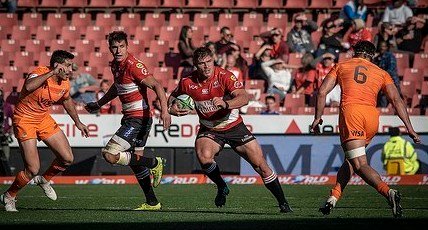
This has been a season of renewal for the Bulls and one of the fresh faces to have really come to the fore in SuperRugby has been loose forward Marco van Staden, a man of frenetic energy, great physicality and no little skill in doing his ball-pilfering job at the rucks.

A couple of the writers who regularly cover the Bulls were fortunate enough to get to interview the 22-year-old recently and he revealed that he played no provincial schoolboy rugby. This is probably largely due to the fact that he went to Hoerskool Bekker in Magaliesburg, not one of the traditional rugby powers.

He has made it this far – now being rated as one of South Africa’s most promising young forwards – thanks to his single-minded determination to fulfil his dream of being a professional rugby player and a bursary to study sports science from the University of Pretoria. Van Staden graduated last month and is the exception to the rule when it comes to how rugby players move through the development pipeline.

This got me thinking about the numerous, who knows how many, talents that fall through the cracks in South African rugby because of our obsession with a handful of elite rugby schools and provincial U19 and U21 competitions and the Varsity Cup.

Our results whenever we get to play against other countries – whether in the Pro14, SuperRugby or at Springbok level – show that our rugby is not well. The main reason for that is the terrible structure of our game. We desperately need a system that includes as much as possible of the undeniable talent that comes flooding through every year.

Instead, our rugby is elitist and there are barriers everywhere. It starts at school level where a few elite schools just get richer and richer through the ridiculous amount of attention that is lavished on them. Just turn on the rugby channel and you are very likely to be watching a schoolboy game.

These youngsters are fawned over from a young age and if you didn’t go to the ‘right’ school then chances are you won’t be playing in Craven Week, which means you won’t get snapped up by a province or university; in other words you are out of the system, generally for good.

Having been taught win-at-all-costs rugby at school level, to the detriment of skills development, these cloistered kids become professional rugby players at the age of 19, big fish in a small pond just going to another small pond. Many of them play in a Varsity Cup that shares little resemblance to the sort of rugby they will need to play if they are going to make it with the Springboks.

That rugby is being jealousy guarded as the preserve of a few was rammed home by two recent incidents.

Wanderers U21 players laid a complaint of vicious racism and assault against Roodepoort, with the disciplinary hearing held on May 9 by the Golden Lions Rugby Union. Seven weeks later and this issue has still not been resolved.

If South African rugby wants their sport to be played and enjoyed by most people in this country then incidents like this cannot be tolerated. If a blind eye is turned to what happens at club level, SA Rugby are discarding the probable solution to their structural crisis. By growing a healthy club rugby culture between the junior and professional ranks, there will be a pipeline that provides opportunity for way more talent.

But this lack of inclusivity is even seen at school level. Hilton College and Paul Roos (still sponsored by a Steinhoff subsidiary) fielded lilywhite teams in their Premier Interschools matches against Maritzburg College and Grey High respectively. Encouraged by blanket television coverage, they are allowed to get away with this gross dereliction of duty.

Both those schools spend a fortune on recruitment, so it is obvious making sure their teams reflect the demographics of our country by obtaining Black talent does not even register on their radar. And these are the schools which are meant to be preparing our children for a future South Africa!

Proteas’ ghosts set to return with eerie similarities to 1999 World Cup 0

Posted on June 27, 2018 by Ken


South Africa’s 2019 Cricket World Cup fixture list will have some eerie similarities to their infamous 1999 campaign in England, according to a report on the CricInfo website on Wednesday, with the ghosts of Edgbaston combining with their tournament nemesis.

The schedule, which the International Cricket Council board will deliberate over in Kolkata on Thursday, sees South Africa enjoying the honour of playing the opening game of the tournament, against England at the Oval, on Thursday, May 30. It is the same venue at which they beat the hosts by 122 runs in the previous World Cup held in England.

But after that matters get scary with history repeating itself with South Africa once again playing against Australia in their last match before the knockout round, on Saturday, July 6, with one of the semi-finals scheduled for Edgbaston in Birmingham, the scene of their notorious tied semi-final in 1999 that eliminated them from the tournament and created shockwaves that seemed to affect them in every World Cup thereafter.

The Proteas will also have to take on New Zealand, the team that has knocked them out of the last two World Cups, at Edgbaston on Wednesday, June 19.

Although there is a reasonable gap of three-to-five days between all the other Proteas’ games, the proposed schedule states that there will be an awkward eight-day gap between their match against Sri Lanka at Chester-le-Street on Friday, June 28, and their crunch clash with defending champions Australia. That match, as well as their June 15 game against Afghanistan in Cardiff, will be day/night affairs, while England, India, Pakistan and Sri Lanka will not play any day/night games in the round-robin phase.

SA fixtures: Thursday, May 30 v England (Oval); Sunday, June 2 v Bangladesh (Oval); Wednesday, June 5 v India (Southampton); Monday, June 10 v West Indies (Southampton); Saturday, June 15 v Afghanistan (Cardiff); Wednesday, June 19 v New Zealand (Edgbaston); Sunday, June 23 v Pakistan (Lord’s); Friday, June 28 v Sri Lanka (Chester-le-Street); Saturday, July 6 v Australia (Old Trafford).

The John McFarland Column: Treacherous conditions play big part in Boks’ downfall 0

Posted on June 26, 2018 by Ken


Obviously the weather dictated the way the third Test between the Springboks and England was played at Newlands last weekend and the fact that it was very wet could be seen by the way the Impi warrior slipped at the start of the game.

When conditions are very treacherous like that then it becomes an arm-wrestle and there were a lot of box-kicks from scrumhalf. England’s were far more accurate, with Faf de Klerk kicking the ball further but Ben Youngs’ kicks were more contestable, and the Springboks dropped quite a few of these.

England were also quite clever in naming Mike Brown on the wing but he played fullback on defence, he was interchangeable. He fielded most of the high balls and is a bit heavier and more robust than Elliot Daly. Taking high balls is Brown’s strength and he became more and more comfortable under them as the game went on.

The inaccuracy of the Springbok kicking game was their one big problem, but they also played an adventurous attacking game in the wet . Elton Jantjies did not have his best Test, but you have to credit England for putting him under pressure. Some subtle late hits meant he always felt the heat and it upset his rhythm. All the targets were on him and Nathan Hughes was always directly right on him. And when England carried the ball, the first hit was often on Jantjies and the second runner close which was why they gained momentum through direct simple two-phase attack.

England again defended the rolling maul very well and the Springboks’ drive did not function as well as it did previously. The English were able to separate the supporter from the jumper so the maul could not get set and they could not get any momentum. The Springboks also lost a couple of lineouts through poor calls.

With the scrum not able to function at its best either, there was no real set-piece platform, which made it difficult for Jantjies as Erasmus himself alluded to.

The penalty count against the Springboks was also very high, which is not usual for teams under Rassie Erasmus, they are normally well-disciplined. There were things we’ve never seen before at the breakdown and they were really given a lesson there by England, who won many turnovers because they were able to isolate the carrier and get over the ball. Tom Curry made some good steals and because of the wet it brings the slower guys into the game. On the highveld, England weren’t quick enough and could not get over the ball often enough.

There were a lot of positives from the series in terms of transformation, but the negative is that this was one of our worst periods of June internationals. This year the Springboks won just two of their four midyear Tests, 50% is well below average.

Both defeats came when conditions were not perfect, which speaks to the Springboks failing to adapt to conditions that were outside their comfort zone.

In the whole period from 2012 to 2015, the Springboks only lost two games against the north which was an exceptional record. So the Northern Hemisphere have definitely improved as we can see by England’s results and Ireland winning in Australia. The margins were very tight in both series and all three Tests were on a knife-edge.

In the wet, both defences were more secure than they had been before in the series and both the tries at Newlands came from grubber kicks, a perfectly-executed one by Warrick Gelant and England’s try set up by Danny Cipriani. Because of that, one needs to look at where the fullbacks were?

The other positives for the Springboks were that they showed tremendous character to come back from big deficits in their two wins and Duane Vermeulen’s form was outstanding. Siya Kolisi’s captaincy and the fact that the team was so transformed has laid down a marker, which is why the long-term contract for Erasmus is so important, it gives him the luxury of having time to build something special.
RG Snyman has also added really well to the lock stocks, he’s very explosive at the front of the lineout, making a nuisance of himself, and South Africa’s set-pieces as a whole were good in the first two Tests and the attack has been really good in both highveld Tests when they have shown a real willingness to have a go.
There are a few weaknesses that the Springboks need to fix though.

Their backline defence out wide and the connection between 13 and both the two wings and the fullback needs work, as does their attacking breakdown, where they were badly exposed in this last Test. They also need to handle the high ball better, especially with Tests against Australia and New Zealand coming up. England have a new attack coach, so it would have been a priority to get his ideas in place – scoring tries and keeping ball in hand – which is possibly why the tourists did not use this tactic more, until the weather forced them to in Cape Town.

The Springboks now turn their attention to the Rugby Championship, where they come up first against Argentina. They can possibly try a few combinations because the Pumas have had a really bad run which has seen coach Daniel Hourcade replaced.

One year out from the World Cup and Australian sides have also struggled in SuperRugby and the Wallabies lost to Ireland, so South Africa are actually in a good position going into the tougher championship having given a large number of new caps experience of international rugby 15 months out from the World Cup.


John McFarland won three SuperRugby titles (2007, 09, 10) with the Bulls and five Currie Cup crowns with the Blue Bulls as their defence coach. In all, he won 28 trophies during his 12 years at Loftus Versfeld.

He is currently the assistant coach of the Kubota Spears in Japan and was the Springbok defence coach from 2012 through to the 2015 World Cup, where they conceded the least line-breaks in the tournament and an average of just one try per game.


  • Recent Posts

  • Archives

  • Thought of the Day

    Galatians 5:22-23 – “But the fruit of the Spirit is love, joy, peace, patience, kindness, goodness, faithfulness, gentleness and self-control.”

    The fruit of the Spirit are elements of the character of Christ and we should have the constant desire to become more and more like Christ in thought and deed. But what seems impossible for you becomes possible through Jesus. In him, we are filled with love, joy, peace, patience, kindness, goodness, faithfulness, gentleness and self-control.


↑ Top