for quality writing

Ken Borland


Whatever they say, Lions prove travel is hard & territory is vital 0

Posted on July 29, 2017 by Ken


Whatever anyone may say, there are still two inviolable truths that apply in rugby – travel is hard and territory is vital – as the Lions proved in their remarkable 44-29 win over the Hurricanes in their SuperRugby semifinal at Ellis Park on Saturday.

It was an incredible victory because the Lions were trailing 22-3 after half-an-hour. Whatever mistakes they made, under the immense pressure of a Hurricanes side that was in their faces, were punished by the visitors, whose every touch turned to gold.

But a try just before halftime, prop Jacques van Rooyen carrying a hapless defender with him as he barged powerfully over the line, gave the Lions hope and, more importantly, showed them how to play in the second half.

The try had come after a penalty was kicked to touch and a couple of lineout drives had the Hurricanes back-pedalling. It was noticeable that flyhalf Elton Jantjies was twice pushed back from over the line when he tried to go it alone, but give the ball to a big, strong forward to carry and it was a totally different story.

The Lions had tried to beat the Hurricanes at their own game in the first half, taking quick tap penalties and spreading the ball wide, and they were being destroyed.

But, to their immense credit, those plans changed in the second half.

There was a much greater emphasis on territory, with the big boots of wing Ruan Combrinck and fullback Andries Coetzee playing a key role, they drove from the lineout and used the set-pieces to get the Hurricanes on the back foot.

As the altitude and travel kicked in, the Hurricanes wilted and they barely fired a shot in the second half, all the momentum going the Lions’ way.

The Hurricanes are absolutely ruthless on turnover or openfield ball and, after Jantjies had kicked an early penalty set up by the forwards, the visitors quickly reminded the Lions of that fact.

A pass from Jantjies missed scrumhalf Ross Cronje on a wraparound move and Hurricanes halfback TJ Perenara twice kicked the ball through before winning the race for the touchdown.

But the Hurricanes are also extremely efficient at creating tries and a turnover from impressive eighthman Brad Shields enabled them to do just that in the 11th minute.

It was a disappointing defensive read from the Lions after the lineout, with too many defenders bunched in midfield, allowing flyhalf Beauden Barrett to come roaring through a big hole on the wraparound, and then freeing wing Wes Goosen on the outside for the try.

On the half-hour, there was a particularly poor moment of bad decision-making by the Lions as they were awarded a penalty inside their own half, but instead of kicking to the corner and squeezing the Hurricanes, they played into their hands by taking a quick tap and trying to run.

There was a hint of Cronje being played at the ruck as lock Sam Lousi knocked the ball out of his hands, but there was no doubt about flank Ardie Savea’s finishing ability as he pounced on the loose ball and roared away.

There was an early chance in the second half for the Lions to make amends, as they won a penalty. This time they set the lineout and then a midfield ruck, which created some space on the left. Cronje, who handled with aplomb the obvious pressure there was focused on him at the breakdowns, dived over from a ruck close to the tryline.

Jantjies, who put the disappointment of his poor goalkicking against the Sharks in last weekend’s quarterfinal behind him by nailing a solid six-from-eight against the Hurricanes, added the conversion and suddenly the Lions were just 17-22 behind and one could sense the momentum shift.

If there is one criticism of the Hurricanes side, it would be that they are not the most patient side and, with the Lions bossing territory through the boots of Combrinck and Coetzee, the frustrated visitors tried a dinky little chip kick from their own territory.

It was gathered by Combrinck, who burst into the Hurricanes’ 22 and forced a penalty for offsides. The Springboks are surely going to have to recall the powerful wing now that he is back to his best after injury.

The Lions once again set the lineout and hooker Malcolm Marx carried strongly to force his way over for the try, Jantjies’ conversion coming off the post to leave the scores level at 22-22.

But the kickoffs and exits are such vital parts of the game these days and, when the Lions dilly-dallied after receiving the kickoff, a well-timed counter-ruck by the Hurricanes turned over possession, which was then simply shipped down the backline until there were no more defenders left and outside centre Ngani Laumape was able to cross for the try.

Fullback Jordy Barrett converted, but they would be the last points the Hurricanes scored as the last 20 minutes were one big hiding for the defending champions.

Combrinck again broke clear but was tackled deep inside the Hurricanes’ 22, with flyhalf Beauden Barrett then playing the ball on the ground and being yellow-carded by referee Jaco Peyper. It was such a cynical foul in the red zone that there could be no buts about it, and Jantjies kicked the penalty to close the gap to 25-29.

The Lions then roared back on to attack; their efforts looked a little aimless at times, but at least they kept the ball alive and Cronje eventually found centre Harold Vorster coming through on a good line for the try that gave the Lions the lead for the first time since the fifth minute.

When flank Kwagga Smith misread a ruck for a collapsed maul and was penalised for hands-in, it meant Jordy Barrett would have his fifth and final shot at goal, but crucially he missed and the Lions’ momentum was not broken.

The Lions have one of the best scrums in the competition and they used it in the 73rd minute to destroy the Hurricanes set-piece and provide fantastic front-foot ball for the backs, which Jantjies used to go sniping over for another try, his conversion stretching the lead to 39-29.

It meant the Hurricanes would have to play from their own territory and a long pass from Perenara was duly intercepted by replacement hooker Akker van der Merwe, who was pleased to have Smith roaring up in support just as the attack seemed to be dying, the flank crossing for the final try.

This time there was no conversion from Jantjies, but there was no denying the Lions as they completed their remarkable triumph.

They showed once again that once the tide is with them, when they have the bit between their teeth, there is no stopping them.

Scorers

LionsTries – Jacques van Rooyen, Ross Cronje, Malcolm Marx, Harold Vorster, Elton Jantjies, Kwagga Smith. Conversions – Jantjies (4). Penalties – Jantjies (2).

HurricanesTries – TJ Perenara. Wes Goosen, Ardie Savea, Ngani Laumape. Conversions – Jordy Barrett (3). Penalty – Barrett.

‘Faf able to make the tough calls’ – Rhodes 0

Posted on July 28, 2017 by Ken


Jonty Rhodes says his reluctance to make tough calls and decisions cancels out any desire to be a head coach, but he adds these exact qualities are what makes Faf du Plessis a great captain.

Rhodes captained Natal for a brief period during his playing days, but always served as a trusty lieutenant to Hansie Cronje and Shaun Pollock in the national team. Although he travels the world as a consultant coach, with fielding his area of expertise, these days, he says he has no desire to become a head coach.

“As captain I used to take things too personally. You have to make the tough calls and decisions and that’s just not my personality, I prefer being more of a motivator. And that’s also why I don’t qualify as head coach material.

“But Faf is a hard guy, he’s very strong mentally and you see it in his batting, anywhere from number three to number five. He brings that tenacity, he’s an unruffled batsman, he’s not flamboyant, he works flippen hard and plays to his strengths. He can block forever and maybe the comeback by the Proteas in the second Test, the way they just built and built the pressure on England, we didn’t give them an inch, we really grinded them, was a reflection of his character,” Rhodes told The Citizen on Wednesday at the CSA Centre of Excellence, where he was putting the national academy through their paces.

Rhodes added that with Jacques Kallis out of the picture, the Proteas had to make the tough decision to change the balance of the team by bringing in the extra frontline bowler in Chris Morris.

“For a long time we had Jacques, who was a frontline batsman at three and a frontline bowler, and not many teams have that. We maybe didn’t appreciate how blessed we were because he was like having an extra player.

“So the Proteas had to make that call. It depends on what’s best for the situation and conditions, I suppose if there’s a bit of juice in the pitch and you can afford to have one bowler less, then you can play the extra batsman. And the time to move Quinton de Kock up the order was also now, while he’s still young and strong enough to do that and keep wicket.

“He can bat with the tail as well, because he hits a high percentage of boundaries, but he can fulfil both roles. He’s totally different to the other grafters in the top-order, before you know it he has 30 and it doesn’t look like he’s taken any risks. Sometimes you just have to bat and other times you need someone to take the game away,” Rhodes said.

The ICC: Growing and promoting cricket and making all the wrong decisions 0

Posted on July 26, 2017 by Ken


On their own website, the International Cricket Council state their vision as custodians and administrators of the game.

They say it is to “lead the continued drive towards more competitive, entertaining and meaningful cricket for players and fans. We will grow the sport by creating more opportunities for more people and nations to enjoy it and increase the competitiveness of international cricket at all levels. We will promote cricket by delivering exciting and engaging global events, attracting new and diverse fans and building long-term successful commercial partnerships. And finally, we will continue to make considerable efforts to protect the integrity of the sport.”

It’s all good and well that that is their vision, but unfortunately the ICC have a notorious history of almost inevitably making the wrong decision when it comes to the good of cricket.

The citing and subsequent suspension of Proteas fast bowler Kagiso Rabada for the second Test against England, which started in Nottingham on Friday, is a case in point.

Yes, Rabada was a naughty boy for swearing on the field. Thank heavens the ICC are stamping down on such behaviour that clearly poses a major threat to the game. I look forward to the day when they have undercover agents patrolling the stands, banning spectators who swear. I am sure, too, that the ICC will be putting pressure on their beloved broadcast partners to ensure they do not show movies with any of that vile language on their channels. Standards are standards after all.

Rabada was not suspended for swearing per se, of course, but rather because the one demerit point he was given took him to the threshold of four points that brings with it a one-match ban. The majority of those four points came from an incident in January when he shoved Sri Lankan batsman Niroshan Dickwella.

It is important, of course, to ensure decent standards of player behaviour, but there are better remedies than removing a star player from a crucial game in a high-profile series. Cricket is ultimately the loser this week as those watching the Trent Bridge clash are denied the joy of watching a great fast bowler locking horns with some fine batsmen. Rabada versus the combative Ben Stokes is always compelling viewing, and a fast bowler with fire has always been one of the best sights in cricket.

Instead of devaluing their own product, which is in desperate need of proper marketing, why does the ICC not rather fine players for their misdemeanours? I know some people will say the cricketers earn so much they don’t care about paying thousands of Rands in fines, but my experience of contract negotiations and the general behaviour of players shows they care just as much about money as the rest of us do.

The ICC have far more important things to worry about than a swear word uttered in the heat of combat.

Justice has been swift in Rabada’s case, but when are the ICC going to put in place a proper structure and context for international cricket? Their incompetence in this regard is putting their premier product – Test cricket – at risk. They have put their heads together innumerable times to discuss this issue and yet they have still come up with nothing. It’s enough to make a puritan want to swear.

In England, at this time of year, the sun stays up right into what we (except for those living in Cape Town, which is part of Europe anyway) would consider night – at 8pm it is still quite bright enough to play cricket. But in the first Test at Lord’s, those in the paying seats and those watching in their lounges did not see the prescribed 90 overs of play on any of the four days of play.

I get a little tired of some of the obsession about over-rates, because, if it’s a gripping contest, nobody cares if a team is bowling 12 overs per hour or 14. But if the conditions allow it, then play should continue for as long as necessary to get the prescribed overs in.

What brought the game of cricket more into disrepute – Rabada’s outburst or the actions of the match officials in Durban in 2016 when a Test against New Zealand was abandoned in bright sunshine with both teams keen to play?

The ICC, in their ivory tower, are firmly in the corner of their officials even when they are ensuring there is no cricket.

Kruger National Park – Malelane & Berg-en-Dal 0

Posted on July 26, 2017 by Ken

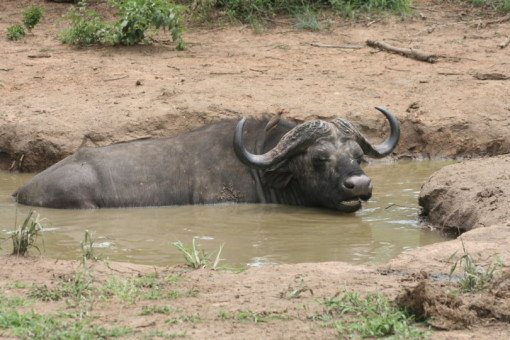
African Buffalo, with Redbilled Oxpeckers, resting up in one of the puddles left by the first rains of summer

African Buffalo, with Redbilled Oxpeckers, resting up in one of the puddles left by the first rains of summer

The drought situation in Kruger National Park in 2016 reached such drastic proportions that it was one of the driest years in recorded history in some areas of the south, but blessed rains eventually fell in early December.

So when I nipped into the park for a morning’s birding on December 5, big puddles of water were still visible from the first rains of the summer. I figured the availability of this surface water would prove attractive to animals and so it proved.

The S114 is the first gravel road on the right after entering through Malelane Gate, and it runs along the Crocodile River before heading northwards towards Skukuza. Shortly before this, close to the S25 turnoff, there were large puddles of water formed next to the road in this area of mixed woodland and thorn thickets on granite, and next to them, half-a-dozen African Wild Dog were lounging around under some bushes.

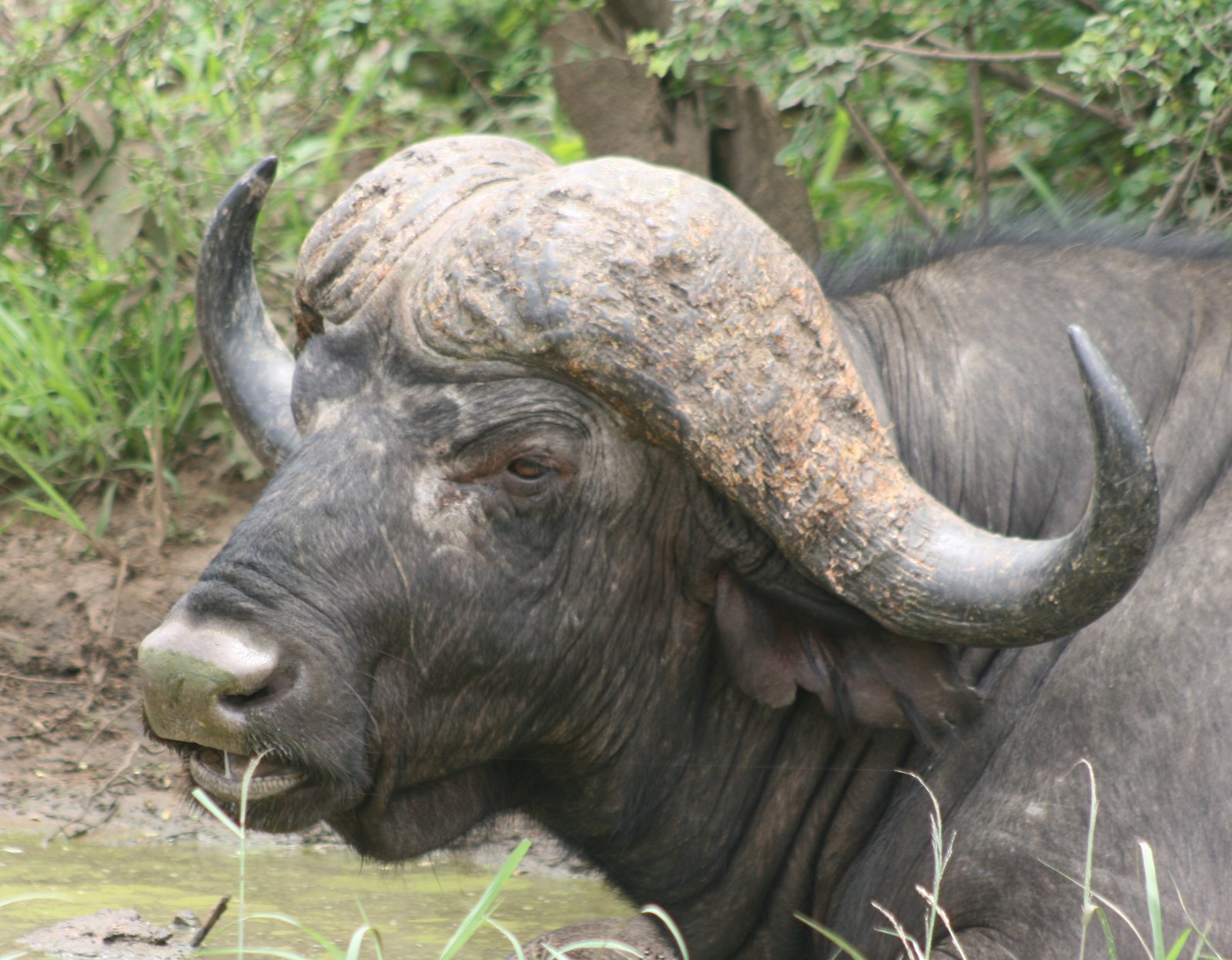
I found two Buffalo lying in a mud-puddle on the side of the road as well and they were clearly not keen to leave, even though I was parked right next to them, clicking away happily on my camera.

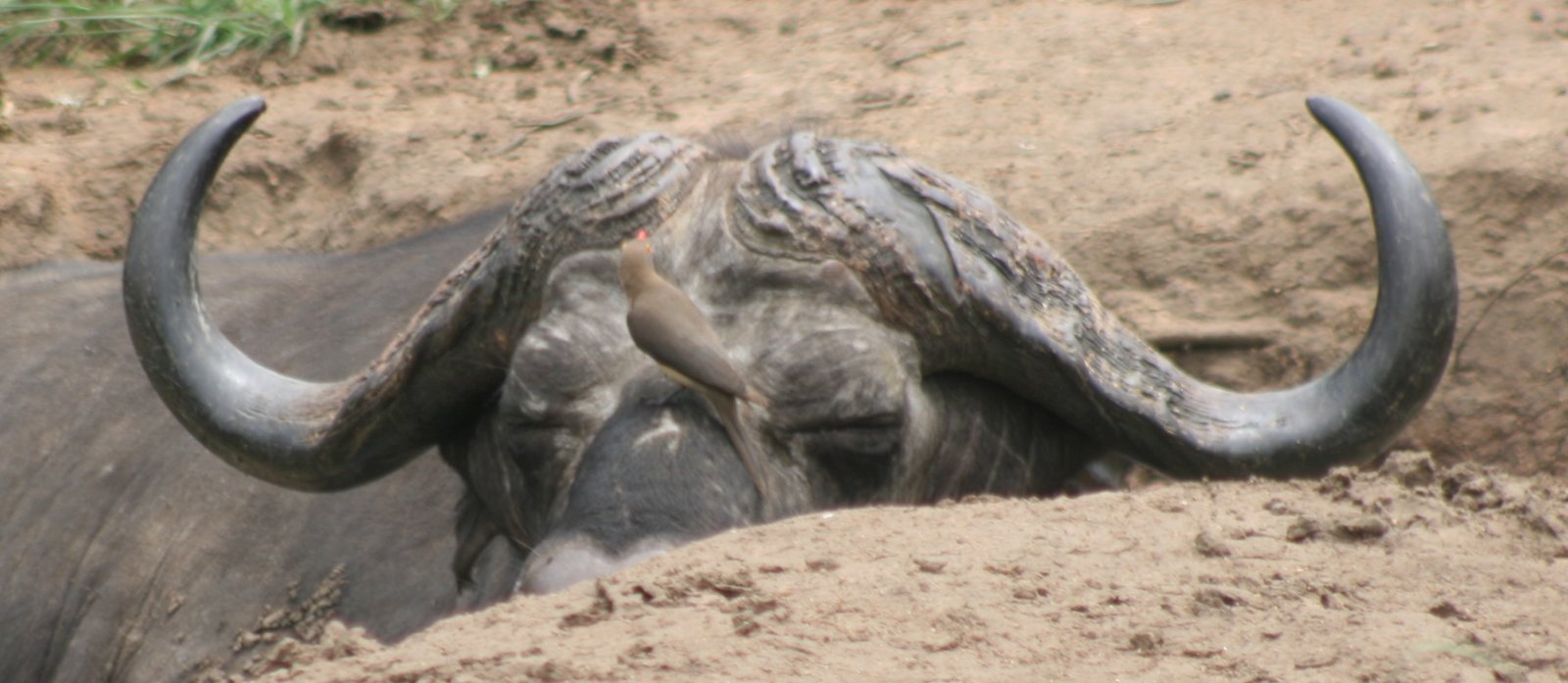
Ahhh ... bliss. A Redbilled Oxpecker gives a Buffalo a spa treatment.

Ahhh … bliss. A Redbilled Oxpecker gives a Buffalo a spa treatment.

Sadly, the rains came too late for many animals and, also on the S114 close to the Crocodile River, a Hippopotamus carcass was lying under a tree, in which one of those rather confusing African Fish Eagle juveniles was perched.

A juvenile Fish Eagle, whose hunting skills have not been fully honed, is quite likely to eat carrion, especially in a dry spell when their preferred food is scarce, but whether or not this individual had been gnawing on some Hippo, I have no way of knowing.

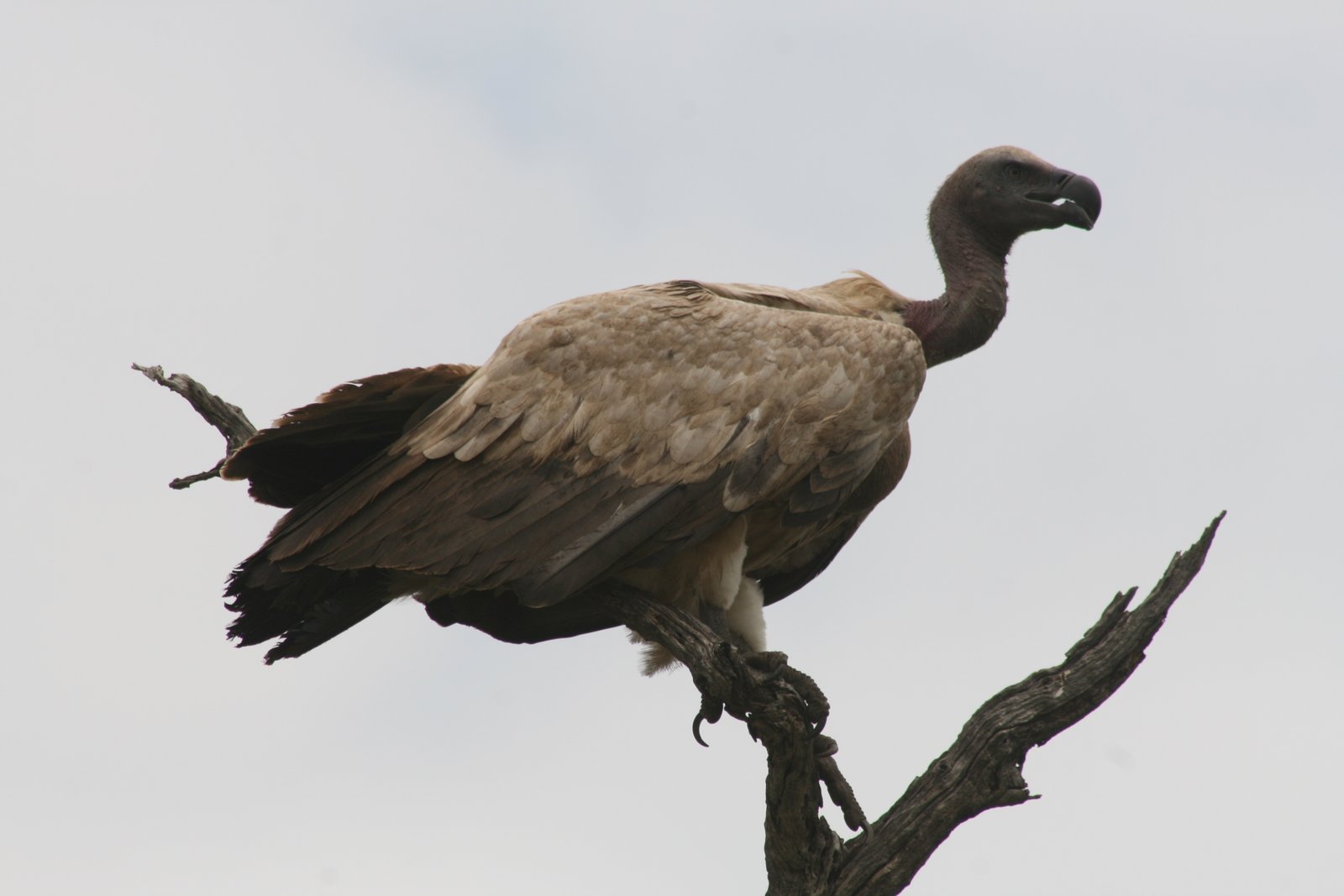
A Whitebacked Vulture was nearby in a tree, another portent of death.

A Whitebacked Vulture with a hoof? in its mouth.

A Whitebacked Vulture with a hoof? in its mouth.

A Hamerkop flew over the H3 tar road as one approaches the bridge over the Crocodile River, in which there was still water, the river being classified as a perennial, with the usual array of birdlife along its course. A solitary African Openbill, a couple of Glossy Ibis, which are considered rare in Kruger Park, only erratic visitors, and Yellowbilled Stork were with all the other common waterbirds, along with Great White Egret and Water Dikkop.

The S110 road turns left from Malelane Gate and heads north-west towards the Berg-en-Dal camp, running between some of the highest hills in Kruger Park, the differences in altitude meaning a great diversity of plants, which attracts a host of birds.

Southern Whitecrowned Shrike were buzzing between the bushes and a few Monotonous Lark were calling in the valley below the slopes of Khandzalive Hill, which is the highest point in the park at 840 metres.

There were a couple of White Rhinoceros with calves, a very pleasing sight, and, close to Berg-en-Dal Dam, a Monotonous Lark was perched on some low branches and scrub and rather scratchily giving its for syrup is sweet call.


IMG_1999[1]

Monotonous Lark

Even the reptiles were out and about, with the impressive Blacklined Plated Lizard crossing the road.


Sightings list

Egyptian Goose

African Openbill

Sacred Ibis

Grey Heron

Cattle Egret

Yellowbilled Stork

Glossy Ibis

Southern Whitecrowned Shrike

African Elephant

Blackeyed Bulbul

Southern Black Flycatcher

Impala

Greater Kudu

Whitewinged Widow

Glossy Starling

African Buffalo

African Buffalo

Wiretailed Swallow

Monotonous Lark

African Buffalo

Redbilled Oxpecker

Forktailed Drongo

Lilacbreasted Roller

Cape Turtle Dove

White Rhinoceros

Little Swift

Brown Snake Eagle

Laughing Dove

Plains Zebra

Sabota Lark

Southern Yellowbilled Hornbill

Spotted Flycatcher

European Bee-Eater

Woodland Kingfisher

Blacklined Plated Lizard

Yellowfronted Canary

Arrowmarked Babbler

Blackcollared Barbet

Plumcoloured Starling

Redbilled Hornbill

Jacobin Cuckoo

Helmeted Guineafowl

African Hoopoe

African Wild Dog

Redbilled Oxpecker on African Buffalo

Redbilled Oxpecker on African Buffalo

Grey Lourie

Longtailed Shrike

Whitebacked Vulture

Giraffe

Grey Hornbill

African Fish Eagle

Hamerkop

Slender Mongoose

Great White Egret

Hadeda Ibis

Blacksmith Plover

Pied Kingfisher

Whitebreasted Cormorant

Water Dikkop


  • Recent Posts

  • Archives

  • Thought of the Day

    Have a fulfilled life by caring about the feelings of others. Show interest in the welfare of others, listen to their problems.

    Be tolerant of people and allow for their mistakes, because no-one is perfect.

    Follow the example of Christ, who showed sympathy and understanding towards all people.


↑ Top