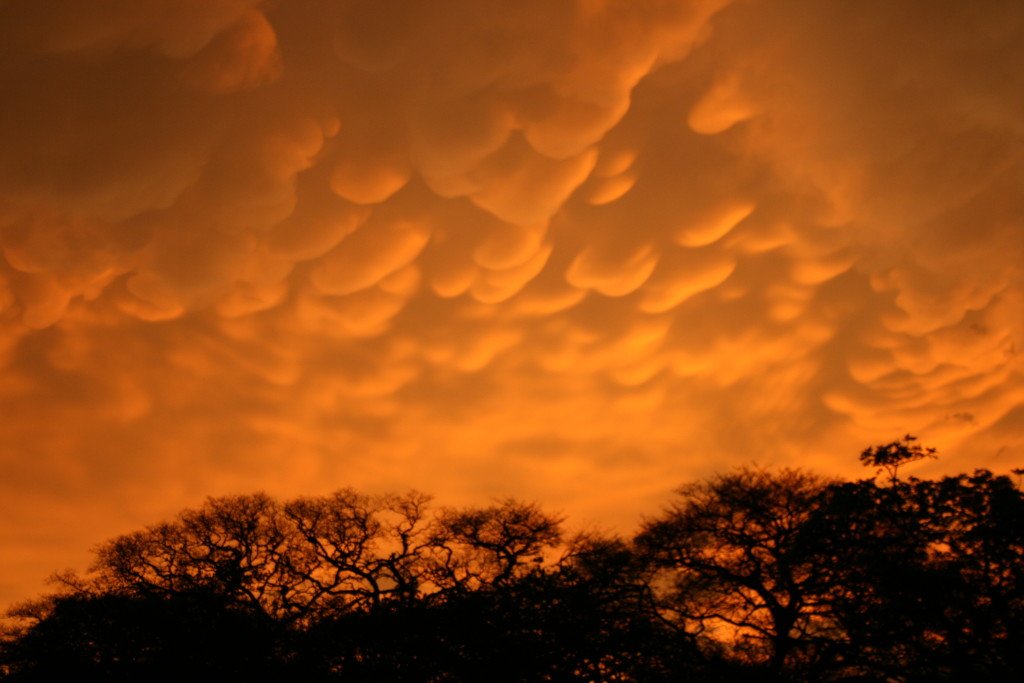
A spectacular sky over Ndumo after an equally spectacular storm
Ndumo Game Reserve is known as one of the best bird-spotting places in the country, but most of the twitching efforts are concentrated around the sand, fig and riverine forests.
The south-western portion of the park is under-rated Acacia woodland and my latest trip to this Zululand gem produced a sighting that will live long in the memory as one of the most amazing things I’ve seen.
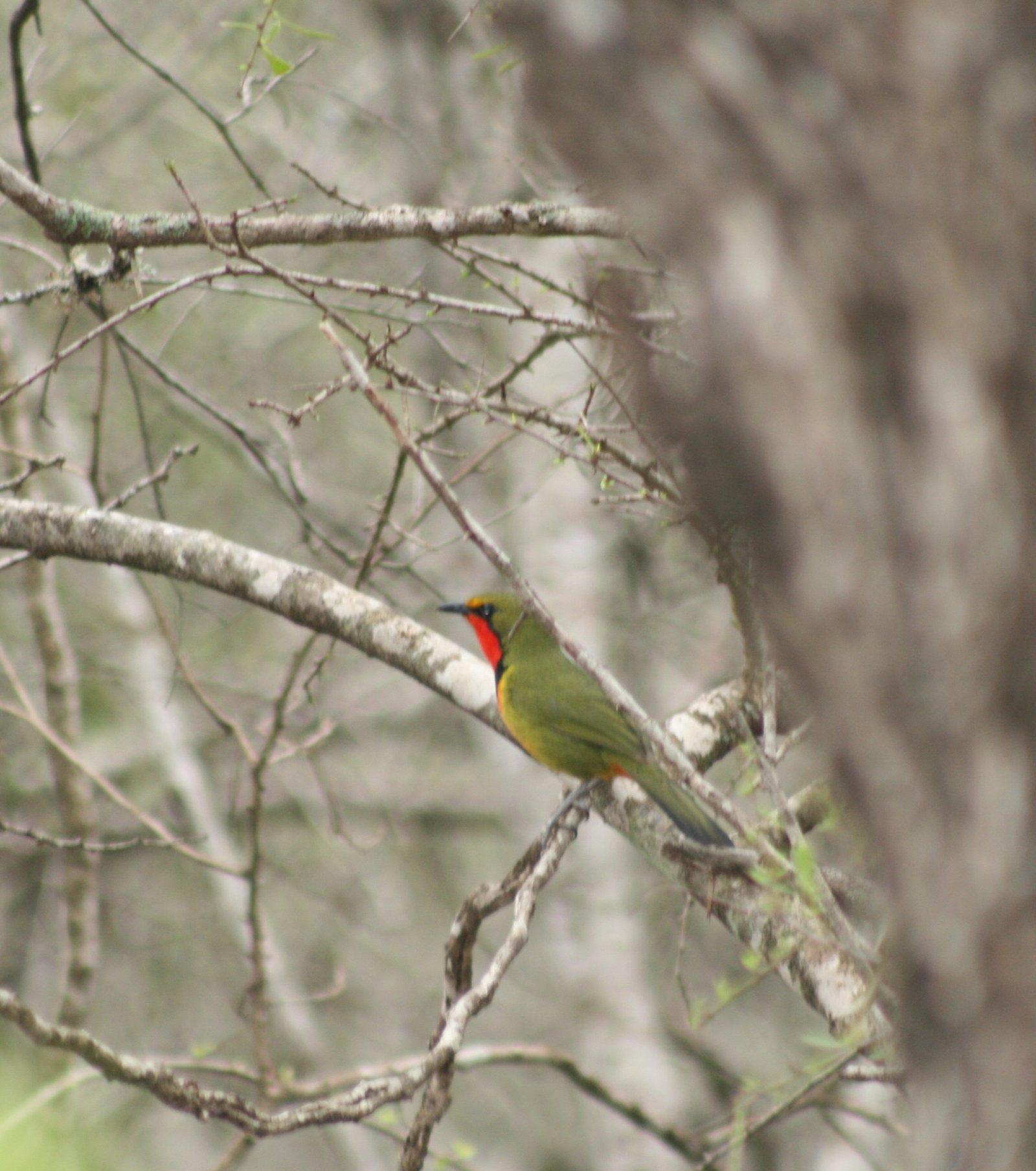
Gorgeous Bush Shrike generally sticks to dense cover and normally only offers a sneak-peek to the many who seek this quite dazzling, aptly-named bird.
![IMG_1867[1]](http://kenborland.com/wp-content/uploads/2017/02/IMG_18671-e1488213409806-300x176.jpg)
Gorgeous Bush Shrike in one of its typical tangled thickets
It is one of Ndumo’s characteristic birds though, even if the beautiful, ringing “kong-kong-kowit” call is heard far more often than the bird is actually seen.
I had enjoyed an excellent sighting earlier in the day along the southern boundary fence of the park when I heard one calling next to the road. I was expecting to be looking for a bird skulking, as usual, low down in the bush and it took me a while to realise that the member of the pair that was actually calling was sitting out in the open!
![IMG_1857[1]](http://kenborland.com/wp-content/uploads/2017/02/IMG_18571-e1488212601294-182x300.jpg)
Gorgeous Bush Shrike
But that sighting paled in comparison to what happened later, further down that road in the Paphukulu section as the sand forest thicket starts to open up into more open woodland.
I came across four Gorgeous Bush Shrike, calling and displaying, lifting their heads to expose their bright red throats, and I was able to follow them for a few hundred metres as they continued through the bushes on the side of the road!

One of the Gorgeous Bush Shrike briefly sitting out in the open
This thorny woodland provides handy perches for birds via the boundary fence and the cattle farm outside offers different habitat to the bushveld inside the park, leading to plenty of sightings.
Steppe Buzzard is more a bird of the open habitats outside the park, but seeing as though their migration pattern follows mountains like the nearby Lebombos and this was late October, maybe the one grooming itself on a fence post was just taking a breather from its long journey.
Little Bee-Eater was also on the boundary fence and there were three Redbilled Oxpecker on a telephone pole.
Another migrant raptor, the Yellowbilled Kite, flew over and seemed to be eating something on the wing, while another skulker, the Sombre Bulbul, was kindly calling from the top of a tree for an easy tick.
A Sabota Lark was being unkindly bullied by a Rattling Cisticola (two typical bushveld species), while a group of four Plumcoloured Starlings were dashing about and the black-and-white wings of an African Hoopoe in flight caught the eye.
As the road curves northwards towards what once was the Matandeni Hide, two African Openbill were soaring overhead.
The Matendeni Hide is no more, but the NRC Picnic Spot is a pleasant stop, with Grey Sunbird chip-chip-chipping away in the trees. I was watching a Variable Skink climb one of those trees when suddenly a Redfronted Tinker Barbet alighted on it. What was strange was that the bird looked heat-stressed, with its beak wide open, and it was totally silent – unusual on a day that only reached 33°C for a bird that normally calls incessantly through even the hottest days!
Typical woodland birds like Blackbacked Puffback, Cardinal Woodpecker, Orangebreasted Bush Shrike and Common Scimitarbill were also present, while Crested Francolin and Red Duiker are often seen on the road to Ziposheni.
Another Ndumo special, the infrequent Caspian Tern, allowed for great views as it was flying close to the shore of the Nyamithi Pan.
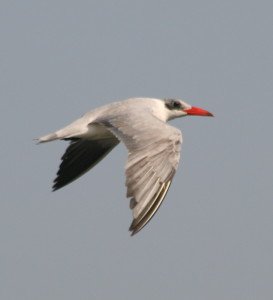
Caspian Tern upperside

Caspian Tern underside
This fever tree lined oasis is well worth paying closer attention to via a guided walk; on the last two occasions I have been to Ndumo, the drought meant there was no water around the hides, with all the water birds concentrated closer to the inlet near the Mjanshi road. While the egrets, flamingos and pelicans were all way to the left of the hide, where the water has retreated to, a Spurwinged Goose did present itself straight in front of the hide on the bone-dry pan!
As we crossed the Mjanshi Spruit on the guided walk, we were welcomed by a pair of Malachite Kingfisher and as the water pooled in the pan we spotted Wood Sandpiper, Saddlebilled Stork, Greenshank, Pied Avocet and a Grey Heron atop a Hippopotamus!
Smaller waders were plentiful too with Ringed Plover, Kittlitz’s Plover looking mean guarding their bit of dry land, Common and Curlew Sandpipers and a big flock of Little Stint, which looked like tiny dots on the pan. Broadbilled Rollers were in the fever trees.
Both Lesser and Greater Flamingo were present, along with Pinkbacked Pelican and Great White Pelican, which suddenly stampeded off the banks into the water, obviously mobbing a school of fish, although probably only the first ten pelicans caught anything!

Flamingos on Nyamithi Pan

Pelicans & Yellowbilled Storks on Nyamithi Pan
The Ndumo campsite is also excellent for birds and I was given a very happy welcome to camp by an Nyala female and her ‘teenage’ daughter eating the pods of a Natal Mahogany tree very close to where I was pitching my tent.
As always, Little Swifts and Lesser Striped Swallows were zooming around the buildings, calling contentedly, while a Blackeyed Bulbul called cheerfully from a tree that was not unlike the Whomping Willow from the Harry Potter series.

Emeraldspotted Wood Dove
Hadeda Ibis provided a very noisy start to the next day, while Purplebanded Sunbird was up by the offices, where so many of the sunbirds seem to hang out.
A pair of Pied Crow have commandeered the communications mast in camp and croak loudly as they fly about, even attacking a drone that the staff were trying out!
Woollynecked Stork flew over camp, as did two displaying Cuckoo Hawk, while Yellowfronted Canary foraged on the sparse lawn. A pair of Yellowbellied Bulbul were sitting in a thicket with much wing-quivering going on.
Their Terrestrial Brownbul cousins were having a whale of a time at the bird bath close to my site, while a Bearded Robin sat by and watched.
Even while cooling off in the most-welcome swimming pool, birds can be spotted – a sub-adult African Fish Eagle was soaring majestically high above and White Helmetshrike were also seen.
Outside the main office, there is a lovely Marula tree and barely two metres off the ground, in the fork between two branches, is a Spotted Eagle Owl nest with at least one young, while a Wood Owl was spotted on the lawn next to the ablutions one evening.
The central portions of Ndumo are dominated by what is known as Mahemane Bush, a near-impenetrable thicket of inhospitable spiny trees and plants that must have been a nightmare for early travellers on the route to Delagoa Bay.
But the dense tangle is a perfect home for Apalises and a Yellowbreasted and a Rudd’s Apalis were having a skirmish, and in fact the rarer Rudd’s was more prominent on this trip than its common cousin.
As one heads north towards the Usutu River one comes across the clearing where the Diphini Hide once stood, overlooking the Mtikini tributary of the Usutu, which flows into Banzi Pan. Down below in the shadows amongst the Fever Trees was a Whitethroated Robin and a Greenbacked Camaroptera was busy stripping spider web off what looked like an egg casing. The little warbler-like bird got a bit tangled in the process but made off with quite a decent ball of webbing in the end, no doubt for use in sowing together its nest.
One can then turn south-west into more sand forest, with a giraffe deep inside this unusual habitat surprisingly being the first thing I saw on the Mabayeni Road.
The third day was set aside for the trip to Red Cliffs, one of my favourite excursions in any game reserve, anywhere.
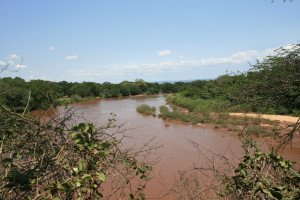
Looking down at the Usutu River from Red Cliffs
The main road from camp was drier than usual, with the drought not having broken yet in early summer, but there was still plenty of birding activity, with quite the overnight storm having brought some much-needed rain.
An immature Southern Banded Snake Eagle flew into a leafless tree and stayed a good while, while there were five Purplecrested Lourie in a busy group, interacting and calling.
A five-strong group of Redbilled Helmetshrike included a couple of juveniles, while a Goldenbreasted Bunting went fluttering after an insect (they don’t just eat seeds).
Green Pigeon, Bluegrey Flycatcher, Goldenrumped Tinker Barbet and a little group of Chinspot Batis were present and Blackheaded Oriole was yet another bird gathering nesting material.
Red Cliffs was a hive of activity, with a Marsh Terrapin crossing the entrance road, no doubt coming from nearby Shokwe Pan and looking for a temporary pan made by the rain.
Two Yellowspotted Nicator were really unobtrusive even though they were calling loudly, in stark contrast to some Water Dikkop that were roosting calmly by some foliage on a sandbank of the Usutu River. Until a Southern Banded Snake Eagle flew over and then all hell broke loose!
A pair of Pied Kingfisher were hovering over the river and some Yellowbilled Stork were far upstream, but a Little Sparrowhawk, closer to hand, was given away by a Forktailed Drongo dive-bombing it.
Where is Ndumo?
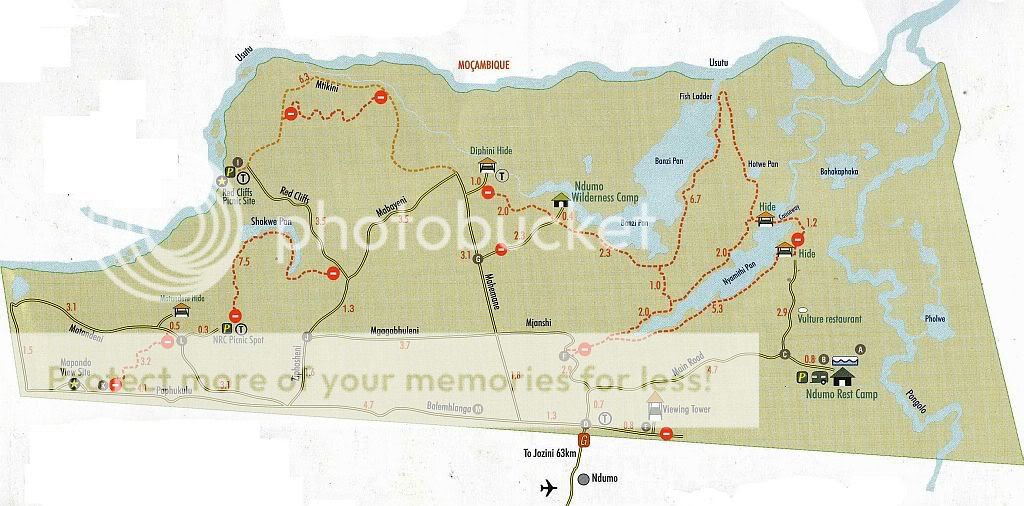
Detailed map of Ndumo
Sightings List
Vervet Monkey
Nyala
Crested Guineafowl
Southern Banded Snake Eagle
Forktailed Drongo
Little Swift
Lesser Striped Swallow
Emeraldspotted Wood Dove
Blackeyed Bulbul
Hadeda Ibis
Purplebanded Sunbird
Brownhooded Kingfisher
Impala
Crowned Hornbill
Purplecrested Lourie
Southern Black Flycatcher
Browncrowned Tchagra
Little Bee-Eater
Fantailed Flycatcher
Southern Black Tit
Cape White-Eye
Redbilled Oxpecker
Gorgeous Bush Shrike
Egyptian Goose
Whitebellied Sunbird
Steppe Buzzard
Yellowbilled Kite
Whitebrowed Scrub Robin
Sombre Bulbul
Longbilled Crombec
Yellow Weaver
Sabota Lark
Plumcoloured Starling
Glossy Starling
African Hoopoe
Yellowbilled Hornbill
African Openbill
Grey Sunbird
Spottedbacked Weaver
Variable Skink
Redfronted Tinker Barbet
Blackbacked Puffback
Cardinal Woodpecker
European Swallow
Orangebreasted Bush Shrike
Common Scimitarbill
Crested Francolin
Red Duiker
Redbilled Helmetshrike
Bateleur
Striped Kingfisher
Blue Wildebeest
Plains Zebra
Goldenbreasted Bunting
Pied Crow
Woollynecked Stork
Pallid Flycatcher
Rattling Cisticola
Grey Duiker
Kurrichane Thrush
Yellowbreasted Apalis
Rudd’s Apalis
Whitethroated Robin
Greenbacked Camaroptera
Giraffe
European Bee-Eater
Goldentailed Woodpecker
Black Kite
Rock Monitor
Redeyed Dove
Goldenrumped Tinker Barbet
Yellowfronted Canary
Yellowthroated Sparrow
Cuckoo Hawk
Yellowbellied Bulbul
African Fish Eagle
Paradise Flycatcher
Great White Egret
Lesser Flamingo
Spurwinged Goose
Pinkbacked Pelican
Trumpeter Hornbill
Striped Skink
Blackheaded Oriole
Chinspot Batis
Marsh Terrapin
Yellowspotted Nicator
Blacksmith Plover
Water Dikkop
Threebanded Plover
Yellowbilled Stork
Blackwinged Stilt
Blackbellied Starling
Greenbacked Heron
African Pied Wagtail
Little Sparrowhawk
Pied Kingfisher
White Helmetshrike
Cape Dwarf Gecko
Wood Owl
Green Pigeon
Bluegrey Flycatcher
Malachite Kingfisher
Wood Sandpiper
Saddlebilled Stork
Greater Honeyguide
Greenshank
Broadbilled Roller
Pied Avocet
Grey Heron
Ringed Plover
Kittlitz’s Plover
Common Sandpiper
Curlew Sandpiper
Little Stint
Hippopotamus
Nile Crocodile
Greater Flamingo
Goliath Heron
Collared Sunbird
Caspian Tern
Great White Pelican
African Spoonbill
Whitebreasted Cormorant
Little Egret
Terrestrial Bulbul
Bearded Robin
Spotted Eagle Owl
Warthog