for quality writing

Ken Borland


Bulls out-muscle Stormers to stay in contention 0

Posted on May 11, 2014 by Ken

Flyhalf Handre Pollard kicked 20 of the Bulls' points in an accomplished display

The Bulls used their powerful, cohesive pack of forwards to out-muscle the Stormers and beat them 28-12 in their Vodacom SuperRugby match at Loftus Versfeld on Saturday night, to maintain their interest in finishing in the top six and making the playoffs.

The Bulls had to fight their way back from a 12-0 deficit inside the first quarter, the Stormers using clinical counter-attacking play to punish the home side’s sloppy work at the breakdown, but were in firm control once they eliminated the mistakes from their game.

A dominant scrum allowed a tremendous platform for the Bulls to set up their favourite driving plays, and the lineout was as solid as ever, and the Stormers were left to live on scraps of quality possession, while also generally trying to play from their own territory thanks to the excellence of the Bulls’ kicking game.

To put it frankly, the Stormers had their backsides handed to them and, no matter how positive the attacking intent, you can’t do much with crap ball.

The demolition job was made even more dramatic by the spectacular change in fortunes after the first quarter. The Bulls were scrappy in the first 10 minutes and the Stormers looked in control.

Schalk Burger rolled back the years to play a typically destructive role in the first quarter, but he also showed his skill and nous in setting up the opening try. Fellow flank Nizaam Carr had just made his second breakdown steal in the first 10 minutes, the Stormers quickly shipping the ball wide, and Burger cut inside before offloading beautifully to Cheslin Kolbe on the left wing. That injected the pace required and Kolbe then found centre Juan de Jongh, who sent flyhalf Kurt Coleman racing clear for a thrilling opening try.

The second try was also a direct result of the Bulls not protecting possession well enough in the ruck, with hooker Scarra Ntubeni pouncing on an unattended ball. Carr was once again involved before the ball was sent wide and De Jongh provided a strong finish to put the Stormers 12-0 ahead in the 19th minute.

But fortunately for the Bulls, these breakdown errors were not ongoing. They tidied up their act at that crucial phase and the steady stream of possession was used to batter the abrasive Stormers defence into submission. Eighthman Grant Hattingh, flank Jacques du Plessis, lock Paul Willemse and even Jono Ross carried the ball strongly and centres Jan Serfontein and JJ Engelbrecht were also willing battering rams.

While the Stormers had produced some inspired counter-attacking play off turnovers for their points, the Bulls were clinical in their own methodical way – most times they were in the opposition 22, they came away with points.

The Bulls opened their scorecard in the 23rd minute, the incisive running of Serfontein and Engelbrecht causing the Stormers to stray offsides and flyhalf Handre Pollard, who certainly had his eye in when it came to shooting at goal, slotting the first of his five penalties.

The Bulls were back in Stormers’ territory three minutes later and Pollard, who has donned the number 10 jersey with aplomb since being elevated to the starting line-up, slotted a slickly-taken drop goal.

The home side secured front-foot ball from the scrum with ease and, in the 29th minute, they really shoved the Stormers backwards to earn a penalty, Pollard converting well from the centre-spot.

The Bulls were carrying the ball with more and more confidence by this stage and, after the flood of turnovers in the opening exchanges, the momentum had definitely shifted at the breakdown (consistently getting over the gain-line will do that) and a frustrated Burger was in referee Craig Joubert’s ear more and more.

“In the first 20 minutes, we were able to carry the ball and be influential on attack, but the tide turned and then it became difficult for us. I got a bit worked up and had a few words with Craig, but I tried to calm down and I apologised to him as we went off at half-time,” Burger admitted after the game.

It was a ruck penalty against eighthman Duane Vermeulen for not supporting his own body weight that allowed Pollard to level the scores at 12-12 on the stroke of halftime and the Bulls, having shown great character in clawing their way back to level terms, will remember the second half with much fondness as they clinically shut the Stormers out of the game.

The Stormers, jailed in their own half by the pinpoint kicking of Pollard, scrumhalf Francois Hougaard and fullback Jurgen Visser, were brave and positive, but the generally poor quality of their possession and the physicality of the Bulls meant they were up against a brick wall.

The Bulls made the ideal start to the second half when Serfontein’s lovely dart from the kick-off forced the Stormers to come in from the side of the ruck, and Pollard kicked the penalty to give the home side the lead for the first time, in the 42nd minute.

Pollard stretched the lead to 18-12 in the 55th minute when Vermeulen and Ruan Botha combined to stop a rampaging Dean Greyling, celebrating his 50th SuperRugby game, but the young lock then did not roll away after the tackle.

The Stormers enjoyed a better period of possession thereafter and spent time in the Bulls half. But, in the 66th minute, substitute flank Siya Kolisi, on for Burger, tried to burst on to a flat pass but knocked on.  The ball bounced into the hands of another replacement loose forward, Jacques Engelbrecht, and he quickly fed the ball to the backline.

The resulting try not only clinched the victory but came straight from the Stormers’ own play-book.

Hougaard read the situation brilliantly, putting the grubber through behind the Stormers defence for wing Akona Ndungane to chase. The veteran wing showed great pace as he got there first, hacking the ball further forward and then winning the race to the dot-down as it crossed the try-line.

With Pollard’s conversion, the Bulls’ lead was 25-12 and the win was secure, Stormers coach Allister Coetzee saying afterwards that it was the pivotal moment in the game.

Replacement flyhalf Jacques-Louis Potgieter added a 71st-minute penalty from the halfway line as the Stormers were sentenced to their eighth defeat in 11 matches – Burger summing up their showing when he said: “We brought quite a young and inexperienced team here and we really put the Bulls under pressure at the start. It was a big effort, but the accuracy wasn’t that good.”

Coach Coetzee is right to point out the huge injury problems that the Stormers have, and bringing two very inexperienced locks – 22-year-old Ruan Botha and 20-year-old debutant Jean Kleyn – to Loftus Versfeld meant their engine room was always going to be under pressure. To make matters worse for the visitors, experienced loosehead prop Brok Harris had to be replaced for much of the match and Springbok tourist Ntubeni went off after 55 minutes. Their replacements were rookies Alistair Vermaak, on debut, and Stephan Coetzee.

The Bulls have now climbed to eighth on the log, just two points from the playoff positions, and captain Victor Matfield warned that the same confidence that saw them win the South African Conference last year with nine successive wins is returning.

“The belief is starting to grow and I’m very happy with tonight’s performance, it felt like the Bulls of old. We just squeezed them, gave them nothing and our scrum killed them.

“We kicked long and then got our line up, we were able to get the ball in the right areas and then fight for inches. It was a great effort to come from behind and then we just built our lead. I’m very confident of the future when I look at our young players,” Matfield said.


Kenya grow their 15-a-side team in Vodacom Cup 0

Posted on May 09, 2014 by Ken

Scrumhalf Edwin Achayo feeds flyhalf Kenny Andola as Kenya get their backline going again during their Vodacom Cup victory over the EP Kings. Pic: Carl Fourie/Gallo Images

The Vodacom Cup – South Africa’s developmental competition for the provincial teams not involved in SuperRugby – has entered the semi-final stage with overseas visitors Kenya no longer in contention but the tournament did offer the African country the chance to further grow their 15-a-side team.

The Kenyans played as the Tusker Simba XV and although they only won a single match – their opening encounter against the Eastern Province Kings – the fact that they did not finish last in their section provided some comfort.

Kenya were invited by the South African Rugby Union, as part of their mandate to help improve and develop the game in Africa, to take the place of Argentinian side Pampas XV and the east Africans were only too happy to take part, giving a crucial boost to their preparations for the final African World Cup qualifier to be played in Madagascar from June 26.

Namibia have been the African qualifiers for all seven Rugby World Cups and so the rest of the continent are trying to close the gap with them. Zimbabwe and Madagascar are the other countries still in the running for 2015 in England.

Encouragingly for Kenya, the Tusker Simba XV performed no worse than Namibia’s Welwitschias did when they played in the Vodacom Cup in 2010/11 and lost 13 of their 15 matches, winning once and drawing the other game.

And the Tusker Simba XV also suffered some misfortune, losing two of their matches – against Border and Boland – in the final minute.

“It was a great experience and, as we try and qualify for the World Cup, the best thing is to play more games. Last year we won the Africa Cup in Madagascar, but that was only with some games before that. The only way to change that was playing in the Vodacom Cup, and it has been a huge success,” Kenya coach Jerome Paarwater said.

A lack of conditioning was one of the concessions the Tusker Simba XV had to make against almost entirely professional opposition, but the size and attacking promise the Kenyans showed was enough to suggest the 15-a-side team could follow their sevens counterparts up the world rankings.

“Size is certainly not a problem with the Kenyan players, but there is a lack of facilities in Kenya for them to work on their conditioning, which you need to be competitive against professional players for a full 80 minutes.

“But we’re getting them a bit stronger and bigger and the skills levels are improving, so those are positives,” Paarwater, the former Western Province loose forward, said.

“The sevens background of the players means they’re not afraid to attack, it comes naturally to them. It helps that our two wings [Leonard Mugaisi and Dennis Osinde] are both pacy and strong, both around 108/109kg.”

The scrummaging – built around huge identical twins Joseph and James Kang’ethe – was also solid, although they did attract some yellow cards, Paarwater explaining that “The twin props are very aggressive and I think that scared the referees a bit”.

While Kenya’s urban areas are relatively wealthy and modern, 75% of the population work in the agricultural sector and food security is an issue – 38% of the population live in poverty. So there are socio-economic issues that hold rugby back too.

While the International Rugby Board insist that the Kenya Rugby Union find their own sponsors, they are involved in growing the game amongst the youth. Programs like Get Into Rugby ensure that kids that would normally just be herding cows get a chance to experience the beautiful oval-ball game.

“The IRB are heavily involved with development and the U19 team, which is great because Kenya rugby has to step up their junior structures, that is the future. The IRB fund development programs and they’ve given our Sevens team lots of help too.

“It’s good that the Kenya Rugby Union have had to find their own sponsors, it means they don’t just ask for handouts,” Paarwater said.

The Western Province Rugby Union in South Africa, from whom Paarwater has been seconded, have also been a great help, also providing medical supplies.

There’s nothing ham-fisted about the way rugby is being grown in Kenya, as the remarkable success of their Sevens side shows, and they are becoming a growing force in African 15s as well.

“They’re quite jacked up and really serious about rugby in Kenya, including women’s rugby. They’re always trying to improve,” Paarwater said.

And it certainly looks like they are succeeding.

http://www.irb.com/newsmedia/regional/newsid=2071330.html#kenya+more+than+just+sevens+nation

Bonnet opts for continuity and pace 0

Posted on May 07, 2014 by Ken

South Africa's women's hockey World Cup squad

Investec South Africa women’s hockey coach Giles Bonnet said on Tuesday that he had chosen the World Cup squad based on the need for continuity and pace.

And so the same 18-strong squad that bowed out in the semi-finals of the Champions Challenge – their only defeat of the tournament – last week will do duty at the World Cup in Holland from May 31 to June 15.

“We’re staying with continuity, although we’ve brought players in through the years, introducing eight U21 players since 2010. We’ve been exposing players for the last four years, bringing in future stars all the time, and we’ve played 150 games since the last World Cup, which was only possible because of the support and sponsorship of Investec.

“So the squad includes one triple Olympian [captain Marsha Cox (nee Marescia)], five double Olympians [goalkeeper Sanani Mangisa, Shelley Russell, Kathleen Taylor, Tarryn Bright, Lenise Marais] and seven who went to the last Olympics,” Bonnet said at the announcement of the squad at the sponsor’s headquarters in Sandton on Tuesday.

The squad includes 13 players with more than a hundred caps, while only goalkeeper Anelle van Deventer (10) has less than 50 appearances for South Africa.

Pietie Coetzee, arguably South Africa’s greatest women’s hockey player, is the glaring omission from the squad, but Bonnet said she had made herself unavailable, along with the injured Jade Mayne, because she did not feel physically up to the tournament.

“Pietie doesn’t feel in shape to play in the World Cup, which basically involves running 10km every game and that has a major impact on the body. Hockey these days is about speed and endurance. We have very quick players in this squad,” Bonnet said.

Endurance is epitomised by captain Cox, for whom international hockey must be like a drug as she looks to add to her 332 caps in Holland.

“The Champions Challenge was successful, getting bronze and laying a good platform for the World Cup. We were extremely disappointed after losing in a semi-final to Ireland that we dominated, but stats don’t win you games.

“But sometimes you need to fail before you succeed and we’ve gained confidence from all the chances we created in that tournament [a tournament-leading 60 in six games]. Realistically we’re aiming to finish in the top eight in the World Cup and, with the style of hockey we’re currently playing and all the experience in the squad, that’s in reach,” Cox said.

Waiting for South Africa, however, are three of the tournament favourites in their first three games – Argentina, Germany and England – and Bonnet is hoping to get a draw from one of those powerhouses before taking full points off China and the USA.

“It will be difficult. You want to go into a World Cup with confidence and build your way into the tournament, but hopefully we can make that middle pool,” the vastly experienced Bonnet said.

Mangisa said she was confident the team would make a good start to the tournament, whatever the opposition.

“We know all the games will be tough because, along with the Olympics, this is the pinnacle of hockey. We’ve learnt from the London Olympics and we won’t repeat that bad start. We have to start well and we’ve grown a lot in the last two years. With all these caps, we can’t have a repeat … we’ll think ‘hang on there, we’ve been here before’ and tighten up. Unlike Liverpool last night,” Mangisa said.

Squad (caps in brackets): Sanani Mangisa (92), Ilse Davids (122), Marsha Cox (332), Shelley Russell (212), Dirkie Chamberlain (168), Lisa Deetleefs (187), Nicolene Terblanche (145), Kathleen Taylor (214), Tarryn Bright (263), Sulette Damons (149), Lenise Marais (228), Bernie Coston (94), Anelle van Deventer (10), Marcelle Manson (nee Keet, 133), Kelly Madsen (113), Celia Evans (89), Lillian du Plessis (58), Quanita Bobbs (56).


Lower Sabie to Letaba 0

Posted on May 06, 2014 by Ken

Lilacbreasted Roller

Driving from Lower Sabie to Letaba is one of the lengthiest routes (160km) one can hope to fit into a day in Kruger National Park, but the eastern sweetveld plains you travel through are richly rewarding.

This is prime birding country, travelling through the open savanna grasslands between Lower Sabie and Satara, heading into the Olifants rugged veld and then into the Mopane-dominated woodland around Letaba. Several of the roads also flirt with the Lebombo Mountains in the east, all of which adds up to numerous different habitats and a lengthy bird list.

The central grasslands around Satara are known as big-game country – there is plenty of grazing and therefore plenty of predators, whose kills attract the vultures.

And the king of the South African vultures – the Lappetfaced – is best found in this area and mine was duly spotted on the tar road (H1-4) between Satara and Olifants. It was an archetypal sighting as well – attending a kill, looking like the Red Skull with its featherless head and neck and malevolent, massive bill.

The Red Skull

On the other side of Olifants, as the Mopane becomes more and more prevalent, Kori Bustard, another of Kruger’s “Big Five” birds, was spotted and other quintessential grassland birds seen between Lower Sabie and Letaba were Steppe Eagle, Rufousnaped Lark, Pintailed Whydah, White Stork, Wattled Starling (particularly common around Satara), Blackshouldered Kite and Swainson’s Francolin.

It’s also great raptor country and, apart from the vulture, resident Blackshouldered Kite and the migratory Steppe Eagle (in the Mlondozi/Muntshe area), Bateleur, Brown Snake Eagle, Whitebacked Vulture and Wahlberg’s Eagle were also seen.

But there are enough different habitats on the route to throw up all sorts of interesting things, and Jacobin Cuckoo, Carmine Bee-Eaters dashing around like the Red Arrows, Melba Finch (in the mixed woodland of the Trichardt Road heading into the Lebombo), Namaqua Dove, Natal Francolin and Helmeted Guineafowl were all spotted.

Late summer in the central savannas of Kruger Park are a time of feast and even the smaller birds were cashing in: just north of Lower Sabie there were a handful of Crested Francolin on the tar road, gorging themselves on a swarm of mayfly-like insects.

Crested Francolin enjoying an insect swarm along the H10

Aquatic habitats along the route further boost the tally; as you leave Lower Sabie you cross the Sabie River and from that causeway Wiretailed Swallow, Greenshank, Common Sandpiper, Pied Kingfisher and Brownthroated Martin were seen.

Temporary pans on the basalt produce Wood Sandpiper, while there was even water in the watercourse at Tshokwane and a Threebanded Plover in attendance.

A typical temporary pan on the basalt plains in central Kruger Park attracts a pair of elephant

The Mazithi Dam on the side of the road just north of Tshokwane was full and a Grey Heron was perched on a half-submerged log of dead tree, with a couple of Hippo for company down below.

Grey Heron and Hippo at Mazithi Dam

Turning off east shortly thereafter, one travels along the Trichardt Road (S37), which takes one through highly nutritious grasslands and mixed woodland as it skirts the Lebombo Mountains, eventually coming to the Sweni River and Sweni Hide, where Malachite Kingfisher was spotted.

There is unsurprisingly plenty of game along the route from Lower Sabie to Letaba as well, with 14 species of mammals, including Hippo, Elephant, White Rhino and Buffalo, seen along the way.

Sightings list

Little Swift

Blackeyed Bulbul

Impala

Blue Wildebeest

Wiretailed Swallow

Greenshank

Common Sandpiper

Pied Kingfisher

Brownthroated Martin

Hippopotamus

Blacksmith Plover

Egyptian Goose

Redbilled Buffalo Weaver

Lilacbreasted Roller

European Roller

Elephant

Lesser Grey Shrike

Sabota Lark

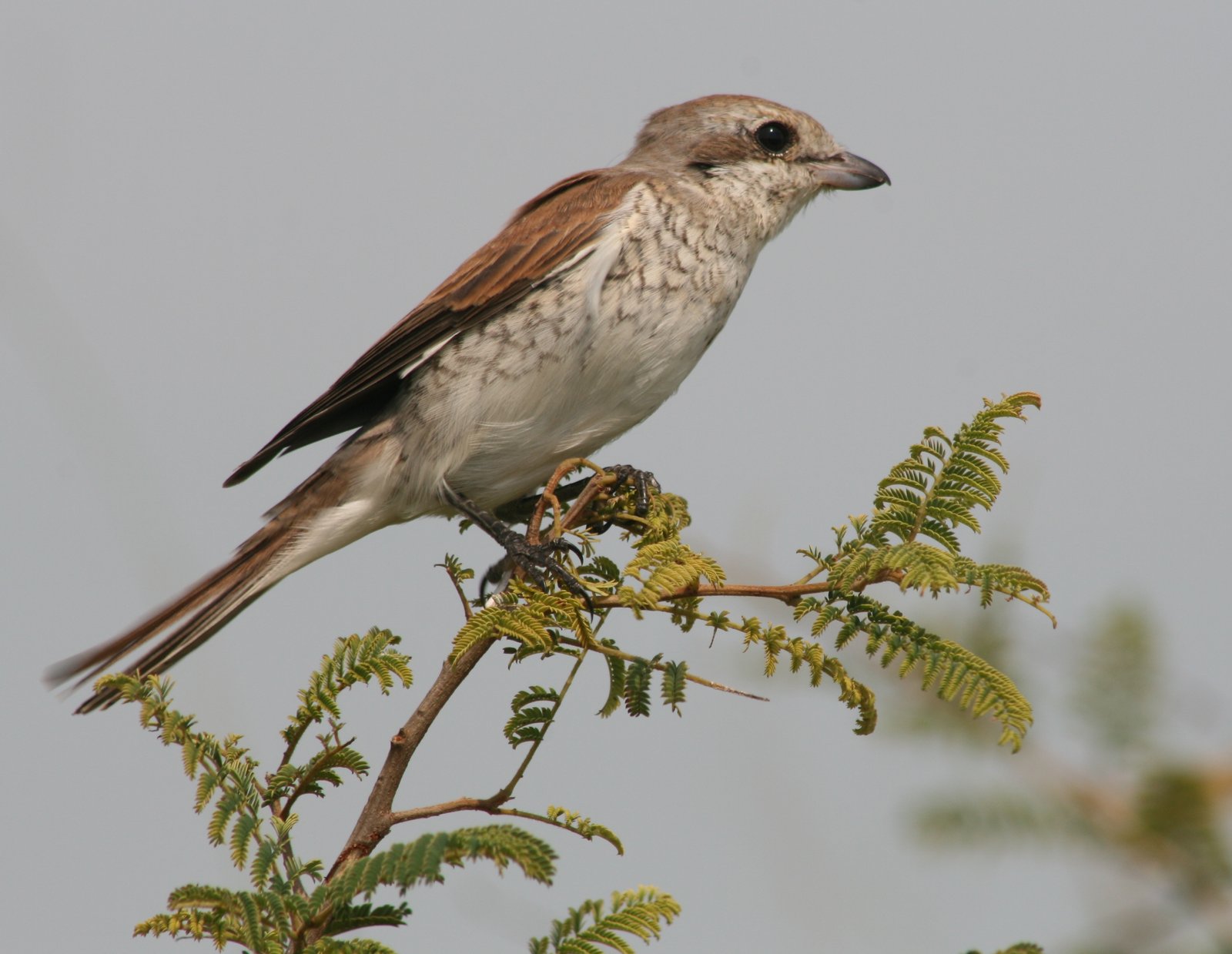
Redbacked Shrike

Yellowbilled Hornbill

Longtailed Shrike

Arrowmarked Babbler

Plains Zebra

Giraffe

Grey Hornbill

Waterbuck

Grassveld Pipit

Woodland Kingfisher

Spotted Flycatcher

Glossy Starling

Marabou Stork

Slender Mongoose

Brown Snake Eagle

Grey Lourie

Laughing Dove

Warthog

Brownhooded Kingfisher

Blue Waxbill

Southern Greyheaded Sparrow

Grey Duiker

Steppe Eagle

Crested Francolin

Jacobin Cuckoo

Whitebacked Vulture

European Swallow

Rattling Cisticola

Carmine Bee-Eater

Bateleur

Rufousnaped Lark

Pintailed Whydah

Wood Sandpiper

White Rhinoceros

Burchell’s Starling

Cape Turtle Dove

European Bee-Eater

Forktailed Drongo

Threebanded Plover

Greater Blue-Eared Starling

Grey Heron

Melba Finch

Malachite Kingfisher

Vervet Monkey

Buffalo

White Stork

Wattled Starling

Marsh Terrapin

Blackshouldered Kite

Lappetfaced Vulture

Namaqua Dove

Kori Bustard

Swainson’s Francolin

Natal Francolin

Wahlberg’s Eagle

Hamerkop

Chacma Baboon

Helmeted Guineafowl

Red Toad


  • Recent Posts

  • Archives

  • Thought of the Day

    Galatians 5:22-23 – “But the fruit of the Spirit is love, joy, peace, patience, kindness, goodness, faithfulness, gentleness and self-control.”

    The fruit of the Spirit are elements of the character of Christ and we should have the constant desire to become more and more like Christ in thought and deed. But what seems impossible for you becomes possible through Jesus. In him, we are filled with love, joy, peace, patience, kindness, goodness, faithfulness, gentleness and self-control.


↑ Top