for quality writing

Ken Borland


3TCricket will add to the game & broaden the players’ thinking – Shamsi 0

Posted on July 18, 2020 by Ken

Cricket will return to South Africa on Saturday as a new format of the game debuts at SuperSport Park in Centurion when 3TCricket is launched with a match between three teams featuring the best local talent available, and the Proteas’ No.1 limited-overs spinner Tabraiz Shamsi believes it will not only add a fun new dimension to the game but also broaden the thinking of cricketers.

3TCricket involves three teams of eight competing with each other at the same time, with each team batting for six overs against each opponent. A total of 36 overs – 12 overs per side – will be played after the action gets underway, broadcast live by SuperSport, from 11am.

The players had a practice game on Thursday and Shamsi said there was confusion at first but they had ultimately enjoyed the experience and he sees future prospects for the format.

“With all the different rules we didn’t know what to expect and it was confusing at first. But it’s exciting and none of the players had anything negative to say about it. I just see it basically as you bat and bowl twice, six overs an innings. It brings a different way of seeing things tactically, like with the team with the worst score after the first innings batting last second time round, so they are still in the game.

“The format gets us thinking in other ways which can only be good. When T20 started, people were thinking it was a joke, just go out there and hit the ball, but now we see there is so much strategy in T20 cricket. Having not played for four months, you can’t expect the players to be at the levels they would normally be at, but hopefully this format does see more matches because it is fun,” Shamsi told Saturday Citizen on Friday.

Even though spinners have subsequently become key weapons in T20 cricket, Shamsi said 3TCricket is going to be tough for all bowlers but especially his slow-bowling ilk.

“It’s going to be very difficult for bowlers, especially spinners, and especially at SuperSport Park where it has traditionally been very hard to defend. There are only six fielders so of course you are going to go for runs. In our practice match teams were scoring 80-90 runs per six overs, so as a spinner if you’re going for 15-runs-an over I think you’re doing okay.

“I think the best strategy is to try and take wickets because batsmen can only bat once between the two games, so they also have to be a bit careful. The best way is still to strike because you probably won’t be able to defend anyway because there are so many gaps in the field. And bowling only three overs makes it hard too because as a spinner you only get in your groove after an over or two,” Shamsi said.

Squads

Kites: Quinton de Kock (captain), Temba Bavuma, Jon-Jon Smuts, David Miller, Dwaine Pretorius, Anrich Nortje, Beuran Hendricks, Lutho Sipamla. Coach – Wandile Gwavu.

Kingfishers: Reeza Hendricks, Janneman Malan, Faf du Plessis, Heinrich Klaasen (captain), Gerald Coetzee, Thando Ntini, Glenton Stuurman, Tabraiz Shamsi. Coach – Mignon du Preez.

Eagles: Aiden Markram, Rassie van der Dussen, AB de Villiers (captain), Kyle Verreynne, Andile Phehlukwayo, Bjorn Fortuin, Junior Dala, Lungi Ngidi. Coach – Geoffrey Toyana.

River Cottage, Malelane 0

Posted on October 31, 2019 by Ken

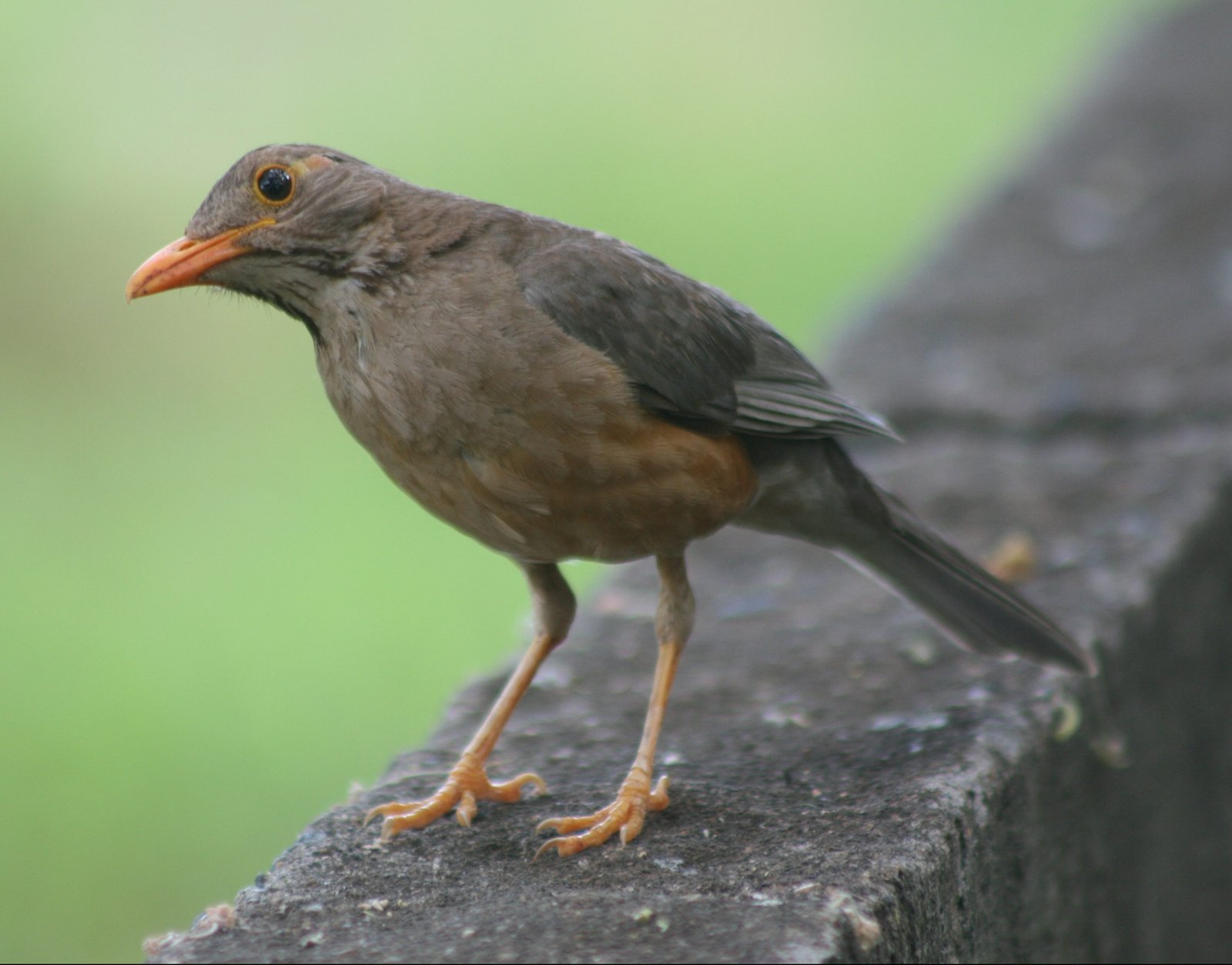
An inquisitive Kurrichane Thrush

The Alfred Dunhill Championship is a prestige golf tournament co-hosted by Southern Africa’s Sunshine Tour and the European Tour, held every summer at the famous Leopard Creek estate outside Malelane. The best part of covering this event is that I get to stay at River Cottage, one of the finest bed and breakfast guesthouses I have had the pleasure of frequenting.

The “River” it is named after is the famous Crocodile River on the southern border of the Kruger National Park and River Cottage is right on the riverside, with an elevated view on to South Africa’s most famous game reserve.

Apart from the spacious units, which are fully equipped for those wanting to self-cater, River Cottage also has beautiful gardens which attract a wealth of birdlife that is slightly different to that found along the river. It’s not often you find a place that combines a sense of wilderness in the pristine bushveld with such comfort.

I have a wonderful start to every day at River Cottage, getting up early to do a circuit of the gardens and the riverfront before sitting down for the sumptuous breakfast and then heading off to work at the golf.

The delicious prospect of what denizens of Kruger Park are down at the river is exciting enough, but first one wanders through the trees of the garden and past some grassy areas that the seedeaters love, collecting a host of Lowveld species. The owners of River Cottage are clearly lovers of the botanical as well, with name tags on the flora and they have planted typical bushveld trees, including even a Baobab and a Mopane, well south of their natural range.

They are not the only inhabitants of further north to be found at River Cottage. While walking along the bank overlooking the river, I became aware of a distinctive purring call coming from high in the trees on the garden side.

It’s a call that always gives me a cheesy grin because it belongs to the African Mourning Dove, one of my favourite Columbids. It is a more typical bird of the restcamps way further north in Kruger Park, such as Satara, Letaba, Mopani and Shingwedzi, with the southern edge of its range usually being north of the bottom camps like Skukuza and Lower Sabie.

African Mourning Dove do love riverine woodland and they are also very fond of Ana Trees, so perhaps it was not too surprising to see one all the way down at the Crocodile River, but it is certainly the furthest south I have ever come across this species.

The River Cottage gardens also attract Brownheaded Parrots to the taller trees and a fruiting fig tree close to the main house hid a few in the canopy, as always they were tough to see but their screeching calls gave them away.

The lapa and sun-deck next to the swimming pool are ideal spots to keep a close watch on the Crocodile River and Great White and Little Egret, Blacksmith Plover, African Jacana, Blackwinged Stilt, Grey, Squacco and Greenbacked Heron, Egyptian and Spurwinged Goose, African Pied Wagtail, Reed and Whitebreasted Cormorant, Spottedbacked and Thickbilled Weaver, Lesser Striped Swallow, Woodland, Pied and Malachite Kingfisher, African Spoonbill, Sacred Ibis, Water Dikkop, African Darter, African Fish Eagle and Natal Francolin are all usually present and easily spotted along the banks.


Egyptian Goose taking off from River Cottage, across the Crocodile River. Note the steep terrain on the Kruger National Park side.

Even less common birds like the Horus Swift, Lesser Masked Weaver and Redfaced Cisticola, which pops up in the reedbeds and other riverside vegetation with its bright silky-white chest and loud, piercing call, are often seen.

Nile Crocodiles are almost always present along this stretch of river that bears their name, while Waterbuck, African Elephant and Impala are usually hanging around.

A troop of Banded Mongoose sometimes ventures down from the surrounding woodland and there is even one family living on the property, while it is always interesting watching the Nile Monitors go about their predatory business either in or around the water.

As the riverine trees thin out heading away from the water, the grass gets longer and rank and a different suite of birds can be seen.

Dusky Flycatcher, Orangebreasted Bush Shrike, Paradise Flycatcher, Arrowmarked Babbler, Whitebellied and Collared Sunbird, Spectacled Weaver and Plumcoloured Starling still prefer some trees around, many of them hosting a resident Southern Tree Agama, but the more scrubby areas attract birds like Whitewinged Widow, Blue Waxbill, Bronze Mannikin, Redbilled Quelea, Yellowfronted Canary and Burchell’s Coucal.

There is probably no finer spot to enjoy the creatures of the Kruger National Park from outside the reserve.

Where is River Cottage?

Sightings List

Kurrichane Thrush

Speckled Mousebird

Dusky Flycatcher

Great White Egret

Blacksmith Plover

Striped Skink

African Jacana

Blackwinged Stilt

Grey Heron

Egyptian Goose

African Pied Wagtail

Reed Cormorant

Spottedbacked Weaver

Horus Swift

Nile Crocodile

Lesser Striped Swallow

Waterbuck

Thickbilled Weaver

Orangebreasted Bush Shrike

Woodland Kingfisher

Yellowbilled Kite

Redeyed Dove

Whitewinged Widow

Forktailed Drongo

Squacco Heron

Greenbacked Heron

African Palm Swift

Glossy Starling

Brownheaded Parrot

Banded Mongoose

Blackeyed Bulbul

Paradise Flycatcher

African Spoonbill

Sacred Ibis

Malachite Kingfisher

Water Dikkop

Laughing Dove

Whitebreasted Cormorant

Southern Tree Agama

African Elephant

Hadeda Ibis

Arrowmarked Babbler

Blue Waxbill

Whiterumped Swift

African Darter

Pied Kingfisher

Impala

Bronze Mannikin

Grey Lourie

Common Myna

African Fish Eagle

Little Egret

Lesser Masked Weaver

Redbilled Quelea

Redfaced Cisticola

Whitebellied Sunbird

Yellowfronted Canary

African Mourning Dove

Spectacled Weaver

Collared Sunbird

Burchell’s Coucal

Helmeted Guineafowl

Plumcoloured Starling

Spurwinged Goose

Nile Monitor

Natal Francolin

The John McFarland Column: Why are there so few Lions backs in the Springbok squad? 0

Posted on May 30, 2018 by Ken


The Lions have an unbelievable record against all other South African SuperRugby franchises since 2015 and they have consistently been our best team. It really is an amazing record, their dominance of South African rugby is the reason they have been in two successive finals and they have consistently scored the most tries in the competition, so you have to ask why they have so few backs in the new Springbok squad?

With only Aphiwe Dyantyi and Elton Jantjies named in the 43-man squad, there may be no Lions back in the starting line-up against England, which is quite interesting when you consider they have been beating everyone else in South Africa convincingly, and especially with their coach, Swys de Bruin, now with the Springboks as a backline consultant.

There have been suggestions that new Springbok coach Rassie Erasmus is concerned with the defensive prowess shown by our SuperRugby franchises, but the Lions in 2016 had one of the best defences in the competition and you have to play, you can’t just kick the ball downfield and defend.

It’s also interesting that none of the first-choice back three from last year’s Springboks – Andries Coetzee, Raymond Rhule and Dillyn Leyds – have been selected by Erasmus.

It is true to win big competitions you need a rock-solid defence.

If you look at the points conceded figure for our teams, the four South African outfits have all leaked between 381 and 392 points, an average of 27.2-29.8 points per match. In terms of tries conceded, the figures are 49 to 52 per side, which amounts to an average of 3.5-3.7 per game.

In comparison, the Jaguares, who are strong contenders to win the South African Conference, are conceding just 26.2 points and 3.4 tries per match. Only the Sunwolves, the bottom team in SuperRugby, have worst stats than the South African franchises.

What is causing our teams to concede so many points? You can’t just say it’s because we now have an attacking mindset. Not one of our sides has been really convincing defensively, which perhaps reflects where most of them are on the overall log. At Test level, the Springboks used to work on trying to concede less than an average of 15-16 points per game, and 11-12 at the World Cup, with just one try. Then, more often than not, you would be on the winning side. It is imperative to get back to these sort of stats now going forward because big Test matches are often gain-line arm-wrestles.

The really good news for the Springboks though is that England have just conceded nine tries and 63 points against a scratch BaaBaas XV, both record lows for them at Twickenham. So their defence is in real trouble and in their last four games one began to notice some real cracks both in terms of their system and individual tackles.They really are sitting before the tackle which causes them to miss so many and any ‘backdoor’ second-line plays cause total disconnection and confusion.

Eddie Jones turned on his players viciously, saying some of them couldn’t cope with the pace of international rugby, but he picked them in the first place, and it will be even harder on super-fast highveld fields with altitude as a factor.

To get back to our Lions, their win over the Stormers at the weekend was so vital because it maintains a buffer between them and the Jaguares, who have a game in hand but are six points behind. It was an exciting battle with the Stormers exploiting the Lions fullback getting into the defensive line early with attacking kicks and the Lions exploiting the home side’s flimsy defence of the rolling mauls and around the edges – the way Nic Groom dummied Ramone Samuels to score was way too easy.

There is also a difference in the way the Lions use the rolling maul these days, they are prepared to wheel it more in order to exploit space and take out the defenders stopping the maul. It is really good use of forces and you have to credit Philip Lemmer for bringing in something different and innovative.

You have to praise the Lions for the win, but the Stormers will rue the red card to Raymond Rhule. You just can’t do what he did anymore on a rugby field, although the nature of his suspension and those of other players in recent weeks does raise fresh questions over exactly how the judiciary works in SuperRugby. How can the ban cause them to effectively miss no rugby?

The Sharks were really outplayed by the Jaguares in Buenos Aires but they also did some sloppy things.

Coach Robert du Preez also made a massive statement during the week that they would be in the final either this year or next, which smacked of desperation and false news from a side scrambling for a quarterfinal place, and about to come up against one of the form teams in SuperRugby.

The Sharks’ pillar defence was just not good enough last weekend, the guys were either too wide or too upright. You can’t allow yourself to just be cut so easily next to the ruck, that should be the strongest part of your defence because that’s where the ball is, but for the Sharks, it was their weakest area.

The Jaguares did finish well and wing Ramiro Moyano scored three tries and they were backing up the ball-carrier well. The try they scored just before halftime to go 17-0 up would have hurt the most for the Sharks because they were slow to react, players had their backs to the ball and conceding a try from a quick-tap penalty is the sort of thing you can’t afford away from home.

It’s a very long trip to Buenos Aires and they had a quick turnaround from their last game, but the Sharks looked sluggish. The Bulls had similar problems the week before and how to manage that trip is something the South African teams have to sort out. When I was involved with the Springboks, we found it better to train in South Africa for two sessions, then fly over, have a captain’s run and play.

It is pleasing, however, to see the Jaguares hit their straps and when SuperRugby resumes they will have three vital games left in which to clinch their playoff place. Their Australasian tour proved that they can win on the road and they have been really impressive in their recent bonus point wins at home, so they are building nicely. It will still, however, be a big test for them to host the Stormers and then play the Bulls and Sharks away after they have played Tests against Wales and Scotland.

The Bulls were also really disappointing last weekend and they will look at their game against the 14-man Brumbies and really rue their defeat – it will probably be the game that loses them a playoff place.

They did some really good things on attack – Handre Pollard’s show-and-go try and Roelof Smit scoring out wide – but their defence is just not good enough for them to be playoff contenders. An example of that was when they had three defenders on two attackers after the restart turnover, but they all just rushed up and opened the space for the Brumbies on the outside. They will also be disappointed with the try when fullback Tom Banks ran the whole length of the field to score.

The Bulls are just not able to stop momentum close to the rucks, their opponents get go-forward too easily, and especially in the 22 that generally means seven points against you because it leads to space around the pillars, something which Brumbies scrumhalf Joe Powell exploited.

The Bulls have certainly been more entertaining this season but they need to step up over the next few weeks. Pretoria only really comes out to the stadium for winning rugby. The Bulls have a lot of talent in key areas, the locks are the envy of every team and the fetchers are second to none, and they have real X-factor in their outside backs.

Pollard has played plenty of Tests and is at the peak of his powers, Jesse Kriel too, and they have more players in the Springbok squad than the Lions, so how come are the Southern Gauteng side so far ahead of them? The Bulls are certainly an enigma, they do a lot of good things in every game, they just need that consistency of performance, they are too up-and-down at the moment.

On a parting, more positive note, my heartiest congratulations to Siya Kolisi on his well-earned appointment as captain for the England series. I am sure he will fly the South African flag high and do the position proud.


John McFarland was the Springbok defence coach from 2012 through to the 2015 World Cup, where they conceded an average of just one try per game and the least line-breaks in the tournament. He is now the assistant coach of the Kubota Spears in Japan and before that, McFarland won three SuperRugby titles (2007, 09, 10) with the Bulls and five Currie Cup crowns with the Blue Bulls. In all, he won 28 trophies during his 12 years at Loftus Versfeld.
There’s 1 positive from T20GL collapse, but will we get the answers? 0

Posted on October 31, 2017 by Ken


The only positive to come out of the T20 Global League fiasco right now is that all the best players in South Africa will be available for the domestic T20 competition that will fill the gap created by the collapse of the ambitious but overhyped get-rich-quick scheme.

The CSA T20 Challenge was going to be played from mid-March, in the middle of the Test series against Australia, and would have ended in mid-April, by which time everyone would probably have been exhausted by cricket anyway after what was going to be the most hectic summer in South African history. The tour by India was going to be sandwiched in between the T20 Global League and the arrival of the Aussies.

But now the domestic T20 will actually have a decent window and the participation of the Proteas, so that is at least some good that has come out of the crater-sized hole that has been left in our cricket, both in terms of the calendar and financial resources.

Given the magnitude of the crisis – it has the potential to dwarf the Gerald Majola bonus scandal – it is only right and proper that Cricket South Africa shares with all their stakeholders – the public, the players and sponsors – just how they managed to get this so wrong.

The South African Cricketers’ Association’s call for an independent review to be set up is exactly right, but after the machinations of the board during the bonus scandal (there were a couple of reviews that were disgracefully lacking in integrity), I have some doubts over CSA’s ability to put all their cards on the table so their stakeholders can get to the bottom of exactly what went wrong.

It is obvious that the CSA board once again, as in Majola’s case, allowed their CEO far too much latitude to just operate on his own, doing what he liked without proper oversight. Another CEO told me that Haroon Lorgat’s sidelining of the chief financial officer from the biggest financial project the organisation has ever undertaken should have set off obvious alarm bells for the board.

The lack of timely action taken by the board (at least they did something before the bleeding became terminal) raises questions over the culpability of their own members in this disaster and that is something that should be within the scope of an independent review.

A more pressing issue is compensation for the players. While CSA are now so financially squeezed that they are like a lemon at a seafood festival, they are going to have to make payouts to the 144 players who were set to play in the T20 Global League.

Many of those had signed on for juicy contracts and have made financial commitments that are now in tatters; many gave up on other opportunities, some of them even at international level. Think of the players who qualified to be rookies this year, but by next year will be 24 and too old.

“The total player loss is very significant and there are many sad stories out there,” SACA head Tony Irish said.

And let’s not forget the bad PR that will follow from many of the top international players who will be spreading news around the world of how disgruntled and let down they feel.

Lorgat used to boast about how CSA were the top sports federation in the country, but after his ignominious fall, they are in the same position they were in when they appointed the former International Cricket Council CEO – desperately trying to win back the confidence of the players and public.

https://www.pressreader.com/south-africa/the-citizen-gauteng/20171014/282445644283171

  • Recent Posts

  • Archives

  • Thought of the Day

    Colossians 3:13-14 – “Bear with each other and forgive whatever grievances you may have; forgive as the Lord forgave you. And over all these virtues put on love, which binds them all together.”

    “When the Holy Spirit lives in you, you reflect the qualities of Christ in your life. Love and courtesy are basic characteristics of the Christian life. … If Chris lives in you, you will be kind and patient toward others.

    “A person who is truly courteous is humble, … His attitude is the same regardless of whether he is talking to kings or beggars. He treats everyone alike, no matter what race, colour or creed they are. He rejoices in making the path through life easier for others to travel.

    “It is impossible to say that you love and serve God while at the same time treating your neighbour with contempt and disrespect.” – Solly Ozrovech, A Shelter From The Storm


↑ Top