for quality writing

Ken Borland


The desire to make the raft of changes fulfilled in Springbok team v Scotland 0
Posted on July 06, 2026 by Ken

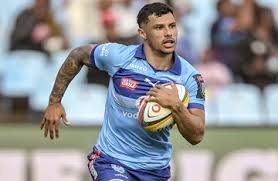
Embrose Papier has stormed his way back into the Springbok starting team.

With the victory in the big game against England safely tucked away in the Done folder, Rassie Erasmus has been able to make the raft of changes that was clearly the desire of the Springbok coach for this Saturday’s Nations Championship Test against Scotland at Loftus Versfeld.

Ten of the 23-man squad that saw off England in impressive fashion at Ellis Park have been retained for the Pretoria match, but only five of them remain in the starting line-up. One of the more interesting selections is the shifting of Damian Willemse, the correct choice for man of the match against England after his outstanding display at fullback, to inside centre.

Jesse Kriel will be alongside him as he retains the No.13 jersey, while Pieter-Steph du Toit, as captain and blindside flank, and Paul de Villiers on the openside, continue to stand in for Siya Kolisi as he recovers from a hamstring injury.

Lock Ruan Nortje, whose work-rate was typically admirable at Ellis Park, is the other player to keep their starting place.

Canan Moodie moves from the bench to starting on the left wing, while scrumhalf Grant Williams, also brilliant at Ellis Park, goes in the other direction. That provides the opportunity for the long-awaited return of Embrose Papier to the Springbok fold. The form scrumhalf of the United Rugby Championship last appeared in Test rugby on November 24, 2018, as a 21-year-old against Wales at the Millenium Stadium.

Jan-Hendrik Wessels, Zachary Porthen and Ben-Jason Dixon retain their places among the substitutes.

Erasmus said Kolisi should be all right to play next week, as should Lood de Jager and Ethan Hooker. The news on Eben Etzebeth and Ox Nche is not so good.

“We want to give Eben proper time because he has had history with concussion. I don’t think he’ll play in the Nations Championship, we should target Argentina [August 8) for his return. Ox, Sacha Feinberg-Mngomezulu and Morne van den Berg should be fit three weeks before the New Zealand series.

“Scotland winning in Argentina did not have any role in our selection. We picked this team for us to make sure we go to the World Cup next year knowing who can do what, where and when under pressure. Scotland played really well, they are a good team and they beat England in the Six Nations. So it could be a tougher game this weekend.

“We didn’t necessarily look at franchise combinations, it was just who is fit to play and players we would like to see what they can do. We don’t have a lot of caps and we will be much less experienced than Scotland. But these players wouldn’t be here if we didn’t think they can do the job.

“The wear and tear on players is tough, although we’re fairly fresh now because we have lots of Japan-based players. But then someone like Siya, who didn’t play for six weeks because his franchise was out of the URC, is well-rested but then got injured.

“So this selection is more about rotation, which is not easy because you always want to win. It’s difficult if you lose because then you lose momentum and belief as well. If Saturday had gone badly, then we would have held some guys back and been more conservative in this selection, making just one or two changes,” Erasmus said.

Given how impressive Papier has been for the Bulls over several successful URC campaigns, his continued absence from the Springbok picture baffled many; there were even (inevitably?) whispers about Erasmus and him having some sort of fallout.

But the coach said he was happy the 29-year-old had forced his way back into contention through sheer performance.

“Embrose has played very well this season,” Erasmus said on Monday when asked what had changed his mind about Papier. “2018 was my first year as coach and he earned his caps then. But then guys like Faf de Klerk, Cobus Reinach and Jaden Hendrikse established themselves, even Herschel Jantjies was involved in winning a World Cup.

“So we had a bunch of really good 9s; sometimes you don’t get selected not because you’re not playing well or because you’re not Springbok class. But you could not look past the way he has played this year, there have been some injuries and some guys have lost form. I am very happy for him personally and we wanted him to play with Handre Pollard, who he is familiar with at flyhalf, which will help him,” Erasmus said.

Speaking of Pollard, there are concerns over the 32-year-old’s form and his return to the starting flyhalf position marks a crucial opportunity for him to dispel any talk of him not being on board for next year’s World Cup. In some circles, Feinberg-Mngomezulu, Manie Libbok and Willemse would be considered ahead of him in the flyhalf pecking order.

Willemse starting at inside centre last happened on September 13 last year – that landmark day when the Springboks handed the All Blacks a record defeat in Wellington. The double World Cup winner had been influential in the No.12 jersey, but then, in the 38th minute, with the Springboks trailing 7-10, Aphelele Fassi was injured and Willemse shifted to fullback.

His performance was a revelation and one of the great individual displays in Springbok history, and Willemse has been in the No.15 jersey for the next seven Tests he played in. But with the unfortunate Fassi back in the Springbok mix for the first time since then, Erasmus wants to get him back up and running. With Andre Esterhuizen concussed, Willemse has the chance to remind everyone how good he is at inside centre as well.

Other players looking to re-state their ability are Edwill van der Merwe, fresh off a hat-trick against the Barbarians, on the wing, Evan Roos at eighthman, Cobus Wiese at lock and Johan Grobbelaar and Boan Venter in the front row. Ntuthuko Mchunu, another standout star in the URC, and Porthen are extremely mobile props on the bench and they will be well-suited to an attacking Scottish side playing at altitude.

Ben-Jason Dixon did well as a replacement lock against England and will surely fill that role again at Loftus Versfeld, with Vincent Tshituka and late inclusion Elrigh Louw providing loose forward cover on the bench. Having originally been left out of the Nations Championship squad following a major knee injury that saw him miss most of 2025, Louw has more to gain than most if he can put up a barnstorming performance on his home ground.

Lions star Quan Horn will provide cover for both the fullback and flyhalf positions, Erasmus confirmed.

“Damian Willemse has done helluva well at 15 and now he has a different role at inside centre, he probably won’t have to catch a lot of box-kicks … But we wanted to give Damian de Allende a rest and we wanted to see Aphelele Fassi at fullback. Quan Horn will cover 10 and 15,” Erasmus said.

Team: Aphelele Fassi; Edwill van de Merwe, Jesse Kriel, Damian Willemse, Canan Moodie; Handre Pollard, Embrose Papier; Evan Roos, Pieter-Steph du Toit (capt), Paul de Villiers, Ruan Nortje, Cobus Wiese, Wilco Louw, Johan Grobbelaar, Boan Venter. Replacements– Jan-Hendrik Wessels, Ntuthuko Mchunu, Zachary Porthen, Ben-Jason Dixon, Vincent Tshituka, Elrigh Louw, Grant Williams, Quan Horn.

Jake does not need social media to create stir 0

Posted on February 01, 2021 by Ken

Bulls coach Jake White has never been averse to stirring up a bit of controversy and, although he does not have much of a social media presence he knows very well how to stoke up conversation before a big game. And in South African rugby, matches don’t get much bigger than the Currie Cup final, which the Bulls will host against the Sharks on Saturday.

But this week White, who admitted that he still feels the pressure of crunch matches, has been strangely restrained and even went as far as to suggest the Sharks might be favourites because half of their team have won the Currie Cup previously. Knowing how canny Jake is though, this is almost certainly some sort of mind game and he will ensure his Bulls team are the most inhospitable of hosts on Saturday.

That’s the thing about  the 57-year-old White, who has been a top-level coach now for almost 20 years, dating back to when he led the Junior Springboks to the U21 World Cup crown in 2002 – there is always a plan and it usually comes off. From utterly transforming a Springbok team that was in disarray in 2004 into World Cup champions in 2007, winning a rare Tri-Nations title along the way, he then took the Brumbies to the 2013 SuperRugby final and the Sharks to the 2014 semifinals, before leading Montpellier to the European Challenge Cup in 2016.

“I’ve been in enough finals and playoffs to know how it works and you can never take away the pressure. So I still feel the pressure and myself and the players will make mistakes, but a final brings the best out of certain players and they take their opportunities. There’s a real buzz in the squad, it’s so nice to be in the changeroom, you can just feel it.

“This is a very proud and driven team, they have a great hunger to win the Currie Cup and I just need to channel that the right way. I felt what it was like to win in the 2007 World Cup and I would like to taste that again, although it doesn’t get easier. But hopefully I can transfer my experience and the lessons I have learnt to the team. I’ll be trying to keep them calm and they must just enjoy the moment,” White said.

Sharks coach Sean Everitt (51) would have had a lot of interaction with White in 2014 because he was one of the Sharks’ assistant coaches, but the relationship between the head coach, his assistants and the players reportedly became strained leading to the World Cup winner spending just a year in Durban.

White was accused of being dictatorial but he has certainly softened since then, and is well-versed in global modern rugby trends.

Everitt’s coaching stock has certainly grown hugely since then as well, and Brad MacLeod-Henderson, who coached with him at the Sharks, winning the Currie Cup in 2013, described him as being a mentor who placed more responsibility on the players.

“Sean is more collaborative, he won’t pitch up and say ‘this is what we are going to do’. He will help the players make the right decisions, depending on the cues the opposition give them. As a former backline player, he’s more creative and he’s in favour of ball-in-hand rugby and having a go. But he wants the players to have a look first; if it’s on, have a go, if not, go to the air. It’s about space and getting the balance right.

“Sean is a great guy and all the players respond well to him being a good person. They have a lot of respect for him, he’s well-liked by the players and they will go the extra mile for him. He has created a good environment  and that’s why the players want to be in Durban because they’re happy on the field,” MacLeod-Henderson told Saturday Citizen on Friday.

John McFarland Column – What made the difference for the Lions? 0

Posted on April 21, 2017 by Ken


The Lions’ win over the Stormers in the weekend’s big game in Cape Town was a fantastic effort.

I predicted last week that whichever side defended better would win the game and that was the case. The key difference was the Lions defence dominated the collisions and were also able to force vital turnovers against the home side.

The Stormers’ defensive policy meant they stayed out of the rucks because the Lions have such width to their game; but that resulted in uncontested, free ball for the Lions and allowed them to build control of the game, and in defence Jaco Kriel and Malcolm Marx were vociferous over the loose ball.

If a team keeps more numbers on their feet in defence then they can build greater width in their defensive line and it is a tactic used by a lot of teams, mainly at wide rucks. With this you should be able to get greater line speed and come harder off the line because of the players on their feet. The Stormers have used this tactic since the Jacques Nienaber era, with the defence outnumbering the attack, and it requires great discipline for players to stay out of the ruck, and so your penalty count will be lower.

If you do defend that way, then you need line-speed and the Stormers didn’t really have that. You need to put pressure on the halfbacks because they are the decision-makers, cut down their space and options, and that was lacking. Elton Jantjies had his best game of the season.

This is completely different to the approach of a team like the Hurricanes, who put pressure on the ball and push the attack backwards, forcing turnovers, which is the hardest ball to defend against.

First prize in defence is to get good tackle contact, maybe a double-hit, and then get over and steal the ball, like Kriel does. The Stormers are lacking a specialist openside flank which means this form of defence suits them, but obviously they need to revisit their recruitment policy and develop or find an openside.

The Stormers were keen on making offloads, getting their hands above the tackle, which means you have to stay up in contact, leaving you vulnerable to the choke-tackle. The Lions were very effective at keeping square and hitting the carrier so that the offload opportunity was nullified or could only be made under extreme pressure. This also resulted in turnovers through the choke-tackle, just like Ireland used in the 2011 World Cup win over Australia.

The Stormers will be disappointed with the blindside try they allowed Sylvian Mahuza to score because the wing should always be up on the short side, Cheslin Kolbe was hanging back which gave space and Harold Vorster ran a wonderful line, through pillar three and four, who were watching the ruck and not him, allowing him to slice through.

It takes a special talent to see the hole in the defence and then to hit it, and Vorster shows how blessed South African rugby is in terms of backline depth. The two leading centres favoured by Allister Coetzee – Damian de Allende and Juan de Jongh – are both injured, so the performances of Vorster have been very encouraging.

The Cheetahs were really on fire for the first 30 minutes of their game against the Chiefs and some of the rugby they played, and the courage they showed to run from deep, was a joy to watch. It just shows that the decision to go with only four South African franchises is going to have the terrible consequence of a lot of people, fine rugby players, losing their livelihoods and jobs, or taking the road overseas.

Francois Venter was very influential with his reverse runs and clever lines, and the Cheetahs still use the strength of their maul well and that caused the Chiefs many problems. They run their exits off the restarts, they take you on first and then look for a short kick. They got good reward from chips during that opening period.

There probably should have been more yellow cards in the first half-hour because the Chiefs were really under the pump and they started to concede penalties rather than tries. They knew that even two penalties against one try was a good deal.

The deliberate conceding of penalties really stops the attacking momentum and after a penalty the offending side then gets territory because they kick deep from the restart! It certainly calls for captains to speak to the referees, the captain needs to put the right sort of pressure on the referee.

Some captains are better at this than others – eg one Richie McCaw! – but it’s a vital thing to get that influence. There are never a lot of yellow cards given because referees don’t want to have an overbearing influence on the game, but there’s normally at least one and it’s important teams find the right time to go to the referee by the captain.

For example, Jan Serfontein’s yellow card last weekend for the Bulls against the Sunwolves was for something not much different to what the Chiefs were doing. But the scoreline influences the decision. In that first half-hour in Bloemfontein, the high tackle when it was a one-on-one by Damian McKenzie was a prime example. He was at the last line of defence and such fouls raise the question of a penalty try.

The Chiefs knew they would score tries at the back end of the match and the Cheetahs’ conditioning was off so the game followed the traditional pattern of South African teams versus New Zealand sides and they ran out of steam in the last 20 minutes.

I was pleased to see the Bulls get back on track and to see CEO Barend van Graan so publicly back the coaching staff. The reward was a quite convincing win and the best result against the Jaguares by a South African team this season.

Congratulations too to all the schools who took part in Easter festivals in South Africa. These are a wonderful showpiece for the game and a very special part of our rugby itinerary. Long may these traditions continue, it’s just wonderful to see the number of games of such quality over the course of a day and that so many come out to support these festivals.

With SA Rugby’s plan for four Super Rugby sides and eight professional Currie Cup sides, you wonder where these highly promising young players are going to get opportunities to play. Obviously the Varsity Cup will be an entry point, hopefully these players will show patience and remain in South Africa.


John McFarland is the assistant coach of the Kubota Spears in Japan and was the Springbok defence coach from 2012 through to the 2015 World Cup, where they conceded the least line-breaks in the tournament and an average of just one try per game. Before that, McFarland won three SuperRugby titles (2007, 09, 10) with the Bulls and five Currie Cup crowns with the Blue Bulls. In all, he won 28 trophies during his 12 years at Loftus Versfeld.


  • Recent Posts

  • Archives

  • Thought of the Day

    Galatians 5:22-23 – “But the fruit of the Spirit is love, joy, peace, patience, kindness, goodness, faithfulness, gentleness and self-control.”

    The fruit of the Spirit are elements of the character of Christ and we should have the constant desire to become more and more like Christ in thought and deed. But what seems impossible for you becomes possible through Jesus. In him, we are filled with love, joy, peace, patience, kindness, goodness, faithfulness, gentleness and self-control.


↑ Top