for quality writing

Ken Borland


The John McFarland Column – Great expectations for the Boks 0

Posted on June 06, 2018 by Ken


I had great expectations for the new-look Springboks last weekend against Wales and I thought a young and energetic team under a fresh coaching staff would play with real vigour and physicality. So it was a surprise to see them play so ponderously and under pressure they seemed scared to take the initiative and impose themselves on the Welsh.

It was strange to see a guy like Ivan van Zyl, who at the Bulls is always keen to move the ball, to keep the flow going, suddenly slow the whole game down. He normally plays an up-tempo passing game, so why did he become a box-kicking player in one week?

To offer some perspective though, it was a difficult away Test and it was obviously just a money-making venture to send them all the way to Washington. It was the  Springboks’ choice  to have only one training session in Washington, and a captain’s run and then play. An international coach has a lot of time for planning and preparation, with Rassie Erasmus resigning from Munster in November,  they had those alignment camps, but they chose not to have training camps which possibly came back to bite them in hindsight.

The conditions were the same for both sides, the Springboks really needed to play a lot more adventurously. Obviously Wales also did a lot of kicking, but whenever the Springboks fielded the ball they tended to slow things down, a whole line of forwards involved in the ruck very slowly setting up the box-kick, and it meant there was no width to the chase. That whole set-up tactic also gives time for the opposition to drop men back to deal with the kick they know is coming because there is no attacking shape, and it’s made easier for them because the chase is so narrow, the Springboks exposing themselves out wide. The big problem for the Springboks was that Wales were able to deal with their kicks and showed more adventure; they were able to put in attacking kicks on the open wing, regain possession and put more pressure on the Boks.

On the positive side, the Springbok set-pieces were good, they scrummed well and were able to get their own lineout ball well, forming the driving maul easily and quickly. Marvin Orie also had the measure of the Wales lineout at the end of the game and was able to steal some crucial balls.

The defence was not up to scratch according to Erasmus, but I didn’t think it was too bad, they had good line-speed when they were set and generally kept the attack from getting gainline and momentum. There are things that they need to put in place better, but they’ve got time now ahead of the first Test against England.

The first try conceded was because of the ball just squirting out at a ruck, while the scrumhalf try after that came after a very poor kick-chase and there was a blocker in the line who took out our props. I don’t understand why they are front-line on a chase, you don’t want to expose them to wings or fullbacks. The Springboks then did not get set in the pillar area, they were moving outwards at pillar two when Tomos Williams broke, which is a basic error.

Obviously they regrouped at halftime and the Springboks’ line-speed forced an error and Travis Ismaiel’s intercept try brought them back in the game. Having been 14-3 down, they did well to get back into it.

But then came the last try conceded by the unfortunate Robert du Preez. One had to ask where the blockers/screen were around the ruck? There was massive space left which enabled Wales to come through easily and put pressure on the replacement flyhalf. Two chargedowns in a passage of play will definitely lead to a try at this level.

While Du Preez had his problems at the end, I also didn’t feel Elton Jantjies controlled the game that well. Van Zyl also did most of the kicking and I think it was probably an instruction for them to kick from scrumhalf because that’s what worked for Rassie at Munster, but then he did have Conor Murray, the best scrumhalf in the world!

Apart from the Springbok scrum being good, they were also very flat and direct on attack from the scrum and they went hard over the gain-line. Jantjies did a lot of this too, but then that means the flyhalf is on the floor for the next two rucks and by the time he is back up on his feet he has static ball, which is why Elton used the outlet of a kick-pass so often. No flyhalf enjoys not having quick ball because that’s when the defence dictates and rushes, and a static flyhalf easily has his wide runners picked off.

The Springboks now need to get back to their best quickly for the England series, which everyone is really looking forward to. It certainly is interesting, as it always is with Eddie Jones and his words off the field. He’s under pressure and deflecting from the fact that England have lost their last four games, which is quite a run and includes their worst ever loss at Twickenham, against the Barbarians in their last outing. They are coming in with no confidence and they rarely win in South Africa – three wins in 13 Tests – so Eddie could be staring down the barrel of seven successive defeats if the Boks hit their straps.

The Springboks are also under pressure though because a world ranking of seven is certainly not where a side with the strength and rugby culture of South Africa wants to be. But it will be a completely different game to Erasmus’s first one in charge, playing at altitude at Ellis Park, which is a super-quick, big field with quick ball.

It’s a bit strange that England have gone to Durban to prepare and have not come straight to altitude. Maybe they wanted to escape winter on the Highveld, but they are definitely going to feel it at the back end of the game and they will need a strong bench to cope. At altitude you have to use 23 players.

I am looking forward to seeing Willie le Roux back at fullback, and with Handre Pollard at flyhalf it means the Springboks have left and right-footed kickers. Willie is tremendous at seeing things on the field, he has great vision in terms of spotting space, and chips and other little kicks -plus he’s lightning quick -to exploit it. He’s also very safe under the high ball.


John McFarland was the Springbok defence coach from 2012 through to the 2015 World Cup, where they conceded the least line-breaks in the tournament and an average of just one try per game. He won three SuperRugby titles (2007, 09, 10) with the Bulls and five Currie Cup crowns with the Blue Bulls as their defence coach. In all, he won 28 trophies during his 12 years at Loftus Versfeld.

He is currently the assistant coach of the Kubota Spears in Japan.


The John McFarland Column: The unsung hero of the Lions’ success 0

Posted on April 25, 2018 by Ken


The Lions’ victory over the Waratahs was a fantastic achievement and one of the best results in the history of our SuperRugby, you have to give credit to the players and the whole coaching staff for pulling off that sort of scoreline in Sydney – and for keeping the New South Welshmen pointless for the first time ever in the competition.

The Lions were really dominant in the scrums and lineouts and they scored some very clever tries. But I would like to single out defence coach Joey Mongalo as their unsung hero.

He took over from JP Ferreira and was under lots of pressure when they started to concede tries in the losses against the Blues, in Argentina and versus the Crusaders, so it is a real credit to him that they have tightened up so much since then. Swys de Bruin took a big punt in appointing his son, Neil, as the skills coach and then he took Joey out of the junior team, where he had been tremendously successful.

It’s a big step up for Mongalo but he can now enjoy the history made in Sydney. He has persevered through the ups and downs and been at the Lions for seven years and was promoted to the Currie Cup last year. He was also the SA U20 defence coach under Dawie Theron and in their last year they finished fourth at the junior world cup. Saru, in their infinite wisdom, decided not to make use of him last year, but he is a quality young coach.

The difference he has made to the Lions’ defence is that they now have great spacing, alignment and width, they really cover the width of the field. They are also very strong in the collisions, guys like Franco Mostert, Harold Vorster and Malcolm Marx really monster guys. They have a great double-hit system which means the ball-carrier can’t get the offload away.

They’ve also shown greater line-speed these last two weeks, they’re coming forward and really laying down the gauntlet to the opposition. With that they can force turnovers through Kwagga Smith and Marx, who is probably the best in the world right now at forcing turnovers. He gets over the ball so often and he is really hard to shift.

The fact that he comes off the lineout and is inside the ball a lot of the time allows him to be very effective at turnovers. The hooker role has changed over the last few years because of the nature of how teams contest for possession and one of the best at stealing ball I ever worked with was Bismarck du Plessis. The hooker nowadays basically defends the inside channel, which enables him to be close to his target.

The other impressive feature of the Lions’ play against the Waratahs was the quality of their kicking game and their lack of fear in doing it anywhere on the field. Elton Jantjies was even prepared to put in a crossfield kick off turnover ball five metres from the goal-line. There was also a great little chip from scrumhalf Dillon Smit in the middle of the field that bounced into Ruan Combrinck’s hands and Kwagga scored.

They have the courage to do it when it’s not expected and they execute those kicks so well. The Lions also have very good chasing wings.

Swys de Bruin obviously gives them the confidence to try anything anywhere on the field and you can never accuse him of taking the safe option. He’s also had his ups and downs as a coach – he spent a long time at the Sharks Academy before Johan Ackermann brought him back into the coaching fold. He brings confidence and a sense of adventure to Lions rugby.

One must also give credit to forwards coach Philip Lemmer. Those two tries from drives off the lineout were really well executed and the way they shifted and created a channel for Marnus Schoeman, ripping a wide open gap for him to go through, was very clever.

So it was almost the perfect performance away from home by the Lions, I expect them to back it up by beating the Reds this weekend, and it is a smart move by Springbok coach Rassie Erasmus to add Swys to the consulting team for the England series. Does it mean the Springboks will play with that same freedom as the Lions do?

Well Rassie is naturally quite a conservative coach so it will be interesting to see if Swys will free up the backs.

Elton Jantjies is now the most capped Lions player ever, having gone past Cobus Grobbelaar’s 94 appearances earlier this season, and he is hardly ever injured, so he is tremendously resilient and looks after his body well. The Lions’ style of play is tailor-made to his strengths and it was encouraging to see him dictate matters in an away game, having shown previously he’s obviously very good at altitude. A lot of it comes down to the backing Swys de Bruin gives him and the question is whether he will now get the same with the Springboks.

I thought the Bulls were good value for their win over the Rebels. Sometimes you have to win ugly but to bank the five points despite that was excellent and coach John Mitchell won’t mind doing that every week.

Adriaan Strauss is certainly in brilliant form, last year’s break did him good and he has dropped some weight. In fact, I have worked with Atta since the U21s and this is the fittest I have ever seen him. He has always been a world-class player, but in the environment Mitchell has created at Loftus Versfeld, he is really performing. Having him there really adds accuracy to the set-pieces and he almost always hits his jumpers with his dead-eye-dick throws.

That brings RG Snyman and Lood de Jager into play and that forms the axis of the Bulls side with flyhalf Handre Pollard.

Under the new regime, Lood is also fitter and more mobile and the offloads and supporting lines of the Bulls forwards are very good, they look to keep the ball alive in space. Their scrum also functioned quite well against the Rebels and they created a great angle on the crucial try scored by Divan Rossouw just before halftime. They took a whole lot of Rebels defenders out of the game, they could not get across in time and the visitors basically ran out of tacklers.

Pollard is also providing direction with the boot and is enjoying a good string of matches, plus you have the magic and game-breaking ability of Jesse Kriel and Warrick Gelant, who has such incredible feet, he could get his way out of a phone box full of tacklers!

In fact there are now a lot of players with good feet on display in South African rugby, there’s that stepping ability. New Zealand’s guys tend to rely on their size, but we’re starting to produce it on the wings, guys who are really quick with good feet and are good in the air, which is going to be crucial in the Rugby Championship and against England.

The Rebels’ tactics are well-known on the Highveld, trying to slow down or stop the game, which gives their forwards longer time to recover. Visiting teams to Pretoria either stack their bench with forwards in a 6/2 split, so for the last 20 minutes they almost have a fresh pack on, or they slow the game down, sit down often and make the whole pace slower.

But hopefully the Bulls will also be able to turn over the Highlanders on the Highveld this weekend.

The Sharks versus Stormers game was obviously between two teams desperate for a win and the loss puts real heaps of pressure now on the Stormers. They’ll have to win with bonus points in their next five games in the Cape, which is possible. But for the Stormers to win with bonus points they need to be far more defensively secure than they have been.

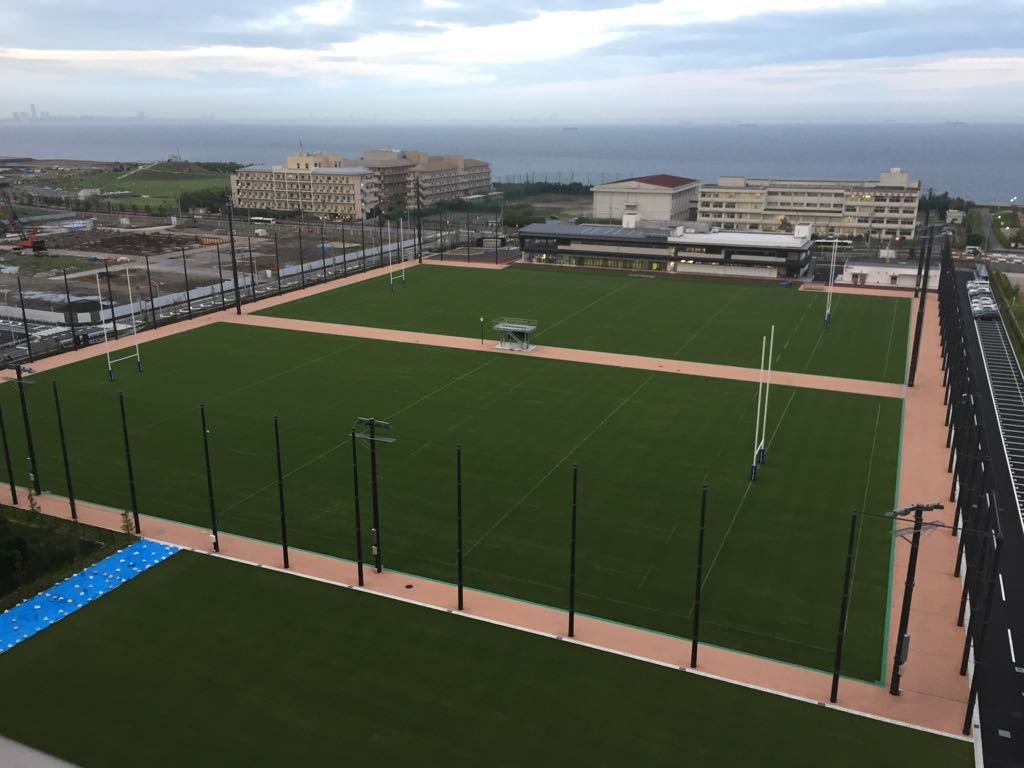
But I look forward to watching the games in my 11th floor Tokyo flat, which overlooks the Springbok training facility for next year’s World Cup. I hope I am still here next year to look out my window and watch them train!


Urayasu City World Cup training facility - where the Springboks will be based while in Tokyo

Urayasu City World Cup training facility – where the Springboks will be based while in Tokyo


John McFarland won three SuperRugby titles (2007, 09, 10) with the Bulls and five Currie Cup crowns with the Blue Bulls as their defence coach. In all, he won 28 trophies during his 12 years at Loftus Versfeld.

He is currently the assistant coach of the Kubota Spears in Japan and was the Springbok defence coach from 2012 through to the 2015 World Cup, where they conceded the least line-breaks in the tournament and an average of just one try per game.


It was an unpromising start … but Boucher has flourished in new role as coach 0

Posted on May 31, 2017 by Ken


As a player, Mark Boucher showed many times that he was a difficult man to rattle, a tenacious character who was at his best when his back was against the wall. But even he was shaken by the start to his coaching career.

Due to a prior commitment to play golf in the prestigious Alfred Dunhill Links Championship in Scotland, Boucher was not actually at SuperSport Park when the Titans began their competitive season with a four-day game against the Knights. It started well enough with the Titans securing a 113-run first-innings lead on the opening day.

Boucher was keeping a regular eye on proceedings via his mobile phone and was on the 14th tee box at Carnoustie, rated one of the nastiest courses in the world with a particularly tough stretch of closing holes, when he checked the latest score on the second day of the Sunfoil Series match.

The Titans had been bowled out for 57, their lowest score ever, and Boucher had to phone a friend to check that the extraordinary collapse was, in fact, real.

“On 14, 15, 16 and 17, I hit all my tee shots out of bounds. But I guess it’s one of those things that happens in cricket; the other day the Bangalore Royal Challengers were bowled out for just 49 with Virat Kohli, AB de Villiers and Chris Gayle in their line-up.

“But it wasn’t great to see and I knew the only way the players would really get better is by being very honest about it. But we lost the next game as well, another poor performance, so we had to work really hard at practice and we won the next two games really well, both by an innings, and that was the turnaround,” Boucher told Saturday Citizen.

From the unpromising beginnings of that spluttering start, the Titans dominated the rest of the season. They only just failed to repair the damage of those first two Sunfoil Series losses, finishing only 1.78 points behind the Knights, but claimed the CSA T20 Challenge and Momentum One-Day Cup in convincing fashion.

Boucher modestly suggests he had luxury sedans to deal with in terms of the players at his disposal, but the way he has worked with cricketers from throughout the spectrum – seasoned former internationals, current Proteas, exciting youngsters who have pushed themselves to the brink of international cricket, and those journeymen who are the stalwarts of a team – as well as the media and administrators, has been highly impressive.

“The Titans always had a very successful set-up, the culture was very strong, and I always looked up to them as a player. They’ve had years of good discipline and a good team ethic.

“And they knew how to win. So it was just a case of trying to keep that culture and adding my knowledge. It would be difficult not to be successful with all that talent,” the 40-year-old said.

But he has handled the challenges of balancing a team with the Black players and keeping the left-out White players happy extremely well.

“I knew it would be a challenge, but I’ve enjoyed it. The emphasis has been on team, there are a lot of stars and great players here, but team is what makes it tick. A lot of players who would play every game with the other franchises have had to sit out and in the limited-overs finals Shaun von Berg and David Wiese had to miss out, which was really hard because they both had very good seasons. But they made good with the time they had,” Boucher said.

The nuggety wicketkeeper/batsman had an inspirational effect on his Proteas team-mates and it seems those qualities have transferred to his new career as a coach.

“Not every good player becomes a good coach but I have always enjoyed working with players. Mickey Arthur said I should go help the bowlers with their batting so they could stick around with me in the lower-order, and I spent a lot of time giving Paul Harris, Morne Morkel and Dale Steyn short balls from the bowling machine. They didn’t particularly like it, but it worked!

“So I think there is a bit of that mould in me, but I’m a completely different coach to how I was as a player. I don’t mind using harsh words, but I try to be fair. I had so many coaches in my playing days so my attitude is ‘what would I have liked as a player in this situation?’,” Boucher said.

Surprisingly, he finds the white-knuckle moments the hardest.

“My big challenge is dealing with pressure, it’s twice as bad as the coach because you can’t do anything about it out in the middle! So I have to look in the mirror and tell myself I need to calm down because the players can feed off that. I’m still a young coach and I’m still learning.”

https://www.pressreader.com/south-africa/the-citizen-gauteng/20170520/282497183600083

A passionate, top-class SA coach without a job 0

Posted on May 24, 2017 by Ken


Despite a poor final year in charge of the Springboks, there is little doubt Heyneke Meyer remains a top-class coach and it is a symptom of a sick South African rugby system that the 49-year-old is without a full-time coaching job despite making it clear that he still wants to make a difference to the game in this country.

Meyer was back at Loftus Versfeld a couple of days ago to launch the Beachcomber World Club 10s, a unique tournament for professional teams in a social environment, that will be held in Mauritius next month, but there is no doubt he still harbours a burning desire to be involved in the cauldron of top quality rugby again judging by the passion with which he answered a range of questions on South African rugby.

Although a great admirer of New Zealand rugby and a personal friend of All Blacks coach Steve Hansen, Meyer makes a good point when he says a drive to play like the Kiwis do is a case of chasing the wind for South African rugby.

He reckons it will take us 10 years to catch up to their style of play, by which time their game will have evolved and they will still be 10 years ahead of South Africa. It is perhaps a symptom of our insecurity as a nation that we are always trying to copy other teams – in the early 2000s it was Australian rugby that was the flavour of the month.

Meyer, who has been working with plenty of New Zealanders and Fijians in his part-time role as coach of the Asia Pacific Dragons team, points to a higher innate skills level as one of the main reasons South Africans will find it very difficult to emulate the free-flowing, expansive style of the Kiwis.

“South Africans don’t have the same natural understanding of space that they do, but I truly believe any of our teams can still beat a New Zealand team, especially at home. But if we try and follow them then we’ll never be the best in the world. We have to rediscover what we stand for and play South African rugby – brilliant set-pieces, driving, strong defence. We must do what we’re good at and kick intelligently, not just kick the ball away,” Meyer said.

The national coach from 2012 to 2015 made the point that ex-Springbok coaches are practically driven out of the country and pointed to Eddie Jones travelling from Australia to South Africa and now to England as an example of the value of experience, even if it comes from losing a few games.

“Eddie lost eight games in a row with Australia and was fired, he then helped the Springboks and learnt a lot there. In fact England are now playing like the Boks used to – they have great set-pieces, a great defence and kicking game, they still score tries and they’re on a winning run. It would be 50/50 right now between them and the All Blacks.”

Many observers have pointed to the speed at which New Zealand teams play the game and Meyer said this difference was most marked towards the end of matches, due to the superior fitness of the Kiwis.

“The All Blacks have always been superior in terms of fitness. We have big, strong guys, but it’s harder to get them fit. New Zealand have smaller but more mobile players and they run you ragged in the last 10-15 minutes. Central contracting means Steve Hansen knows the fitness of all his players and whether they need to rest or work harder.

“But you can’t do major fitness work if your players are tired or injured and our guys going overseas makes it very difficult, I’m very concerned about all the guys in Japan because you can’t play for 12 months. Before the last World Cup, I did not see the players for eight months so I asked for fitness reports from the franchises and nobody sent them in.

“So when I got the players I knew we were in trouble and the guys were not fit for the first game against Japan. But the All Blacks get to rest for three months after SuperRugby, so they’re super-fit for the next year, but we’re playing Currie Cup or in Japan. It’s very difficult for the South African coaches,” Meyer said.

https://www.pressreader.com/south-africa/the-citizen-gauteng/20170513/282578787965088

  • Recent Posts

  • Archives

  • Thought of the Day

    Revelation 3:15 – “I know your deeds, that you are neither cold nor hot. I wish you were either one or the other.”

    How can you expect blessings without obeying?

    How can you expect the presence of God without spending time quietly before him?

    Be sincere in your commitment to Him; be willing to sacrifice time so that you can grow spiritually; be disciplined in prayer and Bible study; worship God in spirit and truth.

    Have you totally surrendered to God? Have you cheerfully given him everything you are and everything you have?

    If you love Christ, accept the challenges of that love: Placing Christ in the centre of your life means complete surrender to Him.


↑ Top