for quality writing

Ken Borland


The John McFarland Column: Why are there so few Lions backs in the Springbok squad? 0

Posted on May 30, 2018 by Ken


The Lions have an unbelievable record against all other South African SuperRugby franchises since 2015 and they have consistently been our best team. It really is an amazing record, their dominance of South African rugby is the reason they have been in two successive finals and they have consistently scored the most tries in the competition, so you have to ask why they have so few backs in the new Springbok squad?

With only Aphiwe Dyantyi and Elton Jantjies named in the 43-man squad, there may be no Lions back in the starting line-up against England, which is quite interesting when you consider they have been beating everyone else in South Africa convincingly, and especially with their coach, Swys de Bruin, now with the Springboks as a backline consultant.

There have been suggestions that new Springbok coach Rassie Erasmus is concerned with the defensive prowess shown by our SuperRugby franchises, but the Lions in 2016 had one of the best defences in the competition and you have to play, you can’t just kick the ball downfield and defend.

It’s also interesting that none of the first-choice back three from last year’s Springboks – Andries Coetzee, Raymond Rhule and Dillyn Leyds – have been selected by Erasmus.

It is true to win big competitions you need a rock-solid defence.

If you look at the points conceded figure for our teams, the four South African outfits have all leaked between 381 and 392 points, an average of 27.2-29.8 points per match. In terms of tries conceded, the figures are 49 to 52 per side, which amounts to an average of 3.5-3.7 per game.

In comparison, the Jaguares, who are strong contenders to win the South African Conference, are conceding just 26.2 points and 3.4 tries per match. Only the Sunwolves, the bottom team in SuperRugby, have worst stats than the South African franchises.

What is causing our teams to concede so many points? You can’t just say it’s because we now have an attacking mindset. Not one of our sides has been really convincing defensively, which perhaps reflects where most of them are on the overall log. At Test level, the Springboks used to work on trying to concede less than an average of 15-16 points per game, and 11-12 at the World Cup, with just one try. Then, more often than not, you would be on the winning side. It is imperative to get back to these sort of stats now going forward because big Test matches are often gain-line arm-wrestles.

The really good news for the Springboks though is that England have just conceded nine tries and 63 points against a scratch BaaBaas XV, both record lows for them at Twickenham. So their defence is in real trouble and in their last four games one began to notice some real cracks both in terms of their system and individual tackles.They really are sitting before the tackle which causes them to miss so many and any ‘backdoor’ second-line plays cause total disconnection and confusion.

Eddie Jones turned on his players viciously, saying some of them couldn’t cope with the pace of international rugby, but he picked them in the first place, and it will be even harder on super-fast highveld fields with altitude as a factor.

To get back to our Lions, their win over the Stormers at the weekend was so vital because it maintains a buffer between them and the Jaguares, who have a game in hand but are six points behind. It was an exciting battle with the Stormers exploiting the Lions fullback getting into the defensive line early with attacking kicks and the Lions exploiting the home side’s flimsy defence of the rolling mauls and around the edges – the way Nic Groom dummied Ramone Samuels to score was way too easy.

There is also a difference in the way the Lions use the rolling maul these days, they are prepared to wheel it more in order to exploit space and take out the defenders stopping the maul. It is really good use of forces and you have to credit Philip Lemmer for bringing in something different and innovative.

You have to praise the Lions for the win, but the Stormers will rue the red card to Raymond Rhule. You just can’t do what he did anymore on a rugby field, although the nature of his suspension and those of other players in recent weeks does raise fresh questions over exactly how the judiciary works in SuperRugby. How can the ban cause them to effectively miss no rugby?

The Sharks were really outplayed by the Jaguares in Buenos Aires but they also did some sloppy things.

Coach Robert du Preez also made a massive statement during the week that they would be in the final either this year or next, which smacked of desperation and false news from a side scrambling for a quarterfinal place, and about to come up against one of the form teams in SuperRugby.

The Sharks’ pillar defence was just not good enough last weekend, the guys were either too wide or too upright. You can’t allow yourself to just be cut so easily next to the ruck, that should be the strongest part of your defence because that’s where the ball is, but for the Sharks, it was their weakest area.

The Jaguares did finish well and wing Ramiro Moyano scored three tries and they were backing up the ball-carrier well. The try they scored just before halftime to go 17-0 up would have hurt the most for the Sharks because they were slow to react, players had their backs to the ball and conceding a try from a quick-tap penalty is the sort of thing you can’t afford away from home.

It’s a very long trip to Buenos Aires and they had a quick turnaround from their last game, but the Sharks looked sluggish. The Bulls had similar problems the week before and how to manage that trip is something the South African teams have to sort out. When I was involved with the Springboks, we found it better to train in South Africa for two sessions, then fly over, have a captain’s run and play.

It is pleasing, however, to see the Jaguares hit their straps and when SuperRugby resumes they will have three vital games left in which to clinch their playoff place. Their Australasian tour proved that they can win on the road and they have been really impressive in their recent bonus point wins at home, so they are building nicely. It will still, however, be a big test for them to host the Stormers and then play the Bulls and Sharks away after they have played Tests against Wales and Scotland.

The Bulls were also really disappointing last weekend and they will look at their game against the 14-man Brumbies and really rue their defeat – it will probably be the game that loses them a playoff place.

They did some really good things on attack – Handre Pollard’s show-and-go try and Roelof Smit scoring out wide – but their defence is just not good enough for them to be playoff contenders. An example of that was when they had three defenders on two attackers after the restart turnover, but they all just rushed up and opened the space for the Brumbies on the outside. They will also be disappointed with the try when fullback Tom Banks ran the whole length of the field to score.

The Bulls are just not able to stop momentum close to the rucks, their opponents get go-forward too easily, and especially in the 22 that generally means seven points against you because it leads to space around the pillars, something which Brumbies scrumhalf Joe Powell exploited.

The Bulls have certainly been more entertaining this season but they need to step up over the next few weeks. Pretoria only really comes out to the stadium for winning rugby. The Bulls have a lot of talent in key areas, the locks are the envy of every team and the fetchers are second to none, and they have real X-factor in their outside backs.

Pollard has played plenty of Tests and is at the peak of his powers, Jesse Kriel too, and they have more players in the Springbok squad than the Lions, so how come are the Southern Gauteng side so far ahead of them? The Bulls are certainly an enigma, they do a lot of good things in every game, they just need that consistency of performance, they are too up-and-down at the moment.

On a parting, more positive note, my heartiest congratulations to Siya Kolisi on his well-earned appointment as captain for the England series. I am sure he will fly the South African flag high and do the position proud.


John McFarland was the Springbok defence coach from 2012 through to the 2015 World Cup, where they conceded an average of just one try per game and the least line-breaks in the tournament. He is now the assistant coach of the Kubota Spears in Japan and before that, McFarland won three SuperRugby titles (2007, 09, 10) with the Bulls and five Currie Cup crowns with the Blue Bulls. In all, he won 28 trophies during his 12 years at Loftus Versfeld.
The John McFarland Column: The unsung hero of the Lions’ success 0

Posted on April 25, 2018 by Ken


The Lions’ victory over the Waratahs was a fantastic achievement and one of the best results in the history of our SuperRugby, you have to give credit to the players and the whole coaching staff for pulling off that sort of scoreline in Sydney – and for keeping the New South Welshmen pointless for the first time ever in the competition.

The Lions were really dominant in the scrums and lineouts and they scored some very clever tries. But I would like to single out defence coach Joey Mongalo as their unsung hero.

He took over from JP Ferreira and was under lots of pressure when they started to concede tries in the losses against the Blues, in Argentina and versus the Crusaders, so it is a real credit to him that they have tightened up so much since then. Swys de Bruin took a big punt in appointing his son, Neil, as the skills coach and then he took Joey out of the junior team, where he had been tremendously successful.

It’s a big step up for Mongalo but he can now enjoy the history made in Sydney. He has persevered through the ups and downs and been at the Lions for seven years and was promoted to the Currie Cup last year. He was also the SA U20 defence coach under Dawie Theron and in their last year they finished fourth at the junior world cup. Saru, in their infinite wisdom, decided not to make use of him last year, but he is a quality young coach.

The difference he has made to the Lions’ defence is that they now have great spacing, alignment and width, they really cover the width of the field. They are also very strong in the collisions, guys like Franco Mostert, Harold Vorster and Malcolm Marx really monster guys. They have a great double-hit system which means the ball-carrier can’t get the offload away.

They’ve also shown greater line-speed these last two weeks, they’re coming forward and really laying down the gauntlet to the opposition. With that they can force turnovers through Kwagga Smith and Marx, who is probably the best in the world right now at forcing turnovers. He gets over the ball so often and he is really hard to shift.

The fact that he comes off the lineout and is inside the ball a lot of the time allows him to be very effective at turnovers. The hooker role has changed over the last few years because of the nature of how teams contest for possession and one of the best at stealing ball I ever worked with was Bismarck du Plessis. The hooker nowadays basically defends the inside channel, which enables him to be close to his target.

The other impressive feature of the Lions’ play against the Waratahs was the quality of their kicking game and their lack of fear in doing it anywhere on the field. Elton Jantjies was even prepared to put in a crossfield kick off turnover ball five metres from the goal-line. There was also a great little chip from scrumhalf Dillon Smit in the middle of the field that bounced into Ruan Combrinck’s hands and Kwagga scored.

They have the courage to do it when it’s not expected and they execute those kicks so well. The Lions also have very good chasing wings.

Swys de Bruin obviously gives them the confidence to try anything anywhere on the field and you can never accuse him of taking the safe option. He’s also had his ups and downs as a coach – he spent a long time at the Sharks Academy before Johan Ackermann brought him back into the coaching fold. He brings confidence and a sense of adventure to Lions rugby.

One must also give credit to forwards coach Philip Lemmer. Those two tries from drives off the lineout were really well executed and the way they shifted and created a channel for Marnus Schoeman, ripping a wide open gap for him to go through, was very clever.

So it was almost the perfect performance away from home by the Lions, I expect them to back it up by beating the Reds this weekend, and it is a smart move by Springbok coach Rassie Erasmus to add Swys to the consulting team for the England series. Does it mean the Springboks will play with that same freedom as the Lions do?

Well Rassie is naturally quite a conservative coach so it will be interesting to see if Swys will free up the backs.

Elton Jantjies is now the most capped Lions player ever, having gone past Cobus Grobbelaar’s 94 appearances earlier this season, and he is hardly ever injured, so he is tremendously resilient and looks after his body well. The Lions’ style of play is tailor-made to his strengths and it was encouraging to see him dictate matters in an away game, having shown previously he’s obviously very good at altitude. A lot of it comes down to the backing Swys de Bruin gives him and the question is whether he will now get the same with the Springboks.

I thought the Bulls were good value for their win over the Rebels. Sometimes you have to win ugly but to bank the five points despite that was excellent and coach John Mitchell won’t mind doing that every week.

Adriaan Strauss is certainly in brilliant form, last year’s break did him good and he has dropped some weight. In fact, I have worked with Atta since the U21s and this is the fittest I have ever seen him. He has always been a world-class player, but in the environment Mitchell has created at Loftus Versfeld, he is really performing. Having him there really adds accuracy to the set-pieces and he almost always hits his jumpers with his dead-eye-dick throws.

That brings RG Snyman and Lood de Jager into play and that forms the axis of the Bulls side with flyhalf Handre Pollard.

Under the new regime, Lood is also fitter and more mobile and the offloads and supporting lines of the Bulls forwards are very good, they look to keep the ball alive in space. Their scrum also functioned quite well against the Rebels and they created a great angle on the crucial try scored by Divan Rossouw just before halftime. They took a whole lot of Rebels defenders out of the game, they could not get across in time and the visitors basically ran out of tacklers.

Pollard is also providing direction with the boot and is enjoying a good string of matches, plus you have the magic and game-breaking ability of Jesse Kriel and Warrick Gelant, who has such incredible feet, he could get his way out of a phone box full of tacklers!

In fact there are now a lot of players with good feet on display in South African rugby, there’s that stepping ability. New Zealand’s guys tend to rely on their size, but we’re starting to produce it on the wings, guys who are really quick with good feet and are good in the air, which is going to be crucial in the Rugby Championship and against England.

The Rebels’ tactics are well-known on the Highveld, trying to slow down or stop the game, which gives their forwards longer time to recover. Visiting teams to Pretoria either stack their bench with forwards in a 6/2 split, so for the last 20 minutes they almost have a fresh pack on, or they slow the game down, sit down often and make the whole pace slower.

But hopefully the Bulls will also be able to turn over the Highlanders on the Highveld this weekend.

The Sharks versus Stormers game was obviously between two teams desperate for a win and the loss puts real heaps of pressure now on the Stormers. They’ll have to win with bonus points in their next five games in the Cape, which is possible. But for the Stormers to win with bonus points they need to be far more defensively secure than they have been.

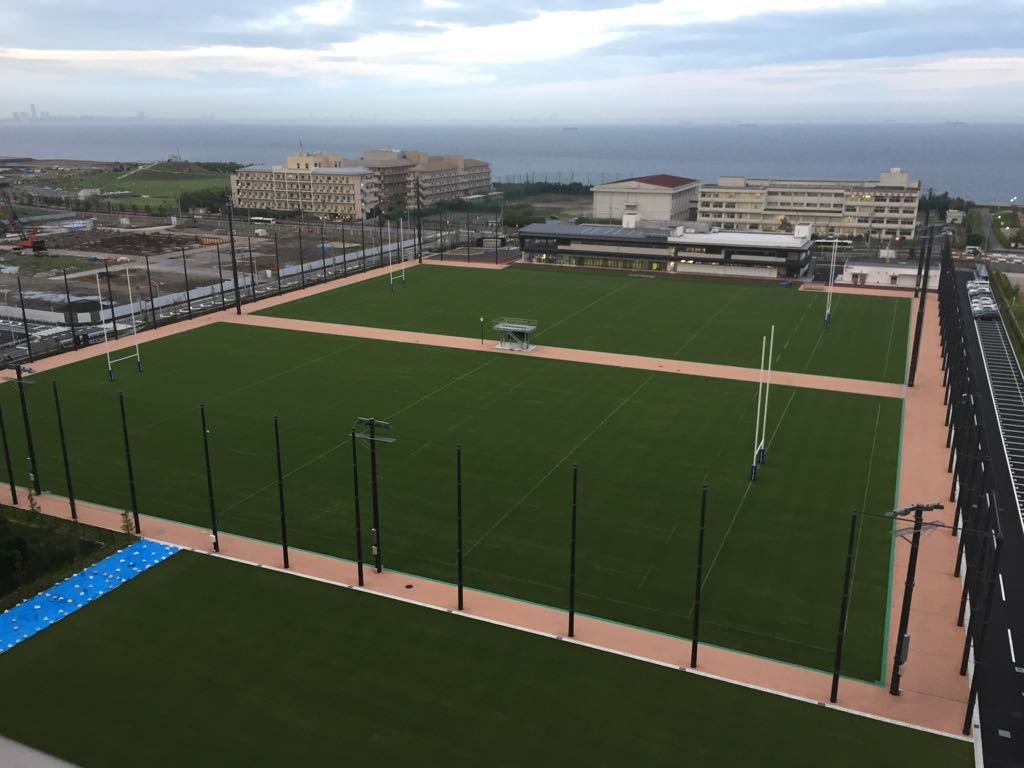
But I look forward to watching the games in my 11th floor Tokyo flat, which overlooks the Springbok training facility for next year’s World Cup. I hope I am still here next year to look out my window and watch them train!


Urayasu City World Cup training facility - where the Springboks will be based while in Tokyo

Urayasu City World Cup training facility – where the Springboks will be based while in Tokyo


John McFarland won three SuperRugby titles (2007, 09, 10) with the Bulls and five Currie Cup crowns with the Blue Bulls as their defence coach. In all, he won 28 trophies during his 12 years at Loftus Versfeld.

He is currently the assistant coach of the Kubota Spears in Japan and was the Springbok defence coach from 2012 through to the 2015 World Cup, where they conceded the least line-breaks in the tournament and an average of just one try per game.


Top of the log speaks volumes for Dragons’ clinical edge 0

Posted on November 30, 2017 by Ken


It speaks volumes for the new clinical edge in Sihle Ntuli’s Drakensburg Dragons side that last year’s Premier Hockey League wooden-spoonists overcame vastly different challenges to win both their games and top the men’s log after the opening weekend of the 2017 competition at the Randburg Astro.

In their opening game, the Dragons hammered last year’s runners-up, the Addo Elephants, 4-0, defending stoutly and being ruthless in finishing their chances at the other end.

The next day, they had to survive the anxiety of a shootout to beat the Golden Gate Gladiators 3-1, after the match ended 2-2 after full time.

“The biggest disappointment last year was that if we look at all our games, we actually outplayed our opponents. The stats were in our favour but we just didn’t convert, so for us to come away with four goals was a really good start to our tournament.  A big thing for us was to not concede – that’s a very good sign for us. The Elephants team have some good players up front so it was a great defensive effort,” coach Ntuli said.

In the women’s tournament, the defending champion Blyde River Bunters ensured that they finished the first weekend on top of the standings as they beat the Namaqualand Daisies SA U21 side in a washed out match that had to be decided by a shootout, and then beat the St Lucia Lakers 3-1 thanks to a brace from Thati Segaole.

“The conditions were difficult to play flowing hockey. There were a couple of concepts that we did very well though. We’ve just got to do a few tweaks and I’m happy that we can do that. So I have all the confidence in the world that we will get better as the tournament progresses,” coach Lindsey Wright said.


The John McFarland Column: Let’s get real about the Currie Cup 0

Posted on November 02, 2017 by Ken


The Currie Cup final was a real spectacle, but it is a competition that SA Rugby really needs to sort out and it doesn’t any longer have any real bearing on Springbok selection for the end-of-year tour.

The Currie Cup staggered to the playoff rounds, when there was far more interest, but the competition cannot overlap with SuperRugby, teams can’t be playing three games in a week and we can’t have the situation we had this year with the Free State Cheetahs starting with a team on fire, winning five of their first six games, but then having to go and play in the Pro14.

SA Rugby needs to get the crowds back to the Currie Cup, it is the most traditional South African tournament and every player and coach, when they set out on their career, they want to win it. The basis of South African rugby is unions, not franchises, that’s how they run it, so the Currie Cup should be SA Rugby’s main competition.

One must commend the two smaller unions, the Pumas and Griquas, for showing how much they belong in the tournament. The Pumas hammered the Blue Bulls by 50 and Griquas beat eventual champions Western Province, and both teams gave some of the other sides real frights.

The Springboks have shown good continuity in their selection – Lukhanyo Am has been recalled after being in the squad in June, Louis Schreuder was there already and Warrick Gelant has been part of the training camps. You don’t want to keep starting again with new players and you don’t want the situation where guys have to fly in and out because of the game against Wales on December 2 falling outside the international window.

Allister Coetzee has been pretty consistent in selection this year and the players have responded because it shows the coach has belief in them, after a good run in which the only team to beat them has been the All Blacks.

Ireland, they’re first up, will be the toughest game for the Springboks on their tour, because of where they are after a stellar year, but I expect South Africa to beat France, Italy and Wales. If the Springboks can win all four tour games, it would be a very good year indeed.

Against Ireland, the Springboks will need a solid lineout and a bit of size around the field, which is why I think Pieter-Steph du Toit will be chosen as a back-row forward from now on. They will need to dominate the set-pieces and have a good kicking game on those fields. The back three will need to absorb pressure and put it back on Ireland because Conor Murray kicks 70% of the time for Munster and kicking from scrumhalf, there’s always a good chase.

The Springbok team is always chosen before the Currie Cup final so that you don’t make emotional decisions, so there are no late inclusions and no outsiders suddenly selected. International rugby is really high-pressure and you need guys who have played well consistently.

Curwin Bosch showed some great moments of class in the final, especially with his kicking game – that drop goal was particularly brilliant. But he’s been in the system since he was 16, part of South African rugby’s elite programs, flagged as a major talent. But it’s obvious he has a weakness in defence, in fact it’s his only real weakness.

This will obviously have to be worked on during the end-of-year tour, but why hasn’t it been worked on already? There are no small centres in international rugby anymore and if he’s going to play in the flyhalf channel then he has no choice – he has to fix his defence or move to fullback.

Robert du Preez certainly put his hand up in the final and I am sure he will get his chance with the Springboks. He now needs a good SuperRugby season.

In the game itself, the other big defensive lapse came when Nizaam Carr picked up against the wheel of the scrum and there was very poor defence by the Sharks flank, it was their dominant scrum but he still allowed the Western Province eighthman to get around him and set up the try.

The final showed the value of a great set-piece and forward-dominance. Western Province were completely in charge from the time their front row was dominant.

The Sharks were maybe a little over-confident after their scrum demolished the Blue Bulls in the semi-finals, but hats off to Wilco Louw and JC Janse van Rensburg.

Wilco has received plenty of deserved plaudits, but hats off to JC as well, who is a real stalwart, especially at the scrummage. Many a tighthead has come off second-best against him and he is unfortunate not to have a Springbok cap, although he did go on tour with us to Great Britain in 2012.

It was a clear turning point in the game when Western Province scored a try just before halftime, with Damian Willemse having the vision to evade Kobus van Wyk’s spot-tackle. There are always risks to rushing out like the Sharks wing did, and Western Province kept the ball for a number of phases after the break by their fullback and the try left them only five behind going into the second half, when Western Province just completely pegged down the Sharks through the dominance of their pack and set-piece.

The Sharks were probably the better team in broken-field play, they have quite exciting backs, and they got a lot of mileage from the kickoffs. That’s a basic thing, but it seems most locks in the Currie Cup were not able to catch the ball! So that’s a work-on for South African teams ahead of SuperRugby.

For the Sharks, they can still approach 2018 with some confidence. They chose not to pick the experienced Chiliboy Ralepelle in their squad for the final, and they’ll have him and Beast Mtawarira back in the front row. They’ll also have some nice physicality in the backs with Robert du Preez arriving at flyhalf and Andre Esterhuizen, Lukhanyo Am, Marius Louw and Louis Schreuder around him.


John McFarland is the assistant coach of the Kubota Spears in Japan and was the Springbok defence coach from 2012 through to the 2015 World Cup, where they conceded the least line-breaks in the tournament and an average of just one try per game. Before that, McFarland won three SuperRugby titles (2007, 09, 10) with the Bulls and five Currie Cup crowns with the Blue Bulls. In all, he won 28 trophies during his 12 years at Loftus Versfeld.

  • Recent Posts

  • Archives

  • Thought of the Day

    Revelation 3:15 – “I know your deeds, that you are neither cold nor hot. I wish you were either one or the other.”

    How can you expect blessings without obeying?

    How can you expect the presence of God without spending time quietly before him?

    Be sincere in your commitment to Him; be willing to sacrifice time so that you can grow spiritually; be disciplined in prayer and Bible study; worship God in spirit and truth.

    Have you totally surrendered to God? Have you cheerfully given him everything you are and everything you have?

    If you love Christ, accept the challenges of that love: Placing Christ in the centre of your life means complete surrender to Him.


↑ Top