for quality writing

Ken Borland


Ndumo Game Reserve 0

Posted on June 03, 2020 by Ken

I’m sure I speak for most birdwatchers when I say it’s funny how the memory of spotting a Lifer is often permanently seared on the brain with the details of the moment immediately springing to mind.

So much so that when I came across this sightings list from a February 2006 trip to Ndumo Game Reserve in northern Zululand, I could immediately picture in my mind’s eye the little loop off the Paphukulu road that goes around a corner and then crosses a dry river bed before going slightly uphill again and returning to the main road.

As one approaches the dried up river, there is a thorn tree on the other side that hangs over the bank and there, in the gathering gloom of dusk, was a massive owl perched on the edge of the branches, surprisingly exposed.

By its large size I was immediately thinking Giant Eagle Owl and a quick squizz through the binoculars confirmed the diagnostic pink eyelids of the bird now known as Verreaux’s Eagle Owl, annoyingly because those French naturalists had nothing to do with the discovery nor naming of the bird.

The Giant Eagle Owl normally spends its days perched inside a leafy tree along a watercourse and they often begin their nightly hunting forays along an open, dry riverbed.

So perhaps my Lifer Giant Eagle Owl was eager to get going with what would have been its ‘breakfast’. For which I was very grateful and shall always remember my first sighting of what is truly a magnificently impressive bird. Not for nothing are they known as the Martial Eagles of the night sky.

The Paphukulu road runs along the south-western border of Ndumo and is always a very interesting drive as the sand forest and dense thorn thicket of the central regions of the reserve grades into dry savanna woodland, a more bushveld type area dominated by Knobthorn Acacias.

On that steamy February day, there were typical savanna woodland birds present like the Eurasian Bee-Eater, Masked Weaver, Redbacked Shrike, Cardinal Woodpecker, African Hoopoe, Little Bee-Eater, Sabota Lark and Crested Francolin.

The boundary fenceposts along the Paphukulu road are always worth keeping an eye on and Pallid Flycatcher, which is found in the Acacia woodlands of Zululand but is replaced by the Marico Flycatcher in that habitat further west, was spotted as well and then further down the road an interesting-looking raptor was seen perched.

It was a medium-sized brown bird, initial thoughts revolving around a Steppe Buzzard, which often perch on these fence poles. But this bird seemed a bit bigger and then, when it turned around to show its underparts they were all-rufous brown with no hint of white on the breast.

It was an immature Jackal Buzzard, which is not often seen in the tropical north-eastern lowveld, but juveniles do sometimes wander over from the escarpment, in this case probably the nearby (less than 100km) Lebombo Mountains.

An immature Steppe Buzzard was seen later on and Sombre Bulbuls also make their way into this area, on the fringes of the thorn thicket.

Icterine Warbler was also seen in the thorn trees close to the Giant Eagle Owl spot, a good sighting because it is scarce in these parts and sparsely distributed in KwaZulu-Natal as a whole.

The next day, on a small track leading to the NRC Picnic Spot, an even more seclusive but much bigger warbler was spotted. The Olivetree Warbler is a very uncommon and often overlooked Mediterranean summer visitor and I managed to get a glimpse of one foraging in a dense grove of acacias.

Heading back from west-to-east on the Paphukulu-Balemhlanga roads, the more open knobthorn woodlands allowed one to tick other typical bushveld gems like African Cuckoo and both the Eurasian and Lilacbreasted Roller.

It’s an under-rated but always good drive. Ndumo is more famous for the Nyamithi Pan and its guided walks.

But on this occasion in mid-summer, the pan was full to the brim, meaning a much lower waterbird count. There were egrets patrolling the shoreline and Wiretailed Swallows flew overhead along with passing groups of Trumpeter Hornbills.

Closer observation of the fringes of the pan, with bushy cover now right up to the edge of the water, provided sightings of Purple and Greenbacked Heron and Water Dikkop. Where there were some muddy edges, Wood Sandpiper was seen.

African Fish Eagles were seen in the Fever Trees on the other side of the pan, while both Pied and Giant Kingfisher were present, and a Hamerkop came yelping past as Hippopotamus frolicked in the water.

The road back from Nyamithi Pan to camp takes one past the reserve’s vulture restaurant, an open patch in which carcasses of deceased large mammals like Giraffe are dumped. There’s almost always something interesting hanging around and occasionally some real specials wander into this area.

On this occasion a Lesser Spotted Eagle, a Palearctic migrant which, given its preference for savanna and open woodland you wouldn’t fancy seeing at Ndumo, was strolling around on the ground. A real raptor special.

A Reedbuck was also pottering around.

The most famous of the Ndumo guided walks is probably North Pongolo, which takes one through the climax riverine forest of the beautiful dark brown river that has flown from Utrecht in Northern Natal, crossed the Lebombo Mountains and is now close to its confluence with the Usutu and its journey to Maputo Bay.

But the fullness of the Nyamithi Pan was a hint to the conditions of the Pongolo floodplain in general and the North Pongolo forest had been flooded and was temporarily off the roster for guided walks.

So instead a guide and I went to Shokwe Pan, an ear-shaped, generally shallower pan nearly seven kilometres long and in the western portion of Ndumo.

This turned out to be an excellent move because we came across, there in the thickets below the majestic Sycamore Fig trees, an African Broadbill, one of the Ndumo specials that is especially challenging to find.

But on this occasion this largely black, grey, brown and white oddity was just sitting on its display perch and allowed us to approach close enough for me to get a photo.

Other typical forest birds seen at Shokwe were Squaretailed Drongo, Collared Sunbird and Blackheaded Oriole, while Samango Monkey were enjoying themselves high in the trees, keeping their distance as they usually do.

A couple of Darter flew over and there were also a few flocks of Whitefaced Duck which passed by.

The route to and from camp, which is in the south-east of the park, to Shokwe takes you right through the centre of Ndumo and the densest, most impenetrable thickets probably anywhere in the country.

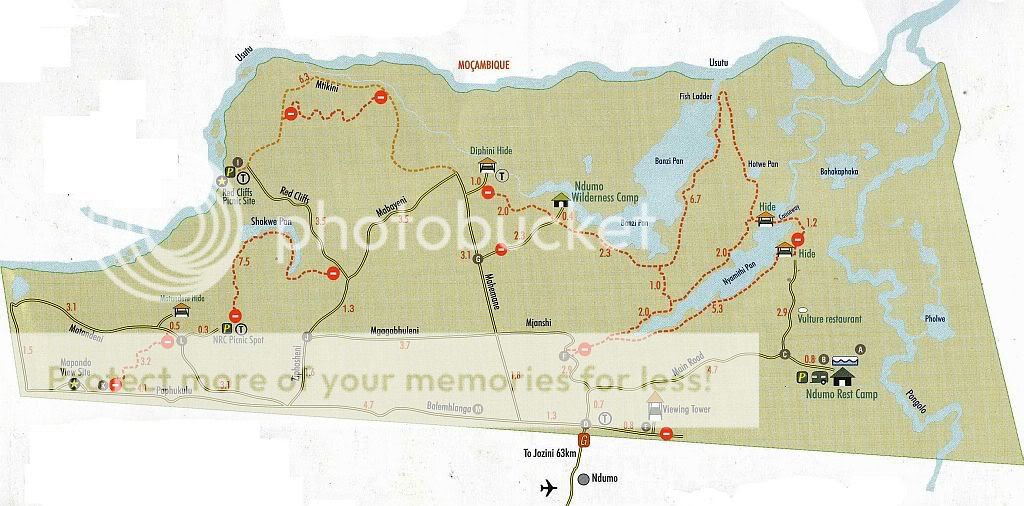
Detailed map of Ndumo

Birding is difficult but there are always surprises for the keen-eyed.

On this occasion the biggest surprise was coming around a corner and finding a thorn tree had toppled over and was blocking the road. Refusing to be denied my route through the wonderful sand forest in the middle of the park, prime birdwatching territory and known for the rare birds that are in residence, I was forced to tow the offending tree out of the road with my car!

My determination was partly rewarded with good sightings of Crested Guineafowl, Orangebreasted Bush Shrike, Dwarf Mongoose and Scimitarbilled Woodhoopoe, while little pans secluded in the forest provided Woollynecked Stork, Common Sandpiper and Greenspotted Dove.

The woodlands on the southern, hilly side of the park are also rich in birdlife. In the thickets and rank grass under the trees one gets the beautiful Melba Finch busily going about its business, normally with a Rattling Cisticola shouting the odds nearby. Neddicky (especially where there are fallen trees), Bronze Mannikin and Common and Blue Waxbill share this habitat too and Tawnyflanked Prinia is often around as well.

Bleating Warbler prefers thicker cover and will often call from a perch two-to-three metres up a tree. While looking for this secretive little bird, the likes of Paradise, Spotted and Black Flycatchers, Redfaced and Speckled Mousebird, Longbilled Crombec, Brownhooded Kingfisher, Puffback, Blackbellied Starling, Crowned Hornbill, Southern Black Tit and Purplecrested Lourie can also be spotted in the trees.

Searching carefully in the canopies threw up African Green Pigeon and Eurasian Golden Oriole.

Birding around the main camp, set in typical Maputaland woodland, is also good and the highlights from there on this trip were a Lanner Falcon, a regionally threatened bird that happened to fly by, probably heading to nearby grasslands to forage, while I was patiently watching the sky from my camp chair, and a Grey Sunbird, an Important Bird Area trigger species, that popped in for some nectar from the flowering hedge and a drink from a birdbath.

Where is Ndumo Game Reserve?

Sightings List

Blackeyed Bulbul

Blue Wildebeest

Nyala

Impala

Lesser Striped Swallow

Whitebrowed Robin

Kurrichane Thrush

Yelloweyed Canary

Chinspot Batis

Moreau’s Tropical House Gecko

Giraffe

Crowned Hornbill

Southern Black Tit

Eastern Coastal Skink

Redeyed Dove

Neddicky

Melba Finch

Spotted Flycatcher

African Green Pigeon

Rattling Cisticola

Redfaced Mousebird

Black Flycatcher

Common Waxbill

Blue Waxbill

Warthog

Common Sandpiper

Crested Guineafowl

Orangebreasted Bush Shrike

Hadeda Ibis

Forktailed Drongo

Vervet Monkey

Dwarf Mongoose

Scimitarbilled Woodhoopoe

Woollynecked Stork

Longbilled Crombec

Greenspotted Dove

Tawnyflanked Prinia

Great White Egret

Cattle Egret

Brownhooded Kingfisher

Lesser Spotted Eagle

Paradise Flycatcher

Speckled Mousebird

Bleating Warbler

Puffback

Blackbellied Starling

Wiretailed Swallow

Eurasian Golden Oriole

African Fish Eagle

Reedbuck

Purplecrested Lourie

Bronze Mannikin

Pallid Flycatcher

Jackal Buzzard

Sombre Bulbul

Eurasian Bee-Eater

Masked Weaver

Redbacked Shrike

Cardinal Woodpecker

Icterine Warbler

Giant Eagle Owl

African Hoopoe

Little Bee-Eater

Sabota Lark

Crested Francolin

Fierynecked Nightjar

Spotted Dikkop

Scrub Hare

Lanner Falcon

Squaretailed Drongo

Samango Monkey

Darter

Whitefaced Duck

Collared Sunbird

African Broadbill

Blackheaded Oriole

Goldenbreasted Bunting

Olivetree Warbler

Southern Boubou

Cape Turtle Dove

Burchell’s Coucal

Plains Zebra

Eurasian Swallow

Steppe Buzzard

African Cuckoo

Eurasian Roller

Red Bishop

Lilacbreasted Roller

Trumpeter Hornbill

Egyptian Goose

Sacred Ibis

Purple Heron

Greenbacked Heron

Water Dikkop

Wood Sandpiper

Pied Kingfisher

Giant Kingfisher

Hippopotamus

Hamerkop

Grey Sunbird
Dauntless Elgar up for Proteas Test captaincy 0

Posted on May 26, 2020 by Ken

Dean Elgar, in typically dauntless fashion, said on Monday that he is not only up for the challenge of being South Africa’s new Test captain but that leadership also comes “extremely easily” to him.

The resolute 32-year-old opening batsman has been mentioned as a strong candidate for the Test captaincy now that Faf du Plessis has retired and Quinton de Kock has been told he will only be the white-ball captain. Elgar is assured of his place in the team and has captained the Test side before, losing by 211 runs to England at Lord’s in 2017 and beating Pakistan by 107 runs at the Wanderers in 2019. And the left-hander said on Monday that he was willing to step up and take the reins if asked.

“It’s tough being a Test captain but I think leadership has generally come extremely easily to me, I’ve done the job a lot, from school days through to franchise level. If it were offered to me I would definitely think long and hard about it and it would mean a lot to me. But it’s not like a job interview where you hand in your CV. You don’t put your hand up for it, it’s something that’s decided by someone else, who they think is the best person for the job and I will respect their decision,” Elgar said.

“But in the last eight years of playing international cricket I’ve had quite vast learnings from the personnel in the changeroom on the way you conduct yourself when it comes to preparation, the media and off the field. I’m extremely grateful for that, as a person I’ve never stopped growing and hopefully what I’ve learnt I can pass on to the younger guys.”

And Elgar, renowned as being one of the toughest competitors around, certainly has visions of restoring South Africa to their past status as one of the world’s best teams.

“We’re coming off a tough summer playing India away and England at home and I would have liked to have seen the team win more games and be more consistent in my own performances so that I leave the team in good stead. We threw some punches in the first Test against India at Vizag but then the wind went out of our sails and India were ruthless, they keep their foot on your throat whenever they smell blood.

“We started well against England but we struggled to do the basics for longer periods, which England did, utilising their experience. We needed more consistency, that’s an area for us to work on. If we do the basics for longer, especially in Test cricket, then the results might turn around. We need some hard chats, there’s definitely room for that, but also to trust in ourselves, have confidence in our ability and always think positively,” Elgar said.

Champion rugby stars are champion humans helping those South Africans in extreme need 0

Posted on May 23, 2020 by Ken

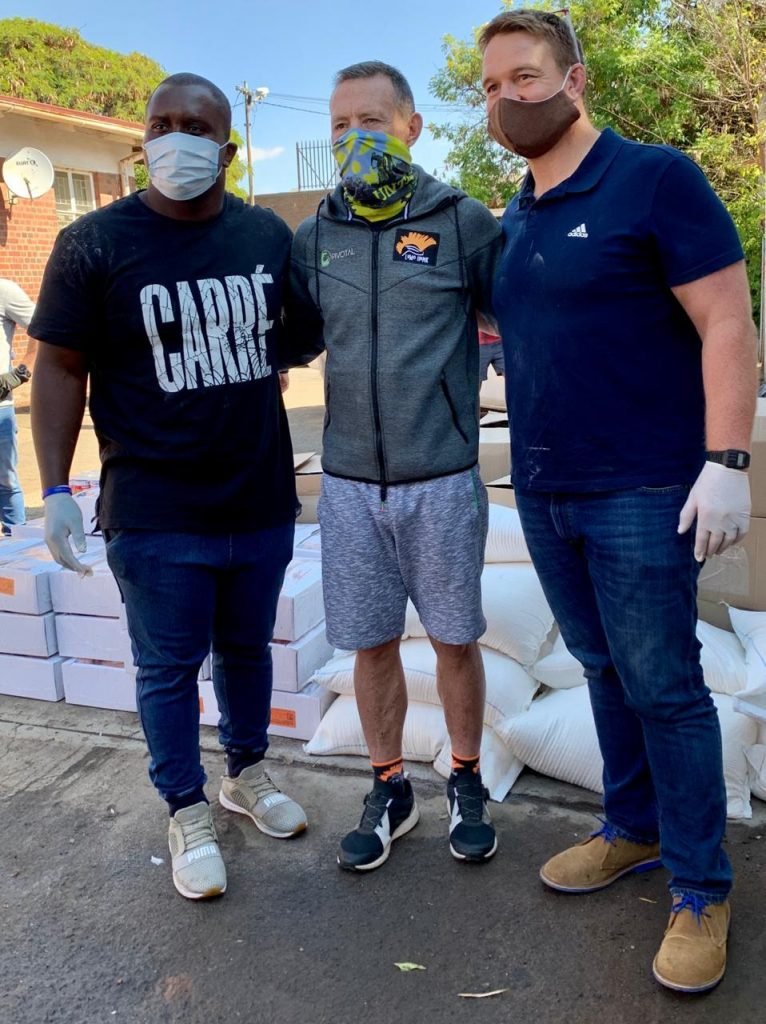
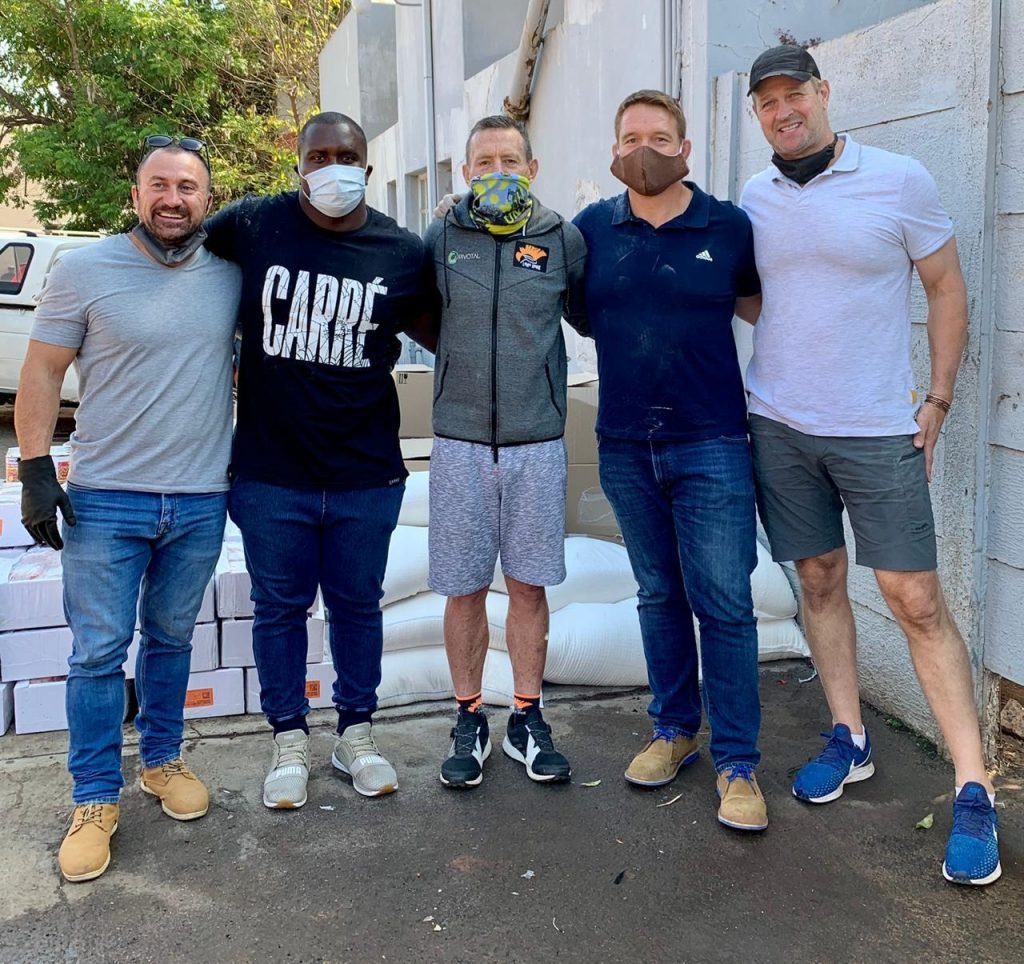
CHAMPIONS – Rugby stars (from left) Dave von Hoesslin, Trevor Nyakane, Joel Stransky, John Smit and Wayne Boardman at a food drop-off for the One Cup of Pap initiative.
Photo by Lauren Terras

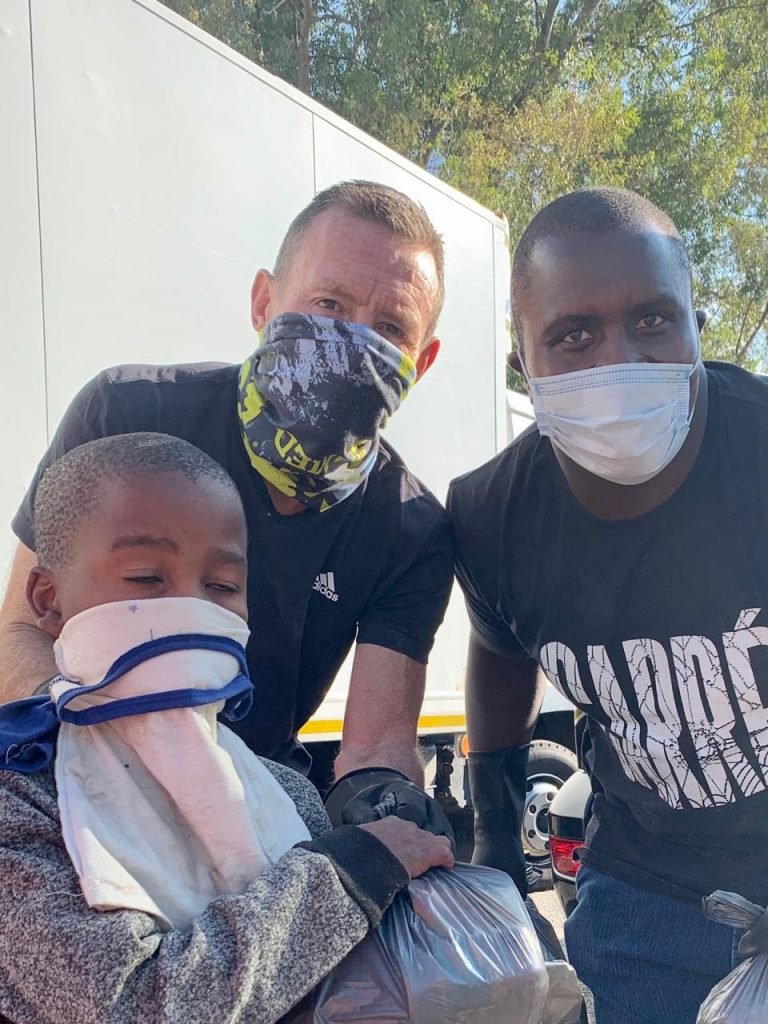
Africa is certainly a continent of extremes and millions of her inhabitants have scant resources when it comes to basic necessities we take for granted. The situation is only going to become worse due to the Covid-19 pandemic. And although we all miss the game, not being able to play or watch rugby in this time of crisis is a minor hardship compared to those who are living in poverty, in horribly overcrowded conditions, suffering from malnutrition and a lack of running water.

And we can be proud of our South African rugby community because they certainly get this, and the paycuts they have willingly taken and the number of charitable initiatives they have supported or started themselves shows they are not just champion sportsmen but champion human beings.

It’s amazing how far a simple act of kindness can go and this was rammed home for me recently by the work of the One Cup of Pap initiative.

It all started at the beginning of Lockdown in late March when former Sharks and Stormers lock Wayne Boardman, together with his father and domestic worker, decided to put some money together to feed at least one family in need. It started out as one cup of pap and a sachet of soup being dished out at an informal settlement in the northern suburbs of Johannesburg, with a budget of R250 a week.

But seeing desperate people fighting over what little he could give – “We were overwhelmed and the last few people were like hyaenas fighting over the food before it ran out,” Boardman says – he decided to reach out to his friends, local community and his rugby network.

In the last eight weeks, the One Cup of Pap feeding scheme has mushroomed to an R80000-a-week operation, feeding approximately 2000 hungry people with two tons of pap, between 500 and 1000 loaves of bread, and one ton of polony, soup and tinned food.

“We started slowly with not a lot of food, but with the help of a couple of influencers and getting social media full of it, it has grown to a size we never expected. To get one or two big names involved like John Smit and Joel Stransky, who are close to everyone’s hearts, automatically gave us big pull and credibility. Their involvement and that of other Springboks like Trevor Nyakane and Dave von Hoesslin has really seen it grow,” Boardman says.

LINED UP – The different food stations and the queues of people at the One Cup of Pap feeding scheme.
Photo by Ken Borland

The project has also spread its reach to areas such as Munsiville in Krugersdorp, Midrand and the Tshuma Stingers development rugby club, Roodepoort and the Feed Thy Kids Creche, the Chilli Lane Community in Sunninghill, the Waste Pickers at Megawatt Park, those living under the bridge at Braamfontein Spruit, Ivory Park and Parkmore. Community involvement is essential because it’s not as if the One Cup of Pap initiative have a census of informal settlement residents to work with when calculating the numbers they need to cater for. The South African Police Services, especially Sandton Police Station, have offered considerable support along with TRSG Security and Security Web.

Joel Stransky & Trevor Nyakane
Photo by Lauren Terras

Stransky is famous for his charitable initiative, the LumoHawk Foundation which specialises in testing the eyesight of underprivileged children and giving them glasses. But with Covid-19 having stopped all testing, Stransky has now taken over sponsoring all the children’s food packs for the One Cup of Pap scheme. “I just want to see these kiddies get a proper education that will prepare them for life and give them hope,” he told Saturday Citizen.

Smit has had his own charitable foundation, Barney’s Army, since 2012 and they have also thrown their weight behind Boardman. “If we all do a little bit then we can make it through this crisis. I’m able to leverage off my profile and I’m sure there are plenty of others doing great work, but we need to highlight everyone doing their bit,” Smit said.

Nyakane, who completed the hat-trick of World Cup winners involved, was moved by the experience.

“Lending a hand has made me realise how poor so many people are, it was a no-brainer to help out and hopefully make a difference in their lives. Every little bit helps and it hit me seeing hundreds of people lining up, all needing a lot of help, even if it’s just shelter and being able to get food. I would urge every South African to just lend a hand, it goes a lot further than you realise,” Nyakane said.

World Cup winners (from left) Trevor Nyakane, Joel Stransky & John Smit.
Photo by Lauren Terras

To get in touch with the charity: Wayne Boardman 084 545 1717

Banking details:

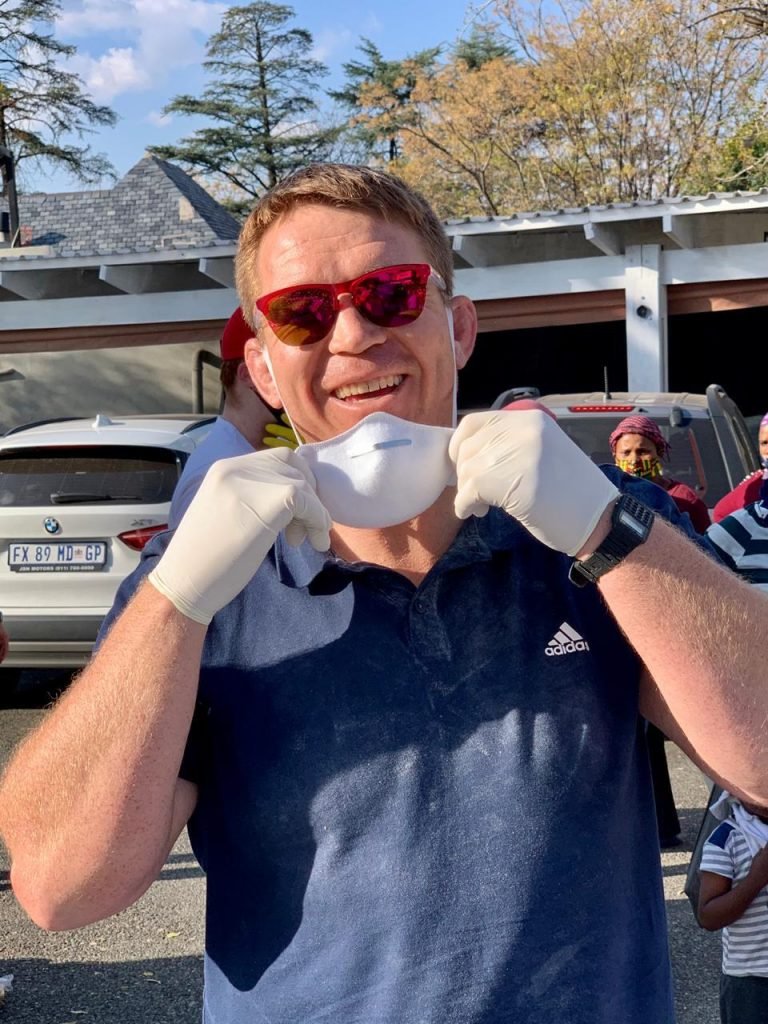
John Smit all smiles
Photo by LT

A Knowles

Nedbank

1969043962

Rivonia Branch

Ref: One Cup Pap

Aplon a feisty little ʼun able to produce moments of magic 0

Posted on May 14, 2020 by Ken

Gio Aplon may be only 1.75 metres tall and weigh just 78kg but he is a feisty individual who is able to produce moments of magic on the rugby field, often enough to convince a famous ‘sizeist’ like Jake White to sign him for the Bulls.

While White was Springbok coach between 2004 and 2007 he made no secret of his belief that a good big ʼun was always better than a good little ʼun, but it seems Aplon first convinced the resolute coach of his merits while playing for Grenoble in France between 2014 and 2017, when White was coaching Montpellier.

When The Cistuses and White split ways not entirely amicably, the coach went to mentor Verblitz in Japan, and signed Aplon early on in his stint.

And now that White has been appointed director of rugby at the Bulls, he has once again brought Aplon with him. The Pretoria-based franchise announced on Wednesday that Aplon will join the team from June or as soon as he is able to travel back to South Africa, saying in their statement that he “epitomised the phrase ‘size doesn’t matter’ with his explosive speed and nimble feet allowing him to score tries from almost anywhere on the field, taking on the biggest and the best the game had to offer”.

Aplon has played 17 Tests for the Springboks, scoring five tries. But his last appearance for South Africa was back in late 2012, although he was part of Rassie Erasmus’s training group in 2018, without making a match-day squad.

The Bulls have developed something of a penchant for bringing veteran players to Loftus Versfeld, from Victor Matfield to Adriaan Strauss, Duane Vermeulen and Schalk Brits, and Aplon continues the trend as he is 37 years old.

Aplon spoke of his respect for the Bulls and what the brand has achieved in the statement, while he has previously spoken of how much he enjoys playing under White.

“The Springboks won the 2007 World Cup because he is such a fantastic coach. System-wise he is exceptional, he has implemented a good programme. He isn’t just there to fill up the post as head coach, he is there with the purpose of making Verblitz better and, as players, we feed off that. Jake is a serial winner and to be coached by him was one of the reasons I went to Japan,” Aplon told SA Rugby Mag.

Cheslin Kolbe, who is even smaller at 1.71 metres and 74kg, has made a massive impact with the Springboks and White will be hoping Aplon, although 11 years older, will prove of similar benefit to the Bulls while also serving as a mentor.

  • Recent Posts

  • Archives

  • Thought of the Day

    Mark 16:15 – “He said to them, ‘Go into all the world and preach the Good News to all creation’.”

    We need to be witnesses for Christ, we need to be unashamed of our faith in Jesus. But sometimes we hesitate to confess our faith in Jesus before the world because of suggestions that religion is taboo in polite company or people are put off by those who are aggressively enthusiastic about their beliefs.

    “It is, however, important to know when to speak and when to be quiet. There is one sure way to testify to your faith without offending other people, and that is to follow the example of Jesus. His whole life was a testimony of commitment to his duty; sympathy, mercy and love for all people, regardless of their rank or circumstances. This is the very best way to be a witness for the Gospel of Jesus Christ.

    “Ask the Holy Spirit to guide you so that others will see Christ in everything you do and say. In this way you will fulfill the command of the Lord.” – A Shelter From The Storm by Solly Ozrovech


↑ Top