for quality writing

Ken Borland


Pilanesberg National Park 0
Posted on January 30, 2019 by Ken


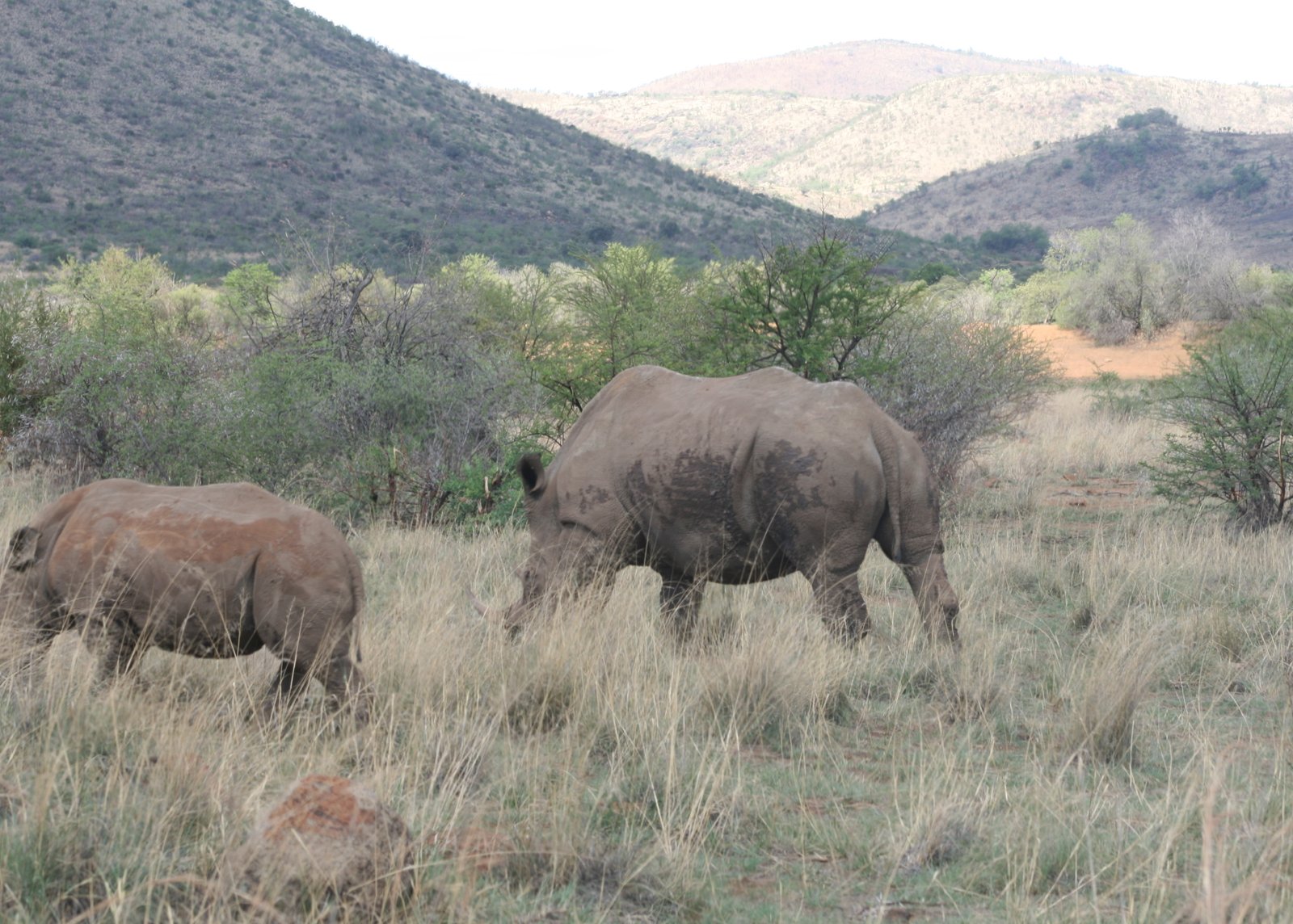
SERENE ... A White Rhinoceros and its calf with the valleys of the Pilanesberg stretching into the distance

SERENE … A White Rhinoceros and its calf with the valleys of the Pilanesberg stretching into the distance

The open country around the Mankwe Dam is bordered by the Tshwene and Kubu drives, two of the four tar roads in the Pilanesberg National Park. I normally try to avoid the tar roads when I’m in the bush, but this area is so peaceful and tranquil, and being the main water source in the reserve, there is also usually lots of game in the vicinity.

But as a very warm afternoon clouded over and a typical Highveld thunderstorm approached, there came a stark reminder that this is wild Africa, red in tooth and claw.

Between the Mankwe and Motlobo drive turnoffs from Tshwene Drive, less than 20 metres from the tar and at the edge of a little bank, an unfortunate Impala took its last breaths. Two Cheetah, still panting hard from the exertions of the chase, soon had blood-stained faces as they tucked into their hard-won meal.

This is Lion and Leopard country as well so the Cheetah, the most lightweight of the big cats, needs to eat quick because there’s nothing like a kill to attract other meat-eaters. While the Cheetahs ripped at the carcass, a sly Blackbacked Jackal was already hanging around waiting for scraps.

Seeing one of the cats on a kill is always a special sighting, but to see Cheetah in the Pilanesberg is an exceptional occurrence because there are only five in the entire 572 square-kilometre park. The open country around Mankwe Dam is probably the best area for them because it allows them the space for their sprint, which is what sets them apart from other predators.

The adrenaline was still flowing from my first Cheetah sighting in the Pilanesberg when my buzz was shattered by an extremely loud, piercing call right next to the car. I was startled and momentarily baffled by what it could be – it was such a high-pitched, pure sound that I thought some sort of emergency alarm had gone off and was wondering if my windshield would crack!

Having regained my senses enough to realise that it was coming from the bushes next to the road, I scanned the vegetation and there the source was, with colours as bright as its song was loud – a beautiful Crimsonbreasted Shrike sitting in an open gap in the bushes.

The Crimsonbreasted is certainly the most brightly coloured of the Laniarius (Boubou) Shrikes and its underparts are a brilliant scarlet colour, heading towards crimson.
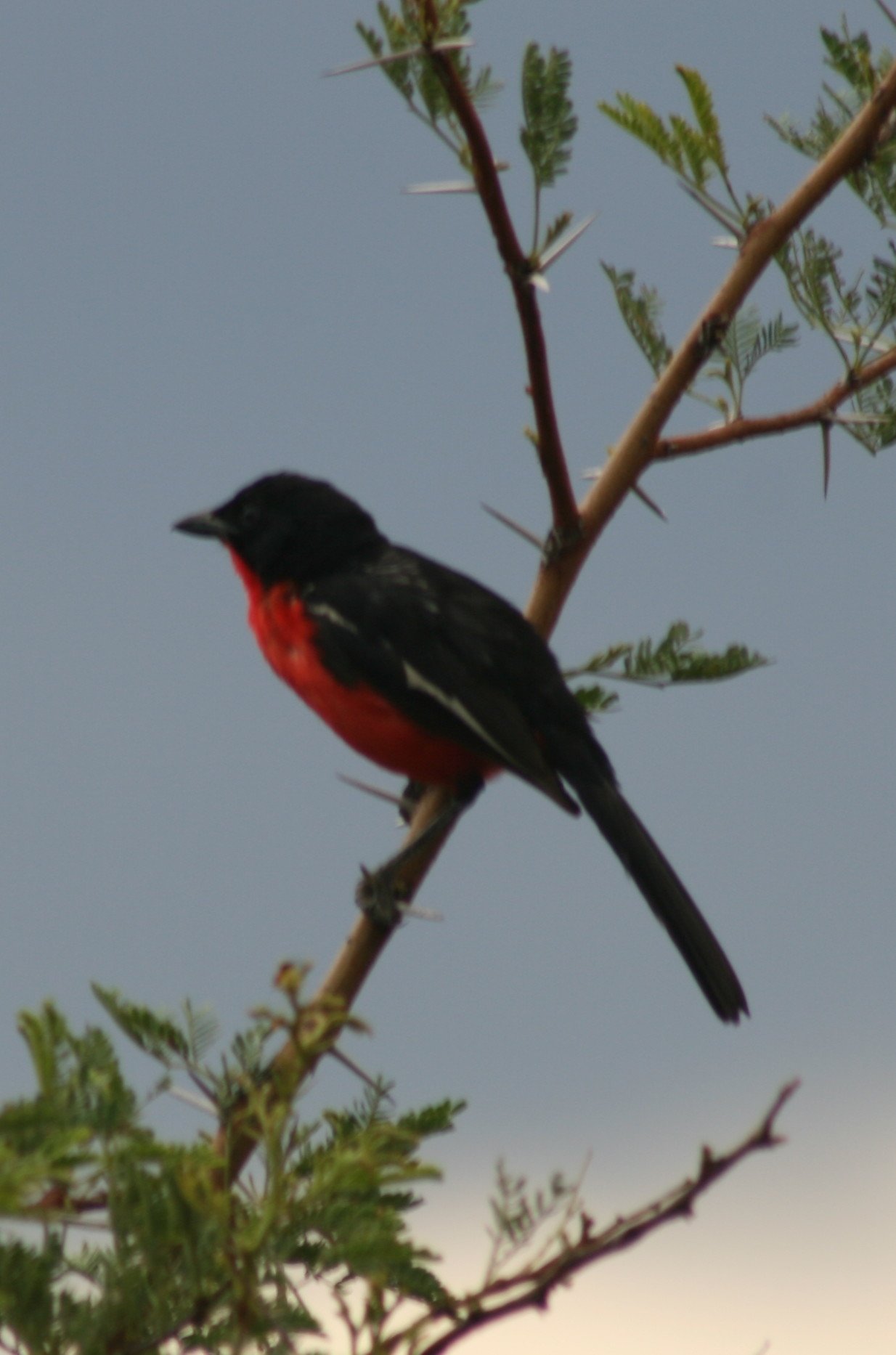
Crimsonbreasted Shrike

Crimsonbreasted Shrike


It provides a real flash of colour particularly when contrasted with the muted tones of the thorny scrub it likes to inhabit.


This is where the Mankwe River flows out of the dam and Mankwe Way crosses the river just north of the Fish Eagle turnoff. It’s a good spot to stop and scan for birds and, having seen one in the exact same dead tree on a previous trip, it was great to see an Osprey once again sitting up in the highest branches. It was joined by a Hamerkop that came to share its lofty perch and there were Pearlbreasted Swallows flying around and landing nearby as well.
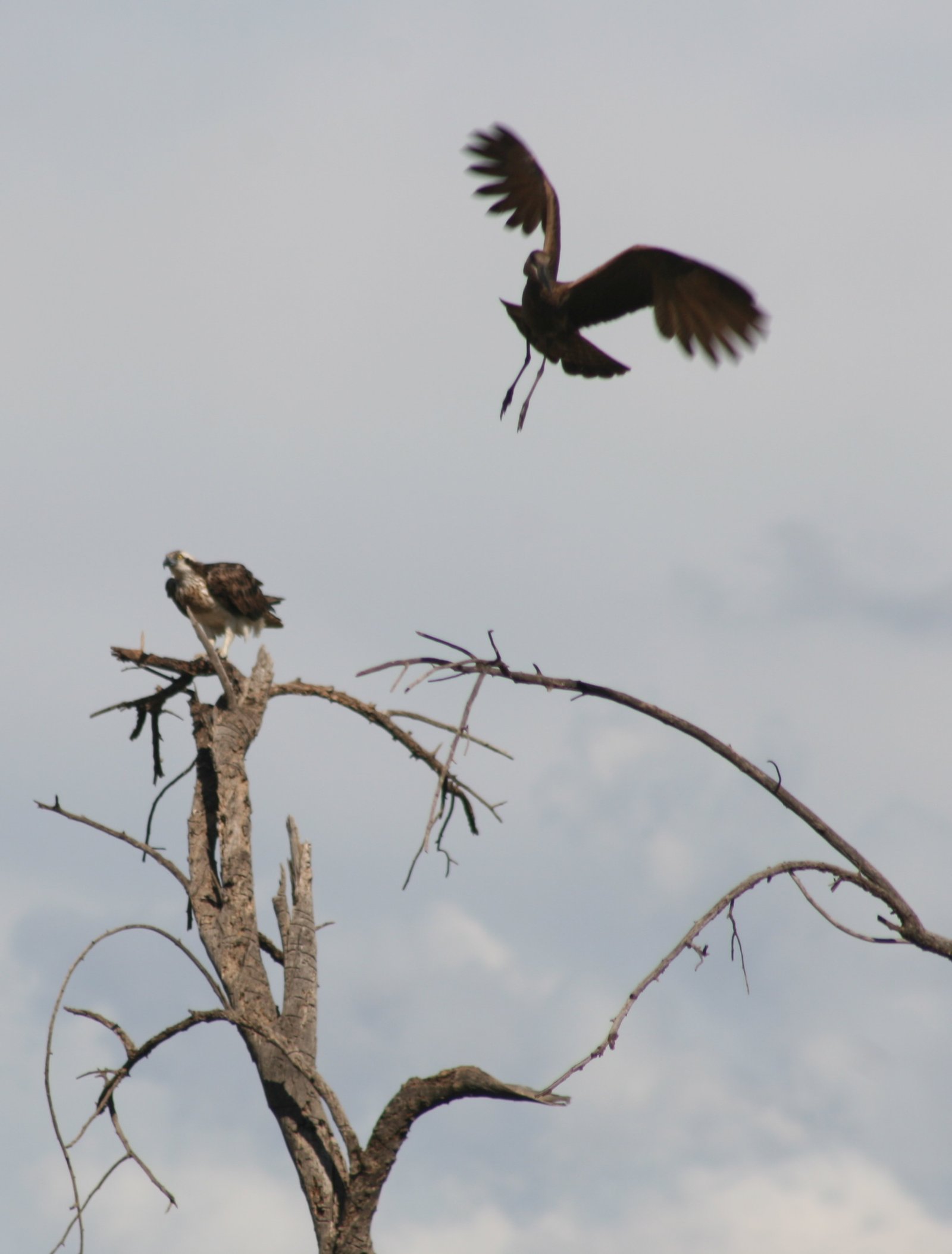
MAY I JOIN YOU? ... A Hamerkop (right) landing in the same tree as an Osprey

MAY I JOIN YOU? … A Hamerkop (right) landing in the same tree as an Osprey

Mankwe Way takes one into an area of open grassland, dotted with termite mounds and boulders as it heads west, past the old farm of General Jan Smuts, Buffelsdrift. Transitional zones where dry plains with short grass meet the longer grasses of the rugged upland areas are excellent for birding as well.

Apart from the White Rhinoceros in the vicinity, there were also Scalyfeathered Finches hopping on the ground and then flying quickly into the small trees when disturbed; Sabota Lark, Crowned Plover, Cinnamonbreasted Rock Bunting and Blackthroated Canary.

But a pair of birds had me a bit confused as they hopped around on the low bushes, behaving much like Capped Wheatears. But the adults of that plains specialist are distinctively marked and these birds were also making some strange, Lark-like calls. With their mottled bands of brown, buff and yellowish colours, they had me thinking of similar-looking rarities.

But discretion won the day and, considering that Capped Wheatears are well-known mimics, I went the most likely route and decided they were, in fact, a pair of immature Capped Wheatears.
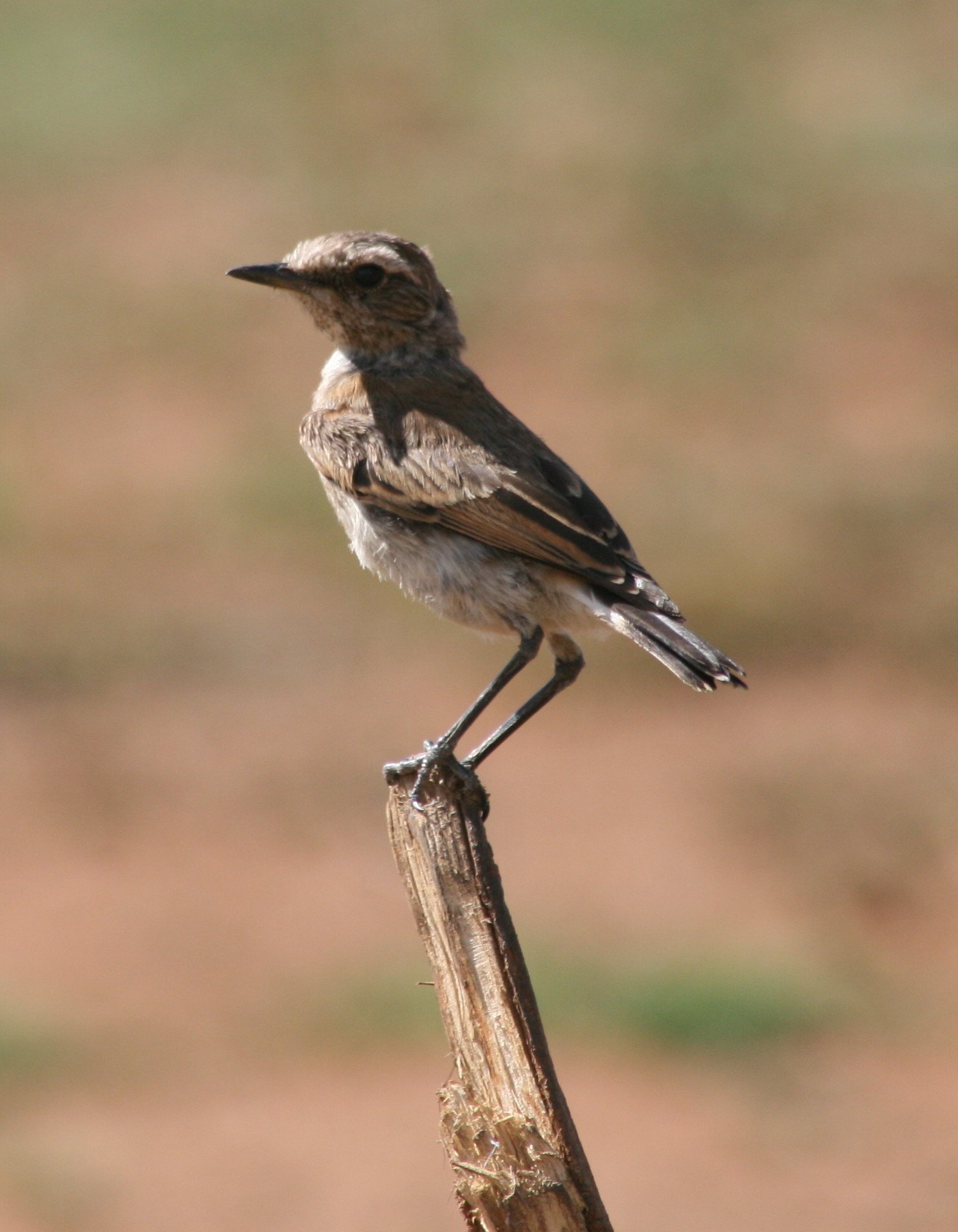
One of the juvenile Capped Wheatears

One of the immature Capped Wheatears

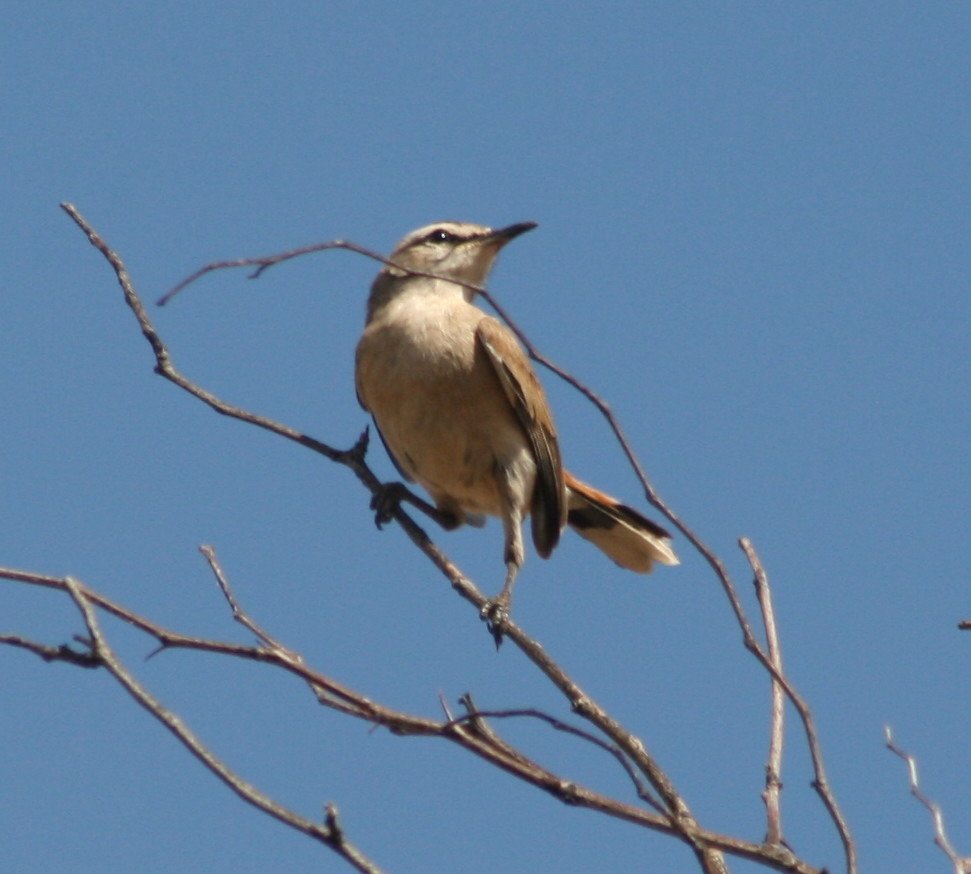
Pilanesberg holds good numbers of both the Kalahari and Whitebrowed Scrub Robins and the central part of the
Kalahari Scrub Robin

Kalahari Scrub Robin

park has both these twitching, insectivorous lovers of thicket and low bushes in close proximity to each other.

Mankwe Dam is by no means the only productive body of water in the park, and if one enters through the south-western gate of Bakubung, after two-and-a-half kilometres on the tarred Kubu Drive, or a bit further if one turns left and takes the more meandering dirt road known as Kgama Drive, one comes to the Lengau Dam.

There are usually large numbers of birds here and on this occasion it was good to see African Darter, Whitefaced Duck, Pied Kingfisher, Greenshank, Marsh Sandpiper and Threebanded Plover. There are usually animals about as well, but this time there was just a solitary Warthog snuffling around.

Even the smallest bodies of water can provide something of interest though and as I was exiting through the easternmost gate – Manyane – four Redbilled Oxpeckers were drinking water from a puddle in the road.

Life can be very tough in the beautiful African bush and to survive the residents need to take advantage of every little windfall they can get.


Sightings List

Blue Wildebeest

Plains Zebra

Sacred Ibis

Warthog

Egyptian Goose

African Darter

Whitefaced Duck

Laughing Dove

Little Swift

Pied Kingfisher

Greenshank

Blacksmith Plover

Marsh Sandpiper

Threebanded Plover

Waterbuck

Jackal Buzzard

Impala

Greater Kudu

Rufousnaped Lark

Palm Swift

Marico Flycatcher

Greater Striped Swallow

Giraffe

Crested Francolin

Streakyheaded Canary

Great White Egret

Southern Masked Weaver

Pintailed Whydah

Blackeyed Bulbul

Whitebrowed Scrub Robin

Blackchested Prinia

Kalahari Scrub Robin

White Rhinoceros

Scalyfeathered Finch

Sabota Lark

Capped Wheatear

Crowned Plover

Cinnamonbreasted Rock Bunting

Blackthroated Canary

Hamerkop

Osprey

Pearlbreasted Swallow

Natal Francolin

Cape Turtle Dove

Grey Lourie

Glossy Starling

Cheetah

Blackbacked Jackal

Helmeted Guineafowl

Rattling Cisticola

Crimsonbreasted Shrike

African Elephant

Forktailed Drongo

Common Myna

Redbilled Oxpecker


Cricket looking to toss a boomerang 0

Posted on September 20, 2018 by Ken


As we have seen so often in rugby, making changes to long-standing rules of the game almost invariably brings unexpected consequences and there has been a lot of talk recently about doing away with one of cricket’s most famous traditions, a move which I believe will boomerang badly on the sport.

South African captain Faf du Plessis was the latest to bring up doing away with the toss, although his beliefs lost some credibility because they came straight after the Proteas had been mauled in their two Tests in Sri Lanka.

Various high-profile Australians have also backed the ending of the toss, but again, these comments were mostly made after they had lost the Ashes in England.

Proponents of the eradication of the toss propose that the visiting team just gets to choose whether they want to bat or bowl, thereby supposedly removing home advantage, which the anti-toss advocates say has become a major problem in world cricket.

Happily, a couple of months ago the ICC Cricket Committee discussed doing away with the toss and decided that it was an integral part of the game and should be spared.

No doubt they had a better grasp of the actual facts surrounding the issue. Home ground advantage has always played a role in cricket, as it does in just about every sport, but winning or losing the toss actually does not have a major effect.

In this decade, the team winning the toss still only wins 43.78% of Test matches, so it is not a massive advantage. There is a slight benefit because only 35.13% of teams that lose the toss go on to win the match. Historically, Australia are the only side that wins more than 50% of the Tests in which they have won the toss, and even then it’s just 50.49%, only slightly higher than their overall success rate of 47.16%.

I believe giving the visiting team total control over what they do first would have a major bearing on the game, which is where the unintended consequences come in, especially in countries like India or New Zealand.

It’s fair to say the weather is out of the control of the people who prepare the pitches in those countries and they can only do so much to negate the effect of overhead conditions. Doing away with the toss would grossly undermine teams like India and New Zealand – in the heat of the sub-continent, dry, dusty, deteriorating pitches are almost inevitable and India would be batting second every time; conversely, New Zealand is usually pretty damp and overcast and the Black Caps would find themselves sent in to bat every time.

It would happen often in England as well that the home team would automatically have to bat at the most difficult time and it could also affect the Proteas at home.

What it boils down to is the ICC actually using the mechanisms they already have in place to ensure fair conditions – they already have rules in the playing conditions when it comes to unfair pitches and they just need to enforce them more diligently, especially when it comes to the sub-continent and even some South African green mambas.

The perception that away teams are struggling does have some basis in fact. In this decade, the visiting team has lost 51.75% of Tests, up from 46.40% in the 2000s. It is interesting, though, that the away team has been winning Tests in the last 20 years at pretty much the same rate as they have been doing through the history of the game.

It is, of course, the number of away draws that has dropped significantly in recent times; down from 47.31% of Tests in the 1960s to just 20.76% in this decade. That is obviously a positive but it also points to the rise of T20 cricket and batsmen being able to hit the ball but not defend against the turning, seaming or swinging delivery.

The problem is not the toss, it’s modern-day batsmen being ill-prepared for foreign conditions, and sometimes the ICC allows the home union to get away with cheap shots in terms of pitch preparation.

Everitt wants Sharks to lift their focus after ‘easier’ games 0

Posted on August 17, 2018 by Ken


On paper, the Sharks have already played most of their ‘easier’ games and assistant coach Sean Everitt is hoping the challenge of taking on the big guns in the competition will cause them to lift their game.

The Sharks have played the Pumas twice, both sides winning their home game, and have scraped home twice against the Eastern Province Kings, while probably their best performance in terms of quality came in the loss against the Golden Lions at home, where they were on top for three-quarters of the match.

The KwaZulu-Natalians are currently fourth on the log, two points ahead of the Free State Cheetahs, but they have a tough run-in to the semi-finals starting with their match against Western Province this Saturday in Durban. They then travel to Johannesburg to take on the Lions, host the Blue Bulls and then end the round-robin phase with visits to Kimberley and Bloemfontein.

“The players are working hard and are frustrated that they just can’t get that consistency. If we concentrate then we can put things together, but we have got to cut out those errors we saw again last weekend against the Pumas. The competition is pretty much in two parts for us, the first part is done where there were a couple of banana peels, and now we’re looking forward to the challenge against the top teams.

“Western Province also have a young side so there’s no hiding behind inexperience for us, and the Lions and Bulls are also waiting for us. Hopefully it brings out the best in us. I think we’ll hit our straps this weekend, teams like Western Province bring out the best in us. We’re two points behind them on the log, so a win will elevate us to third,” Everitt said.

There has obviously been some improvement in the Sharks team since that opening loss to the Pumas in Nelspruit, particularly in the defensive work of the side, and the spirit of the team is good given how they came back to win last weekend in Durban.

“Some people might think that there are few positives, but the defence has got better and the guys showed a lot of character to come back from going down again against the Pumas. That certainly wasn’t planned but there’s a lot of fight in the side and we’ll take that as a positive,” Everitt said.

The likelihood of changes to the team for this weekend is high, however, with Everitt saying “there are certainly things that are not working for us”.

Chief among those is the attacking fluidity of the backline and flyhalf Lionel Cronje’s place is probably top of the list of selection issues to be discussed. The Sharks lineout, despite the superb direction of Marco Wentzel, also seems to stumble at key moments and a change at hooker may also be considered.


Ali deserves another honourable mention for his new development programme 0

Posted on July 27, 2018 by Ken


Of all the contributions Ali Bacher has made to South African cricket – captain of their first world-beating side, CEO of the United Cricket Board during the drive to Unity, running the successful hosting of the 2003 World Cup – the introduction of the then Bakers Mini-Cricket programme to underprivileged areas was arguably the one with the greatest impact on the future of the game in this country.

So one can understand Bacher feeling a little peeved when a Gauteng Cricket Board president mentioned to him almost 20 years after Bakers Mini-Cricket started that the programme was no longer having the desired outcomes.

“The first time we took cricket to the Black townships was in 1986 with the help of Bakers and within 10 years we had sent someone like Makhaya Ntini to Dale College. In 2003 I left Cricket South Africa and in 2005 the Gauteng Cricket Board president phoned me and said the mini-cricket programme is faltering.

“So I looked at the report and the problem was that any young kid with passion and talent would still not make it if they stayed in the township, because everything was against them there. I went to King Edward VII and when we left high school we were ready to play provincial cricket and Kagiso Rabada had five years of that as well at St Stithians.

“But in the townships there are no grass fields, pitches, nets or covers. There are 27 000 schools in South Africa and they are mostly Black with no facilities because they don’t have money for it. If talented players were identified there then you had to get them quickly to government or private schools that were traditionally good cricket schools,” Bacher explains.

KFC have now taken over the mini-cricket programme and their efforts deserve recognition because they are still a tremendous feeder system. But the approach when it comes to high school pupils has now changed, under the guidance of Bacher and with the support of Blue Label.

As the chief marketing officer of the mobile telecoms innovators, Rob Fleming, explains: “Transformation is absolutely critical and it needs constant love and attention. But what’s the best way of achieving it? I’ve seen multiple ideas and there’s no doubt we need to do a better job.

“Our real strength in South African cricket is our schools, but forty of them probably produce 80% of our players, so is that the right place to develop our cricket? If we take township kids to those schools then often they are not up to it academically and it affects their cricket and the whole scheme collapses.

“So it was Ali’s idea to go to old traditional cricket schools and try and reignite the game there, let’s create another forty top cricket schools. There’s no doubt the talent is there, that’s our conveyor belt and I love how coherently this programme can work with the rest of the system,” Fleming says.

What deters many schools from playing cricket is the time and expense it involves, which is where Blue Label is coming in to provide resources for Focus Schools, three of which (Uitsig, Akasia and Hendrik Verwoerd) were recently named in the Northerns region, joining schools in Johannesburg, Krugersdorp and Vereeniging that are already in the programme.

Cricket is competing heavily with other codes at these schools, and teachers and facilities are few, but by combining resources, their weakness has become a strength.

Our schools are where the rubber hits the tar in terms of capacity building and getting more and more talent into the pipeline.

“Many of these traditionally good cricket schools are now 99% Black so we are completing the circle and Rob is passionate about this as well. We’ve identified government schools that were former White schools and they still have good facilities but cricket was no longer being played. For example, Krugersdorp High School, hardly any cricket was being played; Highlands North used to provide most of the Balfour Park club, who were very good, but there was no longer any cricket there.

“But if we can get cricket back on its feet again in schools like that then I reckon we will see a plethora of good players coming through. Like Queen’s High School which is on the other side of the Jeppe Hill, it’s all Black and their cricket is so good. Their U15 side only lost one match last season and they beat Pretoria Boys High, they are well-dressed and their parents are all there. This will be so good for South African cricket,” Bacher says.


https://www.pressreader.com/south-africa/the-citizen-kzn/20180609/282243781291243

  • Recent Posts

  • Archives

  • Thought of the Day

    Revelation 3:15 – “I know your deeds, that you are neither cold nor hot. I wish you were either one or the other.”

    How can you expect blessings without obeying?

    How can you expect the presence of God without spending time quietly before him?

    Be sincere in your commitment to Him; be willing to sacrifice time so that you can grow spiritually; be disciplined in prayer and Bible study; worship God in spirit and truth.

    Have you totally surrendered to God? Have you cheerfully given him everything you are and everything you have?

    If you love Christ, accept the challenges of that love: Placing Christ in the centre of your life means complete surrender to Him.


↑ Top