for quality writing

Ken Borland


2015 SuperRugby preview – SA franchises 0

Posted on June 11, 2018 by Ken


SHARKS


Coach – Former Bath and Kobe Steelers coach GARY GOLD has brought a fresh approach to player management and an emphasis on more attacking play since taking over from Jake White, who left the Sharks at the end of September at a crucial stage of the Currie Cup. The current Montpellier coach left Durban in something of a pall, the fans not happy with a territory-dominated game plan and the players and other coaches not enjoying White’s abrasive management style.


Top Players – The Sharks probably have the most star-studded team of the South African Conference, starting with the first-choice Springbok front row of Tendai Mtawarira, Bismarck and Jannie du Plessis, the exciting lock pairing of up-and-coming Pieter-Steph du Toit and experienced former Saracens and England player Mouritz Botha, a loose trio headlined by Springboks Willem Alberts and Marcell Coetzee, the incumbent Springbok halfback pair of Cobus Reinach and Pat Lambie, and plenty of quality outside them in former Racing Metro centre Francois Steyn, and JP Pietersen and Lwazi Mvovo on the wings.


Captain – BISMARCK DU PLESSIS is arguably the best hooker in the world and a talismanic figure for both the Springboks and the Sharks with the huge physical presence he brings to the game. The veteran of 70 Tests turns 31 in May, but he will want to show he has many golden years ahead of him.


Last year – The Sharks won the South African Conference but finished third on the final round-robin log following crucial late defeats at the hands of the lowly Stormers and Cheetahs which cost them the home semi-final they always seemed to be heading for. That condemned them to a quarterfinal against the Highlanders before travelling to Christchurch to play the Crusaders, who romped home 38-6 in the semi-final. Many critics blamed the Sharks’ “stone-age game-plan” for their failure to turn their forward dominance through most of the campaign into a home semi-final.


This year – The Sharks, with almost all of their stars returning to action and some valuable additions to their squad, are obviously amongst the favourites to win the title. The more positive approach of Gold, plus the input of tactical guru Brendan Venter, should make them even more of a threat this year. But the effects of change can also be disruptive and how well the Sharks adapt remains to be seen.


STORMERS


Coach – The demands of the fickle supporters in the Western Cape have finally had their toll on ALLISTER COETZEE and the former Springbok assistant coach will head to Japan to replace Gary Gold at the Kobe Steelers at the end of the SuperRugby season. Western Province, basically the Stormers minus their Springboks, are the Currie Cup champions, but the Stormers have always offered much in the southern hemisphere competition without delivering the goods. Since reaching the final in 2010 and the semi-finals in 2011 and 2012, they have slipped down the standings to seventh in 2013 and a parlous 11th last year, their worst finish since 2006. So the pressure is on Coetzee to finish his five-year stint as head coach on a high.


Top players – The Stormers have rectified their former ills by assembling a powerful pack that includes stars such as prop Frans Malherbe, one of the best loose trios in the competition in Schalk Burger, Nizaam Carr and Duane Vermeulen, and two tremendous locks in Eben Etzebeth and former Biarritz star Manuel Carizza, who has 44 Test caps for Argentina. Given enough ball, backs like Juan de Jongh, Damian de Allende and Cheslin Kolbe certainly have the ability to beat opposing defences.


Captain – It is probably only a matter of time till DUANE VERMEULEN becomes the Springbok captain and the SA Player of the Year for 2014 will lead from the front in trying to make Newlands one of the toughest lairs of all. An indefatigable eighthman, Vermeulen is a powerful force with ball in hand, a steely defender and a potent force at the breakdown, as well as being a natural leader.


Last year – The Stormers had little to smile about in their 2014 campaign, the highlights being their wins over the Sharks and Bulls at the back-end of the competition that effectively messed up the chances of their South African rivals. They were hard hit by injuries up front but also struggled to match the tempo of play set by overseas opposition.


This year – The Stormers looked a different side in winning eight of their 10 Currie Cup matches and claiming the title in a dramatic final, upping the pace of their play, looking to keep ball in hand more and generally playing more positive rugby, all with an eye on this year’s SuperRugby campaign. Their coaching staff have put a particular emphasis on conditioning as they believe the game has changed into a much more high-intensity affair and they certainly seem better equipped for a title challenge this year.


BULLS


Coach – Patience could well start running out for coach FRANS LUDEKE, who at times last season sounded like a broken record as he bemoaned his side’s poor execution and utter failure to get results away from home. But the momentum of the three previous years that saw the rebuilding Bulls rise from seventh to fifth to second on the log was broken by poor contracting of players that saw a raft of first-choice stars leave Loftus Versfeld, forcing Ludeke to start the rebuilding process again.


Top players – With Handre Pollard pulling the strings at flyhalf, and Jan Serfontein next to him, the Bulls are hopeful of being a much more effective attacking force this year. The pack has been boosted by former Cheetahs stars Lappies Labuschagne, Trevor Nyakane and Adriaan Strauss electing to play their rugby with the Bulls this year. With Springboks Victor Matfield, Pierre Spies, Arno Botha, Marcel van der Merwe and Deon Stegmann also up front, the backs should have plenty of front-foot ball to play with.


Captain – PIERRE SPIES has plenty of pressure to deal with this year: Not only does he need to meet the expectations created by the proud tradition of Bulls rugby, with their last major trophy coming five years ago, but he is also struggling to regain his place in the Springbok squad ahead of the World Cup. Spies, who has not played much rugby over the last two years due to injury, sometimes seem caught between the more traditional eighthman style of play that suits his former life as a wing, and the more robust, tighter approach the Bulls’ game plan seems to favour.


Last year – Already ravaged by the exodus of unhappy players to foreign clubs, the Bulls were then hard-hit by injuries to key loose forwards Botha, Spies and Stegmann. But they were even harder-hit by their self-inflicted sorrows away from home, crucial errors seeing them fail to win a single game on the road. Their only blemish at home came when they were held to a draw by the Chiefs, but by losing away games to the Lions and Stormers in the closing weeks of the competition, they dropped out of playoff contention and finished ninth.


This year – There is more optimism about the Bulls’ chances this year because they have focused on developing a more expansive style of play, they have been willing to spend some money in obtaining three key players from the Cheetahs, and surely their top players will stay injury-free this year and actually be able to play more rugby.


CHEETAHS


Coach – NAKA DROTSKE has been at the helm of the Cheetahs since the 2007 season and has only managed to steer his side into the top-10 once, in 2013. But the gains of that year were reversed in embarrassing fashion last year as the Cheetahs tumbled to 14th on the log and the former Free State captain was sent to the United Kingdom to study new coaching techniques. The pressure is clearly on Drotske.


Top players – Newly-capped Springboks Lood de Jager and Oupa Mohoje provide the spark amongst the pack, while prop Coenie Oosthuizen weds plenty of physicality with surprising mobility and skill at the breakdown. Willie le Roux and Cornal Hendricks provide plenty of joy with their lovely attacking skills at the back, but there were hints towards the end of last year that the honeymoon might be over for them as defences grow wise to their tricks.


Captain – Loyal lock FRANCOIS UYS has exchanged his status as a stalwart performer in the pack for the captain’s armband this year. A hard-working 28-year-old, Uys does not shy away from the physical battle up front, but also has useful ball-skills suiting the free-flowing style of rugby the Cheetahs prefer.


Last year – The Cheetahs did well on attack, playing some thrilling rugby as they scored 37 tries. But their defence was full of holes and conceding 58 tries and an average of 33 points per match saw them plummet from sixth in 2013 to second-last in 2014. Despite the talent available to them and their enthusiasm for positive rugby, the Cheetahs were not well-coached last year.


This year – With their coach almost at the exit door and key players such as Racing Metro flyhalf Johan Goosen, hooker Adriaan Strauss, prop Trevor Nyakane and flank Lappies Labuschagne already gone, it is hard to see the Cheetahs finishing anywhere but in the bottom handful of teams.


LIONS


Coach – Former Springbok lock JOHAN ACKERMANN comes across as a genial giant, ever polite and humble, and this has led to a far happier camp at Ellis Park. But he is far more than just a pretty face as evidenced by his ability to get the best out of relatively limited resources. The Lions have not only produced the results under his leadership but have played attractive rugby while impressing with their forward play, especially their scrummaging.


Top players – While his squad does not boast any superstars, Ackermann has reason to be chuffed by the development of his players over the last 18 months. Critically, he has a powerful front row anchored by Julian Redelinghuys, tremendous loose forwards in Warren Whiteley, Jaco Kriel and Derick Minnie, and two Springbok flyhalves in Marnitz Boshoff and Elton Jantjies.


Captain – At times WARREN WHITELEY seems too skilful, pacy and innovative to be a Springbok forward and he has been a driving force behind the Lions’ high-tempo style of play. Hugely popular as a leader, he is also highly-respected, especially overseas, as a player.


Last year – The Lions marked their return to SuperRugby with a highly-commendable 12th-place finish, winning a franchise record seven games. Given that they had no high-profile players after being cast into the SuperRugby wilderness in 2013, many are still wondering how they managed to do it. The answer is simple: through determination, tremendous belief, commitment, passion and pride, work ethic, positive intent with ball in hand and technical accuracy up front.


This year – The Lions did all that could have been expected and more in the Currie Cup, suggesting that this team is continuing to grow and improve. They do have a challenging draw this year, however, going on tour in Week Four – they did struggle overseas in 2014 – and only having a bye in Round 10.
 

The John McFarland Column: Why are there so few Lions backs in the Springbok squad? 0

Posted on May 30, 2018 by Ken


The Lions have an unbelievable record against all other South African SuperRugby franchises since 2015 and they have consistently been our best team. It really is an amazing record, their dominance of South African rugby is the reason they have been in two successive finals and they have consistently scored the most tries in the competition, so you have to ask why they have so few backs in the new Springbok squad?

With only Aphiwe Dyantyi and Elton Jantjies named in the 43-man squad, there may be no Lions back in the starting line-up against England, which is quite interesting when you consider they have been beating everyone else in South Africa convincingly, and especially with their coach, Swys de Bruin, now with the Springboks as a backline consultant.

There have been suggestions that new Springbok coach Rassie Erasmus is concerned with the defensive prowess shown by our SuperRugby franchises, but the Lions in 2016 had one of the best defences in the competition and you have to play, you can’t just kick the ball downfield and defend.

It’s also interesting that none of the first-choice back three from last year’s Springboks – Andries Coetzee, Raymond Rhule and Dillyn Leyds – have been selected by Erasmus.

It is true to win big competitions you need a rock-solid defence.

If you look at the points conceded figure for our teams, the four South African outfits have all leaked between 381 and 392 points, an average of 27.2-29.8 points per match. In terms of tries conceded, the figures are 49 to 52 per side, which amounts to an average of 3.5-3.7 per game.

In comparison, the Jaguares, who are strong contenders to win the South African Conference, are conceding just 26.2 points and 3.4 tries per match. Only the Sunwolves, the bottom team in SuperRugby, have worst stats than the South African franchises.

What is causing our teams to concede so many points? You can’t just say it’s because we now have an attacking mindset. Not one of our sides has been really convincing defensively, which perhaps reflects where most of them are on the overall log. At Test level, the Springboks used to work on trying to concede less than an average of 15-16 points per game, and 11-12 at the World Cup, with just one try. Then, more often than not, you would be on the winning side. It is imperative to get back to these sort of stats now going forward because big Test matches are often gain-line arm-wrestles.

The really good news for the Springboks though is that England have just conceded nine tries and 63 points against a scratch BaaBaas XV, both record lows for them at Twickenham. So their defence is in real trouble and in their last four games one began to notice some real cracks both in terms of their system and individual tackles.They really are sitting before the tackle which causes them to miss so many and any ‘backdoor’ second-line plays cause total disconnection and confusion.

Eddie Jones turned on his players viciously, saying some of them couldn’t cope with the pace of international rugby, but he picked them in the first place, and it will be even harder on super-fast highveld fields with altitude as a factor.

To get back to our Lions, their win over the Stormers at the weekend was so vital because it maintains a buffer between them and the Jaguares, who have a game in hand but are six points behind. It was an exciting battle with the Stormers exploiting the Lions fullback getting into the defensive line early with attacking kicks and the Lions exploiting the home side’s flimsy defence of the rolling mauls and around the edges – the way Nic Groom dummied Ramone Samuels to score was way too easy.

There is also a difference in the way the Lions use the rolling maul these days, they are prepared to wheel it more in order to exploit space and take out the defenders stopping the maul. It is really good use of forces and you have to credit Philip Lemmer for bringing in something different and innovative.

You have to praise the Lions for the win, but the Stormers will rue the red card to Raymond Rhule. You just can’t do what he did anymore on a rugby field, although the nature of his suspension and those of other players in recent weeks does raise fresh questions over exactly how the judiciary works in SuperRugby. How can the ban cause them to effectively miss no rugby?

The Sharks were really outplayed by the Jaguares in Buenos Aires but they also did some sloppy things.

Coach Robert du Preez also made a massive statement during the week that they would be in the final either this year or next, which smacked of desperation and false news from a side scrambling for a quarterfinal place, and about to come up against one of the form teams in SuperRugby.

The Sharks’ pillar defence was just not good enough last weekend, the guys were either too wide or too upright. You can’t allow yourself to just be cut so easily next to the ruck, that should be the strongest part of your defence because that’s where the ball is, but for the Sharks, it was their weakest area.

The Jaguares did finish well and wing Ramiro Moyano scored three tries and they were backing up the ball-carrier well. The try they scored just before halftime to go 17-0 up would have hurt the most for the Sharks because they were slow to react, players had their backs to the ball and conceding a try from a quick-tap penalty is the sort of thing you can’t afford away from home.

It’s a very long trip to Buenos Aires and they had a quick turnaround from their last game, but the Sharks looked sluggish. The Bulls had similar problems the week before and how to manage that trip is something the South African teams have to sort out. When I was involved with the Springboks, we found it better to train in South Africa for two sessions, then fly over, have a captain’s run and play.

It is pleasing, however, to see the Jaguares hit their straps and when SuperRugby resumes they will have three vital games left in which to clinch their playoff place. Their Australasian tour proved that they can win on the road and they have been really impressive in their recent bonus point wins at home, so they are building nicely. It will still, however, be a big test for them to host the Stormers and then play the Bulls and Sharks away after they have played Tests against Wales and Scotland.

The Bulls were also really disappointing last weekend and they will look at their game against the 14-man Brumbies and really rue their defeat – it will probably be the game that loses them a playoff place.

They did some really good things on attack – Handre Pollard’s show-and-go try and Roelof Smit scoring out wide – but their defence is just not good enough for them to be playoff contenders. An example of that was when they had three defenders on two attackers after the restart turnover, but they all just rushed up and opened the space for the Brumbies on the outside. They will also be disappointed with the try when fullback Tom Banks ran the whole length of the field to score.

The Bulls are just not able to stop momentum close to the rucks, their opponents get go-forward too easily, and especially in the 22 that generally means seven points against you because it leads to space around the pillars, something which Brumbies scrumhalf Joe Powell exploited.

The Bulls have certainly been more entertaining this season but they need to step up over the next few weeks. Pretoria only really comes out to the stadium for winning rugby. The Bulls have a lot of talent in key areas, the locks are the envy of every team and the fetchers are second to none, and they have real X-factor in their outside backs.

Pollard has played plenty of Tests and is at the peak of his powers, Jesse Kriel too, and they have more players in the Springbok squad than the Lions, so how come are the Southern Gauteng side so far ahead of them? The Bulls are certainly an enigma, they do a lot of good things in every game, they just need that consistency of performance, they are too up-and-down at the moment.

On a parting, more positive note, my heartiest congratulations to Siya Kolisi on his well-earned appointment as captain for the England series. I am sure he will fly the South African flag high and do the position proud.


John McFarland was the Springbok defence coach from 2012 through to the 2015 World Cup, where they conceded an average of just one try per game and the least line-breaks in the tournament. He is now the assistant coach of the Kubota Spears in Japan and before that, McFarland won three SuperRugby titles (2007, 09, 10) with the Bulls and five Currie Cup crowns with the Blue Bulls. In all, he won 28 trophies during his 12 years at Loftus Versfeld.

The John McFarland Column – Great to see success of SuperRugby expansion sides 0

Posted on May 24, 2018 by Ken


It was a great weekend in SuperRugby for the two expansion sides from Argentina and Japan, while the Sharks and Lions kept the South African flag flying.

It has certainly been a good two weeks for the Sunwolves, with successive wins. It takes time to settle in a competition as demanding as SuperRugby, and this was even true for the Jaguares, who are basically a full national team.

The Stormers never settled in the heat of Hong Kong and it was really hot, especially at 1pm when the game kicked off in scorching temperatures. Even though the final result was close, the Stormers never really looked like winning the game. Their tries came from Sunwolves’ mistakes, two of them from an intercept try and a crosskick, and they weren’t really constructed by the visitors.

What was concerning was that there were three occasions when the Stormers tried to launch from lineouts, but there were knock-ons in the set-up play. When that happens you just cannot build any pressure on the opposition.

You have to credit the Sunwolves for being bold and working their way down the field for the matchwinning drop goal by Hayden Parker. But if the Stormers’ defensive line had come up harder they could have certainly charged down that kick because Parker went left first and then right, but they just did not put enough pressure on him.

The Bulls were really poor in Buenos Aires and all their good work against the Sharks has been undone. From the first minute, when Ivan van Zyl’s exit kick was charged down and then Warrick Gelant totally missed the ball when he tried to kick, they were under pressure.

They were pinned back in their 22 with sheer line-speed by the Jaguares and they were manhandled at forward. I just thought the Bulls were very sluggish, they didn’t get around the corner and they could not set properly in defence. Perhaps the hard physical battle with the Sharks took it out of them and then it’s a helluva flight to Buenos Aires with a long layover in Sao Paulo. The Bulls’ tight forwards were not at their best, they’re not normally so unaggressive.

But you have to give credit to the Jaguares, to put fifty on the Bulls is something nobody else has managed to do this year and they are clearly getting their development structure right. Coach Mario Ledesma was in Australian rugby for so long and he is employing some of the same systems. An example is Nicolas Sanchez standing at the hooker position in lineout defence, which is similar to what Bernard Foley does at the Waratahs and Wallabies, they hide away their flyhalf.

You also see the Australian influence in their will to move the ball and keep it alive, plus they are now more rugby fit. To win four games in a row away from home was phenomenal and the Jaguares will be a handful in any playoff game.

The Jaguares’ match against the Sharks this weekend is a key game and it will also be interesting to see how Argentina then do in their June Tests against Wales and Scotland, how their players cope back at international level.

It was good to see the Sharks beat a depleted Chiefs side and their only disappointment will be that they did not get the bonus point, which could be vital the way the South African Conference is going.

The Lions struggled a lot against the Brumbies but their forward pack and lineout maul took them through. It was also the sort of match where Rohan Janse van Rensburg is so valuable because in those one-on-one situations he can always break the tackle.

The Lions will certainly be pleased to get back to winning ways and the victory keeps them in control of the conference. Their rolling maul was devastating, back to its best, and it kept them in the game in the first half. They will also be pleased with how well their scrum went – they struggled a bit at the start but just improved more and more.

Elton Jantjies also grew in confidence, even after the red-card incident in which Rory Arnold definitely gave him a premeditated smack to the head, which is good for the Springboks because I see him being the starting flyhalf.

With Swys de Bruin as the attacking consultant for the Springboks, it looks like a smart move by Rassie Erasmus to let Elton play with his mentor there to get the best out of him. It will also be good for Swys, but he’s going to be very tired working through three Tests and then getting straight back to SuperRugby; but his first time in the national set-up will certainly have him enthused.

In terms of the Springbok squad announcement this weekend, there are certainly some new guys who deserve a chance. Warrick Gelant is certainly an example of that, he should definitely be in the mix and I would play him at fullback. He’s an exciting runner and he has good feet, plus he has done some phenomenal things with ball-in-hand, he makes magic happen.

Aphiwe Dyantyi of the Lions is brave and good in the air and he has been so good on the wing that it was a surprise to see him played in the centres last weekend, where he doesn’t have that same freedom.

Travis Ismaiel also played really well, with power and precision, when he was fit and one wonders whether Erasmus will be brave enough to have two uncapped wings feature in his plans.

I think Faf de Klerk will play scrumhalf with Jantjies, there seems a good chance of that halfback pairing, and in terms of the forwards, the Springboks should have a really strong pack, and Erasmus will be hoping for no more injuries in this last round of SuperRugby before the international break.

A guy like Marco van Staden may come into it – he does all the right things, he’s hard to shift off the ball and I can imagine him playing with Jean-Luc du Preez and Duane Vermeulen in the loose trio.

Rassie could go with Francois Louw, but there are only 17 Tests left before the World Cup. You do need massive experience to win a World Cup knockout game, but you don’t want to get to the final year and have to blood new players. You need to get those guys into the mix now for the World Cup.

Guys like Jesse Kriel and Damian de Allende have been part of the Springboks for the last three or four years, which is what you want going into World Cup year.

It’s also worth noting that Japan in September will be hot and you need young and vibrant players. It will be very different to playing in Europe, it will be hot and humid.

Test matches are like cup finals and Erasmus needs to win every one for the South African public. He needs to win series and to do that against England would be a great way to start his tenure, an excellent achievement.


John McFarland is the assistant coach of the Kubota Spears in Japan and was the Springbok defence coach from 2012 through to the 2015 World Cup, where they conceded the least line-breaks in the tournament and an average of just one try per game. Before that, McFarland won three SuperRugby titles (2007, 09, 10) with the Bulls and five Currie Cup crowns with the Blue Bulls. In all, he won 28 trophies during his 12 years at Loftus Versfeld.


The John McFarland Column: The unsung hero of the Lions’ success 0

Posted on April 25, 2018 by Ken


The Lions’ victory over the Waratahs was a fantastic achievement and one of the best results in the history of our SuperRugby, you have to give credit to the players and the whole coaching staff for pulling off that sort of scoreline in Sydney – and for keeping the New South Welshmen pointless for the first time ever in the competition.

The Lions were really dominant in the scrums and lineouts and they scored some very clever tries. But I would like to single out defence coach Joey Mongalo as their unsung hero.

He took over from JP Ferreira and was under lots of pressure when they started to concede tries in the losses against the Blues, in Argentina and versus the Crusaders, so it is a real credit to him that they have tightened up so much since then. Swys de Bruin took a big punt in appointing his son, Neil, as the skills coach and then he took Joey out of the junior team, where he had been tremendously successful.

It’s a big step up for Mongalo but he can now enjoy the history made in Sydney. He has persevered through the ups and downs and been at the Lions for seven years and was promoted to the Currie Cup last year. He was also the SA U20 defence coach under Dawie Theron and in their last year they finished fourth at the junior world cup. Saru, in their infinite wisdom, decided not to make use of him last year, but he is a quality young coach.

The difference he has made to the Lions’ defence is that they now have great spacing, alignment and width, they really cover the width of the field. They are also very strong in the collisions, guys like Franco Mostert, Harold Vorster and Malcolm Marx really monster guys. They have a great double-hit system which means the ball-carrier can’t get the offload away.

They’ve also shown greater line-speed these last two weeks, they’re coming forward and really laying down the gauntlet to the opposition. With that they can force turnovers through Kwagga Smith and Marx, who is probably the best in the world right now at forcing turnovers. He gets over the ball so often and he is really hard to shift.

The fact that he comes off the lineout and is inside the ball a lot of the time allows him to be very effective at turnovers. The hooker role has changed over the last few years because of the nature of how teams contest for possession and one of the best at stealing ball I ever worked with was Bismarck du Plessis. The hooker nowadays basically defends the inside channel, which enables him to be close to his target.

The other impressive feature of the Lions’ play against the Waratahs was the quality of their kicking game and their lack of fear in doing it anywhere on the field. Elton Jantjies was even prepared to put in a crossfield kick off turnover ball five metres from the goal-line. There was also a great little chip from scrumhalf Dillon Smit in the middle of the field that bounced into Ruan Combrinck’s hands and Kwagga scored.

They have the courage to do it when it’s not expected and they execute those kicks so well. The Lions also have very good chasing wings.

Swys de Bruin obviously gives them the confidence to try anything anywhere on the field and you can never accuse him of taking the safe option. He’s also had his ups and downs as a coach – he spent a long time at the Sharks Academy before Johan Ackermann brought him back into the coaching fold. He brings confidence and a sense of adventure to Lions rugby.

One must also give credit to forwards coach Philip Lemmer. Those two tries from drives off the lineout were really well executed and the way they shifted and created a channel for Marnus Schoeman, ripping a wide open gap for him to go through, was very clever.

So it was almost the perfect performance away from home by the Lions, I expect them to back it up by beating the Reds this weekend, and it is a smart move by Springbok coach Rassie Erasmus to add Swys to the consulting team for the England series. Does it mean the Springboks will play with that same freedom as the Lions do?

Well Rassie is naturally quite a conservative coach so it will be interesting to see if Swys will free up the backs.

Elton Jantjies is now the most capped Lions player ever, having gone past Cobus Grobbelaar’s 94 appearances earlier this season, and he is hardly ever injured, so he is tremendously resilient and looks after his body well. The Lions’ style of play is tailor-made to his strengths and it was encouraging to see him dictate matters in an away game, having shown previously he’s obviously very good at altitude. A lot of it comes down to the backing Swys de Bruin gives him and the question is whether he will now get the same with the Springboks.

I thought the Bulls were good value for their win over the Rebels. Sometimes you have to win ugly but to bank the five points despite that was excellent and coach John Mitchell won’t mind doing that every week.

Adriaan Strauss is certainly in brilliant form, last year’s break did him good and he has dropped some weight. In fact, I have worked with Atta since the U21s and this is the fittest I have ever seen him. He has always been a world-class player, but in the environment Mitchell has created at Loftus Versfeld, he is really performing. Having him there really adds accuracy to the set-pieces and he almost always hits his jumpers with his dead-eye-dick throws.

That brings RG Snyman and Lood de Jager into play and that forms the axis of the Bulls side with flyhalf Handre Pollard.

Under the new regime, Lood is also fitter and more mobile and the offloads and supporting lines of the Bulls forwards are very good, they look to keep the ball alive in space. Their scrum also functioned quite well against the Rebels and they created a great angle on the crucial try scored by Divan Rossouw just before halftime. They took a whole lot of Rebels defenders out of the game, they could not get across in time and the visitors basically ran out of tacklers.

Pollard is also providing direction with the boot and is enjoying a good string of matches, plus you have the magic and game-breaking ability of Jesse Kriel and Warrick Gelant, who has such incredible feet, he could get his way out of a phone box full of tacklers!

In fact there are now a lot of players with good feet on display in South African rugby, there’s that stepping ability. New Zealand’s guys tend to rely on their size, but we’re starting to produce it on the wings, guys who are really quick with good feet and are good in the air, which is going to be crucial in the Rugby Championship and against England.

The Rebels’ tactics are well-known on the Highveld, trying to slow down or stop the game, which gives their forwards longer time to recover. Visiting teams to Pretoria either stack their bench with forwards in a 6/2 split, so for the last 20 minutes they almost have a fresh pack on, or they slow the game down, sit down often and make the whole pace slower.

But hopefully the Bulls will also be able to turn over the Highlanders on the Highveld this weekend.

The Sharks versus Stormers game was obviously between two teams desperate for a win and the loss puts real heaps of pressure now on the Stormers. They’ll have to win with bonus points in their next five games in the Cape, which is possible. But for the Stormers to win with bonus points they need to be far more defensively secure than they have been.

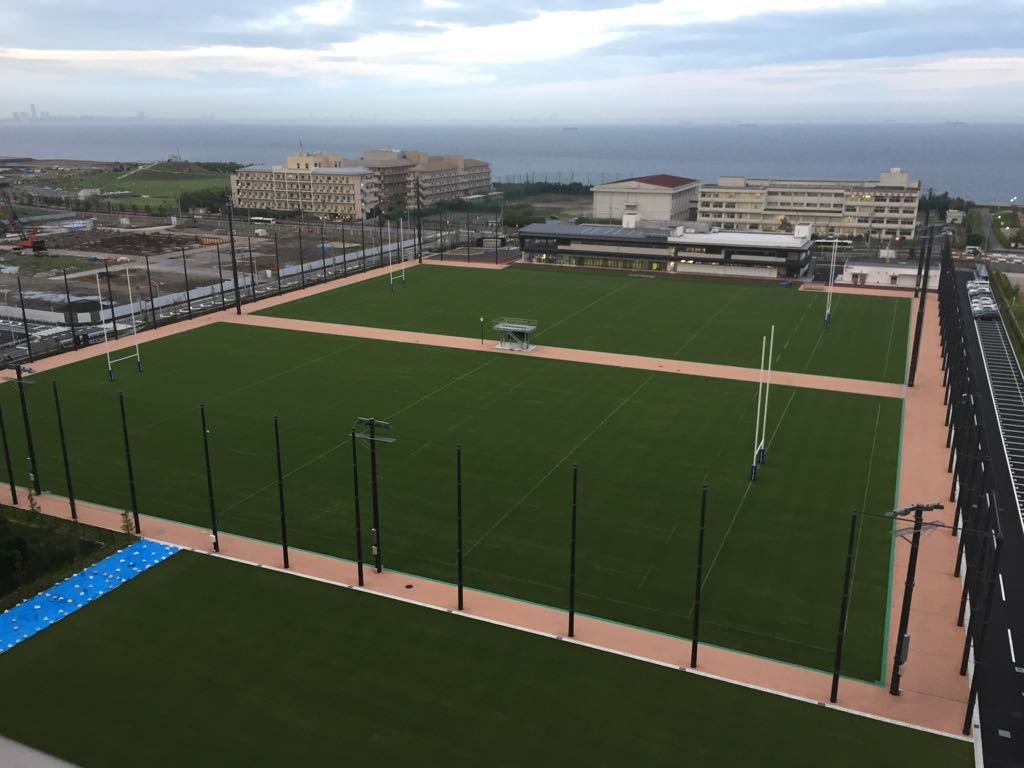
But I look forward to watching the games in my 11th floor Tokyo flat, which overlooks the Springbok training facility for next year’s World Cup. I hope I am still here next year to look out my window and watch them train!


Urayasu City World Cup training facility - where the Springboks will be based while in Tokyo

Urayasu City World Cup training facility – where the Springboks will be based while in Tokyo


John McFarland won three SuperRugby titles (2007, 09, 10) with the Bulls and five Currie Cup crowns with the Blue Bulls as their defence coach. In all, he won 28 trophies during his 12 years at Loftus Versfeld.

He is currently the assistant coach of the Kubota Spears in Japan and was the Springbok defence coach from 2012 through to the 2015 World Cup, where they conceded the least line-breaks in the tournament and an average of just one try per game.


  • Recent Posts

  • Archives

  • Thought of the Day

    Revelation 3:15 – “I know your deeds, that you are neither cold nor hot. I wish you were either one or the other.”

    How can you expect blessings without obeying?

    How can you expect the presence of God without spending time quietly before him?

    Be sincere in your commitment to Him; be willing to sacrifice time so that you can grow spiritually; be disciplined in prayer and Bible study; worship God in spirit and truth.

    Have you totally surrendered to God? Have you cheerfully given him everything you are and everything you have?

    If you love Christ, accept the challenges of that love: Placing Christ in the centre of your life means complete surrender to Him.


↑ Top