for quality writing

Ken Borland


The John McFarland Column: The unsung hero of the Lions’ success 0

Posted on April 25, 2018 by Ken


The Lions’ victory over the Waratahs was a fantastic achievement and one of the best results in the history of our SuperRugby, you have to give credit to the players and the whole coaching staff for pulling off that sort of scoreline in Sydney – and for keeping the New South Welshmen pointless for the first time ever in the competition.

The Lions were really dominant in the scrums and lineouts and they scored some very clever tries. But I would like to single out defence coach Joey Mongalo as their unsung hero.

He took over from JP Ferreira and was under lots of pressure when they started to concede tries in the losses against the Blues, in Argentina and versus the Crusaders, so it is a real credit to him that they have tightened up so much since then. Swys de Bruin took a big punt in appointing his son, Neil, as the skills coach and then he took Joey out of the junior team, where he had been tremendously successful.

It’s a big step up for Mongalo but he can now enjoy the history made in Sydney. He has persevered through the ups and downs and been at the Lions for seven years and was promoted to the Currie Cup last year. He was also the SA U20 defence coach under Dawie Theron and in their last year they finished fourth at the junior world cup. Saru, in their infinite wisdom, decided not to make use of him last year, but he is a quality young coach.

The difference he has made to the Lions’ defence is that they now have great spacing, alignment and width, they really cover the width of the field. They are also very strong in the collisions, guys like Franco Mostert, Harold Vorster and Malcolm Marx really monster guys. They have a great double-hit system which means the ball-carrier can’t get the offload away.

They’ve also shown greater line-speed these last two weeks, they’re coming forward and really laying down the gauntlet to the opposition. With that they can force turnovers through Kwagga Smith and Marx, who is probably the best in the world right now at forcing turnovers. He gets over the ball so often and he is really hard to shift.

The fact that he comes off the lineout and is inside the ball a lot of the time allows him to be very effective at turnovers. The hooker role has changed over the last few years because of the nature of how teams contest for possession and one of the best at stealing ball I ever worked with was Bismarck du Plessis. The hooker nowadays basically defends the inside channel, which enables him to be close to his target.

The other impressive feature of the Lions’ play against the Waratahs was the quality of their kicking game and their lack of fear in doing it anywhere on the field. Elton Jantjies was even prepared to put in a crossfield kick off turnover ball five metres from the goal-line. There was also a great little chip from scrumhalf Dillon Smit in the middle of the field that bounced into Ruan Combrinck’s hands and Kwagga scored.

They have the courage to do it when it’s not expected and they execute those kicks so well. The Lions also have very good chasing wings.

Swys de Bruin obviously gives them the confidence to try anything anywhere on the field and you can never accuse him of taking the safe option. He’s also had his ups and downs as a coach – he spent a long time at the Sharks Academy before Johan Ackermann brought him back into the coaching fold. He brings confidence and a sense of adventure to Lions rugby.

One must also give credit to forwards coach Philip Lemmer. Those two tries from drives off the lineout were really well executed and the way they shifted and created a channel for Marnus Schoeman, ripping a wide open gap for him to go through, was very clever.

So it was almost the perfect performance away from home by the Lions, I expect them to back it up by beating the Reds this weekend, and it is a smart move by Springbok coach Rassie Erasmus to add Swys to the consulting team for the England series. Does it mean the Springboks will play with that same freedom as the Lions do?

Well Rassie is naturally quite a conservative coach so it will be interesting to see if Swys will free up the backs.

Elton Jantjies is now the most capped Lions player ever, having gone past Cobus Grobbelaar’s 94 appearances earlier this season, and he is hardly ever injured, so he is tremendously resilient and looks after his body well. The Lions’ style of play is tailor-made to his strengths and it was encouraging to see him dictate matters in an away game, having shown previously he’s obviously very good at altitude. A lot of it comes down to the backing Swys de Bruin gives him and the question is whether he will now get the same with the Springboks.

I thought the Bulls were good value for their win over the Rebels. Sometimes you have to win ugly but to bank the five points despite that was excellent and coach John Mitchell won’t mind doing that every week.

Adriaan Strauss is certainly in brilliant form, last year’s break did him good and he has dropped some weight. In fact, I have worked with Atta since the U21s and this is the fittest I have ever seen him. He has always been a world-class player, but in the environment Mitchell has created at Loftus Versfeld, he is really performing. Having him there really adds accuracy to the set-pieces and he almost always hits his jumpers with his dead-eye-dick throws.

That brings RG Snyman and Lood de Jager into play and that forms the axis of the Bulls side with flyhalf Handre Pollard.

Under the new regime, Lood is also fitter and more mobile and the offloads and supporting lines of the Bulls forwards are very good, they look to keep the ball alive in space. Their scrum also functioned quite well against the Rebels and they created a great angle on the crucial try scored by Divan Rossouw just before halftime. They took a whole lot of Rebels defenders out of the game, they could not get across in time and the visitors basically ran out of tacklers.

Pollard is also providing direction with the boot and is enjoying a good string of matches, plus you have the magic and game-breaking ability of Jesse Kriel and Warrick Gelant, who has such incredible feet, he could get his way out of a phone box full of tacklers!

In fact there are now a lot of players with good feet on display in South African rugby, there’s that stepping ability. New Zealand’s guys tend to rely on their size, but we’re starting to produce it on the wings, guys who are really quick with good feet and are good in the air, which is going to be crucial in the Rugby Championship and against England.

The Rebels’ tactics are well-known on the Highveld, trying to slow down or stop the game, which gives their forwards longer time to recover. Visiting teams to Pretoria either stack their bench with forwards in a 6/2 split, so for the last 20 minutes they almost have a fresh pack on, or they slow the game down, sit down often and make the whole pace slower.

But hopefully the Bulls will also be able to turn over the Highlanders on the Highveld this weekend.

The Sharks versus Stormers game was obviously between two teams desperate for a win and the loss puts real heaps of pressure now on the Stormers. They’ll have to win with bonus points in their next five games in the Cape, which is possible. But for the Stormers to win with bonus points they need to be far more defensively secure than they have been.

But I look forward to watching the games in my 11th floor Tokyo flat, which overlooks the Springbok training facility for next year’s World Cup. I hope I am still here next year to look out my window and watch them train!
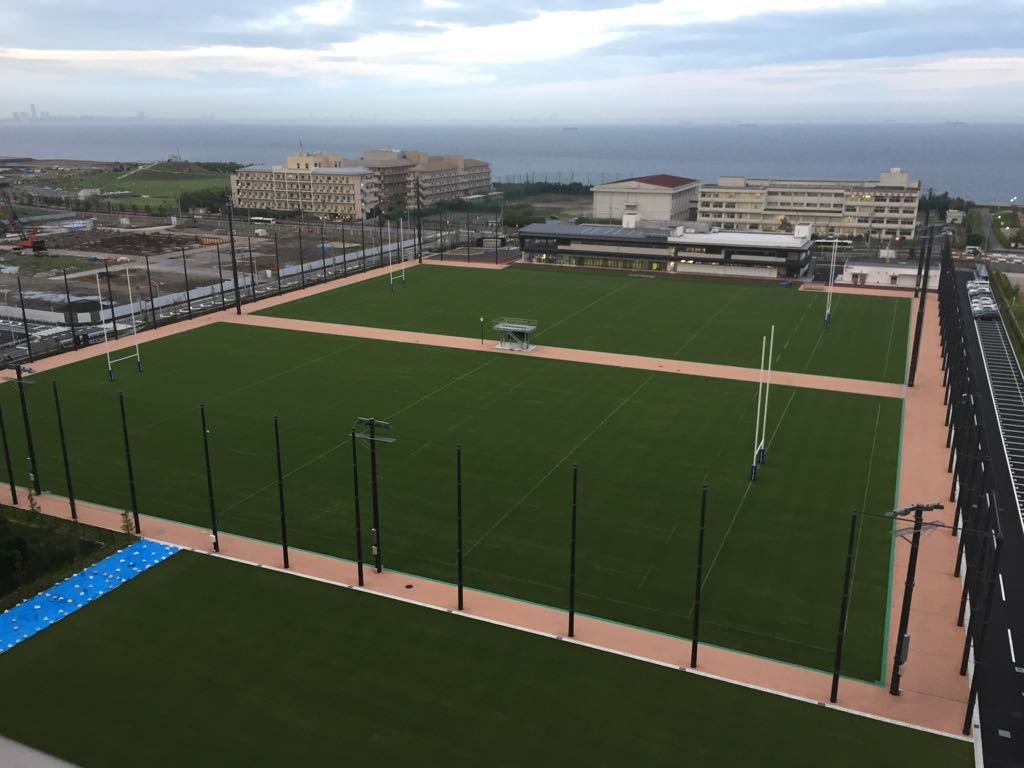
 

Urayasu City World Cup training facility - where the Springboks will be based while in Tokyo

Urayasu City World Cup training facility – where the Springboks will be based while in Tokyo


John McFarland won three SuperRugby titles (2007, 09, 10) with the Bulls and five Currie Cup crowns with the Blue Bulls as their defence coach. In all, he won 28 trophies during his 12 years at Loftus Versfeld.

He is currently the assistant coach of the Kubota Spears in Japan and was the Springbok defence coach from 2012 through to the 2015 World Cup, where they conceded the least line-breaks in the tournament and an average of just one try per game.


The John McFarland Column – Where have these Sharks been? 0

Posted on April 10, 2018 by Ken


So the biggest question to come out of last weekend’s SuperRugby action was where has that Sharks team that put in two massive consecutive performances in New Zealand been hiding all season?!

The Sharks really put in a huge display in Napier and the Hurricanes were very lucky to win; the referee made some poor decisions at the back end of the game and that didn’t help the Sharks either. But Robert du Preez’s team were really in a position to win their second massive game in a row.

To see a New Zealand side struggle to cope with the pace and power of Jean-Luc du Preez and Andre Esterhuizen, especially the ease with which he went straight through from the lineout, was incredible. The Sharks would have won but for a late hit and a missed lineout that led to seven points down the other end, so that was obviously disappointing for them.

The Sharks had shown glimpses of this sort of form before, but probably not early enough in the season, so they are still 11 points off the pace in their group. Questions have to be asked as to why only now have they started to really play?

Maybe they’re more match-fit now, halfway through the competition, but the big thing is that their set-pieces are starting to function better. They’re getting good, clean lineout ball and are disrupting the opposition’s ball too, while Thomas du Toit is starting to settle at tighthead prop and that experiment is starting to not look so crazy. He’s getting his shoulders and the scrum has been stable enough to launch Esterhuizen, and the platform it provided for the Louis Schreuder try would have been really pleasing.

There are a lot of positives for the Sharks at the moment, but some of their first-phase defence and the way the wings defend needs to be better. Lukhanyo Am made one really poor decision at a lineout, he needed to be moving in instead of going out, and that provided the hole for a try.

But it’s going to be a big game this weekend in Durban because whoever loses between the Sharks and the Bulls will have a hard way back to get into a playoff spot. It’s going to be a massive derby.

But as I said, there are a lot of positives for the Sharks to take into the game – their willingness to offload in the wide channels, their ball-carriers going hard and an astute kicking game by Schreuder at scrumhalf. But they still need to tighten their defence – they’ve conceded 10 tries in two games.

As for their performances over the last night fortnight providing a blueprint for how to beat New Zealand, one thing is certain and that is that historically it takes a miracle to score more than five tries against the All Blacks. So you can’t be conceding five tries per game. It is pleasing that the Sharks are scoring so many points, but they need to concede less.

The Bulls had a great win against the Stormers two weeks ago and should be refreshed after their bye round. Handre Pollard had a really good game with the boot and exposed the positional play of the back three of the Stormers and he will be hoping to do the same this weekend. What was also impressive was the two tries they scored with their driving maul but the main thing for them will be to defend well in Durban because the Sharks are definitely scoring tries. They will have to contain the power running of Esterhuizen, Jean-Luc du Preez and Am. I’ve also been impressed by Robert du Preez’s ability to keep the scoreboard ticking over with his excellent goalkicking.

So the Bulls will have to be at their best defensively and very good in terms of discipline. The penalty count will need to be less than 10 so they will have to make very good decisions at the breakdown and strive for set-piece excellence.

The Lions, after their setbacks of the last few weeks, came out full of intent against the Stormers and Madosh Tambwe was outstanding.

For his first try, from the chip, Damian Willemse’s kick was from too deep. With his footwork, he needs to be flat and bringing runners into the game, and that chip needed to be behind the centres. It was just in the wrong spot and he doesn’t yet have the tactical boot and appreciation for space.

So that try had the Stormers under pressure from practically the first minute and then the ability of Elton Jantjies to pick up Tambwe on the kick into space and the wing himself showing he can also go into the hard channels led to his other two tries for an astonishing hat-trick in 13 minutes.

The Lions certainly seem to have a pool of wings now, with Ruan Combrinck back and Aphiwe Dyantyi close to returning, plus Courtnall Skosan on the sidelines, they have four really quality players. Four years ago, our wing stocks were really low in South Africa, but now we have those four plus Sbu Nkosi of the Sharks and Travis Ismaiel of the Bulls.

However, a lot of the defensive decisions of South African wingers this year have been poor. Yes, you have to put pressure on but you also have to make the tackles! Springbok defence coach Jacques Nienaber will have a different approach to guys like John Mitchell and Paul Feeney, who are using a rush defence at the Bulls and Stormers respectively. They want their wings to get in amongst the opposition, but that leaves you open to the bridge-pass and the kick-pass because they get disconnected from their centres. Jacques in the past wanted his wings behind the centres, to shadow the opposition and force them towards the touchline.

We are seeing so much of the kick-pass to the wide channels these days and wings have so much on their plate defensively, not to mention the big guys with serious gas and stepping ability they have to contend with as well.

The Springbok alignment camps are on the go and obviously the guys don’t train at those, but it’s a good chance for the national coaching staff to impart their philosophies. They will reveal the calling system and defensive lingo to be used, basically it’s a chance for them to give the players their messages for the year. It involves a heck of a lot of study because it’s all about how the Springboks will play this year.

There’s certainly some exciting talent available for Rassie Erasmus, and how his predecessor, Alistair Coetzee, would have loved to have seen the 30-cap overseas player rule relaxed. Why was this policy in place for two years and now it’s suddenly lifted?

It’s probably been changed for the likes of Faf de Klerk and Vincent Koch, they are the two players affected who really spring to mind.

Faf has been playing quite well for Sale, and has also been goalkicking, plus he’s proven at Test level. With Ross Cronje not invited to the alignment camps, I also rate Schreuder very highly at scrumhalf, he definitely has the skill-set to play at that level – he has a good kicking game, he’s a good organiser and he has the ability to finish, he’s no slouch with ball in hand.

Koch is being looked at because obviously South Africa’s tighthead stocks are a bit low. The Springboks have Wilco Louw and Ruan Dreyer, but you always need three guys in the crucial positions and there will always be five props in the Springbok squad.

England have some big guys up front and I’m sure Koch has had many training sessions against Mako Vunipola at Saracens, so he would be a good pick for the Springboks in terms of inside knowledge.


John McFarland is the assistant coach of the Kubota Spears in Japan and was the Springbok defence coach from 2012 through to the 2015 World Cup, where they conceded the least line-breaks in the tournament and an average of just one try per game. Before that, McFarland won three SuperRugby titles (2007, 09, 10) with the Bulls and five Currie Cup crowns with the Blue Bulls. In all, he won 28 trophies during his 12 years at Loftus Versfeld.


Standard Bank jump in at grassroots level to ensure decent opportunities for all 0

Posted on October 31, 2017 by Ken


That there is enormous cricketing potential in this country is generally accepted, but due to a variety of reasons, it is tough for Cricket South Africa (CSA) to ensure all our communities get decent opportunities to play the game.

CSA’s development programmes are one thing, but what happens next? How do those talented young cricketers in the outlying areas then get to play enough decent matches, how are they transported to matches, what facilities do they have with which to hone their game? Are they given the love of cricket and then just left to their own devices?

CSA identified these problems and came up with the idea of hubs and regional performance centres (RPCs).

The RPCs have been a heck of a success in ensuring it is no longer the case that talented young cricketers from disadvantaged areas are lost to the system due to socio-economic circumstances. And, in tremendous news for South African cricket, it has been announced on Thursday that Standard Bank, the headline sponsors of the Proteas, will no longer be focused on just the pinnacle of the pipeline, but are now making a major contribution at grassroots level with their sponsorship of the RPC programme.

The implementation of the RPC programme means CSA are now making great headway in terms of building relationships with communities and local municipalities. And now this progress will be accelerated thanks to the support of Standard Bank, who have added this vital development initiative to their naming rights sponsorship of the national team.

“Standard Bank has been a key supporter and sponsor of the Proteas for many years and by sponsoring the RPCs we hope to develop the immense cricketing talent we have in our country.

Budding young cricketers in many outlying areas are still in desperate need of facilities and coaching, and this RPC in Soweto will assist in helping these players fulfil their true potential and turn their dreams into reality,” Vuyo Masinda from Standard Bank said at the launch of the new deal at the Dobsonville RPC in Soweto on Thursday.

There are RPCs in all nine provinces, with each having several hubs in their stable acting as feeders. Having a centralised venue dedicated to nurturing the disadvantaged talent in the vicinity allows CSA to pour resources into it, ensuring there is adequate infrastructure with which to develop quality cricketers.

Girls and women’s cricket is also included in this programme.

The quality of coaching is also of the greatest importance and each RPC must have a head coach who is Level III certified and an assistant coach who is Level II certified. The Hubs must have a head coach who is Level II certified and an assistant coach who is Level I certified.

The feeder system for the Hubs starts with the KFC Mini-Cricket programme and, thanks to the Momentum Friendship Games, the Hubs and RPCs get to play against the leading schools in their area.

Some of the franchise players who will be acting as mentors for the programme include Omphile Ramela, Malusi Siboto, Khaya Zondo, Mangaliso Mosehle and Temba Bavuma.

The John McFarland Column: A special win for the Springboks 0

Posted on June 13, 2017 by Ken


It was really a quite special win for the Springboks over France at Loftus Versfeld last weekend, against a side that definitely turned up, were hard to break down and were the best French side available on that Saturday.

The match was brutal on the gain-line, there were double-hits, they smashed the Springboks and the Springboks smashed them, so it was a great Test for the home side to come through, especially with five debutants in the 23-man squad. It’s a great start to their 2017 season.

The match was in the balance at 16-14 and then came the penalty try. Given how quickly the officials made up their minds, it must have been a clearcut decision.

The Springbok attack was definitely based around getting to the middle of the field and there were a lot of tip-on passes from the forward pods, which creates indecision in the defence, one-on-one tackles and lightning-quick ball. It’s quite an effective tactic against a rush defence.

From middle rucks, sometimes the outside back-row forward would come hard off the scrumhalf, who would either play him or go behind his back to Elton Jantjies, which makes the defence sit a bit and creates space.

There was a lot of quality passing from the Springboks, which was not in evidence last year, and there was definitely more attacking understanding and ball-in-hand play.

It was great that Jantjies looked so composed, and he and Ross Cronje, who gave very slick service and was a threat around the edges, directed play well; they always had a couple of options and it created indecision in the French defence. Because Elton is the only specialist flyhalf in the squad, he’s not looking over his shoulder and he feels he has Allister Coetzee’s total backing, he can run the show. It’s the sort of thing a key decision-maker wants.

Andries Coetzee, in his first Test, showed real pace, especially in the outside channels, he showed one or two lovely touches and was willing to run the ball back from deep, he really had a go.

The ball-carries of Malcolm Marx were exceptional and the Springboks made a lot of blindside probes, guys like Marx running a hard line close to the ruck, and he bounced off defenders at will, also creating more space. When was the last time we saw such a physically dominant performance by a South African hooker?

The scrum was very compact, it looked in good shape and form and was used as a good platform. The Springboks had two very experienced props, plus with their locks and loose forwards, there was no shortage of beef behind them.

The lineout also functioned really well, Eben Etzebeth was really good, and the Springboks won most of their pressure throws. There were not many easy balls at number two in the lineout, and it’s very difficult to attack from the front of the lineout. So they were very adventurous with their lineout tactics and Marx’s throwing was spot-on.

It was also a superbly-executed try off a throw to the back, a move which was very difficult to defend against. It’s very special to score those sort of tries at Test level, so credit to the coaches, it takes some doing.

In terms of the kicking game, South Africa cleared their lines very well and were never under pressure from kickoffs, it was just one hit up and then back to Jantjies, who kicked it to halfway. In the middle areas of the field, they would drive to suck in forwards and then Cronje would kick, and there was excellent execution of that too.

It was also a very much improved defensive display from the Springboks, credit to Brendan Venter for the best defensive performance by a South African team this year. There was brutality on the gain-line, great field-coverage and, at the end of the game, their willingness to put their bodies on the line and keep the French out was tremendous.

The defence looked organised and in the French faces for the whole game, and it will only get better as the players settle into the system. What was most impressive was how disciplined they were, so France only had one penalty shot at goal.

A small area of improvement that is needed was that they became a little compressed from wide rucks and were caught a little short on numbers in the outside channels. They came off the line quite hard and if France were able to get the ball behind their first line of attackers then they did find space.

The Springboks also closed very early at fullback, Coetzee came very early into the line, which means you then rely a lot on the scrumhalf for cover. Everyone does it these days, but sometimes perhaps the fullback should not be so quick to come up.

But it was a good start for the first Test and you can see the team is much more bonded, the leadership has set the right tone. Warren Whiteley is so selfless and empathetic, as alluded to in this column when he got the Springbok captain’s job, so he is in tune with his team.

France will obviously be a different animal in Durban, especially because they have just been physically dominated. But the whole Springbok side worked so hard, to keep a Test side pointless in the last 25 minutes at altitude is an amazing effort and it speaks to South Africa having a really strong bench.

It was a really positive start and we hope for more over the next two weeks.

And good luck too to the South African U20s for their Junior World Cup semi-final. It’s going to be a really big challenge against the England U20s, but I hope they can come through.


  • Recent Posts

  • Archives

  • Thought of the Day

    Proverbs 3:27 – “Do not withhold good from those who deserve it, when it is in your power to act.”

    Christian compassion is a reflection of the love of Jesus Christ. He responded wherever he saw a need. He did not put people off or tell them to come back later. He did not take long to consider their requests or first discuss them with his disciples.

    Why hesitate when there is a need? Your fear of becoming too involved in other people’s affairs could just be selfishness. You shouldn’t be afraid of involvement; have faith that God will provide!

    Matthew 20:28 – “The Son of Man did not come to be served, but to serve, and to give his life as a ransom for many.”


↑ Top