for quality writing

Ken Borland


Archive for November, 2012


Bonamanzi 0

Posted on November 22, 2012 by Ken

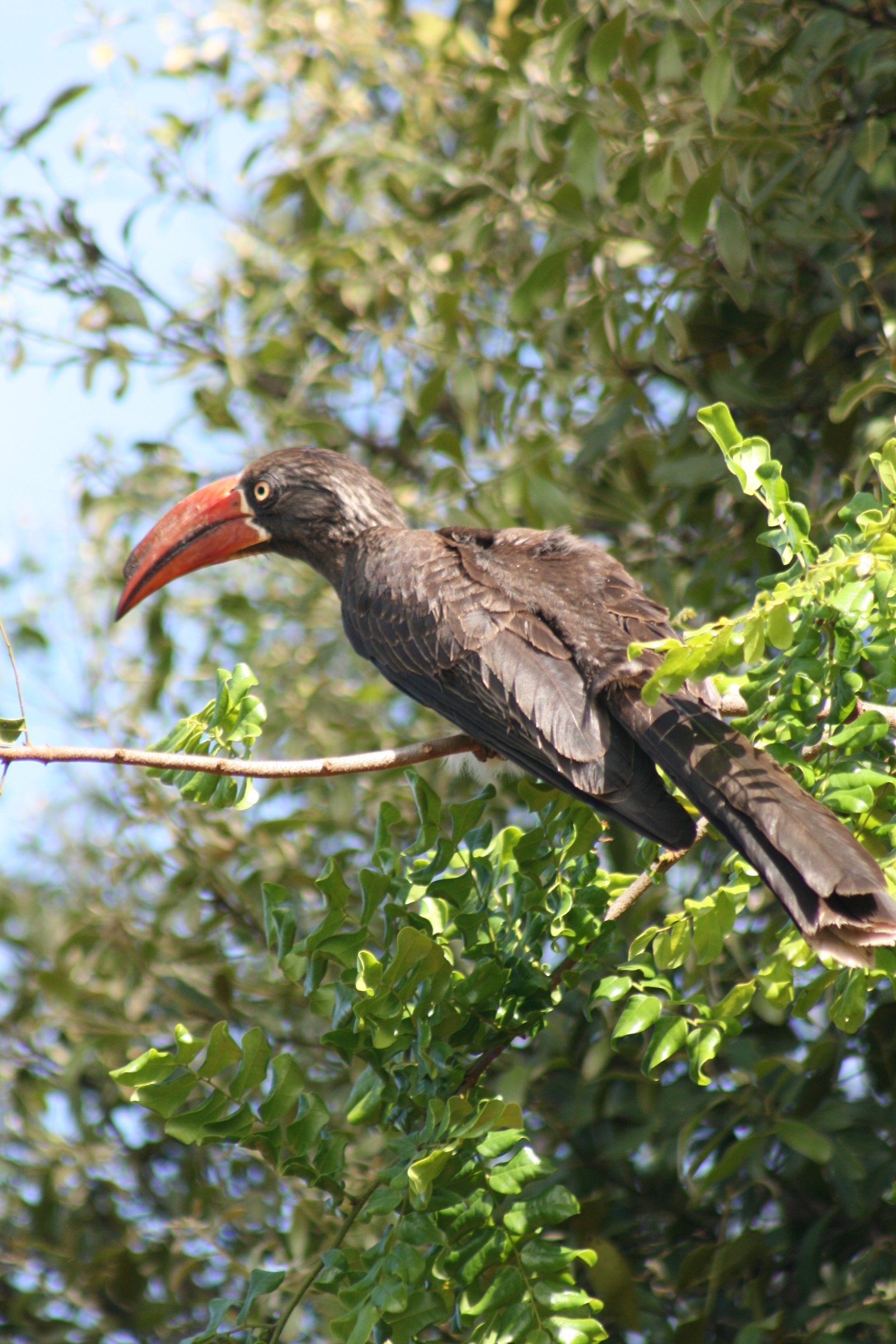
An inquisitive Crowned Hornbill at Bonamanzi

My second trip to Bonamanzi – situated between Lake St Lucia and Hluhluwe – saw me armed with my newly-acquired 4×4, a Hyundai Tucson 2.0 diesel automatic, which I call the Serval, but my wife calls Catalina.

Sadly, Lauren could not get leave to join me on this trip (she is forced to take leave over Christmas when her company is closed, which is most unfair I believe) so I was accompanied by Stidy, the renown cartoonist, my long-time birding mate and the sharer of many dramatic adventures with me.

Stidy was particularly pleased that I now had a 4×4 to ferry him around in, because it allowed me to track down a lifer for him – Lemonbreasted Canary.

Next to the entrance gate at Bonamanzi is a little track heading northwards along the boundary fence, into some pristine Lala Palm Savanna, the perfect habitat for the little canary Stidy was so eager to get … particularly since he had missed the ones I saw several years earlier heading into Crook’s Corner at Pafuri in the Kruger National Park!

But, given the amount of rain that had fallen in Zululand in October and November, this track was something of a quagmire … ideal to test out the capabilities of my new 4×4!

Marico Sunbird was a nice first sighting heading down the track and some Lesser Blackwinged Plover gave us a foretaste of the more exotic treat to come.

And there they were: Half-a-dozen Lemonbreasted Canaries cavorting on the trees hanging over the boundary fence. I allowed Stidy the agony of convincing me that they weren’t just washed out juvenile Yellowfronted Canaries, but there was no denying the greyish backs and the cute little black-and-white face patches.

It was a fortunate sighting because, shortly thereafter, the track disappeared beneath a large, muddy pool. Walking through it, I quickly became mired in the mud and there was no way I was going to risk the Serval ploughing through that and getting stuck on her first real outing!

It seemed harder, more slippery going on the way back … mostly because Borland forgot to engage the 4×4 properly! Sigh … must have been all the excitement of the canaries!

It was only the next day when we discovered we weren’t meant to be on the track at all … the No Entry sign had disappeared at the start, which perhaps explained the perplexed look of the guard at the main gate as we ducked off down the road.

Bonamanzi has a couple of the best camping sites I have ever had the pleasure of staying in and fortunately we were allocated the same one as on my previous visit – beautifully tucked away in the sand forest with your own ablutions and scullery.

That makes birding highly rewarding even when sitting on your camp chair and Yellowbellied Bulbul, Crested Guineafowl and Forest Weaver were all seen close to home.

On the second morning, Redchested Cuckoo obliged us with some lovely views and a Greyheaded Bush Shrike came to visit as well, while we also picked up Bluegrey Flycatcher.

There is a fantastic dam just below the main office block, which is fenced off because of the large Nile Crocodiles that lurk ominously therein. The island in the dam was frantic with three species of weaver nesting – Thickbilled, Lesser Masked and Yellow – and they were predictably attended by Diederick Cuckoo.

We also picked up Blackcrowned Night Heron, Water Dikkop, African Jacana, Black Crake and African Spoonbill. The facilities include a wonderful wooden walkway over a portion of the dam leading to a functions area, where we took shelter from a sudden squall and picked up House Martin and Lesser Striped Swallow.

Once it cleared, we then had our lunch under the Fever Trees, next to the crocodile enclosure. One of them took a liking to me and gradually inched its way closer to the fence and me … it was close enough for me to hear the malevolent hissing of the ancient reptile.

We then went on a good long walk that took in a couple of hides and waterholes, returning back to the main camp through the sand forest, and picked up Natal Robin, Purplecrested Lourie, Woollynecked Stork, Bearded Robin, Purplebanded Sunbird, Wahlberg’s Eagle and Malachite Kingfisher.

Back at camp and after dinner, I tracked down a pair of Wood Owl calling near our camp, enjoying the sense of natural wildness as I then turned off my spotlight and stood under the tree from which they were hu-hu-hooting.

Our last morning was spent driving through the myriad of tracks through the sand forest and some determined birding rewarded us with sightings of Sombre Bulbul, Yellowbreasted Apalis, Southern Boubou, Yellowspotted Nicator, Pale Flycatcher and Greater Honeyguide, all of which had been calling and calling but had evaded being actually seen.

The Nicator was an especially good sighting as he sat on the outer edge of a thick clump of bush, chuckling away beautifully.

Bonamanzi is that kind of place … exotic, beautiful and rapidly becoming a firm favourite of mine.

The other great thing about Bonamanzi is that although there are Vervet Monkey around, they are very well-behaved ones that never bother your campsite!


Sightings list

Nyala

Yellowbellied Bulbul

Blackbacked Puffback

Crowned Hornbill

Crested Guineafowl

Goldenbreasted Bunting

Kurrichane Thrush

Forktailed Drongo

Red Duiker

Terrestrial Bulbul

Yellowbilled Kite

Yellow Weaver

European Swallow

Little Swift

Forest Weaver

Moreau’s Tropical House Gecko

Redchested Cuckoo

Greyheaded Bush Shrike

Blackbellied Starling

Squaretailed Drongo

Bluegrey Flycatcher

Impala

Grey Heron

Thickbilled Weaver

Lesser Masked Weaver

Nile Crocodile

Blackcrowned Night Heron

Diederick Cuckoo

Water Dikkop

Yellowthroated Sparrow

African Jacana

Egyptian Goose

Black Crake

Redeyed Dove

African Spoonbill

Warthog

Hadeda Ibis

African Pied Wagtail

House Martin

Lesser Striped Swallow

Natal Robin

Purplecrested Lourie

Woollynecked Stork

Great White Egret

Whitefaced Duck

Blue Waxbill

European Bee-Eater

Speckled Mousebird

Blackeyed Bulbul

Marico Sunbird

Crowned Plover

Lesser Blackwinged Plover

Blue Wildebeest

Glossy Starling

Lemonbreasted Canary

Common Waxbill

Bearded Robin

Emeraldspotted Wood Dove

Goldentailed Woodpecker

Brownhooded Kingfisher

African Fish Eagle

Purplebanded Sunbird

Greenbacked Camaroptera

Rattling Cisticola

Wahlberg’s Eagle

Malachite Kingfisher

Collared Sunbird

Hamerkop

African Palm Swift

Southern Masked Weaver

Spottedbacked Weaver

Wood Owl

Foam Nest Frog

Sombre Bulbul

Yellowbreasted Apalis

Southern Boubou

Yellowspotted Nicator

Steppe Buzzard

Pale Flycatcher

Greater Honeyguide

Paradise Flycatcher
Amatikulu Nature Reserve 2

Posted on November 21, 2012 by Ken

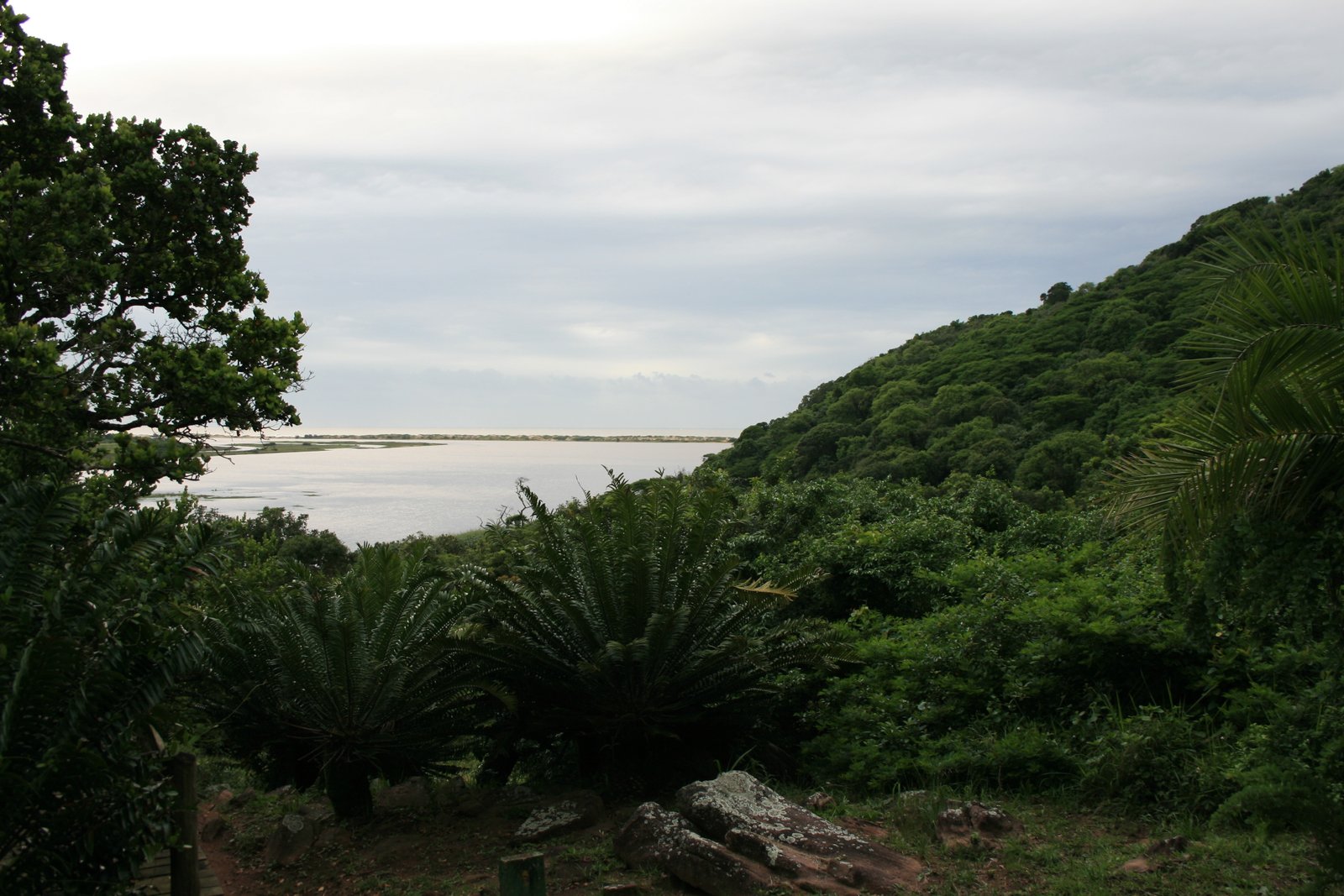
Looking out over the Amatikulu Estuary, its confluence with the Nyoni and beyond that the Indian Ocean, one was struck by an enormous sense of tranquility as we enjoyed the scenery from the tented camp on the hill.

Twelve hours later, that tranquility had been replaced by what felt like a raging hurricane as we tried to pack up camp after our two nights at Amatikulu Nature Reserve. Situated so close to the coast, we were bombarded by squalls that raced up from the south, bringing howling wind and heavy rain.

While the weather had been against us in terms of birding, we still enjoyed a fabulous stay and were most impressed by Amatikulu.

The view from the tented camp, looking out over the Amatikulu Estuary

My first sighting arriving after the long drive from Johannesburg to the reserve, situated about 100km north of Durban and just above the mouth of the Tugela River, was of a Vervet Monkey. Fortunately, Amatikulu is one of the few places that has well-behaved monkeys and they did not trouble our camp at all!

A Wild Plum was the centrepiece of the campsite and in the morning we were greeted by a flock of Blackbellied Starlings foraging in it.

Our first morning consisted of doing the lengthy forest trail over the next hill and down to the estuary. We quickly picked up a Bluegrey Flycatcher and soon we were admiring the idyllic dune forest and that wet smell that came from the rather swampy conditions after all the recent rain. A stream also runs through the forest and we were impressed by a large stand of trees with their roots in the stream, which reminded me of banyan trees in India. (I wish I knew trees better, these had long, straight trunks and big glossy leaves if anyone can help with identification!)

Another notable forest tree was Tabernaemontana ventricosa, the Forest Toad Tree, with its beautiful five-star, helix-shaped, creamy white flowers.

An Eastern Olive Sunbird was chip-chipping away in the higher foliage but we managed to track him down, while Thickbilled Weavers were down on the forest floor even though the breeding season was surely underway.

Down we went through the beautiful forest until we came out on the river bank, from where we walked a few hundred metres to where the Amatikulu reached the Nyoni. Sitting down for a bite to eat, we were joined on a little sandbank by a delightful little Sanderling, as well as Whitefronted Plover and Common Sandpiper.

Towards the other end of the estuary, peeking above a sandbank, we spotted the distinctive heads and bills of a few Whimbrel. As pleased as we were to see them, we decided against wading across to their side because the river looked fairly deep and there are crocodiles about!

This did not deter a couple of locals from their handfishing in the estuary, which just adds to the sense of stepping back into a time when the Natal coast was not just holiday resorts.

Heading back to the picnic site, we picked up White-Eared Barbet and then Squaretailed Drongo, Blackbacked Puffback and Forest Weaver were waiting for us back at camp.

The afternoon, interspersed with showers, was spent doing the 4×4 trail through the hilly coastal grassland with patches of forest and Lala Palms.

It was prime habitat for Croaking Cisticola and he was our first tick on the afternoon drive, quickly followed by Yellowthroated Longclaw. A Longcrested Eagle came zooming over and Yellow Weavers were busy in one of the trees along the route.

Yellowthroated Longclaw

Spectacled Weaver was also around and, although the swampy area around the Nyoni Pan looked very promising, it didn’t provide anything unusual.

Redbilled Oxpeckers were on a female group of Greater Kudu and we finally tracked down Natal Robin just before sunset.

In between squalls on the final morning, a visit to the ablutions turned up a Pygmy Kingfisher sitting briefly on a branch right by the door.

It was a great way to end a trip which pretty much blew us away in both senses of the phrase!

Sightings list

Vervet Monkey

Plains Zebra

Blackbellied Starling

Bluegrey Flycatcher

Whitefronted Bee-Eater

Blackeyed Bulbul

Redshouldered Widow

Redcollared Widow

Eastern Olive Sunbird

Sombre Bulbul

Thickbilled Weaver

Collared Sunbird

Pied Kingfisher

Egyptian Goose

Reed Cormorant

Great White Egret

Whitebreasted Cormorant

Common Sandpiper

Whitefronted Plover

Sanderling

Whimbrel

Yellowbilled Duck

European Swallow

White-Eared Barbet

African Pied Wagtail

Squaretailed Drongo

Blackbacked Puffback

Forest Weaver

Croaking Cisticola

Yellowthroated Longclaw

Giraffe

Longcrested Eagle

Yellow Weaver

Little Bee-Eater

Spectacled Weaver

Common Moorhen

Grey Heron

African Jacana

Scarletchested Sunbird

Greater Kudu

Redbilled Oxpecker

Redeyed Dove

Natal Robin

Red Duiker

Pygmy Kingfisher

Meyer makes all the popular selections 0

Posted on November 21, 2012 by Ken

Heyneke Meyer has previously said that bowing to public opinion would be akin to having fans voting for the national team, but the Springbok coach has made what will be some popular selections in the squad announced on Sunday to tour Great Britain and Ireland.

While it’s a perfectly logical squad, featuring all the players who appeared for the Springboks this year and are fit, there will be some debate, as ever, round the flyhalf position.

Meyer has predictably named all three contenders – Elton Jantjies, Morne Steyn and Pat Lambie – in the squad and it would perhaps be best for the long-term growth of the Springboks if he spread the flyhalf duties between the trio for the three Tests against Ireland, Scotland and England.

There are five uncapped players in the 31-man squad, with lock Franco van der Merwe and scrumhalf Jano Vermaak having been round the block a few times, while outside backs Lionel Mapoe and 19-year-old Raymond Rhule have the flair and skills to be exciting additions to the Springbok backline in years to come.

Speaking of flair and skills, Meyer has decided to bring hooker cum part-time flank Schalk Brits in from the cold, the 31-year-old Saracens player having not represented the Springboks since 2008. The other overseas-based players in the squad are Ulster scrumhalf Ruan Pienaar, Bath flank Francois Louw and mountainous Toulouse loosehead prop Gurthro Steenkamp.

The other uncapped player in the touring group is loose forward Arno Botha, who has been part of the Springbok squad this year.

Meyer explained his reasoning by saying: “We’ve got a settled core of players that did the job during the England series and the Rugby Championship and we decided to stick with them.

“Gurthrö and Schalk are experienced front-rankers who have played for South Africa before and know the conditions in the Northern Hemisphere. This tour provides a good opportunity to assess them as we plan ahead. Arno, Lionel, Franco and Jano have all been part of our squad earlier in the season.

“Raymond put up his hand for the Junior Boks and the Cheetahs and I’m very excited to see what he can do. It’s also great to have JP Pietersen and Chiliboy Ralepelle back from injury as they bring a lot of experience to the squad.”

Meyer will also name a 32nd squad member before the team depart for the United Kingdom on Saturday, with loose forward and outside back the two areas where the Springboks probably currently have holes.

Captain Jean de Villiers, who missed Western Province’s run-in to the Currie Cup title with a hamstring strain, will also have to prove his fitness before departure.

The Springboks have already been hard-hit by injuries with prop Coenie Oosthuizen, hookers Bismarck du Plessis and Tiaan Liebenberg, lock Andries Bekker, loose forwards Siya Kolisi, Jacques Potgieter and Pierre Spies, flyhalf Johan Goosen, centre Frans Steyn and wing Bryan Habana all being wounded in action this year.

Flanks Schalk Burger, Juan Smith and Heinrich Brussow were all ruled out before the Springboks even stepped on to a field this year.

The injury curse got her dirty little hands into Habana over the weekend, the in-form winger leaving the field with a knee injury in the 14th minute of the Currie Cup final after Beast Mtawarira hurled him to the ground at a ruck.

On the plus side though, Pietersen is back in the Springbok squad and will be hoping Lady Luck only has her best in store for him after he missed the entire Rugby Championship with a hand injury.

While Springbok fans have had to endure a diet of uninspired rugby and mostly defeats this year, the team began to show real promise in the second half of the Rugby Championship before the brilliant All Blacks gave them a lesson in Soweto.

Weather conditions overseas may favour Meyer’s preferred conservative game plan, but there are enough exciting youngsters in the squad for more glimmers of hope to be seen.

Springbok squad – Zane Kirchner (Bulls), Pat Lambie (Sharks), JP Pietersen (Sharks), Juan de Jongh (WP), Jaco Taute (Lions), Jean de Villiers (WP), Lionel Mapoe (Lions), Lwazi Mvovo (Sharks), Raymond Rhule (FS), Elton Jantjies (Lions), Morne Steyn (Bulls), Ruan Pienaar (Ulster), Francois Hougaard (Bulls), Jano Vermaak (Bulls), Duane Vermeulen (WP), Willem Alberts (Sharks), Arno Botha (Bulls), Francois Louw (Bath), Marcell Coetzee (Sharks), Juandre Kruger (Bulls), Franco van der Merwe (Lions), Eben Etzebeth (WP), Flip van der Merwe (Bulls), Jannie du Plessis (Sharks), Pat Cilliers (Lions), CJ van der Linde (Lions), Adriaan Strauss (FS), Chiliboy Ralepelle (Bulls), Schalk Brits (Saracens), Tendai Mtawarira (Sharks), Gurthro Steenkamp (Toulouse).

WP stun Sharks like few have done before 0

Posted on November 21, 2012 by Ken

It is seldom such overwhelming favourites are so conclusively played off the field as the Sharks were by Western Province, but that’s what happened in the Currie Cup final in front of a stunned King’s Park crowd in Durban.

The Sharks, with a dozen Springboks in their squad and form and momentum on their side after topping the Currie Cup log, were expected to enjoy a stroll in the park against a young and injury-hit Western Province side that had lost their last four matches against the Natalians.

But sport is such wonderful entertainment exactly because of the sort of upset Western Province dished up on Saturday. The new Currie Cup champions also delivered a timely warning that, no matter how flashy or skilful your side is, you ignore the set-pieces at your peril.

Hooker is a position where the Sharks have enjoyed tremendous depth in the past, with John Smit and Bismarck du Plessis battling it out for supremacy up to last year and Craig Burden becoming a fast-rising star.

But Burden is a re-treaded wing, and a hooker’s core skill is throwing into the lineout. Unfortunately for the Sharks, his throwing was wayward in the final and, under immense pressure from the magnificent Eben Etzebeth, the home side could only win two of their eight lineouts, which fatally stymied their game plan.

The Burden was replaced on the hour mark, but things did not go much better for substitute Kyle Cooper and it was he who dropped the pass after the hooter as the Sharks launched a desperate last-ditch effort to level the scores.

Having almost single-handedly dismantled the Sharks’ lineout, Etzebeth was also massive on defence, carrying the ball up and even chasing kicks – it is difficult to think of a more destructive force in South African rugby at the moment.

Etzebeth turns 21 on Monday, but he came of age in a rugby sense a long time ago and is surely a shoe-in for the SA Rugby Player of the Year award next month.

On a national level, Springbok coach Heyneke Meyer is currently under pressure to choose flashier players but, as we saw in the Currie Cup final, if these fan favourites cannot deliver the goods in their primary roles, whether that be in the set-pieces, servicing the backline or defending, then they will be exposed in the cauldron of high-stakes rugby.

Sharks scrumhalf Cobus Reinach had been impressive in helping his team into the final, but fickle fans who were saying he should be in the Springbok squad on the basis of a couple of months of good play had their views rammed back in their faces, as the 22-year-old was another to be exposed. The son of late rugby and athletics Springbok Jaco Reinach struggled with the quality of his service and was poor on defence, the inexperienced error he made in the 36thminute leading to Juan de Jongh’s try that shifted the momentum the way of the visitors.

The final seemed to be going according to script before then, as the Sharks took a 12-3 lead courtesy of four Pat Lambie penalties. The Sharks had been dominating the scrums, but the home side was also helped by the referee, Jaco Peyper, who inflicted a string of poor decisions against Western Province in the second quarter, denying them crucial momentum.

But the character of the young Cape team was the outstanding feature of the final. The way they dominated a Sharks pack full of top stars says much for the work of coach Allister Coetzee – who has now taken them to three major finals – has done between their ears.

Credit, too, must go to captain Deon Fourie, a hooker playing on the flank, who kept driving his team on and was a major frustration on the ground for the Sharks.

Western Province was also thoroughly committed on defence, with the try-saving tackle Bryan Habana made on fellow Springbok wing JP Pietersen in the seventh minute setting an early benchmark.

In the final minute, the Sharks had broken free and looked set to score before the heroics of fullback Joe Pietersen and flyhalf Demetri Catrakilis spoilt the move.

Catrakilis, the unsung number 10 who was meant to be outshone by Lambie, had earlier kicked the two drop goals that stretched the lead to 25-18 – the final score – and the 23-year-old will now head to the EP Kings as a Currie Cup-winning flyhalf.

The Johannesburg-born Catrakilis will certainly be delighted with the way the career choices he has made have turned out. A highly promising footballer who was a member of the Moroka Swallows junior squad and toured with a South African invitational team, the St John’s pupil chose rugby at the end of high school.

The picture of a young Catrakilis in a winning junior football team that hangs in a Johannesburg car dealership can now be replaced by one featuring South Africa’s most iconic sporting trophy.

http://dailymaverick.co.za/article/2012-10-29-keep-calm-and-currie-on-wp-wallops-the-sharks

  • Recent Posts

  • Archives

  • Thought of the Day

    People have a distorted understanding of values, but I believe:

    • Financial riches are not of greater importance than an honourable character;
    • It is better to give than to receive;
    • Helping someone for nothing brings its own rich reward.

    “The highest standards are those given to man by God. They are the old, proven values of love, honesty, unselfishness and purity … allow these God-given principles to govern your conscience.

    “As you live according to these divine standards, God’s best for you will outshine all the plans you can make for yourself.” – A Shelter From The Storm by Solly Ozrovech


↑ Top