for quality writing

Ken Borland


Many things buffet the SuperRugby product, but here’s a fresh idea to sell it 0

Posted on February 09, 2019 by Ken

Economic hardships, the lure of foreign lands and a saturated market all buffet SA Rugby’s efforts to produce an alluring SuperRugby product, but in the magnificently comfortable Cape Town Stadium last weekend they were given some massive ideas in terms of getting it to work again.

Getting spectators to watch live sport these days is all about the stadium experience, and the fact the Cape Town Stadium was sold out for the SuperRugby Superhero Sunday Double-header – warm-up matches that ultimately count for nothing – tells you the venue is doing something right.

Spacious and with plenty of open spaces along the concourses, Cape Town Stadium is also brilliantly designed so that there is not a bad seat in the house. Thanks to SuperSport, I enjoyed my first visit to the Green Point venue last weekend and I was enormously impressed.

The Cape Town public came in their droves even though the Stormers rested most of their big stars. Fortunately there were enough Springboks in the Lions, Bulls and Sharks teams to make up for that. When Duane Vermeulen walked on to the field, the Stormers faithful began cheering, until they remembered he has signed for their archrivals the Bulls, which was when the boos and jeers began.

The big success story of Superhero Sunday was bringing the kids back into the stadium. Support for rugby seems to be dying and what better way to halt the slide than by recruiting the yongsters and getting them hooked on the live game.

The fact that SuperSport and Vodacom, with huge backing from Marvel, made major efforts to market the day was obviously also crucial, but so too was the idea of four teams playing in one stadium.

Every SuperRugby franchise has a sizeable number of fans in cities outside of their province these days and I would love to see double-headers played in the actual competition as well.

The cricketers do it during their T20 tournament and the argument of teams losing home-ground advantage is easily combatted and should be set aside if, for probably the first time ever, the unions are willing to do what is best for the game.

The answer is simple: The schedule must be such that the Stormers and the Sharks visit the Lions and the Bulls on the same weekend. Seeing as though both coastal teams are now on the Highveld, they play at the same venue, either Ellis Park or Loftus Versfeld. The next year, the double-header is played at the other Gauteng venue.

The number of Sharks and Stormers fans in Gauteng is huge and all the coaches I spoke to – Swys de Bruin, Robert du Preez and Pote Human – were supportive of the double-header concept.

The superhero theme was novel and certainly attracted the kids, but it doesn’t have to continue. The success of the double-header does not rest on it, the South African rugby fan is known for the passion they bring to the game and there are other narratives that can be pursued.

Besides, the sight of a rather unathletic Black Panther and a very naff Spiderman mincing around are not things I would want to see again. Apparently Marvel insist that only their regular costume-wearers are allowed to fulfil those roles and the Americans they brought fell way short of what my imagination had been inspired to expect from the comics.

Cape Town Stadium, however, surpassed expectations and it is difficult to comprehend why Western Province rugby would not want to move there from the old and decrepit Newlands stadium, which has tradition and a proud history going for it, but not much else.

Which sounds a bit like SA Rugby at times, but a new SuperRugby season full of possibility lies before us; will they take the lead offered by two of their most loyal sponsors in SuperSport and Vodacom and come up with new, fresh ideas to re-popularise the tournament?

Youngest member of SA’s exciting wing stocks just wants to learn 0

Posted on January 30, 2019 by Ken


The country’s wing stocks look very exciting at the moment what with Aphiwe Dyantyi’s heroics in Green and Gold and the likes of Makazole Mapimpi and Sbu Nkosi just waiting to recover from their injuries before exploding on to the international stage once again. But there is another hugely talented winger coming through in Aphelele Fassi, who just happens to be a team-mate of Nkosi and Mapimpi at the Sharks.

The 20-year-old Fassi has burst on to the scene in this year’s Currie Cup and he says the key to his breakthrough has been learning from more experienced players like Nkosi, Lwazi Mvovo and Mapimpi, all of whom are Springboks.

“It’s been a great year for me and the one thing I keep telling myself is that I need to learn more. The likes of Sbu have been there at the highest level and playing with guys like him, Lwazi and Makazole, they have guided me as seniors. It’s all about learning and I’m here now because of that.

“So I plan to learn even more and the coaching staff have given me all the support I need, they back me and I’m very grateful for the opportunities I’ve been given. As a player you intend to improve every time you run on the field and the Currie Cup is no different to the SuperSport Rugby Challenge in terms of speed and physicality, so I’ve set my game there, I’ve reached those levels,” Fassi said.

Perhaps the key to the great industry Fassi has shown out on the wing is that he actually prefers playing at fullback and he also excelled at flyhalf for his school, Dale College in King William’s Town.

“I prefer fullback more, but it’s about where the coach needs you. And obviously coming out of high school rugby, it’s not the same speed and physicality. So I’m working on my tackles, taking the high balls and my long clearance kicks,” Fassi, who also captained Dale at cricket and was a good enough all-rounder to earn junior provincial colours for Border, said.

Saturday’s game against the Golden Lions at Kings Park will provide another good measure of just how exciting a future Fassi has in rugby though, as he comes up against a stellar backline featuring the experienced Courtnall Skosan, Howard Mnisi, Lionel Mapoe and Andries Coetzee.

https://citizen.co.za/sport/south-african-sport/sa-rugby-sport/2011792/exciting-future-ahead-for-sharks-fassi/

Close encounters on the Kransberg 1

Posted on April 27, 2018 by Ken


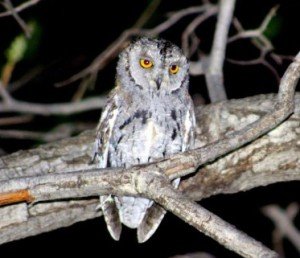
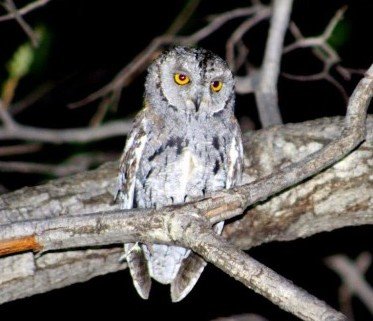
An African Scops Owl comes to visit our campsite

An African Scops Owl comes to visit our campsite


by Anthony Stidolph


I am, by nature, a wanderer. For me there is nothing quite like the thrill of departure, the joy of being on the road again, of heading off to remote and cut-off places.

As an antidote to this restlessness I have travelled the length and breadth of South Africa searching out new places I can claim as my own. In recent years this has involved launching several expeditions up to the Limpopo, along the way taking in Punda Maria and Pafuri in North Kruger, Mapungubwe, Ratho on the Botswana border,  Hans Merensky on the Groot Letaba, the forests of Magoebaskloof, parts of the Soutspanberg and that little-known gem, Blouberg Nature Reserve near Vivo.

Having explored and fallen in love with this sun-drenched landscape, my birding partner Ken and I recently took a notion to recreate these epic treks by heading back up there once again, only, this time, adding Marakele National Park, which would be new country for me.

A Tshwana word, aptly meaning “Place of Sanctuary”, Marakele falls within a transitional zone between the dry western habitat, made up mostly of Kalahari thornveld, and the typical bushveld country of the moister eastern sections of South Africa. It also lies within the Waterberg range of mountains, with an altitude ranging from 1050 metres on the plains to 2088 metres at its highest point.

Because of this broad range of vegetation types and its diverse topography the area boasts a wide variety of game (including the Big Five and Wild Dog) and an abundant bird life. Its biggest attraction, for birders anyway, is the around 800 breeding pairs of Cape Vulture which nest high up in the cliffs of the Kransberg

Arriving at the park, which is situated about twenty kilometres north of the old iron-ore mining town of Thabazimbi, we set up camp and then headed off on our first drive. I was immediately rewarded with my first lifer of the trip – a Greyheaded Kingfisher.

As we sat having a celebratory beer that night, listening to the clear, articulated noises of the bushveld at night, a tiny African Scops Owl landed on a branch above us and began its odd but strangely comforting, frog-like, “Prrrt…prrrt…prrrt…” call. This was more like it. My latest Excursion Into The Great Unknown had officially begun.
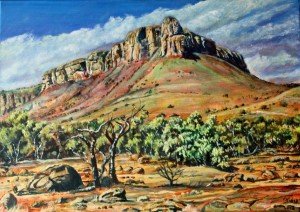
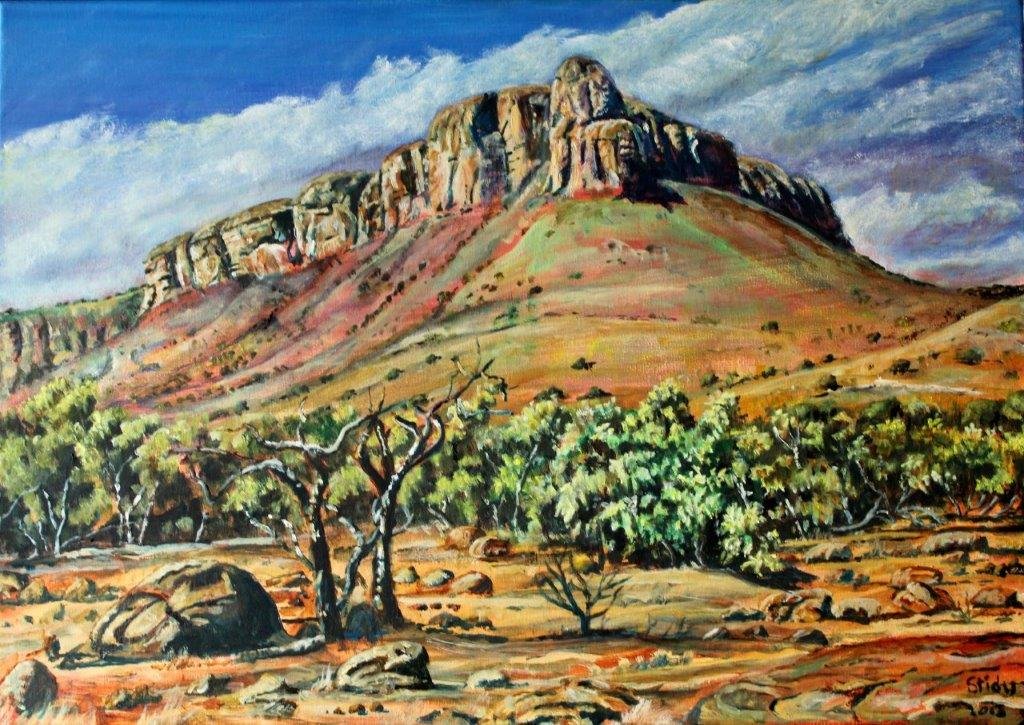
The Kransberg, Marakele NP

Anthony Stidolph’s painting of The Kransberg in Marakele National Park. For Sale – contact Stidy at stidy@sai.co.za (42×60)

The next day we were up at dawn and driving through heavy bush country towards the impressive pass that leads up to the top of the Kransberg mountain. A friend of ours had told us that her biggest concern going up this narrow, winding, precipitous road, was what she would do if she encountered another vehicle coming down the other way as there is little room to pass. That proved to be the least of our worries.

Rounding one steep-sided corner we suddenly found ourselves coming face-to-face with a young elephant bull that had stepped out on to the road. Having been in this situation many times before, Ken immediately pulled up short, stopping a sufficient distance from the animal so as not to make it feel threatened or think that we were encroaching on its space. It didn’t help.

Coming face-to-face with a wild animal so much bigger than yourself can be a slightly intimidating experience and this one decided to remind us of its size advantage. Without even affording us the courtesy of a warning mock charge, it let out an almighty bellow and came thundering down the road.

There was nothing to do but slam the car into reverse and head back down the road with me craning my head out of my window, shouting directions, while Ken did the same on his side.

The kilometre or so we drove in this manner was like a rapid ride through eternity. We kept hoping that each time we rounded a corner and the elephant lost sight of us it would lose interest. No such luck. The beast definitely did not like the cut of Ken’s jib and was determined to drive us clear off his mountain stronghold.

We went back down into the valley and somehow – and I shall never know how we did it – managed to do so without plunging down the mountain side or getting stomped on by the elephant. Once safely back on the flat we found a turning point, backed into it and sped off in the direction we had earlier come from.

A half-an-hour or so later we gingerly ventured back but, very bravely, decided to allow another vehicle – that had come driving up while we were parked on the side of the road observing, of all things, a Neddicky (the ultimate Little Brown Job), while considering the sagacity of continuing on our journey – go up ahead of us. Once we had seen they had safely cleared the ridge we sailed forth ourselves, this time, thankfully, unmolested.

At the top of this particular stretch the road evens out on to a trough through which you drive before getting to tackle the final, most spectacular, stage of the mountain. Here the road begins an even more torturous ascent. On the one side rise the naked sandstone towers of the Kransberg massif itself, weathered into the shapes of fantastical beasts and strange deformed reptiles. On the other side the slopes plunge steeply down into a treeless, meadowy grassland in which several more elephant and a herd of wildebeest were feeding.

As we advanced the road got narrower and narrower. What got us perspiring heavily all over again was that there were yet more fresh elephant droppings at regular intervals all along its surface, virtually to the top.

On the summit it was like another world. The view was colossal. Below us the mountain stretched away in every direction before dropping down, in a series of steps, to the plains, fading away into the blue distance.

Immediately in front was another castle-like knob, a labyrinth chaos of rock, fitted with clefts and chimneys. It was here the vultures nested. There were many of these large, endangered raptors wheeling gracefully above us, trailing their shadows on the ground beneath them.

The protea-covered hillsides on top of the mountain also provide a home for some other unusual species like the Gurney’s Sugarbird and the Buff-streaked Chat, birds which I more commonly associate with the Natal Midlands, where I live, and the foothills of the Drakensberg. Another occupant is the Kransberg Widow, a very rare and beautiful butterfly which puts in an appearance in November and early December and then, like Cinderella, sheds its finery and disappears. This is the only place in the world where it occurs.

We were reading all about the insect on a large information board they have erected up there, alerting us to its presence, when one came fluttering past. A few minutes later it came fluttering back again … and again. It may be scarce but it certainly wasn’t shy about showing off its beautiful cream markings.


A cold wind was blowing across the mountain top and a storm was brewing in the distance and so, after a warming cup of coffee, which we shared with a pair of very tame Cape Buntings and a cheery Mocking Cliff-Chat, we made our way back down the same twisting road, this time without having to face down any elephants with murder on their minds. Heading into camp I did, however, have another good sighting of two more Greyheaded Kingfishers, dive-bombing a family of Banded Mongoose.

Two days later, in Blouberg, I had an even better view of the kingfisher sitting at the end of a dead branch. This meant that after fruitlessly searching for the elusive bird for years I had now seen four in four days …

The grumpy pachyderm who had chased us down the Kransberg may have scared me witless, but I couldn’t help wondering afterwards if he hadn’t deliberately engineered the whole encounter just to make sure I kept running into the bird!


ANTHONY STIDOLPH


Where is Marakele National Park?
 

The John McFarland Column: Coaching changes aplenty as SuperRugby returns 0

Posted on February 15, 2018 by Ken


It is really exciting to have rugby starting again in the Southern Hemisphere this weekend and what I’m really looking forward to is having a traditional South African Saturday afternoon braai here while watching the rugby, something I won’t be getting in freezing Japan when I return there.

SuperRugby is a ‘new’ competition this year with 18 teams having been cut to 15, supposedly to ensure more closer contests and greater competitiveness. But I do have my reservations because SuperRugby must be the only competition in the world where over 50% of the competing teams make the playoffs, apart from the Currie Cup of course!

Despite eight teams making it through to the quarterfinals, there are clearly only a few places up for grabs, and you can pretty much see already the teams that aren’t going to make it – the Melbourne Rebels, Queensland Reds, Sunwolves, Jaguares and one New Zealand side.

I would say the Kiwi team to miss out will probably be the Chiefs because they are under new management and have lost some massive names – Tawera Kerr-Barlow, Liam Messam, Michael Leitch and most importantly coach Dave Rennie.

And then there will be two South African sides that miss out. I’m pessimistic about our chances because of our SuperRugby record in New Zealand over the last six years, which is nothing to brag about. We can beat New Zealand teams in South Africa, but it is a whole different kettle of fish doing it away from home – and those are the points you have to get in order to succeed in SuperRugby.

The other thing about the rule that eight out of 15 teams qualify for the knockout rounds is that it makes bonus points very necessary for teams to pick up, so it has been pleasing to see the stated attacking intent of our franchises. But because you only get a bonus point by finishing three clear tries ahead of your opponents, that means teams have to defend as well.

In terms of the South African teams, there have been many changes in coaching set-up.

The Bulls have a fresh coaching team and I know they have been working hard and it will be interesting to see how they go. Having been to training at Loftus Versfeld, they certainly look in good shape, for which you have to credit the conditioning staff and John Mitchell.

The Bulls do have certain strengths, especially at hooker and their lock pairings, and the spine of their team is quite strong – hooker, the locks, eighthman, scrumhalf, flyhalf and fullback all look good. I suppose we can be not entirely sure about scrumhalf because Ivan van Zyl and Embrose Papier have got just two SuperRugby appearances between them. How those two cope with the step up to SuperRugby will be crucial; they are both certainly talented and this is now their chance and their time. These days scrumhalf is a young man’s position because it’s all about energy and work-rate.

The Bulls have a very tough start to the competition and how they get through that will be key. They play three New Zealand teams and the Lions in their first five games and if they can come through that with a positive ledger then they will really be contenders.

The Stormers have obviously lost a lot of quality centres and the injuries around their locks is also a concern. It’s interesting to see the changing roles of their coaching staff  and how that works out.

The Stormers were certainly a real handful in Cape Town last year with their offloading game and the way they scored tries. They will now have even more danger on the wings with the players they’ve added, but the big question mark will be how they defend away from home.

They obviously have problems at flyhalf after losing their lynchpin from last year in Robert du Preez, who really made a difference in the Currie Cup final with his control and ability to dictate field position, as well as his immaculate goal-kicking.

Unfortunately the Stormers have a real draw from hell after being in relatively easy Super 18 pools, but if they get a good start then they obviously can be playoff contenders.

The Sharks have also made changes to their coaching set-up. Dick Muir has come back to Durban and they are obviously not going to die wondering in terms of attack.

They have also made some astute signings like Du Preez and Makazole Mapimpi, and with Japanese players like Philip van der Walt and Andre Esterhuizen coming back, they should certainly be a handful. It’s also going to be interesting to watch Thomas du Toit’s move to tighthead after the Sharks scrum was demolished by Western Province in the Currie Cup final.

The Sharks do have a quality, big forward pack and if they keep them all fit and start well (they have a couple of nice games at home early on), that should bear them in good stead.

The Lions have also undergone a change in coaching staff, making appointments from within the franchise and giving guys their first chance at SuperRugby level, although Swys de Bruin has been there through all their recent success. It will be interesting to see how he steps up to being head coach and how well the Lions ride the loss of the Ackermanns, father and son.

The Lions’ strength is in their centres, with Lionel Mapoe, Harold Vorster and Rohan Janse van Rensburg certainly a quality trio. How the Lions accommodate all three of them through the season will be interesting.

The key for the Lions is that the spine of their team are now all seasoned Test players – Andries Coetzee, Elton Jantjies, Ross Cronje, Warren Whiteley and Malcolm Marx – so their core is still very strong.

It’s vital that they make a good start and they have always had strong set-pieces, so it will also be interesting to see how that evolves under new forwards coach Phillip Lemmer because the Lions have always scored a lot of tries through driving mauls and lineout special plays. Will that strength still be there?

The Sunwolves will be in action next week and they will certainly be stronger this year, they have a whole host of foreign players and the rest are basically the Japan national squad working towards the next World Cup. They are also under the former Highlanders pairing of Jamie Joseph and Tony Brown, who are very experienced SuperRugby coaches.

Once again the Kiwi franchises are the ones to beat, but obviously the British Lions’ success in New Zealand in June gave a little blueprint to teams in terms of how to succeed over there. You need a strong pack of forwards, good set-pieces to put them under pressure, a rush-defence to deny their playmakers time on the ball and extremely accurate box-kicking from scrumhalf because that is the hardest kick to counter-attack from because of the chase.


John McFarland is the assistant coach of the Kubota Spears in Japan and was the Springbok defence coach from 2012 through to the 2015 World Cup, where they conceded the least line-breaks in the tournament and an average of just one try per game. Before that, McFarland won three SuperRugby titles (2007, 09, 10) with the Bulls and five Currie Cup crowns with the Blue Bulls. In all, he won 28 trophies during his 12 years at Loftus Versfeld.

T


  • Recent Posts

  • Archives

  • Thought of the Day

    Revelation 3:15 – “I know your deeds, that you are neither cold nor hot. I wish you were either one or the other.”

    How can you expect blessings without obeying?

    How can you expect the presence of God without spending time quietly before him?

    Be sincere in your commitment to Him; be willing to sacrifice time so that you can grow spiritually; be disciplined in prayer and Bible study; worship God in spirit and truth.

    Have you totally surrendered to God? Have you cheerfully given him everything you are and everything you have?

    If you love Christ, accept the challenges of that love: Placing Christ in the centre of your life means complete surrender to Him.


↑ Top