There will be a bonanza of rugby at Loftus Versfeld this week with the Bulls taking on the Free State Cheetahs in a Currie Cup game on Wednesday and then also hosting a United Rugby Championship Jukskei derby against the Lions on Saturday.
And, if the players’ comments at Monday’s press conferences are to be believed, they don’t know yet whether they will be playing in the Currie Cup, the URC or both. The Bulls are set to name their team to play the Cheetahs shortly before midday on Tuesday.
For some players, it may be a bit unsettling, but centre Harold Vorster said he is one of the Bulls who is quite happy with the dual squad arrangement.
“It’s a difficult thing running both a URC and a Currie Cup team at the same time. But we’re enjoying it, it doesn’t matter which one you play in. I don’t care which team I’m in, when you get a chance, you’re just excited to play.
“Your opportunity can come at any time of the week, especially with Covid, and you need to be on the same page as everyone else whether you’re playing Currie Cup or URC,” Vorster said on Monday.
Of course, the last time the Bulls played at Loftus Versfeld, they let slip a 26-18 lead with 12 minutes remaining to lose 30-26 to the Stormers, a maiden defeat at home with Jake White as coach. It left a sour taste in the month and the Bulls produced an impressive performance in response last weekend against the Lions at Ellis Park.
Now it is the Lions who travel to Pretoria eager to erase the hurt from their previous outing.
“The Stormers game was a big disappointment, but fortunately we got another opportunity to fix what went wrong against the Lions. Our focus was just on getting back on track and being the best we can be,” Vorster said.
“We put the Lions under a lot of pressure and executed very well. I don’t think the Lions lack anything, they’re still a very good side, and it’s a fresh week, Saturday is gone and over.
“I’m sure the Lions will prepare very well and we’ll have to set new standards for ourselves,” Vorster said.
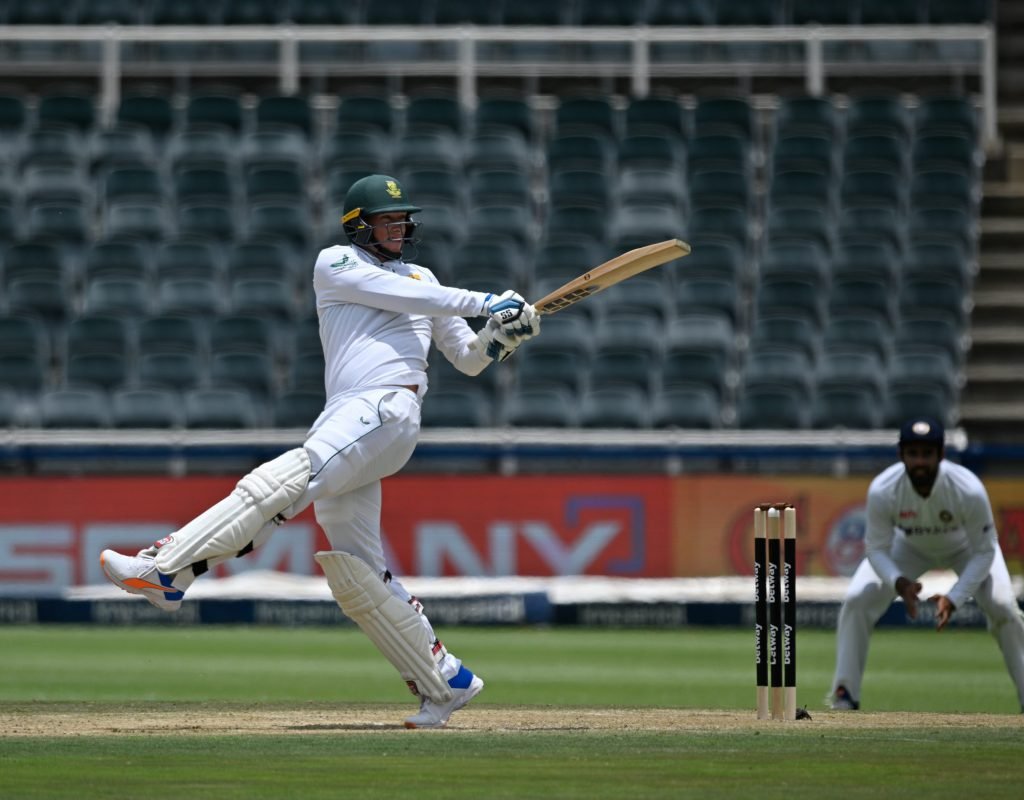
Rassie van der Dussen pulls stylishly at the Wanderers. – Photo by Marcel Sigg
Temba Bavuma has made a tremendous start to his tenure as South Africa’s white-ball captain, and Keshav Maharaj was also excellent when standing in for him, but it is heartening to know that if they are unfortunately unavailable for any reason, there is another calm, deep-thinking leader in the team who could do the job with aplomb.
Rassie van der Dussen has cemented his place in the limited-overs teams in spectacular fashion and his heroics in the recently-completed ODI whitewash of India leave him with 1267 runs in 26 innings in the 50-over format, at the extraordinary average of 74.52.
The second oldest of four sports-mad brothers, Van der Dussen was first touted as leadership material during the horrors of the 2019 World Cup in England. Amidst a chaotic campaign, the Pretoria product impressed with his cool head and clear thinking, as well as the three half-centuries he scored in six innings, finishing the tournament with an average of 62.
That same composure and ability to adapt to any situation was clearly evident during the memorable Test and ODI series wins over India. There were times Van der Dussen had to dig in defiantly; on other occasions he turned the momentum through positive strokeplay and no little skill.
“The Test series was definitely the toughest conditions I’ve ever had to bat in and it was high pressure with the Indian bowlers just never letting you go,” Van der Dussen told Saturday Citizen.
“Every session seemed to be more important than the last, every moment things could swing the other way. It was extremely mentally testing. But being mentally strong is something I pride myself on.
“Under pressure I need to be level-headed and to analyse the situation objectively. Throughout my career I’ve believed that I can manage the chase, absorb the pressure when the opposition is bowling well.
“I pride myself on performing in the big moments and matches. It maybe comes from playing club cricket in Pretoria from a young age, playing against men. There was often verbal abuse and you had to deal with it,” Van der Dussen said in typically stoic fashion.
The 32-year-old currently has the highest average in ODI history of all batsmen who have played at least 20 innings and when one looks at some of the other superstars near the top of that list – Virat Kohli (58.77), Babar Azam (56.92), Michael Bevan (53.58) and AB de Villiers (53.50) – one thing characterises them all. They are all expert players of the situation, whether it called for consolidation or acceleration.
Many other just as talented batsmen ended with inferior records because they would only play in one way, arguing that that was their “natural game”.
“A batsman can be labelled with that – ‘that’s just the way he plays,’ people will say. But it can also be a cop-out,” Van der Dussen said.
“Whenever I bat, I try to change the match and there is always a certain amount of responsibility you have to accept. It’s about reading the match situation and working out what is needed.
“That’s always my thing: to put the team in a good position to win the game. At the Wanderers Test, I knew Dean and I had to be in overnight, the runs did not matter at the end of the third day. But then we were able to start well the next day.”
The way Van der Dussen stayed calm and clear-headed under immense pressure from India was in stark contrast to visiting wicketkeeper Rishabh Pant, a great talent who twice got out for ducks at crucial times on tour due to wild forays down the pitch to try and slog the bowler.
Van der Dussen admits he did have a few words with Pant, who ‘caught’ him in the first innings of the Wanderers Test when the ball had clearly bounced, but the phlegmatic Central Gauteng Lions star did raise the bar above petty sledging.
“I like to think I’m a deep thinker and I just asked Pant a few questions, nothing attacking him personally, but I guess they did not sit well with him. I suppose it made him think differently.
“But the Wanderers incident was a massive moment because chasing 280-300 would possibly have been too much for us and he’s a young and exciting player. We did speak about making sure that was a moment India would really regret and capitalising on it,” Van der Dussen said.
It will surprise no-one that someone as pragmatic as Van der Dussen already has a plan for life after cricket and has gone into business with his agent and close friend Chris Cardoso.
“I’m really enjoying delving into the business side and we now have three coffee shops – called Abantu Coffee – in the Centurion area. Our aim is to make good coffee and create as many jobs as we can.
“I really want to scale up my involvement in it and I enjoy being hands-on in the business,” Van der Dussen said.
Something else that the Menlo Park High School and Affies alma mater enjoys immensely, along with wife Lara, is the bush and especially birdwatching.
Even in that hobby, Van der Dussen is trying to make a change for good with his support of the Mabula Ground Hornbill Project, along with Cardoso.
“I go to Mabula about twice a year, Chris owns a unit in Mabula and through our conservation fund African FRDM x Environment we are helping them with the great work they do in trying to secure a good future for these endangered birds.
“We’ve helped them with new tyres and in trying to build suitable nest boxes that are strong enough for these massive birds and their huge beaks.
“I’ve loved the bush from early on because my grandfather had a farm with game and cattle at Springbokvlakte between Modimolle and Marble Hall. Growing up amongst animals I learnt things like tracking.
“Which got me into birdwatching because of the thrill of the chase, you hear the call and you want to track the bird down and see it. For Lara and I, seeing a rare bird gives us the same feeling as seeing a lion or a leopard,” Van der Dussen said.
But for now, dreams of spending more time in the bush have had to take a back seat because Van der Dussen is spotting both the red and the white ball extremely well at the moment.
Former Proteas captain AB de Villiers has already taken public umbrage at the findings of the Social Justice and Nation-Building Report and other players and officials who have been named will also be expressing their unhappiness in letters to the Cricket South Africa board.
SJN ombudsman Dumisa Ntsebeza accused De Villiers of unfair discrimination based on racial grounds due to his leading role in the non-selection of Khaya Zondo for the decisive last ODI of their tour to India in 2015.
De Villiers, who stated in his affidavit to the SJN that he had earlier been told by the selectors that Zondo was in the squad as a learning experience and not to be part of the playing XI, responded on social media with a message saying his opposition to the then-uncapped Zondo’s selection was purely based on cricketing reasons.
“Throughout my career, I expressed honest cricketing opinions only ever based on what I believed was best for the team, never based on anyone’s race. That’s the fact,” De Villiers said.
The CSA board will consider what action to take based on the report in the new year.
The fact that Ntsebeza himself admitted that the SJN “cannot make definite findings”, “there was no process in place for testing the submissions” and that his recommendations and findings are “merely tentative”, will give the board some leeway, especially since so many of the implicated are lawyering up.
Others, however, have expressed their lack of confidence in the ability of the entire process to treat them fairly.
“I am afraid there isn’t much to say that will benefit me at all. I was found guilty before any response by a kangaroo court,” one former player told The Citizen on condition of anonymity.
“I am trying to take the higher ground without it being a tit-for-tat argument, but I am spending too much on lawyer’s fees already.
“But it doesn’t suit the narrative, I am not holding my breath, we’ve been hung out to dry, so I am not expecting that to change,” he said.
De Villiers has, of course retired from all cricket and so is out of CSA’s jurisdiction, but the originators of the SJN hearings have wanted the prize heads of Proteas coach Mark Boucher and director of cricket Graeme Smith for a long time.
Ntsebeza has delivered what they wanted, but critics of the SJN report say his report is fatally flawed on legal grounds and CSA will undoubtedly have to tread carefully unless they are to find themselves embroiled in more courtroom battles.
How do South Africa get the better of England’s batting juggernaut on Saturday in their vital T20 World Cup match in Sharjah? Keep the batsmen guessing, says former Proteas star Neil McKenzie, who is also CSA’s high performance batting lead coach.
McKenzie admitted that hopes of victory, that will probably ensure a semi-final place for the Proteas, would rely more on their bowlers than their batsmen, but he expressed the confidence that they are capable of backing up the efforts of their great attack.
England have a powerful batting line-up and their preferred mode of operating is to go extremely hard from the start.
“Against England, it’s important to strike up front and we must use our variations – Keshav Maharaj bowling to the right-handers and taking the ball away from them, Tabraiz Shamsi comes into his own against the left-handers and our fast bowlers are going really well,” McKenzie told The Citizen on Wednesday.
“If there’s any assistance for the seamers then our pacemen will exploit that and Dwaine Pretorius has been a revelation at the death.
“We know what England’s blueprint is, but they did change it against Sri Lanka when they were 47 for three after the first 10 overs, they definitely modified their play. But their middle-order has not really been tested and I think there might be a few chinks in the armour there,” McKenzie said.
While the former middle-order stalwart admitted to some compassion for the batsmen, who are having it tough in general in the United Arab Emirates, he said it was soft dismissals against spin that were concerning.
“They’re playing in three different venues, each of which plays differently, so it is hard and it has been a difficult tournament for the batsmen.
“There’s been enough in the pitches and if bowlers are putting the ball into the wicket then some skid and some are stopping, it’s not as if it’s spinning all the time, which is actually the worst-case scenario.
“But there have been some soft dismissals to spin, especially finger-spinners, for a right-hander to get out to Glenn Maxwell is criminal. If you’re going for the boundary or genuinely get deceived by Adil Rashid then fine, but don’t get out to a defensive push down the ground.
“The Proteas need to eliminate those soft dismissals, you can’t afford getting out when you’re trying to knock the ball for one,” McKenzie said.
Revelation 3:15 – “I know your deeds, that you are neither cold nor hot. I wish you were either one or the other.”
How can you expect blessings without obeying?
How can you expect the presence of God without spending time quietly before him?
Be sincere in your commitment to Him; be willing to sacrifice time so that you can grow spiritually; be disciplined in prayer and Bible study; worship God in spirit and truth.
Have you totally surrendered to God? Have you cheerfully given him everything you are and everything you have?
If you love Christ, accept the challenges of that love: Placing Christ in the centre of your life means complete surrender to Him.