for quality writing

Ken Borland


Pilanesberg National Park 2

Posted on May 12, 2019 by Ken

A wonderful Leopard sighting near Kubu Dam

A wonderful Leopard sighting near Kubu Dam

Being in the bush and birding is always such a special time for me, real soul-food, and a time of replenishment before heading back into the hectic ‘real’ world. So I have a small obsession about what my last sighting is, always wanting to end on a high note, preferably with something exotic, something I don’t see every day in my garden.

It is also a source of motivation to stay sharp and keen-eyed at the end of what are normally long, hot days in the bushveld.

Pilanesberg National Park may be one of the most popular reserves in the country and is attached to a tourist hot-spot in Sun City, but it is Big Five country and genuine bushveld. It has a ruggedness about it with its hills lying at angles (after the massive volcanic eruptions that shaped the landscape), its rocky outcrops and the densely-wooded gorges where few people would have ventured.

It is normally also blisteringly hot in summer but this October day had been pleasant: a beautiful sunny day with barely a cloud in the sky and a lovely cooling breeze. The temperature did not get above 31 degrees.

I had concentrated my efforts on the southern half of the park, doing a half-circle from KwaMaritane to Bakubung, and I was 10 minutes from the exit gate when sighting number 53 appeared – a pair of Common Mynahs flying along!

These aliens are all over our towns, cities and neighbourhoods and are considered a scourge in our wild places, like game reserves. So you can imagine my dismay at the very real possibility now that this invasive would be my last sighting of the day … Oh, the horror!

But this was a happy day (it had included a Leopard sighting next to the road) and Mother Nature was kind to me.

Just when I thought the Mynahs would be my last bird, a magnificent pair of Violeteared Waxbills popped up in the bush next to me on the side of the road!

Now these waxbills are really exotic-looking with their incredible combination of violet, red, bright blue and chestnut colours. It is one of my favourites, not only because it is exquisite but also because it eluded me for many years before my first sighting. I even had to put up with my birding colleague Stidy seeing it as a passenger in my car while I dipped on it!

It would have been a dream last bird, but Mother Nature had another trick up her sleeve for me. At Bakubung Gate, amongst the buildings – which I guess make fairly authentic copies of the boulders found on the koppies that are normally their home -were a pair of Mocking Chat.

I had no problem with these cute, somewhat mischievous birds being my last sighting. They are real characters and I watched them a bit before finally departing the peaceful, but wild, hills and valleys of the Pilanesberg.

I was still buzzing though from my Leopard sighting, which had been in the vicinity of Kubu Dam, just before I turned west off the tar and on to the Kgama Drive that goes past Lengau Dam and then rejoins the tar just before the Bakubung Gate.

The Leopard was lying with typical insouciance under a shady bush, about 20 metres from the road, but quite hard to see due to the combination of dappled light and the rosettes on its body. What a gorgeous young specimen it was though.

The insouciant Leopard

The insouciant Leopard

While the Leopard was, typically, a loner, there were lovely family sightings of 10 African Elephant marching along the flanks of the Magare Hills, away in the distance as the Tsepe Drive turned to the north-west, having skirted along the south-eastern border of the park for nearly 10km from the KwaMaritane entrance.

It was also most pleasing to see three different family groups of Squarelipped Rhinoceros, numbering 10 in all of these critically endangered animals.

The group theme had started at the beginning as I entered KwaMaritane gate and was immediately bombarded by three Blackchested Prinia dashing around and calling loudly in some sort of furore.

Two Greater Kudu youngsters down by the Maritane River were much more peaceful, and some Little Swift were also swirling around merrily, without a care in the world.

Blackcollared Barbets are normally seen amongst the trees at the picnic sites, so it was nice to see one at the hills and plains of the Tshepe Drive. Further down the road, a Kalahari Robin was conspicuous as it posed on top of a bush, behaving more like a Chat. Which is not surprising because the Scrub Robins (Genus Cercotrichas) are in the same Subfamily – Saxicolinae – as things like the Familiar and Mocking Chats, both characteristic birds of the Pilanesberg.

Close by, a juvenile Blackshouldered Kite was also posing nicely on top of a tree,

Juvenile Blackshouldered Kite

Juvenile Blackshouldered Kite

while both Redfaced and Speckled Mousebirds were in close proximity to each other as the Tshepe Drive crossed the Mankwe River, where, as is often the case, a purposeful Cape Wagtail was doing a thorough inspection.

The Lengau Dam was hosting a big flock of Sacred Ibis, and there were also Redbilled Teal, which I have only seen infrequently in the Pilanesberg.

Where is Pilanesberg National Park?

Sightings list

Blackchested Prinia

Greater Kudu

Little Swift

Blue Waxbill

Blackcollared Barbet

Neddicky

Kalahari Robin

African Elephant

Sabota Lark

Blackshouldered Kite

Rattling Cisticola

Grey Lourie

Redfaced Mousebird

Speckled Mousebird

Cape Wagtail

Cinnamonbreasted Rock Bunting

Glossy Starling

Southern Yellowbilled Hornbill

Southern Yellowbilled Hornbill

Southern Yellowbilled Hornbill

Blackeyed Bulbul

Impala

Marico Flycatcher

Blue Wildebeest

Helmeted Guineafowl

Giraffe

Redbilled Oxpecker

Natal Francolin

Capped Wheatear

Springbok

Pied Crow

Squarelipped Rhinoceros

Lesser Striped Swallow

Common Waxbill

Longtailed Shrike
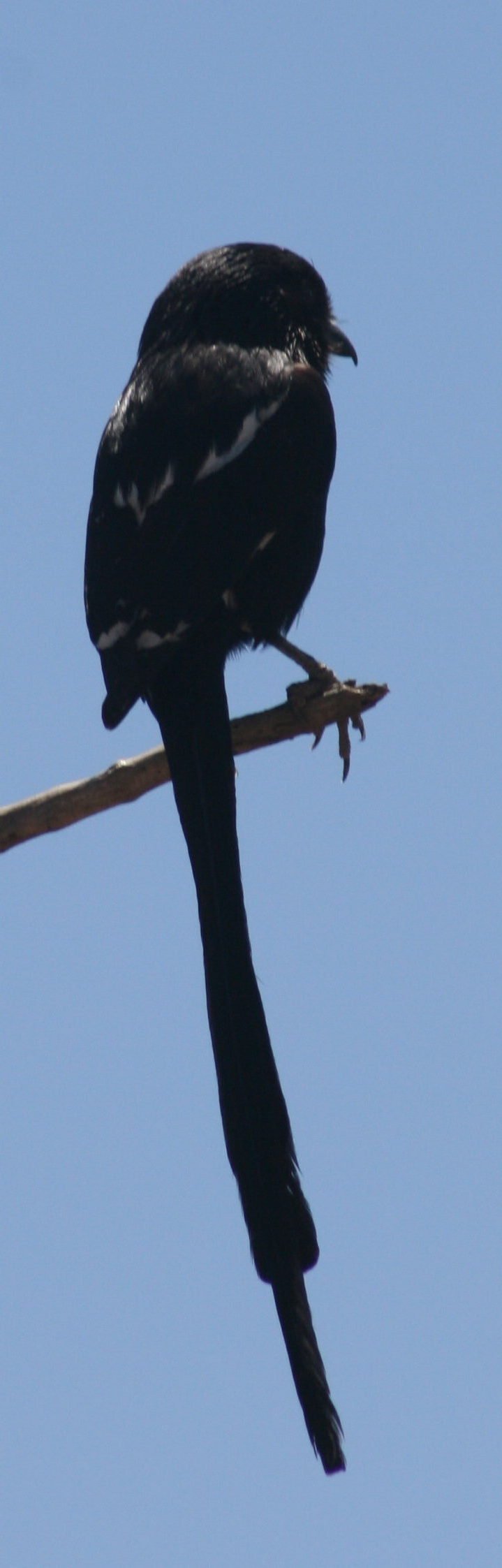
Longtailed Shrike

Arrowmarked Babbler

Whitebreasted Cormorant

Reed Cormorant

Southern Masked Weaver

Blackbacked Puffback

Laughing Dove

Great White Egret

Browncrowned Tchagra

Warthog

A Warthog strolling along

A Warthog strolling along

Leopard

Familiar Chat

Plains Zebra

Waterbuck

Blacksmith Plover

Redbilled Teal

Dabchick

Sacred Ibis

Egyptian Goose

African Darter

Common Mynah

Violeteared Waxbill

Mocking Chat
Pilanesberg National Park 0

Posted on January 30, 2019 by Ken


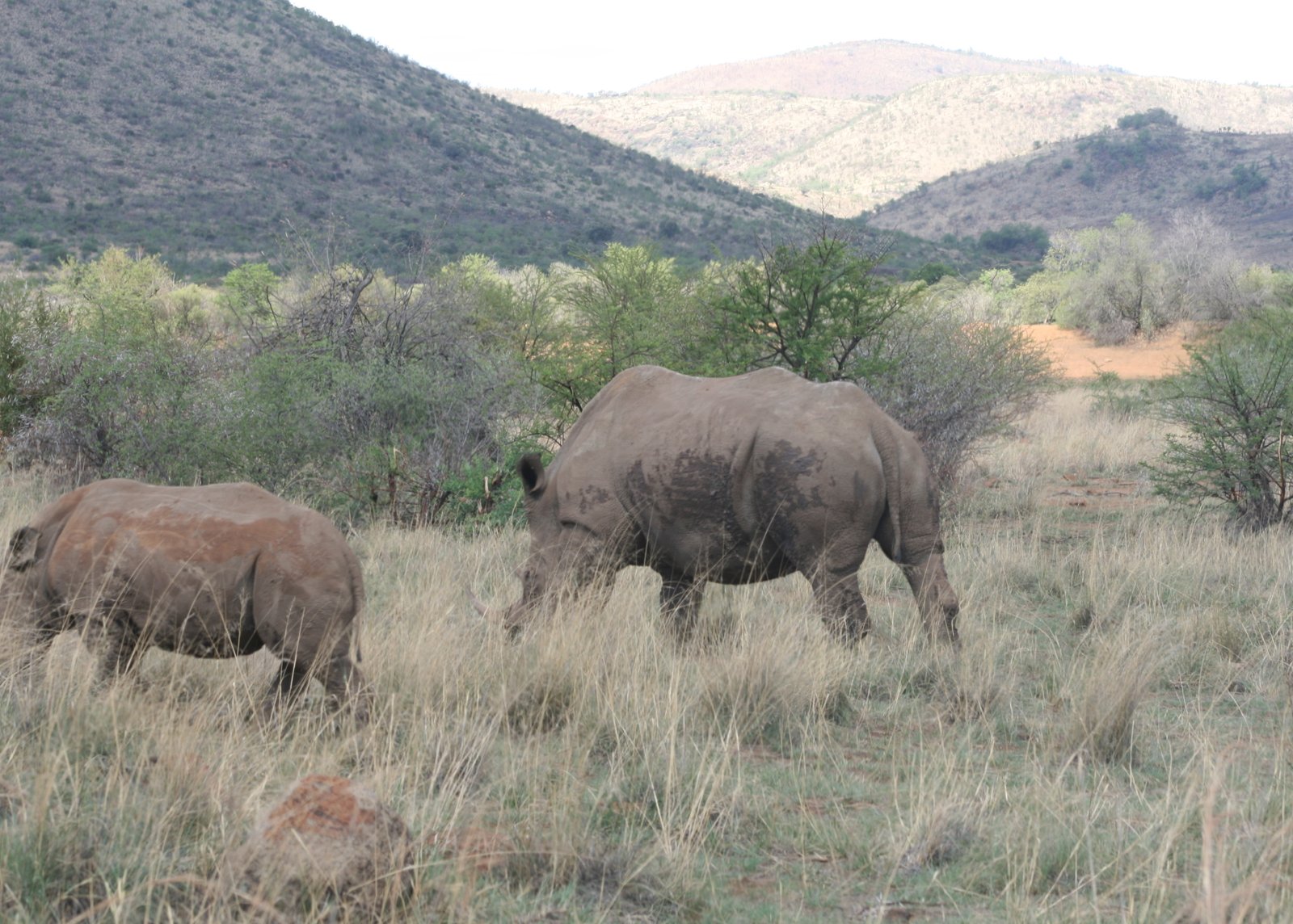
SERENE ... A White Rhinoceros and its calf with the valleys of the Pilanesberg stretching into the distance

SERENE … A White Rhinoceros and its calf with the valleys of the Pilanesberg stretching into the distance

The open country around the Mankwe Dam is bordered by the Tshwene and Kubu drives, two of the four tar roads in the Pilanesberg National Park. I normally try to avoid the tar roads when I’m in the bush, but this area is so peaceful and tranquil, and being the main water source in the reserve, there is also usually lots of game in the vicinity.

But as a very warm afternoon clouded over and a typical Highveld thunderstorm approached, there came a stark reminder that this is wild Africa, red in tooth and claw.

Between the Mankwe and Motlobo drive turnoffs from Tshwene Drive, less than 20 metres from the tar and at the edge of a little bank, an unfortunate Impala took its last breaths. Two Cheetah, still panting hard from the exertions of the chase, soon had blood-stained faces as they tucked into their hard-won meal.

This is Lion and Leopard country as well so the Cheetah, the most lightweight of the big cats, needs to eat quick because there’s nothing like a kill to attract other meat-eaters. While the Cheetahs ripped at the carcass, a sly Blackbacked Jackal was already hanging around waiting for scraps.

Seeing one of the cats on a kill is always a special sighting, but to see Cheetah in the Pilanesberg is an exceptional occurrence because there are only five in the entire 572 square-kilometre park. The open country around Mankwe Dam is probably the best area for them because it allows them the space for their sprint, which is what sets them apart from other predators.

The adrenaline was still flowing from my first Cheetah sighting in the Pilanesberg when my buzz was shattered by an extremely loud, piercing call right next to the car. I was startled and momentarily baffled by what it could be – it was such a high-pitched, pure sound that I thought some sort of emergency alarm had gone off and was wondering if my windshield would crack!

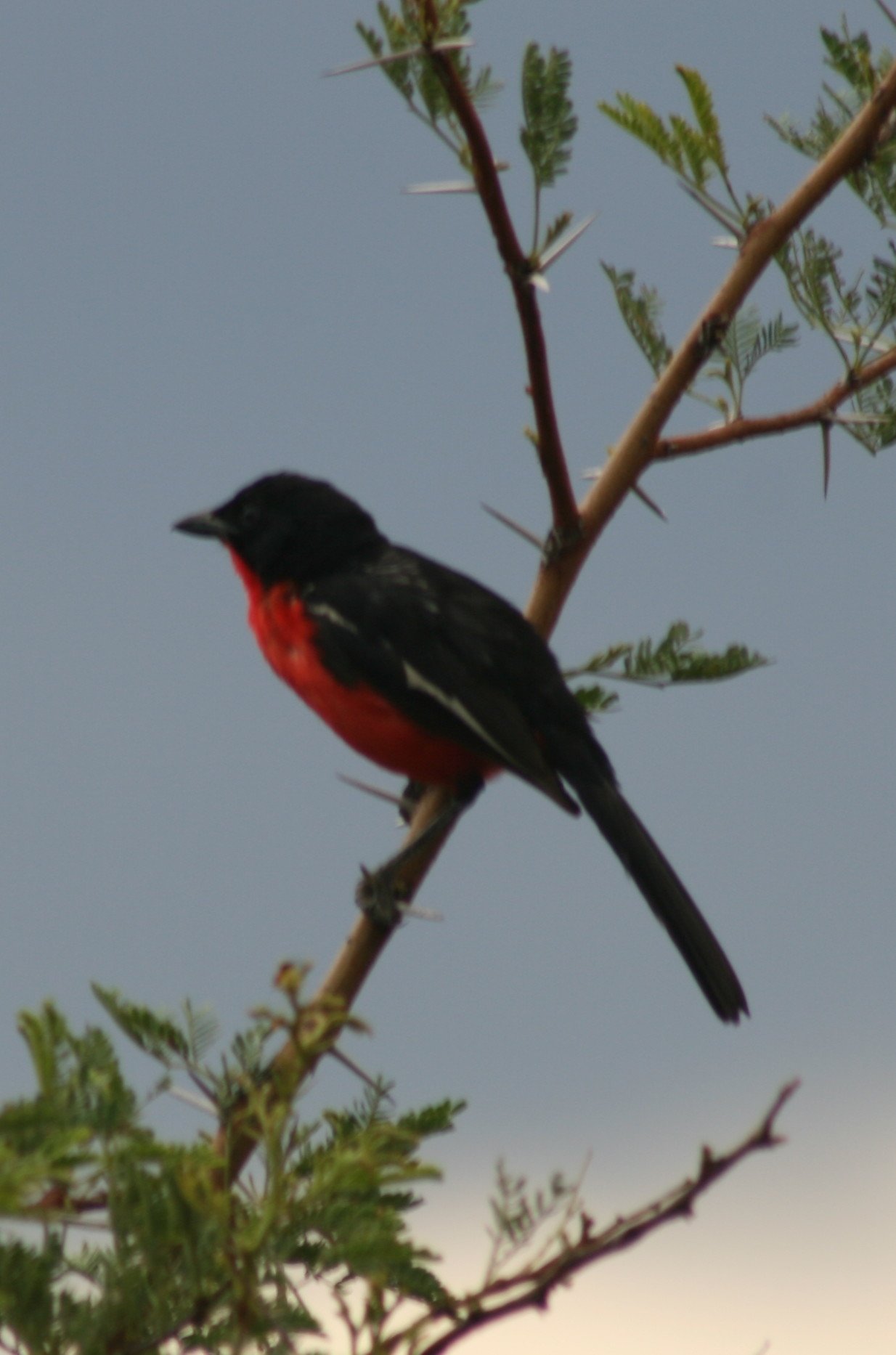
Having regained my senses enough to realise that it was coming from the bushes next to the road, I scanned the vegetation and there the source was, with colours as bright as its song was loud – a beautiful Crimsonbreasted Shrike sitting in an open gap in the bushes.

The Crimsonbreasted is certainly the most brightly coloured of the Laniarius (Boubou) Shrikes and its underparts are a brilliant scarlet colour, heading towards crimson.

Crimsonbreasted Shrike

Crimsonbreasted Shrike


It provides a real flash of colour particularly when contrasted with the muted tones of the thorny scrub it likes to inhabit.


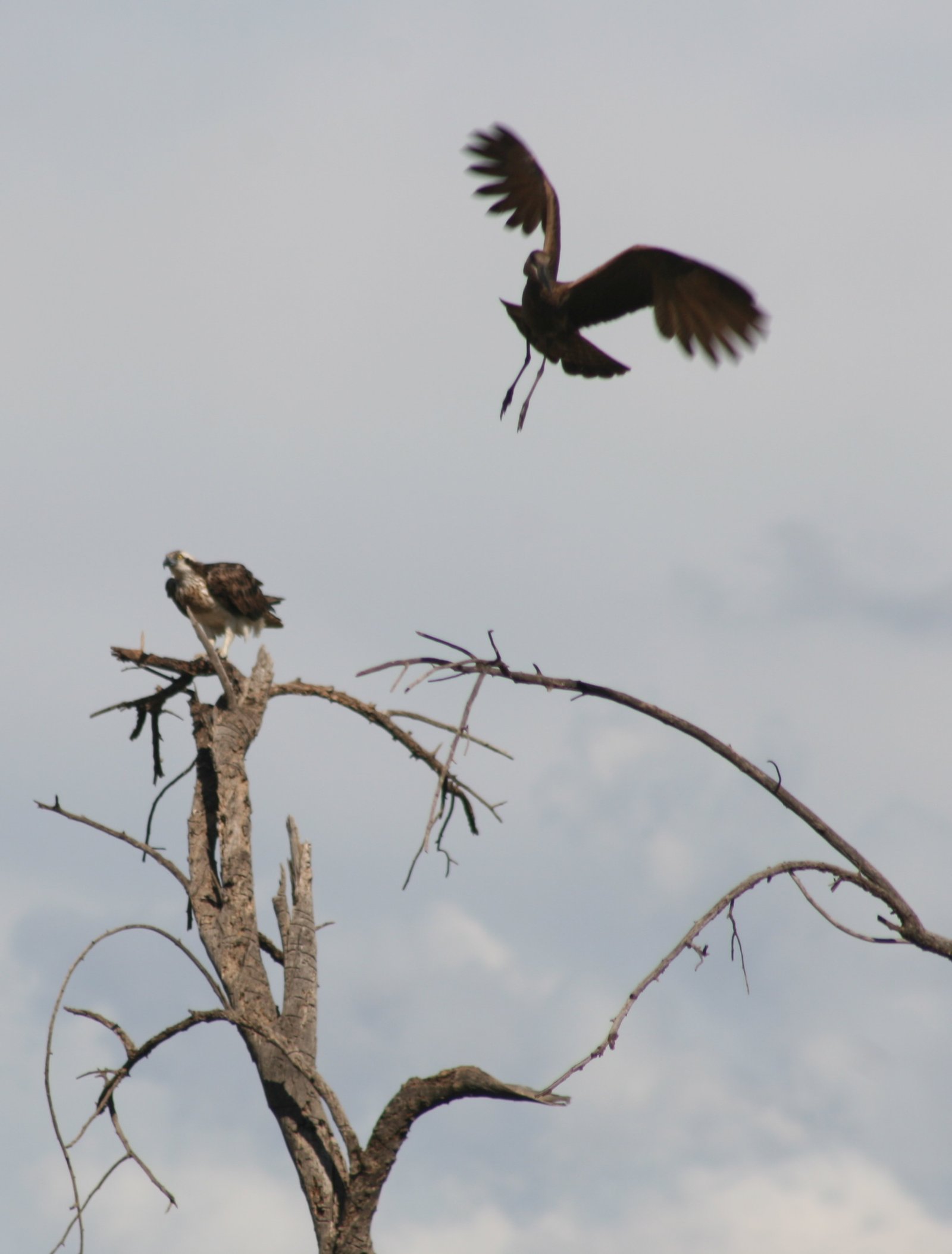
This is where the Mankwe River flows out of the dam and Mankwe Way crosses the river just north of the Fish Eagle turnoff. It’s a good spot to stop and scan for birds and, having seen one in the exact same dead tree on a previous trip, it was great to see an Osprey once again sitting up in the highest branches. It was joined by a Hamerkop that came to share its lofty perch and there were Pearlbreasted Swallows flying around and landing nearby as well.

MAY I JOIN YOU? ... A Hamerkop (right) landing in the same tree as an Osprey

MAY I JOIN YOU? … A Hamerkop (right) landing in the same tree as an Osprey

Mankwe Way takes one into an area of open grassland, dotted with termite mounds and boulders as it heads west, past the old farm of General Jan Smuts, Buffelsdrift. Transitional zones where dry plains with short grass meet the longer grasses of the rugged upland areas are excellent for birding as well.

Apart from the White Rhinoceros in the vicinity, there were also Scalyfeathered Finches hopping on the ground and then flying quickly into the small trees when disturbed; Sabota Lark, Crowned Plover, Cinnamonbreasted Rock Bunting and Blackthroated Canary.

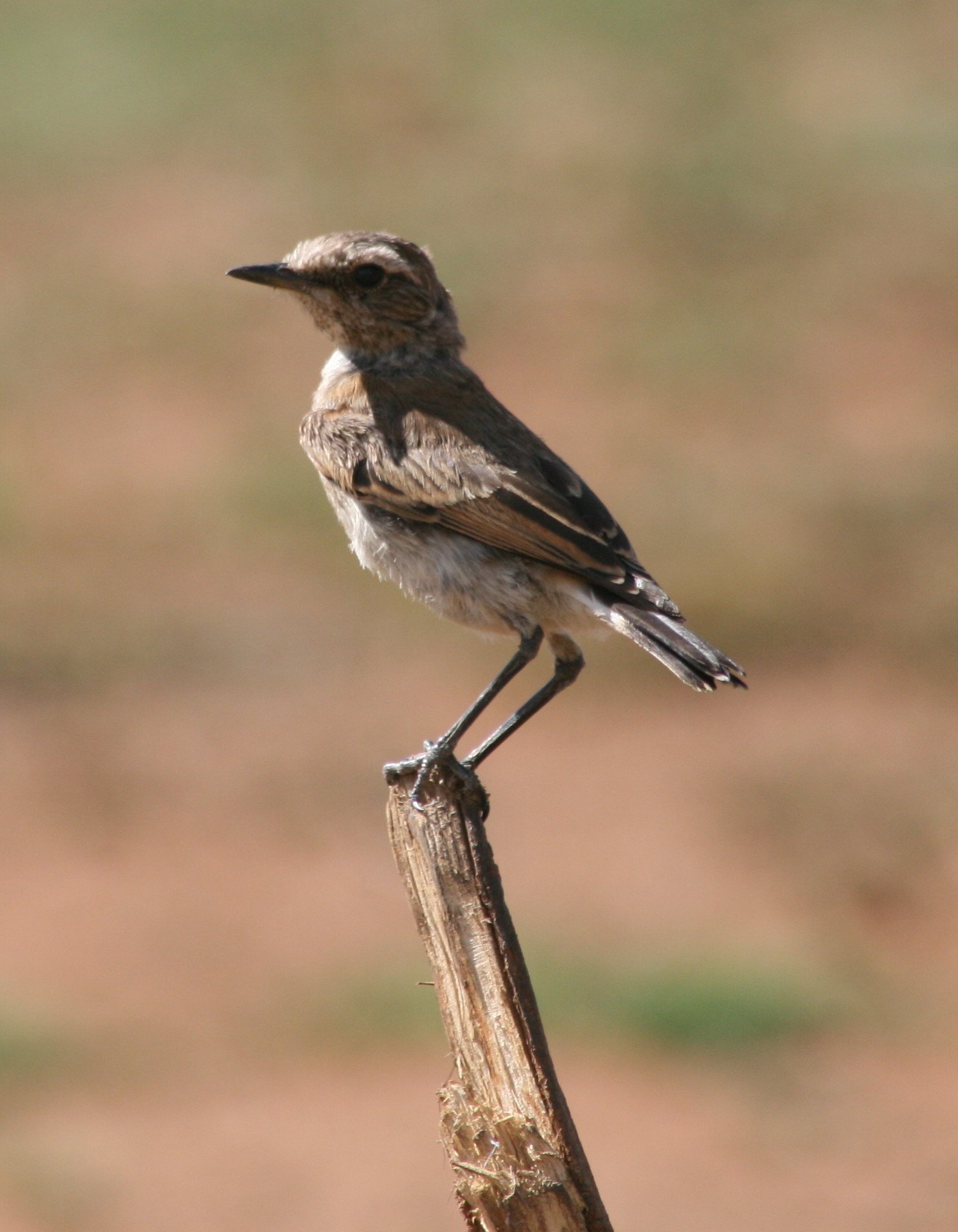
But a pair of birds had me a bit confused as they hopped around on the low bushes, behaving much like Capped Wheatears. But the adults of that plains specialist are distinctively marked and these birds were also making some strange, Lark-like calls. With their mottled bands of brown, buff and yellowish colours, they had me thinking of similar-looking rarities.

But discretion won the day and, considering that Capped Wheatears are well-known mimics, I went the most likely route and decided they were, in fact, a pair of immature Capped Wheatears.

One of the juvenile Capped Wheatears

One of the immature Capped Wheatears

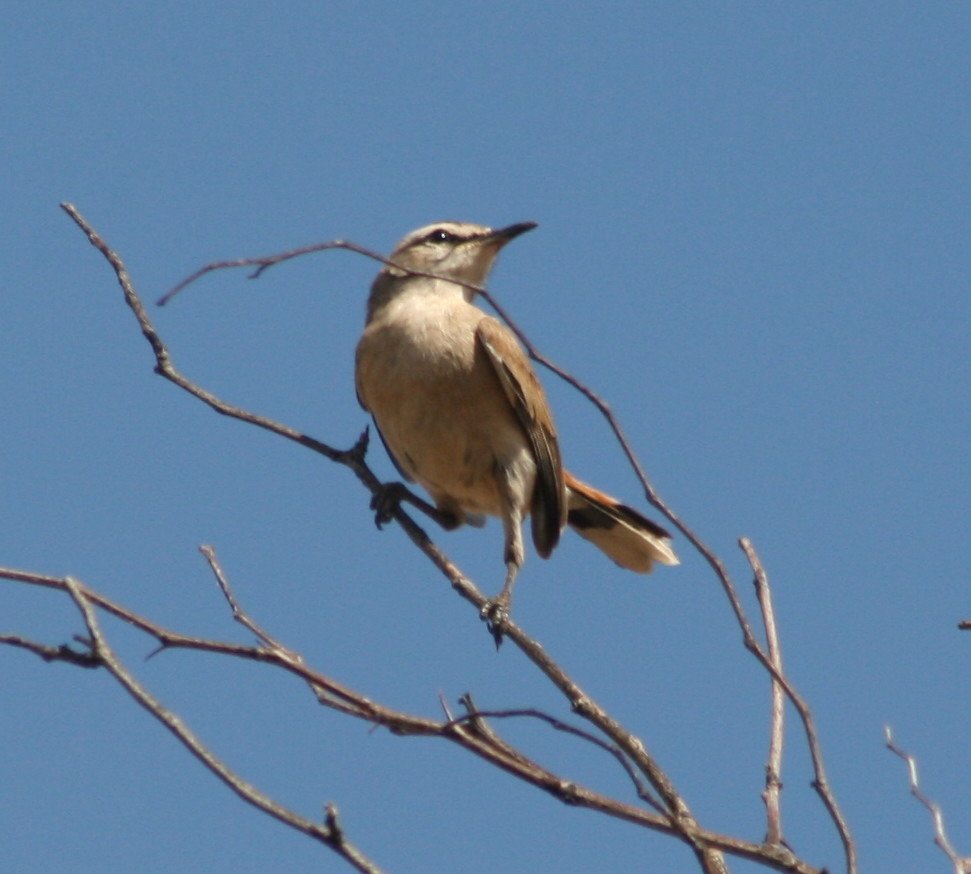
Pilanesberg holds good numbers of both the Kalahari and Whitebrowed Scrub Robins and the central part of the

Kalahari Scrub Robin

Kalahari Scrub Robin

park has both these twitching, insectivorous lovers of thicket and low bushes in close proximity to each other.

Mankwe Dam is by no means the only productive body of water in the park, and if one enters through the south-western gate of Bakubung, after two-and-a-half kilometres on the tarred Kubu Drive, or a bit further if one turns left and takes the more meandering dirt road known as Kgama Drive, one comes to the Lengau Dam.

There are usually large numbers of birds here and on this occasion it was good to see African Darter, Whitefaced Duck, Pied Kingfisher, Greenshank, Marsh Sandpiper and Threebanded Plover. There are usually animals about as well, but this time there was just a solitary Warthog snuffling around.

Even the smallest bodies of water can provide something of interest though and as I was exiting through the easternmost gate – Manyane – four Redbilled Oxpeckers were drinking water from a puddle in the road.

Life can be very tough in the beautiful African bush and to survive the residents need to take advantage of every little windfall they can get.


Sightings List

Blue Wildebeest

Plains Zebra

Sacred Ibis

Warthog

Egyptian Goose

African Darter

Whitefaced Duck

Laughing Dove

Little Swift

Pied Kingfisher

Greenshank

Blacksmith Plover

Marsh Sandpiper

Threebanded Plover

Waterbuck

Jackal Buzzard

Impala

Greater Kudu

Rufousnaped Lark

Palm Swift

Marico Flycatcher

Greater Striped Swallow

Giraffe

Crested Francolin

Streakyheaded Canary

Great White Egret

Southern Masked Weaver

Pintailed Whydah

Blackeyed Bulbul

Whitebrowed Scrub Robin

Blackchested Prinia

Kalahari Scrub Robin

White Rhinoceros

Scalyfeathered Finch

Sabota Lark

Capped Wheatear

Crowned Plover

Cinnamonbreasted Rock Bunting

Blackthroated Canary

Hamerkop

Osprey

Pearlbreasted Swallow

Natal Francolin

Cape Turtle Dove

Grey Lourie

Glossy Starling

Cheetah

Blackbacked Jackal

Helmeted Guineafowl

Rattling Cisticola

Crimsonbreasted Shrike

African Elephant

Forktailed Drongo

Common Myna

Redbilled Oxpecker


Women’s Proteas eye West Indies tour as ranking boost & T20 reconnaissance mission 0

Posted on September 21, 2018 by Ken


Women’s Proteas coach Hilton Moreeng on Wednesday described their upcoming tour of the West Indies, in which they will play three ODIs and five T20 internationals from September 16 to October 6, as being vital on two fronts.

The ODIs form part of the ICC Women’s Championship, in which South Africa are currently languishing in seventh place, but if they win the series then they will overtake the fifth-placed West Indies, with the top four teams automatically qualifying for the 2021 World Cup.

But while that is South Africa’s priority, they would be stupid not to take advantage of being in the Caribbean just a couple of months before the next T20 World Cup, and the Proteas will get in some invaluable reconnaissance during that five-match series against the defending champions.

“The importance of the tour is two-fold, firstly the three ODIs are key because of the ICC Women’s Championship and they give us the opportunity for some points because we have some home series after that. Our priority is the ODIs, but we are very fortunate to play the T20s against the defending champions on their home soil as well.

“We will be able to see the conditions over there, we know the West Indies play very aggressive cricket and they obviously know the conditions very well, so we can see how we go against them, having beaten them here in the T20 series in 2016. So we will take as much as we can from being exposed to the conditions over there,” Moreeng said at the Tuks Cricket Oval, where the team is preparing at the High Performance Centre.

The Women’s Proteas disappointed in their tour of England in June, making silly mistakes, and the drive for consistency is the major focus of their preparations.

“Our consistency is the biggest thing we need to improve, we were extremely inconsistent in England. The skills were not where they should be, both in terms of the batting and the bowling. The fitness and fielding have been very good on the first two days of our camp and I’m very happy with how the youngsters are keeping up.

“We will now be going into the different scenarios we want to train for and the three practice games we’ll play will make sure the players all understand what is required. The experience around the young players will help them grow, we’ve been keeping tabs on how the new faces go about their business at the High Performance Centre and they have graduated very well,” Moreeng said.


https://www.pressreader.com/south-africa/the-citizen-kzn/20180823/282063392820794

SA goalkeeper Phumelela Mbande: master of the balancing act 0

Posted on September 06, 2018 by Ken


Hockey being a largely amateur pursuit in South Africa has led to the implementation of delicate balancing acts by our national teams, but if one player stands out for their ability to juggle the demands of work and playing international sport then it is women’s goalkeeper Phumelela Mbande.

Mbande was the star of South Africa’s World Cup campaign in London last week, and was named player of the match for her sensational display in salvaging a 1-1 draw with world number three Argentina. But like Wonder Woman changing into the work clothes of Diana Prince, her civilian identity, Mbande takes off her pads, glove and chest protection and, when she returns to South Africa, will continue slogging away at her ‘real job’.

The 25-year-old is a qualified chartered accountant and is busy doing her articles with Price Waterhouse Coopers, a daunting enough task on its own without having the added ‘burden’ of ensuring she remains South Africa’s first-choice goalkeeper.

“It’s definitely not easy doing both, but there have been so many people willing to help, especially my varsity coaches at Tuks and PWC, I always say how lucky I am that everyone is willing to meet halfway. It’s been very tough and it has been a huge learning curve for me as a person, but I’m grateful for all the help I’ve had to make it easier,” Mbande says.

Hailing from Pietermaritzburg, Mbande started playing hockey in Grade V at Lynford Primary School and the challenge of being the goalkeeper and having a hard object fired at you from close range was appealing from the outset. Mbande agrees that it takes a special type of person to want to be a hockey goalkeeper.

“In all the teams you see, the goalkeeper is usually a standout character, you certainly won’t miss us!” Mbande laughs. “The position definitely suits me personality-wise, I’m a typical first-born, I like to get my way and I’m pretty independent. Goalkeepers are part of the team but we think of ourselves as a team within the team. Being goalkeeper has definitely allowed my personality to bloom.”

Mbande then went to Carter High School and she singles out the arrival of Marie-Laure Johnson as a teacher there when she was in Grade VII as being pivotal in her development.

“If there’s one person who has been a major influence then it’s Marie-Laure, who basically adopted me. During the World Cup now I went to visit her mother who lives in Stratford and that just shows the great relationship we have. She encouraged me to go and play at Collegians, where I was by far the youngest at the club, but I was able to be coached by Brian Edwards [former national captain who coached both the men’s and women’s national teams].

“Marie-Laure would give me lifts to the airport, bought me my first own kit and, outside of hockey, played a huge role in my life. She was definitely more than a coach to me, she’s a mentor and a friend.”

Mbande’s academic excellence earned her a PWC bursary to the University of Pretoria, where she also received a sports bursary, and she made her debut for South Africa in 2013. Initially she was playing in the considerable shadow of Sanani Mangisa, one of the country’s greatest goalkeepers, a double Olympian capped 112 times between 2006 and 2016.

“It felt like a great achievement to start out under Sanani because she was the first hockey personality I really looked up to, after she coached me in Grade VIII. She noticed one of my strengths was how hard I can kick the ball and it was awesome to come into the national team with her still there.

“But it was also very disappointing not to make the squads for the 2014 Commonwealth Games and World Cup. But I’ve learned quite a bit since then and I’m definitely a better goalkeeper now, I manage pressure better. But I still wish I had more time in the national team with Sanani,” Mbande says.

With the continued support of her mother, the shoulder she has cried on the most, Mbande says, and her two younger brothers, the 2020 Olympic Games in Tokyo are the next big sporting goal for one of the new stars of South African hockey.

“This was the first World Cup I’ve played in, so I was pretty excited to play so well and end on a high after we did not start so well. Considering everything that’s available to South African hockey teams, the Olympics are definitely top of the food chain and I would love to make it to Tokyo.

“But it’s one step at a time and God willing and if my employers allow it, then the Olympics will be my next big thing. Maybe one or two of the players will retire before then, but we still have a good group of players and massive talent, and two years is a good period in which to build.”

Mbande will be at the forefront of those plans and the excellence and determination she brings to all her endeavours can only be good for the game.

https://www.pressreader.com/south-africa/the-citizen-kzn/20180804/281492162131681

  • Recent Posts

  • Archives

  • Thought of the Day

    Revelation 3:15 – “I know your deeds, that you are neither cold nor hot. I wish you were either one or the other.”

    How can you expect blessings without obeying?

    How can you expect the presence of God without spending time quietly before him?

    Be sincere in your commitment to Him; be willing to sacrifice time so that you can grow spiritually; be disciplined in prayer and Bible study; worship God in spirit and truth.

    Have you totally surrendered to God? Have you cheerfully given him everything you are and everything you have?

    If you love Christ, accept the challenges of that love: Placing Christ in the centre of your life means complete surrender to Him.


↑ Top