It was a case of the early birds getting the worms on the first day of the Hornbill Classic Golf Tournament at Kruger Park Lodge Golf Club on Friday, as the Kranspoort four-ball claimed opening-round honours in the two-day event in the Lowveld.
The Kranspoort team, who travelled from the Mpumalanga highveld to participate, teed off early when the wind was not up yet and really hit their straps, especially their lady golfers, as they tallied 89 points in the four-ball alliance format that is being used for the highly popular tournament.
Kirstin Kemp, who plays off a 35 handicap, failed to score on only one hole, while Michelle Higgo, playing off a 29, also played very well. Seventeen-handicapper Theo van Niekerk led the side, using his 15 years of experience on the Gary Player designed course which he describes as his favourite, while Kevin Kemp (23 handicap) also enjoyed a successful day.
Kemp admitted starting early had been a benefit because the wind definitely picked up through the day as there was a foreboding change in weather from the Lowveld’s usual clear blue skies at this time of year to overcast and cooler conditions.
He related how, early in the shotgun start round, he had hit a seven-iron on the 124-metre par-three seventh hole, and when he returned later in the day to attack the same green from the 144-metre 16th tee he had hit driver in a successful attempt to find the putting surface, such was the impact of the blustering wind.
There was a tie on points for third and second place, with the Fairbridges team counting out Sabie River Sun for second after they both finished on 87 points.
Fairbridges are a team of attorneys who travelled all the way from Cape Town to participate, such is the allure of this tournament. Bok and Max Groeneveld were joined by Conrad Fraser and Sharjah Jonsson, and they readily admitted that one of their pars was recorded when an errant approach was deflected on to the green by a passing Pajero!
Sabie River Sun was the team they counted out into third place and it was clearly a good day for the four-ball of Darren Lane, Brendon Steele, Luke Baumer and Wayne Smith as they said the tremendous hospitality of the Kruger Park Lodge was the highlight of their round.
The Hornbill Classic concludes on Saturday on a Kruger Park Lodge Golf Course that has been universally praised for its superb quality.
Like migrant birds flying from their wintering grounds to their summer breeding spots, the Bulls find themselves in a very warm and muggy Treviso and they are hoping to bring the heat and catch Benetton by surprise in their Rainbow Cup final at the Stadio Monigo on Saturday evening.
Having swept all before them in South Africa over the last year, the Bulls have gone to Italy as the winners of the southern leg of the competition, to take on the European winners, a Benetton side that have surprised all and sundry with their resurgence in the last couple of months.
The last trophy presentation the Bulls enjoyed was when they won the Currie Cup at the height of our summer, and their winter work has involved finishing top of the franchises involved in the Rainbow Cup. But the temperature is expected to rise to above 30⁰ on Saturday in north-eastern Italy, so that will take some adapting to. Coach Jake White said though that he hoped the intensity of the Bulls’ play will force Benetton to do some adapting of their own.
“The nice thing is we played through the summer in South Africa so we’re used to weather like this. I hope we can play with the same tempo and pace that we did then and hopefully that surprises Benetton. We’ve had a year of really tough derby rugby, so hopefully that helps us as well. Having been together as a team for a lot longer now, our ball-in-play time has also improved and we’ve seen the effect of that.
“But Benetton have done really well, they’re the only unbeaten side, they beat Connacht, who beat Munster who had just beaten Leinster. Plus Benetton are playing at home while we have to adapt to travel, and 11 of their team started for Italy against Scotland not that long ago, so we are up against international players. Now that we’re in the Northern Hemisphere, it will be good to measure ourselves,” White said on Friday.
While the Bulls are breaking new ground for South African rugby, they do have some experience in the kitty of what to expect in the form of captain Marcell Coetzee and lock Jan Uys, who have both played in Italy before.
“It’s fantastic to have Marcell’s experience, he played here for Ulster, they won by three points and it was a struggle. Jan Uys also played in this competition, in Italy, for Brive and that experience is a must-have, especially with no Duane Vermeulen, Morne Steyn, Marco van Staden and Arno Botha. When I was coaching in France, we played against a couple of Italian sides and they do present a bit of a different package in terms of strategy,” White said.
“It’s actually the first time I have experienced so much heat in Europe, but there are no excuses, we have to adapt if we want to be champions,” Coetzee said. “I told the players we will need to control our emotional levels, we need to be relaxed and calm, but we are going to be in some dark places and then it’s about who wants it more. Fortunately this team has been playing finals and winning … ”
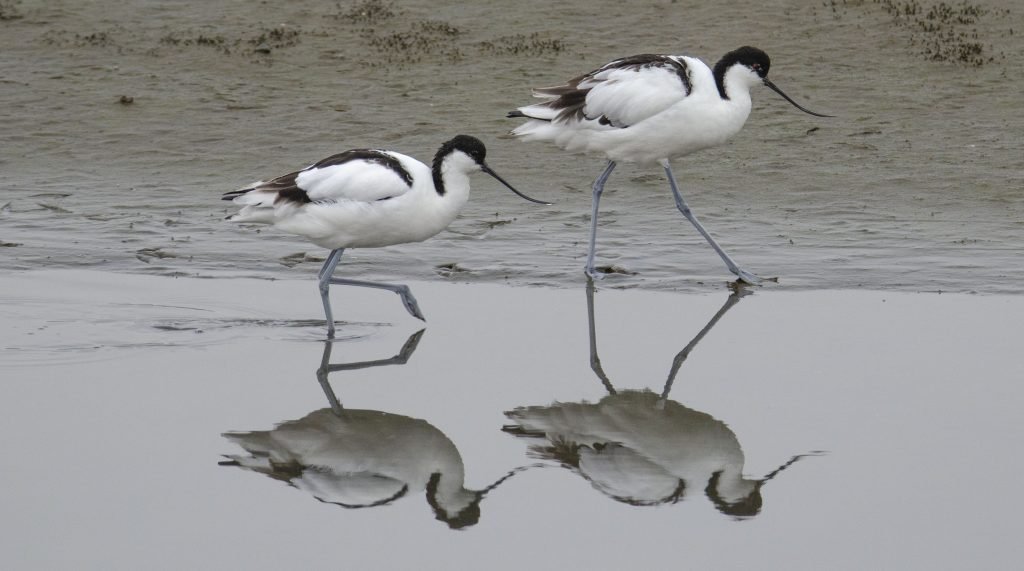
The False Bay Coastal Park, in particular the Strandfontein Sewage Works, is a waterbird mecca and it provides just the right sort of habitat for one of my favourite birds – the Pied Avocet.
Having spent most of my life in KwaZulu-Natal and done most of my birding in lowveld areas, the Pied Avocet is not a run-of-the-mill sighting for me. As the name ‘Pied’ makes clear, this wader features just two colours – black and white – and yet the combination of them is so perfect, so crisply elegant and pleasing to the eye.
Added to this is the sight of their unusual bill – long, thin and upcurved – and their stately comportment, walking slowly through shallow water while swiping right … and left … with their scything bill to capture small crustaceans and insect larvae, which just makes them thoroughly interesting and pleasant to watch.
They have become particularly fond of artificial water bodies, especially saline or nutrient-rich ones. So sewage works have been a particular boon for this species.
And the Strandfontein Sewage Works, which are the central feature of the False Bay Coastal Park, situated between Muizenberg and Mitchell’s Plain, occasionally holds globally significant numbers of Pied Avocet – at times as many as 1% (550) of the African population, thereby qualifying as an Important Bird Area trigger species.
On this visit, on a lovely sunny evening in late March with a fresh breeze blowing, there were discrete handfuls of this nomad on the settling ponds.
With them were Blackwinged Stilts, also a member of the long-legged, long-billed Recurvirostridae family.
There are 20 different pans at Strandfontein, linked by a system of tracks which a normal sedan car can comfortably navigate, except sometimes for those next to Baden Powell Drive which runs right alongside False Bay and the ocean.
The pans have differing water-levels, some of them manually manipulated, which means they provide subtly different habitats – from reedbeds to large expanses of open water, both shallow and deep – and their different features range from artificial roosting platforms to well-vegetated edges, coastal dunes and sand islands.
This promotes a high diversity of species which is why 76 different waterbird and 18 coastal birds have been recorded at Strandfontein. And they are there in their numbers, making it a popular destination for large numbers of birders from all over the country. And every now and then a national rarity pops up; it really does feel like anything is possible on or above the pans or in the Cape Flats Dune Strandveld surrounding them.
My sightings at the end of summer were more mundane, but still enough to whet the appetite for future visits.
The near-endemic, plankton-loving Cape Shoveller can be uncommon elsewhere in South Africa, but is common in the sea-level freshwater wetlands around False Bay, and it was joined by other Anatids in Yellowbilled Duck, Cape Teal and Spurwinged Goose, while Kelp Gulls were common, flying over the coastal dunes and nearby dump site.
Lots of Hadeda and Sacred Ibis were along the fringes of the pans, along with Cattle Egret, Blacksmith Plover, Cape Wagtail and Grey Heron. Redknobbed Coots quietly munched on water weeds, Dabchicks appeared and then disappeared again as they dived underwater, and Whitebreasted Cormorants were standing around drying themselves before contemplating heading off to roost.
Cape Reed Warblers gave their rich, bubbly calls from inside the reedbeds, before one eventually came into view at the top of the stalks. European Swallows owned the skies above the pans.
The grassy areas where one enters the False Bay Coastal Park are also good for birding. A Jackal Buzzard was standing sentry at the entrance before patrolling for rodents in the verges of the tar road.
The road goes along the eastern end of Zeekoevlei, and has picnic sites underneath a row of Eucalyptus trees; a Pied Crow was flying around looking for scraps and even a Small Grey Mongoose came dashing from cover to see what morsels it could find.
The bushier areas mark the beginning of the Cape Flats Dune Strandveld, an endangered vegetation type unique to this area. It is prime habitat for the Cape Grassbird, an endemic skulker that is not often seen despite its long tail, but on this occasion I was sharp enough to be fortunate.
Karoo Prinia is another endemic and a habitat generalist as long as it has some shrubby thickets to dive into when disturbed, and it was spotted on one of the dune ridges close to the Grassbird.
A Blackshouldered Kite perched nearby and kept a beady red eye on proceedings.
Birders are well-advised to watch like a hawk in the False Bay Coastal Park because one will seldom be disappointed given the number of species that frequent this area. And there is always the possibility of spotting a rarity. That’s what I’ll be hoping for next time I’m there.
A mid-winter afternoon drive in the Pilanesberg National Park might not be the time hardened twitchers are expecting to see loads of exciting birds, but it was still a very rewarding jaunt on a sunny day that quickly dropped to just 13 degrees once the sun started setting.
My route took me from the Bakgatla gate at the top of the park, a Familiar Chat giving me the familiar greeting to the Pilanesberg as it flew into a tree and began flicking its tail, and was focused on the Dithabeneng Drive and the Acacia shrubs and thickets that characterise that route and prove very attractive to birds.
As is often the case in winter, the best birding happens when you chance upon a bird party – a flock of foraging birds comprised of mixed species. I had just turned on to the Dithabaneng Drive from the Moruleng link road when I hit one of these bird parties.
A pair of Marico Flycatchers on either side of the road were the initial birds spotted, but some non-breeding Southern Masked Weavers were also hopping about, there was a Forktailed Drongo aloofly surveying proceedings higher up on the trees and the obligatory Blackeyed Bulbuls were noisily jerking around the leaves.
And then two long-tailed birds went darting into the undergrowth. Closer inspection revealed the superb colours of the beautiful Violeteared Waxbill – the blue, chestnut, violet and red contrasting spectacularly with the general drab colours of thornveld in winter.
The Dithabaneng Dam was the next stop, but it was rather dry with just a couple of muddy pools left. A pair of Blacksmith Plover and a Forktailed Drongo playing sentinel was all that was left in terms of birdlife.
Still, the Dithabaneng Drive was providing enough to keep one interested: Chestnutvented Tit Babbler, Rattling Cisticola and Sabota Lark on the bushes, while a Kalahari Scrub Robin was perched in the open and singing away cheerfully.
The Malatse Dam is also off the Dithabaneng Drive, and here at least there was more activity with African Spoonbill, Whitebreasted Cormorant, Yellowbilled Duck, Threebanded Plover and Egyptian Goose on or next to the water. The hide at Malatse is east-facing so it is an ideal spot in the afternoon, as peaceful and tranquil as can be. The dead trees rising out of the shallows complete the scenic picture and also provide useful perches for birds, with a few Rock Pigeon using them as a stopover on this occasion.
Pearlbreasted Swallows and Grey Hornbill were also hanging around in the vicinity of the dam on the way back to the Dithabaneng Drive, where a Cape Bunting was being unusually secretive lurking in the thickets and not scratching around on the open ground as it normally does.
The Salty Springs are patches of water that run between Dithabaneng Drive, the eastern border of the park and Manyane camp, and they often throw up interesting sightings; today there were Blackwinged Stilt foraging and Blue Wildebeest had come to drink.
With a bit of time in hand, I veered off back west along the Potokwane Road, where another bird was hiding in a tree instead of being in its typical place on the ground – a Groundscraper Thrush. Perhaps something had scared it up there.
Colossians 3:13-14 – “Bear with each other and forgive whatever grievances you may have; forgive as the Lord forgave you. And over all these virtues put on love, which binds them all together.”
“When the Holy Spirit lives in you, you reflect the qualities of Christ in your life. Love and courtesy are basic characteristics of the Christian life. … If Chris lives in you, you will be kind and patient toward others.
“A person who is truly courteous is humble, … His attitude is the same regardless of whether he is talking to kings or beggars. He treats everyone alike, no matter what race, colour or creed they are. He rejoices in making the path through life easier for others to travel.
“It is impossible to say that you love and serve God while at the same time treating your neighbour with contempt and disrespect.” – Solly Ozrovech, A Shelter From The Storm