for quality writing

Ken Borland


Steyn explains why he rates Magala as a ‘very very good bowler’ 0

Posted on April 06, 2021 by Ken

Sisanda Magala is a “very, very good bowler” are words you are likely to hear from time to time, but when they come from one of the greatest bowlers of all time, then it is time to sit up, take notice and put him in the Proteas starting XI.

Magala’s fan is none other than Dale Steyn, indisputably a legend of the game because he has taken over 400 Test wickets at an average lower than all but four of the other 16 bowlers in that club. Steyn has previously tweeted how impressed he is with Magala and on Tuesday he explained to The Citizen why he rates the 30-year-old so highly ahead of what will hopefully be his Proteas debut in the ODI series against Pakistan starting on Friday.

But as Steyn reveals, they did not have a very good start to their relationship …

“The first time I played against him was for the Titans against the Warriors and I had heard amazing things about him. So I gave him so much stick, I basically just abused him, because I wanted to see what he was made of. He was upset, but after the game I spoke to him and told him I just did that because I heard you were really good. I wasn’t sure he liked me much after that though … ” Steyn said.

“Then we played together at the Cape Town Blitz, and as team-mates he just impressed me more and more. He’s really quick, he’s a good fielder, extremely athletic for his size, and just a flippen nice guy. He has that fight in him. He has a bit of a strange action so he’s quicker than you think.

“I always look for things that make someone better than the rest and he has a wicked wrist – it’s really cocked back, whippy, giving him extra pace. With good coaching and as he gets more familiar with how to use that wrist, he could get even quicker.”

There have been whispers that Magala’s size – he is certainly burly – is considered an issue by Proteas management and is why he has not yet taken the field for the national team. But Steyn says his physical dimensions and not passing certain fitness tests should not be a factor in selection.

“The testing is one thing but I don’t mind if a guy looks slightly overweight as long as he is hitting the same numbers or even a bit better over a period of time, it’s only a problem if there’s a massive slump. For some people it’s just very difficult for them to do anything about their weight, but I’ve often seen cricketers lose a couple of kilograms and then they can’t hit the ball as far or bowl as well.

“As professional cricketers, we don’t necessarily have to look like Michael Jordan or Usain Bolt,’ Steyn said.
From having to convince her Mom to cricket superstar: the journey of Marizanne Kapp 0

Posted on February 13, 2019 by Ken

When Marizanne Kapp mooted the idea of becoming a professional cricketer to her mother, her greatest supporter, it did not go down well. But remembering it was the previous decade and Cricket South Africa contracts and having their matches televised was still a long way off for our top women’s players, this should not be a surprise.

Mother Nereda Lamprecht had earlier been the one to approach the principal of Hoerskool DF Malherbe to convince him to allow her 13-year-old daughter to play boys cricket at the Port Elizabeth school. The immense talent was obvious, but ensuring Kapp had the platform to reach her potential was another matter.

“To be able to play cricket for a living, that’s my biggest dream come true. My mother was so upset when I told her I wanted to be a professional cricketer, she said no, I must get a proper job. Well now I can take her anywhere in the world she wants to go and pay for her, so I guess it worked out in the end.

“I was a bit of a tomboy growing up and I wanted to do anything the boys were doing. My cousins used to play cricket in the streets, so I started playing with them and then I graduated to indoor cricket. Then my mother went to the principal and asked if I could join the boys team. I did everything at school and I got provincial colours for swimming, biathlon, cross-country and netball, but it was cricket that really stuck,” Kapp, who has a degree in sports management and is studying for another one in human resources, told Saturday Citizen.

Chosen by South Africa for the first time in March 2009, Kapp was still a teenager when she was given a baptism of fire by hosts Australia in the World Cup. But she has grown into one of the best all-rounders in world cricket, chosen by the International Cricket Council for their 2017 ODI team of the year and headhunted by the Sydney Sixers for the inaugural Big Bash in 2015. That’s the most lucrative event for women’s cricketers, their version of the IPL, and the Sixers have been the most successful team, winning the title twice and being runners-up in the other two seasons.

There is no question that the Proteas Women have been helped into the upper echelons of the world game by the arrival of the tremendously athletic Kapp. She forms a formidable new-ball partnership with Shabnim Ismail, rated by many as the best in the world, while she is good enough with the bat to play in the top-order and she has scored South Africa’s only World Cup century.

A feisty character on the field, Kapp may seem a bit shy and withdrawn in the public eye when not playing cricket. But she is clearly the type of person you can go to war with and is hard on herself. She is especially eager to contribute more with the bat.

“I really want to do a bit more with the bat, I’ve been playing for the Proteas for quite a while now and the seniors need to put up their hands and take the load. The bowling is still our team’s big strength, but the batting has to improve. Batting at number three, I’d like to end more games.

“The bowling just comes more naturally for me and in ODIs you’re normally bowling first and batting second. Which is why my batting took a bit of a knock, but I want to get into it more and it’s something I can work on. I’m just waiting for the chance now because we’re playing matches every second day at the moment, whereas in the past we had a few more rest days,” Kapp says.

The Proteas, having whitewashed Sri Lanka 3-0 in their T20 series, now take on the tourists in three ODIs in Potchefstroom next week and if Kapp plays in them all, she will be tantalisingly poised on 99 ODI caps.

Her wife, Dane van Niekerk, is the national captain and will probably get to the 100th game milestone first as she already has 98 caps. They will join Mignon du Preez and Trisha Chetty as the only centurions.

The corridors of Cricket South Africa  can be a rabbit warren of political intrigue, but one thing they are clearly getting right is stabilising and growing the women’s game. Kapp is very appreciative of their efforts and, once her playing days are over (which will hopefully only be in a long while because she is only 29), she is determined to continue working towards the progress of South African women’s cricket.

“It’s tough but there are very good signs which show how serious CSA are in taking the women’s game forward. I wold like to give back when I’m done playing, to contribute to women’s cricket here becoming like it is in Australia,” Kapp said.

https://citizen.co.za/sport/south-african-sport/sa-cricket-sport/2080036/women-in-sport-how-feisty-marizanne-won-her-mom-over/

Ali deserves another honourable mention for his new development programme 0

Posted on July 27, 2018 by Ken


Of all the contributions Ali Bacher has made to South African cricket – captain of their first world-beating side, CEO of the United Cricket Board during the drive to Unity, running the successful hosting of the 2003 World Cup – the introduction of the then Bakers Mini-Cricket programme to underprivileged areas was arguably the one with the greatest impact on the future of the game in this country.

So one can understand Bacher feeling a little peeved when a Gauteng Cricket Board president mentioned to him almost 20 years after Bakers Mini-Cricket started that the programme was no longer having the desired outcomes.

“The first time we took cricket to the Black townships was in 1986 with the help of Bakers and within 10 years we had sent someone like Makhaya Ntini to Dale College. In 2003 I left Cricket South Africa and in 2005 the Gauteng Cricket Board president phoned me and said the mini-cricket programme is faltering.

“So I looked at the report and the problem was that any young kid with passion and talent would still not make it if they stayed in the township, because everything was against them there. I went to King Edward VII and when we left high school we were ready to play provincial cricket and Kagiso Rabada had five years of that as well at St Stithians.

“But in the townships there are no grass fields, pitches, nets or covers. There are 27 000 schools in South Africa and they are mostly Black with no facilities because they don’t have money for it. If talented players were identified there then you had to get them quickly to government or private schools that were traditionally good cricket schools,” Bacher explains.

KFC have now taken over the mini-cricket programme and their efforts deserve recognition because they are still a tremendous feeder system. But the approach when it comes to high school pupils has now changed, under the guidance of Bacher and with the support of Blue Label.

As the chief marketing officer of the mobile telecoms innovators, Rob Fleming, explains: “Transformation is absolutely critical and it needs constant love and attention. But what’s the best way of achieving it? I’ve seen multiple ideas and there’s no doubt we need to do a better job.

“Our real strength in South African cricket is our schools, but forty of them probably produce 80% of our players, so is that the right place to develop our cricket? If we take township kids to those schools then often they are not up to it academically and it affects their cricket and the whole scheme collapses.

“So it was Ali’s idea to go to old traditional cricket schools and try and reignite the game there, let’s create another forty top cricket schools. There’s no doubt the talent is there, that’s our conveyor belt and I love how coherently this programme can work with the rest of the system,” Fleming says.

What deters many schools from playing cricket is the time and expense it involves, which is where Blue Label is coming in to provide resources for Focus Schools, three of which (Uitsig, Akasia and Hendrik Verwoerd) were recently named in the Northerns region, joining schools in Johannesburg, Krugersdorp and Vereeniging that are already in the programme.

Cricket is competing heavily with other codes at these schools, and teachers and facilities are few, but by combining resources, their weakness has become a strength.

Our schools are where the rubber hits the tar in terms of capacity building and getting more and more talent into the pipeline.

“Many of these traditionally good cricket schools are now 99% Black so we are completing the circle and Rob is passionate about this as well. We’ve identified government schools that were former White schools and they still have good facilities but cricket was no longer being played. For example, Krugersdorp High School, hardly any cricket was being played; Highlands North used to provide most of the Balfour Park club, who were very good, but there was no longer any cricket there.

“But if we can get cricket back on its feet again in schools like that then I reckon we will see a plethora of good players coming through. Like Queen’s High School which is on the other side of the Jeppe Hill, it’s all Black and their cricket is so good. Their U15 side only lost one match last season and they beat Pretoria Boys High, they are well-dressed and their parents are all there. This will be so good for South African cricket,” Bacher says.


https://www.pressreader.com/south-africa/the-citizen-kzn/20180609/282243781291243

Chatty Saltpans, Swartkops Estuary 0

Posted on May 08, 2018 by Ken


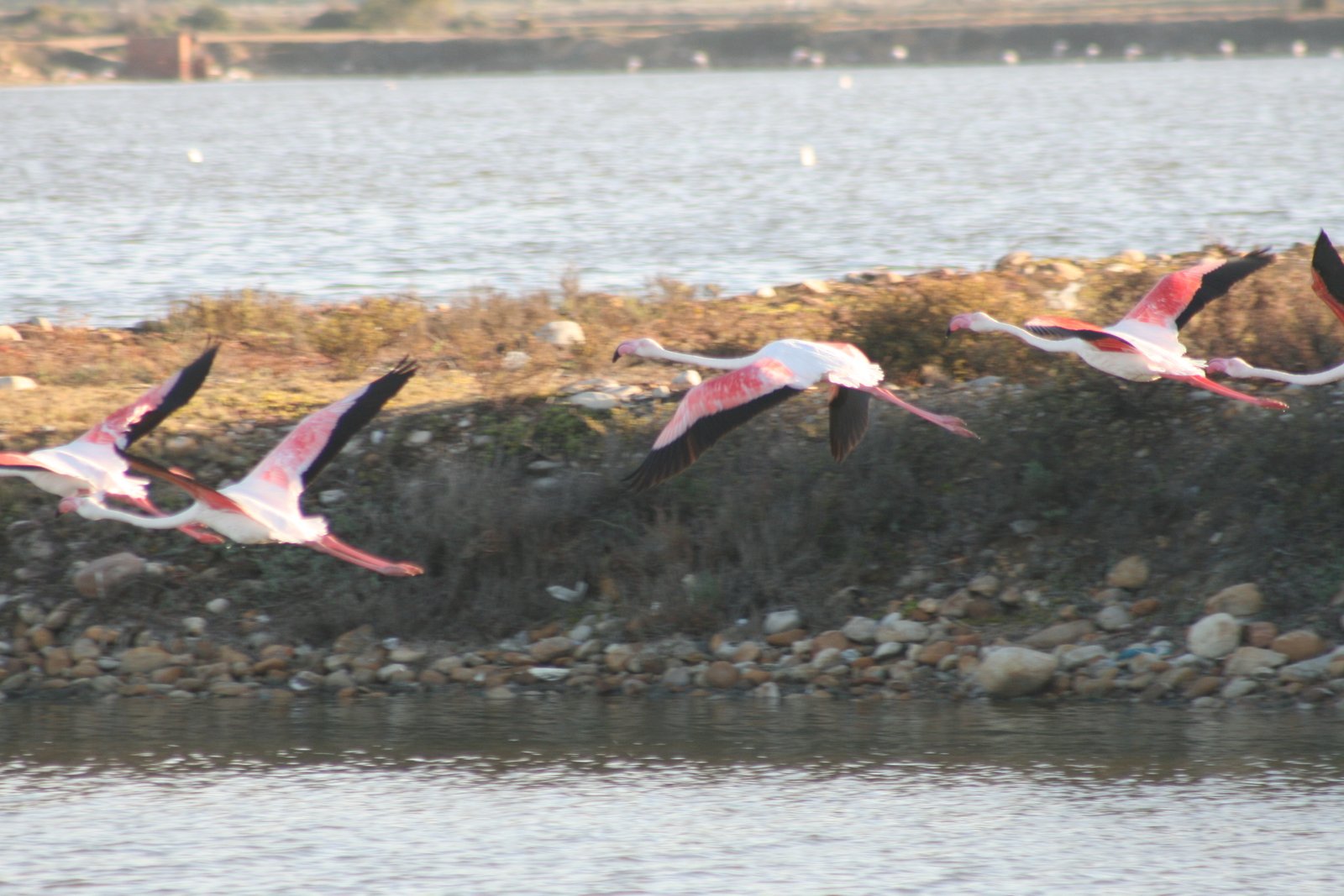
Greater Flamingo flying over the Chatty Saltpans

Greater Flamingo flying over the Chatty Saltpans

The Swartkops Estuary in Port Elizabeth is well-known as one of South Africa’s 112 Important Bird & Biodiversity Areas (IBAs) and while the river and mudflats have the greatest density of birds and hog the limelight as the most natural areas, my sunset visit on December 30 was to the salt pans and threw up a special that is often difficult to find elsewhere.

The Chatty River flows from the west into the Swartkops River and alongside it, next to the R367 main road, there are commercial saltpans which can provide quality foraging opportunities for many birds, especially when the salinity and water level are just right for a host of invertebrates to be crawling around in the benthos.

The elegant flamingos – both Greater and Lesser – immediately catch the eye and I was also drawn to the Pied Avocets, one of my favourite birds, sweeping and scything around in the water.

But dotted around the pan were smaller birds – the Blacknecked Grebe.

The Chatty Saltpans hold globally significant numbers of this uncommon nomad, which has the propensity to suddenly colonise a flooded area and start breeding. There are usually good numbers of this cute little diving bird at Swartkops though, and I did not notice any birds in breeding plumage, so perhaps they were moulting, with the widely-distributed Blacknecked Grebe known to utilise saline lakes overseas for this purpose.

Another special that can be picked up at the Swartkops Estuary is the Hartlaub’s Gull, which has a recently-established breeding colony in the area. It was previously considered a bird of the Western Cape, its distribution tied to that of Kelp, with only vagrant birds moving east of Cape Agulhas, and it interbreeds with Greyheaded Gulls in this river valley. Being omnivorous, it seems to have adapted to new foraging opportunities around human settlements.

Nicely built-up embankments between the pans allow one to approach the vulnerable Flamingos and their friends reasonably closely as they continue their search for invertebrates, and other birds that have adapted well to man-made wetlands were also busy foraging for their dinner in the gathering gloom – Blackwinged Stilt, African Spoonbill, Cape Cormorant, Kelp Gull, Egyptian Goose, Blacksmith Plover, Cape Wagtail and Sacred Ibis.

Where are the Chatty Saltpans?

Sightings list

Greater Flamingo

Kelp Gull

Pied Avocet

Blacknecked Grebe

Blackwinged Stilt

Lesser Flamingo

Egyptian Goose

Cape Cormorant

Blacksmith Plover

Hartlaub’s Gull

Cape Wagtail

Sacred Ibis

African Spoonbill


  • Recent Posts

  • Archives

  • Thought of the Day

    People have a distorted understanding of values, but I believe:

    • Financial riches are not of greater importance than an honourable character;
    • It is better to give than to receive;
    • Helping someone for nothing brings its own rich reward.

    “The highest standards are those given to man by God. They are the old, proven values of love, honesty, unselfishness and purity … allow these God-given principles to govern your conscience.

    “As you live according to these divine standards, God’s best for you will outshine all the plans you can make for yourself.” – A Shelter From The Storm by Solly Ozrovech


↑ Top