for quality writing

Ken Borland


Pilanesberg National Park 2

Posted on May 12, 2019 by Ken

A wonderful Leopard sighting near Kubu Dam

A wonderful Leopard sighting near Kubu Dam

Being in the bush and birding is always such a special time for me, real soul-food, and a time of replenishment before heading back into the hectic ‘real’ world. So I have a small obsession about what my last sighting is, always wanting to end on a high note, preferably with something exotic, something I don’t see every day in my garden.

It is also a source of motivation to stay sharp and keen-eyed at the end of what are normally long, hot days in the bushveld.

Pilanesberg National Park may be one of the most popular reserves in the country and is attached to a tourist hot-spot in Sun City, but it is Big Five country and genuine bushveld. It has a ruggedness about it with its hills lying at angles (after the massive volcanic eruptions that shaped the landscape), its rocky outcrops and the densely-wooded gorges where few people would have ventured.

It is normally also blisteringly hot in summer but this October day had been pleasant: a beautiful sunny day with barely a cloud in the sky and a lovely cooling breeze. The temperature did not get above 31 degrees.

I had concentrated my efforts on the southern half of the park, doing a half-circle from KwaMaritane to Bakubung, and I was 10 minutes from the exit gate when sighting number 53 appeared – a pair of Common Mynahs flying along!

These aliens are all over our towns, cities and neighbourhoods and are considered a scourge in our wild places, like game reserves. So you can imagine my dismay at the very real possibility now that this invasive would be my last sighting of the day … Oh, the horror!

But this was a happy day (it had included a Leopard sighting next to the road) and Mother Nature was kind to me.

Just when I thought the Mynahs would be my last bird, a magnificent pair of Violeteared Waxbills popped up in the bush next to me on the side of the road!

Now these waxbills are really exotic-looking with their incredible combination of violet, red, bright blue and chestnut colours. It is one of my favourites, not only because it is exquisite but also because it eluded me for many years before my first sighting. I even had to put up with my birding colleague Stidy seeing it as a passenger in my car while I dipped on it!

It would have been a dream last bird, but Mother Nature had another trick up her sleeve for me. At Bakubung Gate, amongst the buildings – which I guess make fairly authentic copies of the boulders found on the koppies that are normally their home -were a pair of Mocking Chat.

I had no problem with these cute, somewhat mischievous birds being my last sighting. They are real characters and I watched them a bit before finally departing the peaceful, but wild, hills and valleys of the Pilanesberg.

I was still buzzing though from my Leopard sighting, which had been in the vicinity of Kubu Dam, just before I turned west off the tar and on to the Kgama Drive that goes past Lengau Dam and then rejoins the tar just before the Bakubung Gate.

The Leopard was lying with typical insouciance under a shady bush, about 20 metres from the road, but quite hard to see due to the combination of dappled light and the rosettes on its body. What a gorgeous young specimen it was though.

The insouciant Leopard

The insouciant Leopard

While the Leopard was, typically, a loner, there were lovely family sightings of 10 African Elephant marching along the flanks of the Magare Hills, away in the distance as the Tsepe Drive turned to the north-west, having skirted along the south-eastern border of the park for nearly 10km from the KwaMaritane entrance.

It was also most pleasing to see three different family groups of Squarelipped Rhinoceros, numbering 10 in all of these critically endangered animals.

The group theme had started at the beginning as I entered KwaMaritane gate and was immediately bombarded by three Blackchested Prinia dashing around and calling loudly in some sort of furore.

Two Greater Kudu youngsters down by the Maritane River were much more peaceful, and some Little Swift were also swirling around merrily, without a care in the world.

Blackcollared Barbets are normally seen amongst the trees at the picnic sites, so it was nice to see one at the hills and plains of the Tshepe Drive. Further down the road, a Kalahari Robin was conspicuous as it posed on top of a bush, behaving more like a Chat. Which is not surprising because the Scrub Robins (Genus Cercotrichas) are in the same Subfamily – Saxicolinae – as things like the Familiar and Mocking Chats, both characteristic birds of the Pilanesberg.

Close by, a juvenile Blackshouldered Kite was also posing nicely on top of a tree,

Juvenile Blackshouldered Kite

Juvenile Blackshouldered Kite

while both Redfaced and Speckled Mousebirds were in close proximity to each other as the Tshepe Drive crossed the Mankwe River, where, as is often the case, a purposeful Cape Wagtail was doing a thorough inspection.

The Lengau Dam was hosting a big flock of Sacred Ibis, and there were also Redbilled Teal, which I have only seen infrequently in the Pilanesberg.

Where is Pilanesberg National Park?

Sightings list

Blackchested Prinia

Greater Kudu

Little Swift

Blue Waxbill

Blackcollared Barbet

Neddicky

Kalahari Robin

African Elephant

Sabota Lark

Blackshouldered Kite

Rattling Cisticola

Grey Lourie

Redfaced Mousebird

Speckled Mousebird

Cape Wagtail

Cinnamonbreasted Rock Bunting

Glossy Starling

Southern Yellowbilled Hornbill

Southern Yellowbilled Hornbill

Southern Yellowbilled Hornbill

Blackeyed Bulbul

Impala

Marico Flycatcher

Blue Wildebeest

Helmeted Guineafowl

Giraffe

Redbilled Oxpecker

Natal Francolin

Capped Wheatear

Springbok

Pied Crow

Squarelipped Rhinoceros

Lesser Striped Swallow

Common Waxbill

Longtailed Shrike
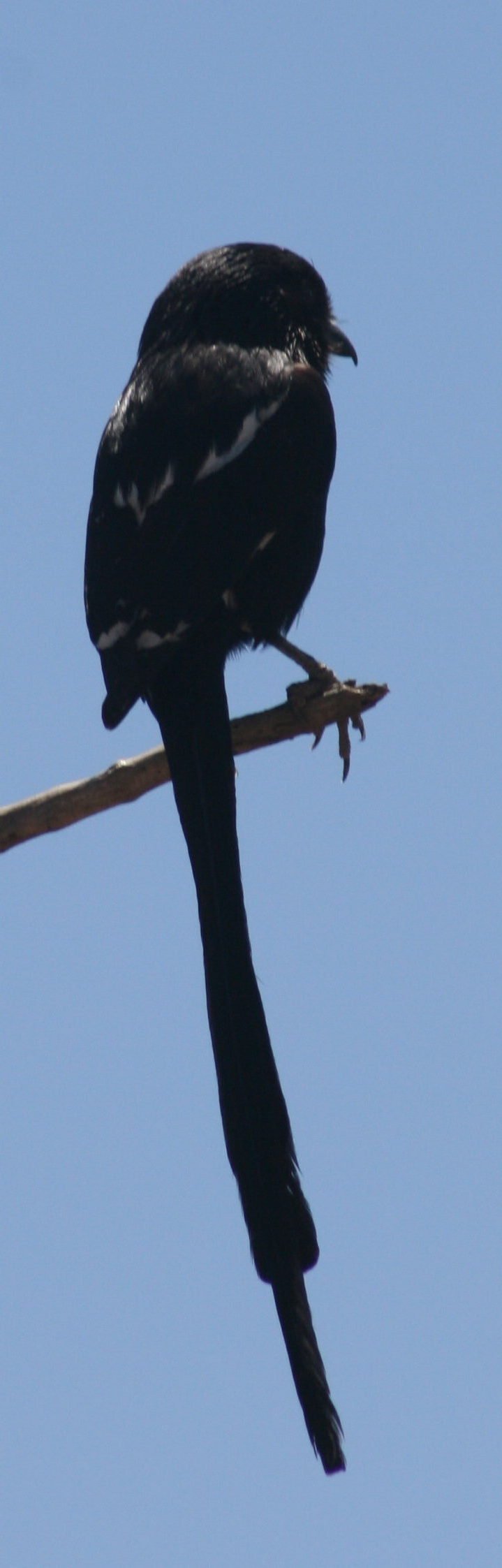
Longtailed Shrike

Arrowmarked Babbler

Whitebreasted Cormorant

Reed Cormorant

Southern Masked Weaver

Blackbacked Puffback

Laughing Dove

Great White Egret

Browncrowned Tchagra

Warthog

A Warthog strolling along

A Warthog strolling along

Leopard

Familiar Chat

Plains Zebra

Waterbuck

Blacksmith Plover

Redbilled Teal

Dabchick

Sacred Ibis

Egyptian Goose

African Darter

Common Mynah

Violeteared Waxbill

Mocking Chat

Swys has brushed aside all teething problems & maintained Lions’ high standards 0

Posted on August 28, 2018 by Ken


Swys de Bruin endured some teething problems early on in his career as Lions head honcho, but hats off to the well-travelled coach for keeping the faith and his nerve and maintaining the high standards of excellence that have characterised Ellis Park as the team head into their third successive SuperRugby final on Saturday.

Change – especially when it involves losing someone as integral as Johan Ackermann – is often difficult but it is a credit to the smooth systems in place at Ellis Park and De Bruin’s own wisdom and level-headedness that the performance of the Lions in the long run has barely suffered.

It was not as smooth a road to the final this year, which has forced them to make the daunting trip to Christchurch, but reports of the Lions’ demise were greatly exaggerated. Sure, they have had their problems this season, but in a way that makes their achievement all the more impressive because they had to overcome greater challenges to reach the final.

Without their inspirational captain, Warren Whiteley, for most of the season, the Lions also lost their most influential player in Malcolm Marx at a crucial stage of the tournament while Jaco Kriel, a matchwinner, has been ruled out of the entire campaign due to injury. They also had to cope with the departure of integral players like Ruan Ackermann, Faf de Klerk and Akker van der Merwe, while also dealing with the rumours swirling around contracted players wanting to leave and those that did depart mid-season like Rohan Janse van Rensburg.

Apart from still churning out the results against the odds, with so many things mounted against them, the Lions have also still played with flair, which is unsurprising considering how obsessed coach De Bruin is with scoring tries; in a sport which is marred by plenty of cynicism, it is refreshing to have a head coach state so openly, with almost childish naivety, that all he cares about are tries. But that is why most people started playing rugby.

Whatever the result of Saturday’s final, and it would be an upset for the ages if the Lions were to beat the Crusaders in Christchurch, they have done the nation proud. And I don’t agree with the prophets of doom who say it’s now or never for the Lions to win SuperRugby; these are probably the same naysayers who predicted the team would fall off the rails this year already.

The wonderful thing that the culture of success at Ellis Park – and here we must also give the credit to the superb leadership trio of Rudolf Straeuli, Kevin de Klerk and Altmann Allers – has done is to ensure that the Lions are now the team everyone wants to play for. It is the first port of call for the SA Schools star looking to start his professional career.

And the pipeline is working well. Players such as Madosh Tambwe, Marco Jansen van Vuuren, Len Massyn, Hacjivah Dayimani, Gianni Lombard, Jeanluc Cilliers, Wandisile Simelane, Reinhard Nothnagel, Keagan Glade, Asenathi Ntlabakanye, Cristen van Niekerk, Mark Snyman and Yanga Hlalu will be at the vanguard of the Lions’ efforts to remain the undisputed champion franchise in South Africa.

It was not always thus and, as Allers said in his address at the post-match function after the semi-final win over the Waratahs, the last home game of the season, so many of the current Lions stars came to Ellis Park with the reject tags around the neck.

The irony is that so many of those players were shown the door just up the road at Loftus Versfeld, the former SuperRugby champions who used to be the place of choice for young players. The new Bulls coach, John Mitchell, is currently negotiating with the board to fix the mess that has been created there by years of terrible talent identification.

The beneficiaries have been the Lions and so many of the franchise’s stars now carry a new label, the precious tag of being a Springbok.


https://www.pressreader.com/south-africa/the-citizen-gauteng/20180804/282651803301630


Dudley Pringle Dam, Maidstone 0

Posted on July 23, 2018 by Ken


IMG_2733[1]

Looking down on the Dudley Pringle Dam outside Maidstone

The KwaZulu-Natal North Coast is generally extremely degraded habitat due to the development of extensive sugarcane fields and timber plantations, as well as the high levels of urbanisation and the roads and alien plant infestations it brings.

The natural vegetation of the coastal belt is classified as Endangered; comprising Moist Coastal Forest, Thorn and Palmveld; bushed grassland and bushland thicket. But these days, as you venture north from Durban, it is just a sea of sugarcane, endless and monotonous.

The undulating topography of the area – rolling hills heading westwards to the plateau in the central regions of the province – with steep sloping ground, means only sugarcane can really be considered as a permanent crop, because the ground is either too wet or too sloping to grow much else.

The valley bottoms are where more indigenous flora is found and, having spotted a dam on the maps of the Maidstone area, I decided to head there to see what the birdlife would be like around this colonial village that was built for the employees of Tongaat Hulett Sugar Company.

But in order to find my way down to the dam, I had to negotiate a myriad of little tracks through the monoculture. Being towards the end of May, it was also the dry season and I wasn’t expecting much. But it was proven otherwise as the canefields threw up some birds of their own.

For good birding habitat, the drainage streams between canefields with irrigation water still in them proved a hit with the birds, including Whitewinged Widow, but it was still a surprise when a couple of Spurwinged Goose turned up where the water had collected into a small pool near the road.

You wouldn’t find Southern Africa’s largest duck (it’s not a real goose) in the actual sugarcane but it is generally common and conspicuous at inland waters and fallow fields, usually being seen in flight.

Two Southern Red Bishop males, surprisingly still in breeding plumage, went towering upwards in the sky nearby.

While the Stonechat was the most common bird, the Fantailed Widowbird is the common Euplectid of sugarcane fields, flying up out of the rows of green, alongside the Yellowthroated Longclaw, which is more a bird of the lower reaches of South Africa, as you head towards the sea, being far more widespread than the endemic Orangethroated (Cape) Longclaw, and flying up from the grass on the tracks that cut through the cane.

The only natural habitats available on-site are restricted to a few isolated patches of riparian vegetation along water courses, where I was able to confirm the winter presence of Redwinged Starling along with a family of Vervet Monkey, and the major feeder for Dudley Pringle Dam is the Wewe River, part of the Tongaat River catchment.

IMG_2734[1]

The island in the middle of Dudley Pringle Dam – how I would love to bird there!

The dam itself is not very accessible but I did manage to find one spot to walk around, a launching area for a local canoe club.

Little flocks of Fantailed Widowbird, the males with their red shoulder patches, flew up out of the tall, moist grassland around the dam, over which Egyptian Geese were flying.

A Threebanded Plover, which has been recorded breeding in the area, was nodding along on the dilapidated weir, while a few pairs of African Jacana, an unlikely bird to see on sugarcane farms, were squabbling and flying around and then settling in the waterweed.

Another surprise was when a Whitebreasted Cormorant came gliding into view from around the corner of the dam, and I was delighted to see a few Little Bee-Eater hawking insects from the reeds on the dam shore.

There is more vegetation, including stands of bamboo, around the dwellings on the farm, and it was interesting to see a Fiscal Flycatcher in the same tree as the more fierce bird it mimics in appearance, the Fiscal Shrike.

A similar example of mimicry in which one birds looks confusingly similar to another highly aggressive bird occurs between the Southern Black Flycatcher and the Forktailed Drongo, with the Flycatcher hypothesised to gain some sort of advantage by looking like the more rapacious Drongo.

Coincidentally, a Southern Black Flycatcher was spotted in the tree right next door to a Forktailed Drongo.

Where is Dudley Pringle Dam?

Sightings list

Forktailed Drongo

Hadeda Ibis

Redwinged Starling

Southern Black Flycatcher

Cape Wagtail

Fiscal Shrike

Grassveld Pipit

Fiscal Flycatcher

Tawnyflanked Prinia

African Stonechat

Vervet Monkey

Southern Red Bishop

Spurwinged Goose

Redeyed Dove

Blackeyed Bulbul

Whitewinged Widow

Yellowthroated Longclaw

Fantailed Widowbird

Egyptian Goose

Threebanded Plover

African Jacana

Whitebreasted Cormorant

Little Swift

Litte Bee-Eater


Noren aimed low but ended over the moon 0

Posted on November 15, 2016 by Ken


Alex Noren was not aiming high at the start of the final round of the Nedbank Golf Challenge at Sun City on Sunday, but he was over the moon after a phenomenal nine-under-par round of 63 earned him a dazzling six-shot victory at Gary Player Country Club.

In the 36 editions of the Nedbank Golf Challenge, only two other golfers – Sergio Garcia (2001) and Ernie Els (2002) – have shot 63 in the final round to win and it’s fair to say the course was much easier back then.

The 34-year-old Swede started the day six strokes behind leader Jeunghun Wang, who had fired a wonderful 64 in incredibly tough conditions on the third day and seemed to already have one hand on the famous crystal trophy.

But Noren produced a magnificent front nine, that featured six birdies, and then eagled the 10th and birdied 11 to rocket into the lead, nine-under through 11 holes and playing golf that was simply out of this world.

“Honestly, I thought I had no chance at the start of the round, this is a really tricky course and the leader had shot 64 yesterday which was like 59 today.

“So I just wanted to get a good round in before the World Tour Championship in Dubai next week, to have a good positive feeling going there, work on my swing a bit. Anything under par I would have been happy,” Noren said after his fourth victory in his last 11 tournaments.

But after starting with three straight birdies he then also picked up a shot on the fifth and then sank a 30-foot putt for another birdie on the par-three seventh; two behind Wang, he started to believe.

“I was a bit nervous at the start, I didn’t feel on top of my game but something happened and after seven holes I started to realise that I must believe in myself that I can win. My putter was very hot and I got a lot more excited,” Noren said.

The 21-year-old Wang initially held things together well and was not going away as he birdied the ninth to draw level with Noren. But he could only muster one more birdie on the back nine and, with his tee-shots going ever more off-target, he was undone by four bogeys coming in, having to settle for second place.

Louis Oosthuizen, three off the lead at the start of the day, just could not get going on Sunday and double-bogeyed the par-three seventh after finding the greenside bunker to fall off the pace. He birdied the 10th and 15th holes, but there were more dropped shots on the last three holes as he finished ninth, nine behind Noren.

Andy Sullivan shot a level-par 72 on Sunday to finish on seven-under, tied for third with leading South African Branden Grace (70), Spaniard Alejandro Canizares (68), Frenchman Victor Dubuisson (68) and Portugal’s Ricardo Gouveia (67).

Henrik Stenson shot a 70 to finish eighth on six-under and will be going to the Race to Dubai finale in Dubai this week on top of the order of merit, but with Danny Willett and Noren still able to catch him.

  • Recent Posts

  • Archives

  • Thought of the Day

    Revelation 3:15 – “I know your deeds, that you are neither cold nor hot. I wish you were either one or the other.”

    How can you expect blessings without obeying?

    How can you expect the presence of God without spending time quietly before him?

    Be sincere in your commitment to Him; be willing to sacrifice time so that you can grow spiritually; be disciplined in prayer and Bible study; worship God in spirit and truth.

    Have you totally surrendered to God? Have you cheerfully given him everything you are and everything you have?

    If you love Christ, accept the challenges of that love: Placing Christ in the centre of your life means complete surrender to Him.


↑ Top