for quality writing

Ken Borland


Pilanesberg National Park 2

Posted on May 12, 2019 by Ken

A wonderful Leopard sighting near Kubu Dam

A wonderful Leopard sighting near Kubu Dam

Being in the bush and birding is always such a special time for me, real soul-food, and a time of replenishment before heading back into the hectic ‘real’ world. So I have a small obsession about what my last sighting is, always wanting to end on a high note, preferably with something exotic, something I don’t see every day in my garden.

It is also a source of motivation to stay sharp and keen-eyed at the end of what are normally long, hot days in the bushveld.

Pilanesberg National Park may be one of the most popular reserves in the country and is attached to a tourist hot-spot in Sun City, but it is Big Five country and genuine bushveld. It has a ruggedness about it with its hills lying at angles (after the massive volcanic eruptions that shaped the landscape), its rocky outcrops and the densely-wooded gorges where few people would have ventured.

It is normally also blisteringly hot in summer but this October day had been pleasant: a beautiful sunny day with barely a cloud in the sky and a lovely cooling breeze. The temperature did not get above 31 degrees.

I had concentrated my efforts on the southern half of the park, doing a half-circle from KwaMaritane to Bakubung, and I was 10 minutes from the exit gate when sighting number 53 appeared – a pair of Common Mynahs flying along!

These aliens are all over our towns, cities and neighbourhoods and are considered a scourge in our wild places, like game reserves. So you can imagine my dismay at the very real possibility now that this invasive would be my last sighting of the day … Oh, the horror!

But this was a happy day (it had included a Leopard sighting next to the road) and Mother Nature was kind to me.

Just when I thought the Mynahs would be my last bird, a magnificent pair of Violeteared Waxbills popped up in the bush next to me on the side of the road!

Now these waxbills are really exotic-looking with their incredible combination of violet, red, bright blue and chestnut colours. It is one of my favourites, not only because it is exquisite but also because it eluded me for many years before my first sighting. I even had to put up with my birding colleague Stidy seeing it as a passenger in my car while I dipped on it!

It would have been a dream last bird, but Mother Nature had another trick up her sleeve for me. At Bakubung Gate, amongst the buildings – which I guess make fairly authentic copies of the boulders found on the koppies that are normally their home -were a pair of Mocking Chat.

I had no problem with these cute, somewhat mischievous birds being my last sighting. They are real characters and I watched them a bit before finally departing the peaceful, but wild, hills and valleys of the Pilanesberg.

I was still buzzing though from my Leopard sighting, which had been in the vicinity of Kubu Dam, just before I turned west off the tar and on to the Kgama Drive that goes past Lengau Dam and then rejoins the tar just before the Bakubung Gate.

The Leopard was lying with typical insouciance under a shady bush, about 20 metres from the road, but quite hard to see due to the combination of dappled light and the rosettes on its body. What a gorgeous young specimen it was though.

The insouciant Leopard

The insouciant Leopard

While the Leopard was, typically, a loner, there were lovely family sightings of 10 African Elephant marching along the flanks of the Magare Hills, away in the distance as the Tsepe Drive turned to the north-west, having skirted along the south-eastern border of the park for nearly 10km from the KwaMaritane entrance.

It was also most pleasing to see three different family groups of Squarelipped Rhinoceros, numbering 10 in all of these critically endangered animals.

The group theme had started at the beginning as I entered KwaMaritane gate and was immediately bombarded by three Blackchested Prinia dashing around and calling loudly in some sort of furore.

Two Greater Kudu youngsters down by the Maritane River were much more peaceful, and some Little Swift were also swirling around merrily, without a care in the world.

Blackcollared Barbets are normally seen amongst the trees at the picnic sites, so it was nice to see one at the hills and plains of the Tshepe Drive. Further down the road, a Kalahari Robin was conspicuous as it posed on top of a bush, behaving more like a Chat. Which is not surprising because the Scrub Robins (Genus Cercotrichas) are in the same Subfamily – Saxicolinae – as things like the Familiar and Mocking Chats, both characteristic birds of the Pilanesberg.

Close by, a juvenile Blackshouldered Kite was also posing nicely on top of a tree,

Juvenile Blackshouldered Kite

Juvenile Blackshouldered Kite

while both Redfaced and Speckled Mousebirds were in close proximity to each other as the Tshepe Drive crossed the Mankwe River, where, as is often the case, a purposeful Cape Wagtail was doing a thorough inspection.

The Lengau Dam was hosting a big flock of Sacred Ibis, and there were also Redbilled Teal, which I have only seen infrequently in the Pilanesberg.

Where is Pilanesberg National Park?

Sightings list

Blackchested Prinia

Greater Kudu

Little Swift

Blue Waxbill

Blackcollared Barbet

Neddicky

Kalahari Robin

African Elephant

Sabota Lark

Blackshouldered Kite

Rattling Cisticola

Grey Lourie

Redfaced Mousebird

Speckled Mousebird

Cape Wagtail

Cinnamonbreasted Rock Bunting

Glossy Starling

Southern Yellowbilled Hornbill

Southern Yellowbilled Hornbill

Southern Yellowbilled Hornbill

Blackeyed Bulbul

Impala

Marico Flycatcher

Blue Wildebeest

Helmeted Guineafowl

Giraffe

Redbilled Oxpecker

Natal Francolin

Capped Wheatear

Springbok

Pied Crow

Squarelipped Rhinoceros

Lesser Striped Swallow

Common Waxbill

Longtailed Shrike
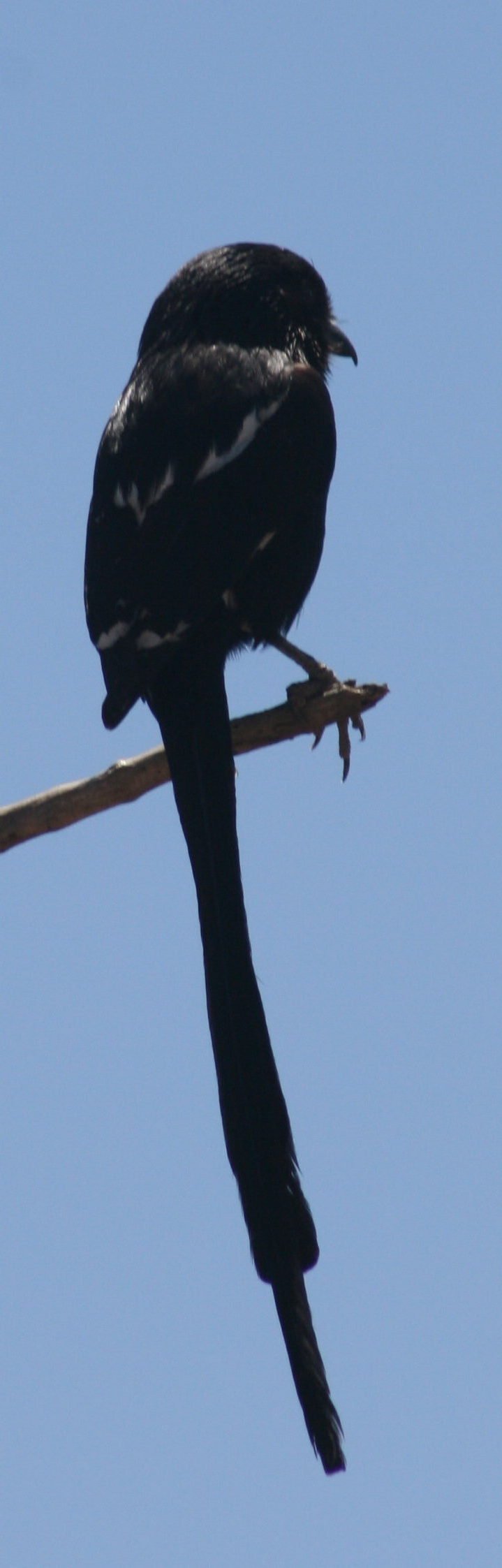
Longtailed Shrike

Arrowmarked Babbler

Whitebreasted Cormorant

Reed Cormorant

Southern Masked Weaver

Blackbacked Puffback

Laughing Dove

Great White Egret

Browncrowned Tchagra

Warthog

A Warthog strolling along

A Warthog strolling along

Leopard

Familiar Chat

Plains Zebra

Waterbuck

Blacksmith Plover

Redbilled Teal

Dabchick

Sacred Ibis

Egyptian Goose

African Darter

Common Mynah

Violeteared Waxbill

Mocking Chat

Albie Morkel’s harrowing Mozambique ordeal 0

Posted on January 23, 2019 by Ken


The only words South African cricket all-rounder Albie Morkel was able to get through the cellphone to his wife Marthmari, before he was bundled into a car and driven to prison were “I’m going to be stuck in Mozambique for a little longer, there’s a problem but I can’t talk now because the guards are coming with their AK47s”.

The harrowing ordeal, which Morkel, one of South Africa’s most internationally famous cricketers thanks to his nine years in the Indian Premier League, describes as “the most horrific two days of my life”, began a couple of hours earlier when the 37-year-old arrived at Chingozi Airport in Tete, north-western Mozambique, after a tiger-fishing trip to the lower Zambezi River in July.

The incident had its genesis in a hunting trip Morkel, who is known for his love of the bush, went on a couple of weeks earlier. Upon his return, he asked his gardener to clean his car. When the gardener found a small packet of ammunition in the vehicle, he wasn’t sure what to do with it, so he put it in the side pocket of one of Morkel’s old cricket bags.

That was the bag Morkel thought would be perfect to put his fishing tackle in when he went to Mozambique. Getting through O.R. Tambo International Airport and arriving in Tete without any problems, the drama only started when the Pretoria-based cricketer was about to board his flight back to Johannesburg.

“It had been a fantastic trip and I was at the airport on my way back when the airport security found some ammunition in my bag that I didn’t know about. With the language barrier, things escalated very quickly into a very big mess. I told the other guys in our party to go ahead and board and I’ll just sort this problem out and catch the later flight.

“But two hours later I was in Tete provincial prison for the two most horrific days of my life. I was held for the serious criminal charge of weapons smuggling and nobody at the court was willing to help me before it closed at 3pm so I was taken to jail. The situation got a bit ugly when the guy helping me jostled one of the policemen a bit and out came the AK47s, I was pushed into a car and next thing I knew I was at the gates of the prison,” Morkel revealed on The Dan Nicholl Show on Wednesday night.

Morkel was fortunate to find the help of two inmates when his spirits were at their lowest.

“I’ve never been close to jail before and this place was just inhuman, 800 prisoners, some of them clearly mentally unstable, all together in an open prison in 45 degree heat. They were so crammed together that at night they would just relieve themselves on each other.

“Luckily I met a couple of guys in jail, Andrew was a computer tech guy from Malawi, who had been inside for six months because he couldn’t show his papers after they had had a few drinks in the pub, and the other guy had been there for 11 months after being arrested for selling cellphone batteries that the police thought he had stolen.

“They told me who I should stay away from and that the shade belonged to the main okes. Fortunately I was allowed to sleep alone in the office at night and five minutes before the jail closed on Friday afternoon for the weekend, my friends on the outside managed to get me out,” Morkel recalls.

Quite how they were able to dig a famous sportsman, whose name meant nothing in northern Mozambique, out of his predicament, remains unclear, but Morkel has a reasonable idea.

“They never got into how they managed to get me released, but they knew how the system works over there.”

https://citizen.co.za/news/south-africa/2009079/albie-morkel-tells-of-his-hell-in-mozambique-cell/

Swys has brushed aside all teething problems & maintained Lions’ high standards 0

Posted on August 28, 2018 by Ken


Swys de Bruin endured some teething problems early on in his career as Lions head honcho, but hats off to the well-travelled coach for keeping the faith and his nerve and maintaining the high standards of excellence that have characterised Ellis Park as the team head into their third successive SuperRugby final on Saturday.

Change – especially when it involves losing someone as integral as Johan Ackermann – is often difficult but it is a credit to the smooth systems in place at Ellis Park and De Bruin’s own wisdom and level-headedness that the performance of the Lions in the long run has barely suffered.

It was not as smooth a road to the final this year, which has forced them to make the daunting trip to Christchurch, but reports of the Lions’ demise were greatly exaggerated. Sure, they have had their problems this season, but in a way that makes their achievement all the more impressive because they had to overcome greater challenges to reach the final.

Without their inspirational captain, Warren Whiteley, for most of the season, the Lions also lost their most influential player in Malcolm Marx at a crucial stage of the tournament while Jaco Kriel, a matchwinner, has been ruled out of the entire campaign due to injury. They also had to cope with the departure of integral players like Ruan Ackermann, Faf de Klerk and Akker van der Merwe, while also dealing with the rumours swirling around contracted players wanting to leave and those that did depart mid-season like Rohan Janse van Rensburg.

Apart from still churning out the results against the odds, with so many things mounted against them, the Lions have also still played with flair, which is unsurprising considering how obsessed coach De Bruin is with scoring tries; in a sport which is marred by plenty of cynicism, it is refreshing to have a head coach state so openly, with almost childish naivety, that all he cares about are tries. But that is why most people started playing rugby.

Whatever the result of Saturday’s final, and it would be an upset for the ages if the Lions were to beat the Crusaders in Christchurch, they have done the nation proud. And I don’t agree with the prophets of doom who say it’s now or never for the Lions to win SuperRugby; these are probably the same naysayers who predicted the team would fall off the rails this year already.

The wonderful thing that the culture of success at Ellis Park – and here we must also give the credit to the superb leadership trio of Rudolf Straeuli, Kevin de Klerk and Altmann Allers – has done is to ensure that the Lions are now the team everyone wants to play for. It is the first port of call for the SA Schools star looking to start his professional career.

And the pipeline is working well. Players such as Madosh Tambwe, Marco Jansen van Vuuren, Len Massyn, Hacjivah Dayimani, Gianni Lombard, Jeanluc Cilliers, Wandisile Simelane, Reinhard Nothnagel, Keagan Glade, Asenathi Ntlabakanye, Cristen van Niekerk, Mark Snyman and Yanga Hlalu will be at the vanguard of the Lions’ efforts to remain the undisputed champion franchise in South Africa.

It was not always thus and, as Allers said in his address at the post-match function after the semi-final win over the Waratahs, the last home game of the season, so many of the current Lions stars came to Ellis Park with the reject tags around the neck.

The irony is that so many of those players were shown the door just up the road at Loftus Versfeld, the former SuperRugby champions who used to be the place of choice for young players. The new Bulls coach, John Mitchell, is currently negotiating with the board to fix the mess that has been created there by years of terrible talent identification.

The beneficiaries have been the Lions and so many of the franchise’s stars now carry a new label, the precious tag of being a Springbok.


https://www.pressreader.com/south-africa/the-citizen-gauteng/20180804/282651803301630


Settlers Park Nature Reserve 0

Posted on April 10, 2018 by Ken


Settler's Park Nature Reserve - view from the main parking lot.

Settler’s Park Nature Reserve – view from the main parking lot.

The Settlers Park Nature Reserve is situated in the Baakens River Valley in Port Elizabeth and while there are steep cliffs on the northern side of the river, the opposite side provides the opportunity to climb a path into the Eastern Cape Fynbos.

I was making my way up one of the steeper sections when I heard a strident kek kek kek kek repeatedly coming from nearby, which I presumed to be the alarm call of a francolin. So of course, once I had stealthily approached the area the call was coming from, I began looking on the ground, amongst the grasses and shrubs.

And yet I could not spot any francolin … so I began casting my eyes higher up and there, in a low tree, sat the most unexpected source of the ongoing call, continuing to badger me for daring to invade its space.

A Peregrine Falcon which had possibly flown across from the cliffs on the other side of the river on a hunting foray and was now complaining at me in persistent fashion, perhaps because it had not been a successful trip. After some minutes the magnificent, endangered predator gave me one last glare with its large, ruthless eyes and then took off to head back towards the cliffs.

The Peregrine Falcon is often seen along the valley but it was still a very pleasant surprise to see one perched and being so vocal.

Plenty of other birds frequent the pools, reeds and bush around the Baakens River and, upon descending from the main car park there was lots of activity around one of the drifts across the river. Cape Wagtail and Streakyheaded Canary were bathing and then flew into the protection of a tree next to the water, while Malachite Kingfisher disappeared down the river in a flash of ultramarine blue.

Southern Red Bishop and Southern Masked Weaver were busy in the reeds, while Levaillant’s Cisticola was more secretive but present in good numbers. Bronze Mannikin were also attracted to the water, while the deeper pools boasted Reed Cormorant, Egyptian Goose, Grey and Blackheaded Heron.

Being the Eastern Cape, there is obviously valley bushveld around and these thickets held Olive Thrush, with a juvenile deeply concealed, Speckled Mousebird, Blackeyed Bulbul, Barthroated Apalis, Knysna Lourie and Sombre Bulbul.

The more open areas on the hilltops feature clumps of bush and Fiscal Flycatcher, Fiscal Shrike and Pintailed Whydah can be seen here, while Kelp Gull and Cape Crow fly overhead.

A Small Grey Mongoose was seen darting across one of the paths on the hillside and, on the return back up the hill to the main car park, just waiting quietly brought a Forest Canary at close quarters.

Where is Settlers Park Nature Reserve?

Sightings list

Olive Thrush

Reed Cormorant

Laughing Dove

Forktailed Drongo

Southern Red Bishop

Southern Masked Weaver

Cape Wagtail

Streakyheaded Canary

Malachite Kingfisher

Fiscal Flycatcher

Peregrine Falcon

Kelp Gull

Fiscal Shrike

Cape Crow

Speckled Mousebird

Blackeyed Bulbul

Levaillant’s Cisticola

Barthroated Apalis

Small Grey Mongoose

Knysna Lourie

Egyptian Goose

Grey Heron

Bronze Mannikin

Sombre Bulbul

Blackheaded Heron

Pintailed Whydah

Forest Canary


  • Recent Posts

  • Archives

  • Thought of the Day

    Revelation 3:15 – “I know your deeds, that you are neither cold nor hot. I wish you were either one or the other.”

    How can you expect blessings without obeying?

    How can you expect the presence of God without spending time quietly before him?

    Be sincere in your commitment to Him; be willing to sacrifice time so that you can grow spiritually; be disciplined in prayer and Bible study; worship God in spirit and truth.

    Have you totally surrendered to God? Have you cheerfully given him everything you are and everything you have?

    If you love Christ, accept the challenges of that love: Placing Christ in the centre of your life means complete surrender to Him.


↑ Top