for quality writing

Ken Borland


Kruger National Park – Malelane & Berg-en-Dal 0

Posted on July 26, 2017 by Ken

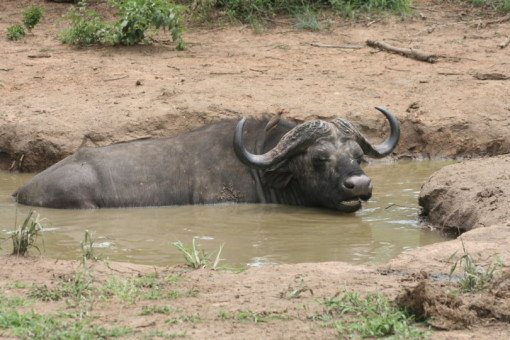
African Buffalo, with Redbilled Oxpeckers, resting up in one of the puddles left by the first rains of summer

African Buffalo, with Redbilled Oxpeckers, resting up in one of the puddles left by the first rains of summer

The drought situation in Kruger National Park in 2016 reached such drastic proportions that it was one of the driest years in recorded history in some areas of the south, but blessed rains eventually fell in early December.

So when I nipped into the park for a morning’s birding on December 5, big puddles of water were still visible from the first rains of the summer. I figured the availability of this surface water would prove attractive to animals and so it proved.

The S114 is the first gravel road on the right after entering through Malelane Gate, and it runs along the Crocodile River before heading northwards towards Skukuza. Shortly before this, close to the S25 turnoff, there were large puddles of water formed next to the road in this area of mixed woodland and thorn thickets on granite, and next to them, half-a-dozen African Wild Dog were lounging around under some bushes.

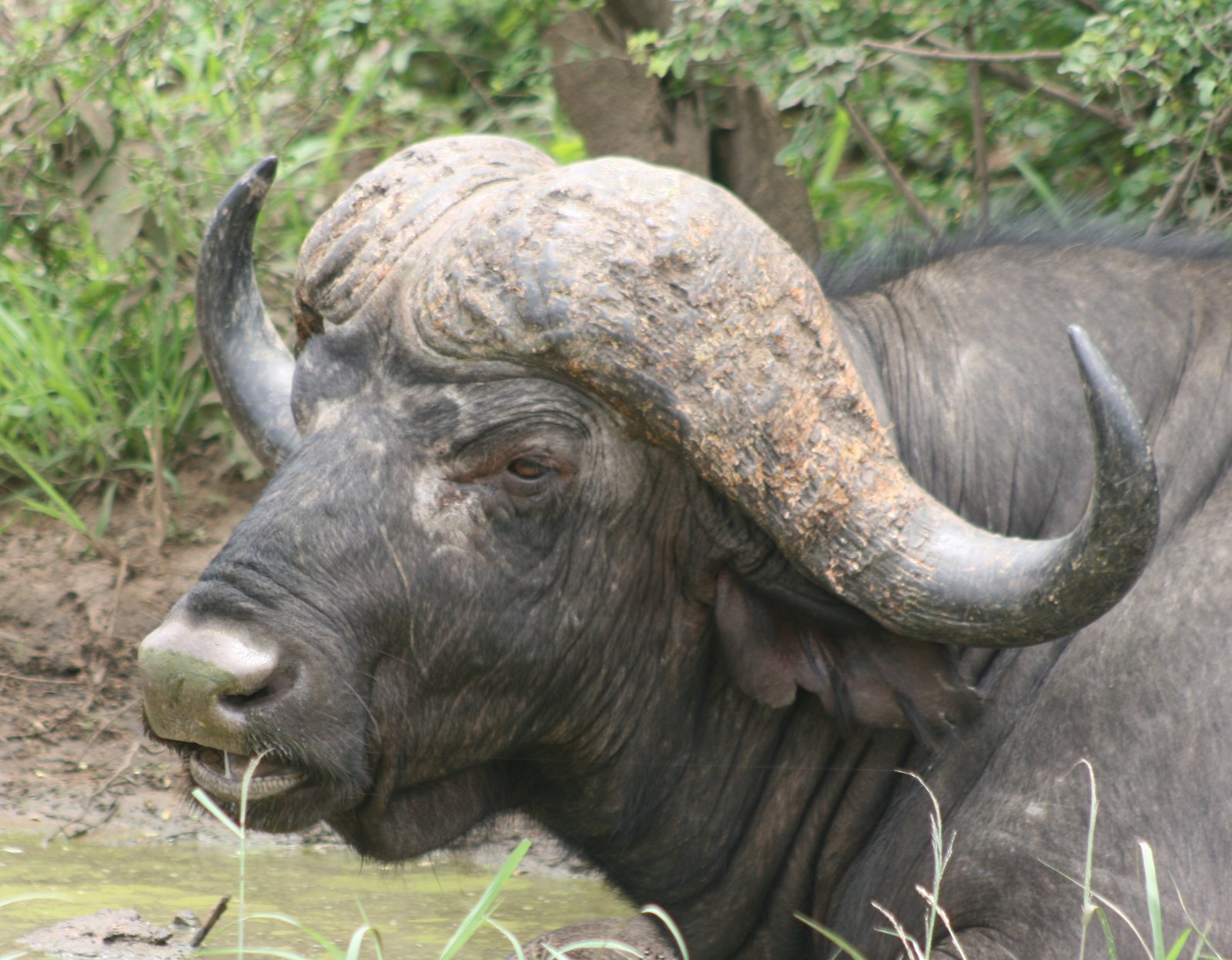
I found two Buffalo lying in a mud-puddle on the side of the road as well and they were clearly not keen to leave, even though I was parked right next to them, clicking away happily on my camera.
Ahhh ... bliss. A Redbilled Oxpecker gives a Buffalo a spa treatment.

Ahhh … bliss. A Redbilled Oxpecker gives a Buffalo a spa treatment.

Sadly, the rains came too late for many animals and, also on the S114 close to the Crocodile River, a Hippopotamus carcass was lying under a tree, in which one of those rather confusing African Fish Eagle juveniles was perched.

A juvenile Fish Eagle, whose hunting skills have not been fully honed, is quite likely to eat carrion, especially in a dry spell when their preferred food is scarce, but whether or not this individual had been gnawing on some Hippo, I have no way of knowing.

A Whitebacked Vulture was nearby in a tree, another portent of death.
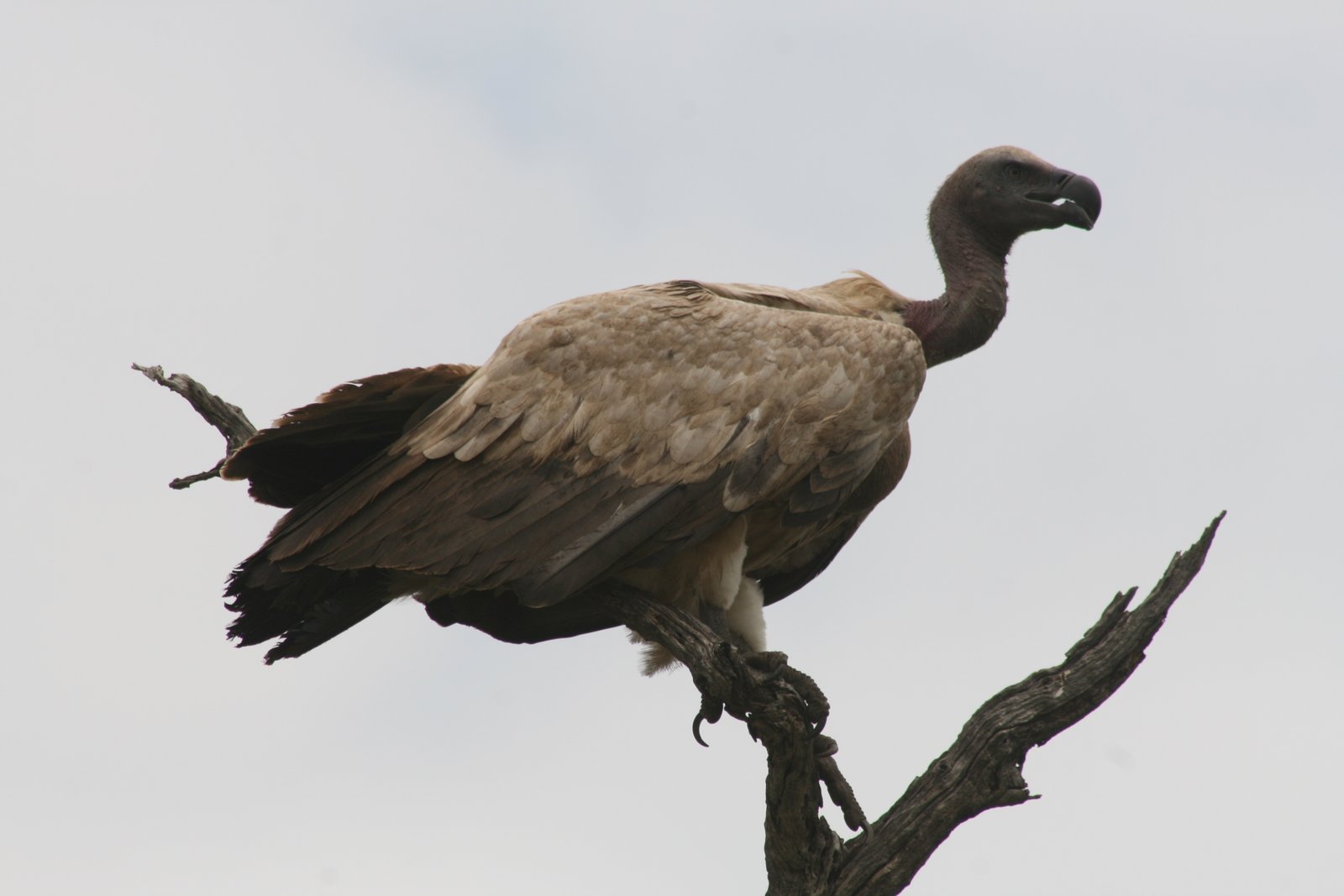
A Whitebacked Vulture with a hoof? in its mouth.

A Whitebacked Vulture with a hoof? in its mouth.

A Hamerkop flew over the H3 tar road as one approaches the bridge over the Crocodile River, in which there was still water, the river being classified as a perennial, with the usual array of birdlife along its course. A solitary African Openbill, a couple of Glossy Ibis, which are considered rare in Kruger Park, only erratic visitors, and Yellowbilled Stork were with all the other common waterbirds, along with Great White Egret and Water Dikkop.

The S110 road turns left from Malelane Gate and heads north-west towards the Berg-en-Dal camp, running between some of the highest hills in Kruger Park, the differences in altitude meaning a great diversity of plants, which attracts a host of birds.

Southern Whitecrowned Shrike were buzzing between the bushes and a few Monotonous Lark were calling in the valley below the slopes of Khandzalive Hill, which is the highest point in the park at 840 metres.

There were a couple of White Rhinoceros with calves, a very pleasing sight, and, close to Berg-en-Dal Dam, a Monotonous Lark was perched on some low branches and scrub and rather scratchily giving its for syrup is sweet call.


IMG_1999[1]

Monotonous Lark

Even the reptiles were out and about, with the impressive Blacklined Plated Lizard crossing the road.


Sightings list

Egyptian Goose

African Openbill

Sacred Ibis

Grey Heron

Cattle Egret

Yellowbilled Stork

Glossy Ibis

Southern Whitecrowned Shrike

African Elephant

Blackeyed Bulbul

Southern Black Flycatcher

Impala

Greater Kudu

Whitewinged Widow

Glossy Starling
African Buffalo

African Buffalo

Wiretailed Swallow

Monotonous Lark

African Buffalo

Redbilled Oxpecker

Forktailed Drongo

Lilacbreasted Roller

Cape Turtle Dove

White Rhinoceros

Little Swift

Brown Snake Eagle

Laughing Dove

Plains Zebra

Sabota Lark

Southern Yellowbilled Hornbill

Spotted Flycatcher

European Bee-Eater

Woodland Kingfisher

Blacklined Plated Lizard

Yellowfronted Canary

Arrowmarked Babbler

Blackcollared Barbet

Plumcoloured Starling

Redbilled Hornbill

Jacobin Cuckoo

Helmeted Guineafowl

African Hoopoe

African Wild Dog
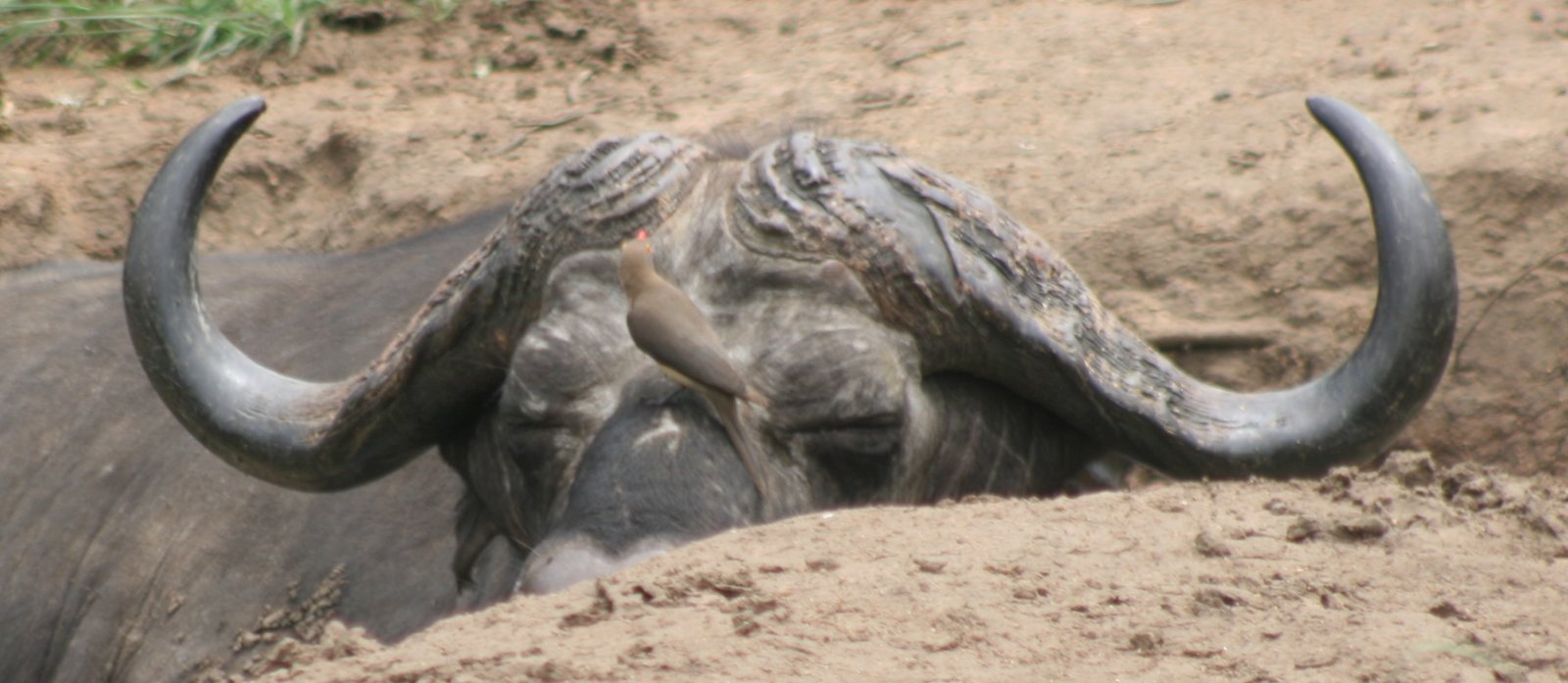
Redbilled Oxpecker on African Buffalo

Redbilled Oxpecker on African Buffalo

Grey Lourie

Longtailed Shrike

Whitebacked Vulture

Giraffe

Grey Hornbill

African Fish Eagle

Hamerkop

Slender Mongoose

Great White Egret

Hadeda Ibis

Blacksmith Plover

Pied Kingfisher

Whitebreasted Cormorant

Water Dikkop


Mark Boucher the coach 0

Posted on August 19, 2016 by Ken


Mark Boucher, the heartbeat of the South African team from the late 1990s to 2012, is hoping the experience and wisdom gained from all those years of playing and inspiring the changeroom will rub off on the new career of coach that he has chosen for himself, with the 39-year-old set to land the job as the new Titans mentor.

Boucher’s stellar career, in which he played 147 Tests and 295 ODIs and took the most dismissals in Test history, was ended on the 2012 tour of England when he suffered a serious eye injury after being hit by a bail in a warm-up game.

Since then Boucher has become a leading figure in rhino conservation and is with the Proteas squad in Durban at the moment, working as a consultant for the Test series against New Zealand. The Titans coaching job is the best-paid franchise post in the country and the Centurion-based team won two of the three domestic trophies on offer last season, so the famously nuggety cricketer has landed a high-profile role at the start of his coaching career.

‘I always said I would take five or six years off from the game and it’s been five years now so I’m ready to get involved again. I’m not sure where it’s going to take me, but I’ve always enjoyed imparting knowledge,” Boucher said this week when asked about his invitation to join the Proteas coaching staff.

“I’ve been through quite a few coaches and teams and cultures in my career, and also eras, I was part of the old Proteas team as well as the new. So the lessons I’ve learnt I’d be stupid not to use. I don’t really like the term ‘coach’, I’d like to be more of a man-manager. The game has changed and you see specialist coaches come in more these days,” Boucher said.

Although Boucher’s tenacity and competitiveness were his most famous attributes, he said he was also a student of the technical side of the game and would certainly bring that into his coaching.

“Even though people think of me more on the mental side, you pick up a few things behind the stumps, it provides a very good view. But I always used to sit behind the computer a lot too and look at opposing batsmen, I got a lot of knowledge that way, looking at head and hip positions because you’re trying to get these batsmen out.

“Being brought up in Border, where we didn’t have the best sides, you just had to make it work. Not every player in a team is going to have the technique of a Kallis or De Villiers, but that doesn’t mean he’s not a good player. You have to make do with what you’ve got, you can be technically sound but be lacking mentally, while someone like Graeme Smith didn’t have the greatest technique, but he had a very strong head,” Boucher pointed out.

Titans CEO Jacques Faul was unable to confirm Boucher’s appointment.

“The process has been completed and we have appointed a candidate that we feel can take the team forward and we will announce his name on Monday. Unfortunately we cannot speculate before that,” Faul said.

Experience will matter a great deal at Sun City 0

Posted on January 09, 2015 by Ken

Defending champion Thomas Bjorn says that as middle age nears for golfers, so thoughts begin of when their careers will end, but if the last half-dozen years at Sun City have shown anything, it’s that experience matters a great deal when it comes to winning the Nedbank Golf Challenge that starts today.

In that time, Henrik Stenson, Robert Allenby, Lee Westwood and Bjorn himself have all triumphed at Gary Player Country Club and the Dane said the confidence and self-belief he gained from last year’s win was a massive boost for his career.

“It was certainly a big boost for me, it gave me the belief that I could make another Ryder Cup team, that on really tough courses I can still compete with the best, the game is still there.

“I have a good eye for the course and hopefully I can put up a strong defence, but somebody will kick-start the 2015 year in a great way here,” the 43-year-old Bjorn said yesterday.

The previous two winners of the title, Kaymer and Westwood, are both in the elite 30-man field that tees off this morning at 10.10am and the Englishman is certainly in a confident mood.

“I’ve been lucky enough to win it a couple of times and it’s a great title to win. I’ve been coming here since 1997 and it’s a championship I’ve always held in very high regard and wanted to win. Ernie Els beat me in a play-off in 2000, and my worst finish is sixth in the nine times I’ve played here, so I seem to have played well. I’ve shot some low scores, such as the 62 in 2011 when I won. I was 17-under-par in 2010 when I also won. And I think Ernie and I were tied at 20-under when we played off in 2000.

“So my scoring average is pretty good round here and I’ve been looking forward to this week for a while. Hopefully I can play as well as I did a few years ago,” Westwood said.

There’s no doubt 2012 winner Kaymer would like to add to his collection of titles which includes two major crowns and 11 European Tour wins, while South Africans Charl Schwartzel, Louis Oosthuizen and Tim Clark are desperate to win on home soil in what amounts to their home major.

Ryder Cup star Jamie Donaldson, who finished tied second last year, is amongst the other contenders to watch, along with former world number one Luke Donald and the in-form Brooks Koepka and Joost Luiten.


  • Recent Posts

  • Archives

  • Thought of the Day

    People have a distorted understanding of values, but I believe:

    • Financial riches are not of greater importance than an honourable character;
    • It is better to give than to receive;
    • Helping someone for nothing brings its own rich reward.

    “The highest standards are those given to man by God. They are the old, proven values of love, honesty, unselfishness and purity … allow these God-given principles to govern your conscience.

    “As you live according to these divine standards, God’s best for you will outshine all the plans you can make for yourself.” – A Shelter From The Storm by Solly Ozrovech


↑ Top