for quality writing

Ken Borland


Archive for April, 2020


Only human to feel betrayal over Olivier 0

Posted on April 30, 2020 by Ken

In the wake of Duanne Olivier becoming the latest South African cricketer to drop the Kolpak bombshell, it would be only human for Cricket South Africa chief executive Thabang Moroe to be feeling betrayed and to be considering his options when it comes to ensuring that his organisation and the staff involved with the national teams don’t have to go through that pain again, never mind the considerable resources expended – and now wasted – on grooming a player to make a successful entry into international cricket.

Olivier was probably the good news story of the summer, getting a prolonged run in the national team thanks to injuries to Lungi Ngidi and then Vernon Philander, and his immediate success prompted the Proteas brainstrust to take drastic steps to keep him in the side: World-class spinner Keshav Maharaj was sidelined and they even went into some games a batsman short, further weakening an already struggling batting line-up, just to ensure their new-found Enforcer could keep charging in and taking wickets.

The falling-over-backwards continued at board level as Olivier was offered a two-year contract, something highly unusual. The fact that everyone else only received a one-year contract when the new deals were announced on Friday shows just how obliging they were trying to be to the 26-year-old Free State fast bowler.

And then it turns out that all the time he was talking about his Proteas achievements being a dream come true and how proud he was, all the time he was negotiating with CSA for a two-year contract, he had already decided to sign a lucrative Kolpak deal with Yorkshire.

South African cricket has been through this betrayal before of course, with Kyle Abbott and Rilee Rossouw jumping ship midway through the previous home series against Sri Lanka in January 2017. Abbott had spent the previous weeks gushing about how delighted he was to be finally getting a prolonged run for the Proteas while Rossouw, after CSA had spent huge amounts of medical bills on him and persisted with through one of the worst duck-laden starts to an international career, merely dumped his employees with barely a word spoken.

This is not a Kolpak move like Morne Morkel’s, who, after more than 10 years of service to South African cricket, decided his body could no longer take the grind of the international game and nobody bemoaned him giving his pension a well-earned boost in England.

Olivier is in his prime, has played just 10 Tests and two ODIs, and Ottis Gibson and Faf du Plessis have very much been making plans for the future around having him in the fast bowling pool.

Olivier is, of course, represented and managed by an agent, Weber van Wyk. Who just happens to be the same agent who organised the Kolpak deals for Abbott and Rossouw, hence the same scarcely ethical modus operandi that clearly cannot be termed ‘negotiating in good faith’. Van Wyk has earned a fortune exporting South African talent to England.

If you were the CEO of a multimillion rand company that spends millions on developing their key assets, only to see them up-and-leave as soon as they get promoted to a level that makes them attractive to others, what would you do? If the same person was behind three of your prize assets leaving, would you reconsider having any dealings with that agent or his clientele ever again?

When Olivier was called up to replace Abbott for the third Test against Sri Lanka in 2017, he told CricInfo: “I want to play as long as possible for my country. When I am playing, I don’t think about stuff off the field. I haven’t considered a Kolpak deal.”

Who would have thought he would follow Abbott so closely and so quickly, swelling his pockets but surely to the detriment of his standing in the game.

Sadly, we have seen this lack of patriotism stretch to rugby circles in Bloemfontein as well. Apart from the despicable shenanigans of Johan Goosen in retiring from the game for a year just to get out of a recently-extended mega-millions contract in France, so he could sign an even bigger contract with a rival club, a school like Grey College is not even pretending to support South African rugby anymore, having signed an exclusive deal with Goosen’s Montpellier club to feed players into their – and therefore France’s – pipeline.

Money can buy many things, but it will never be able to buy respect.
Future of SA cricket obviously gloomy – Dien 0

Posted on April 30, 2020 by Ken

South African cricket was obviously already in troubled financial waters before the Covid-19 pandemic struck, but outgoing Cape Cobras chief executive Nabeal Dien on Wednesday gave a gloomy forecast for the future of the game over the next couple of years in this country.

Dien is retiring after being at the helm of cricket in the Western Cape since February 2015 and he admitted to some relief that it won’t be his responsibility to negotiate one of the biggest franchises in the country through the coming turmoil as the game looks to recover from their governance scandals as well as simply just trying to get back on to the field again.

“It’s important not to lose sight of the fact that Cricket South Africa was already in dire straits and already talking about making cuts, and all that will obviously be exacerbated due to the virus. The game will have to reinvent itself with the money and resources we have left. It’s going to take a collective effort for us to survive and remain competitive.

“If not much has changed by June/July then we run the risk of not playing at all for the rest of this year, only starting cricket again in January next year. I’m sure that there will then be a flood of members and suite-holders wanting to withdraw. And it would be a huge challenge to play without spectators because it costs money just to host a game and that revenue has to be offset from ticket sales.

“At the moment, CSA just gives us hosting fees, which isn’t enough to cover costs, so we supplement that with our 40% share of ticket sales. To now also have to pay for thermometers, sanitisers, washing of the stadium, will require a rethink. I think this whole situation is going to take away a lot from what it means for us to go and watch cricket,” Dien said on a conference call from Cape Town on Wednesday.

Dien also said he supported a new playing structure in which the 12 provinces would be divided into two pools with promotion/relegation. That would mean teams like Border and Northern Cape, who come from historically economically depressed areas, trying to compete on the same playing field as franchises like the Cobras, Lions and Titans, who come from the major city centres. Dien said he nevertheless expected them to be competitive.

“I unashamedly support going to 12 teams but it’s important to have an A and B Section with promotion/relegation, for the four-day and one-day cricket. I think this has been accepted as the way forward, the Members Council have agreed in principle, but with Covid-19 we don’t know if there will be further changes. The Mzansi Super League will continue but will be different, with the six local franchises plus two new teams based in Free State and Border.

“There’s always this debate around transformation and playing opportunities and having 12 teams will resolve that. It’s up to the affiliates to be competitive and there should be better rewards for the top six. Players will also gravitate towards the top six and the people who run the bottom six teams must do their work, especially in terms of younger players, they will need a vibrant academy system,” Dien said.

CSA announced at the end of March that the six franchises would still compete in 2020/21, playing in two groups, with four home-and-away matches in their own pool and three cross-pool matches, before a final between the two group winners.

Moreeng’s reputation intact but will he stay national women’s coach? 0

Posted on April 24, 2020 by Ken

Hilton Moreeng has completed his second term as national women’s coach with his reputation intact but whether he continues in charge of the Proteas or not will depend on how new Director of Cricket Graeme Smith sees the long-term future of the team. And captain Dane van Niekerk said on Thursday that she has full faith in Smith’s judgement, even if she may not entirely agree with his viewpoint that the women’s game requires specialist input.

Moreeng, who first became South Africa coach in December 2012, has led the team to the semi-finals of both of the most recent T20 and 50-over World Cups, in both cases losing narrowly to the eventual champions, Australia and England respectively. They have also already automatically qualified for the next 50-over World Cup, in New Zealand early next year, after the points from their postponed series with Australia were shared.

Smith said last week that the post of national women’s coach has been advertised and that he saw it as being “different to the men’s game so we need to improve the pipeline to the national side, as we grow, getting more players who have played for that national team”. The 42-year-old Moreeng is believed to have re-applied for the post.

Van Niekerk said, however, in a teleconference on Thursday that she did not believe in treating the men’s and women’s games differently.

“Graeme came to Australia to meet with me and Mignon du Preez during the ICC World T20, to see where the team was at and where we wanted to go. He’s certainly passionate about the game and we are excited to work with him. It’s more CSA’s job to decide on the coach and we will respect their decision, either to keep Hilton or to make a change. Our relationship with CSA is good enough that we can talk about anything.

“But I believe cricket is cricket, the principles stay the same, although in the women’s team you have to deal with different personalities and hormones, of course, while the men tend to be more cool, calm and collected. But I’m a big believer that looking at the men’s and women’s games differently is not the way to go forward, I would like to change that stigma because we train just as hard as the men,” Van Niekerk said.

The Covid-19 pandemic not only caused the series with Australia to be called off but it is playing havoc with South Africa’s planning leading into the World Cup starting on February 6. A tour of the West Indies scheduled for the end of May is almost certainly not going to go ahead, while the tour to England in August/September is also under threat.

“Hopefully we get back on the park sooner rather than later and the next World Cup is very important for us and our sole focus at the moment. We have unbelievable talent and I wouldn’t be captain if I didn’t believe we could win a World Cup, we’ve been very close twice and we just need to stay patient.

“But Covid-19 has affected the momentum we created at the last World Cup, which was so successful for women’s cricket in general, it would have been nice to continue that hype, especially since it was going to be us against the world champions a couple of weeks later. But we have the World Cup next year to create that hype again and I think there are a lot of special things still waiting for this team,” Van Niekerk said.

False Bay Coastal Park 0

Posted on April 20, 2020 by Ken

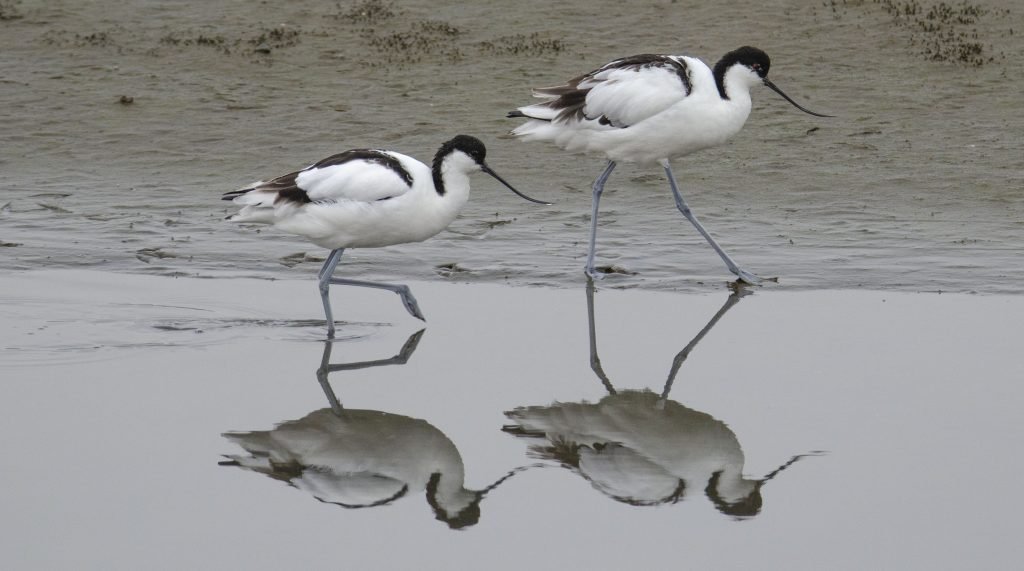
Pied Avocets – Photo by Gwen Stokes

The False Bay Coastal Park, in particular the Strandfontein Sewage Works, is a waterbird mecca and it provides just the right sort of habitat for one of my favourite birds – the Pied Avocet.

Having spent most of my life in KwaZulu-Natal and done most of my birding in lowveld areas, the Pied Avocet is not a run-of-the-mill sighting for me. As the name ‘Pied’ makes clear, this wader features just two colours – black and white – and yet the combination of them is so perfect, so crisply elegant and pleasing to the eye.

Added to this is the sight of their unusual bill – long, thin and upcurved – and their stately comportment, walking slowly through shallow water while swiping right … and left … with their scything bill to capture small crustaceans and insect larvae, which just makes them thoroughly interesting and pleasant to watch.

They have become particularly fond of artificial water bodies, especially saline or nutrient-rich ones. So sewage works have been a particular boon for this species.

And the Strandfontein Sewage Works, which are the central feature of the False Bay Coastal Park, situated between Muizenberg and Mitchell’s Plain, occasionally holds globally significant numbers of Pied Avocet – at times as many as 1% (550) of the African population, thereby qualifying as an Important Bird Area trigger species.

On this visit, on a lovely sunny evening in late March with a fresh breeze blowing, there were discrete handfuls of this nomad on the settling ponds.

With them were Blackwinged Stilts, also a member of the long-legged, long-billed Recurvirostridae family.

There are 20 different pans at Strandfontein, linked by a system of tracks which a normal sedan car can comfortably navigate, except sometimes for those next to Baden Powell Drive which runs right alongside False Bay and the ocean.

The pans have differing water-levels, some of them manually manipulated, which means they provide subtly different habitats – from reedbeds to large expanses of open water, both shallow and deep – and their different features range from artificial roosting platforms to well-vegetated edges, coastal dunes and sand islands.

This promotes a high diversity of species which is why 76 different waterbird and 18 coastal birds have been recorded at Strandfontein. And they are there in their numbers, making it a popular destination for large numbers of birders from all over the country. And every now and then a national rarity pops up; it really does feel like anything is possible on or above the pans or in the Cape Flats Dune Strandveld surrounding them.

My sightings at the end of summer were more mundane, but still enough to whet the appetite for future visits.

The near-endemic, plankton-loving Cape Shoveller can be uncommon elsewhere in South Africa, but is common in the sea-level freshwater wetlands around False Bay, and it was joined by other Anatids in Yellowbilled Duck, Cape Teal and Spurwinged Goose, while Kelp Gulls were common, flying over the coastal dunes and nearby dump site.

Lots of Hadeda and Sacred Ibis were along the fringes of the pans, along with Cattle Egret, Blacksmith Plover, Cape Wagtail and Grey Heron. Redknobbed Coots quietly munched on water weeds, Dabchicks appeared and then disappeared again as they dived underwater, and Whitebreasted Cormorants were standing around drying themselves before contemplating heading off to roost.

Cape Reed Warblers gave their rich, bubbly calls from inside the reedbeds, before one eventually came into view at the top of the stalks. European Swallows owned the skies above the pans.

The grassy areas where one enters the False Bay Coastal Park are also good for birding. A Jackal Buzzard was standing sentry at the entrance before patrolling for rodents in the verges of the tar road.

The road goes along the eastern end of Zeekoevlei, and has picnic sites underneath a row of Eucalyptus trees; a Pied Crow was flying around looking for scraps and even a Small Grey Mongoose came dashing from cover to see what morsels it could find.

The bushier areas mark the beginning of the Cape Flats Dune Strandveld, an endangered vegetation type unique to this area. It is prime habitat for the Cape Grassbird, an endemic skulker that is not often seen despite its long tail, but on this occasion I was sharp enough to be fortunate.

Karoo Prinia is another endemic and a habitat generalist as long as it has some shrubby thickets to dive into when disturbed, and it was spotted on one of the dune ridges close to the Grassbird.

A Blackshouldered Kite perched nearby and kept a beady red eye on proceedings.

Birders are well-advised to watch like a hawk in the False Bay Coastal Park because one will seldom be disappointed given the number of species that frequent this area. And there is always the possibility of spotting a rarity. That’s what I’ll be hoping for next time I’m there.

Sightings List

Jackal Buzzard

Small Grey Mongoose

Spurwinged Goose

Kelp Gull

Blackshouldered Kite

Cape Grassbird

Hadeda Ibis

Karoo Prinia

Pied Crow

Cattle Egret

Blacksmith Plover

Cape Teal

Yellowbilled Duck

Dabchick

Cape Shoveller

Pied Avocet – Photo by Gwen Stokes

Sacred Ibis

European Swallow

Cape Wagtail

Whitebreasted Cormorant

Grey Heron

Pied Avocet

Blackwinged Stilt

Cape Reed Warbler

Redknobbed Coot

  • Recent Posts

  • Archives

  • Thought of the Day

    Revelation 3:15 – “I know your deeds, that you are neither cold nor hot. I wish you were either one or the other.”

    How can you expect blessings without obeying?

    How can you expect the presence of God without spending time quietly before him?

    Be sincere in your commitment to Him; be willing to sacrifice time so that you can grow spiritually; be disciplined in prayer and Bible study; worship God in spirit and truth.

    Have you totally surrendered to God? Have you cheerfully given him everything you are and everything you have?

    If you love Christ, accept the challenges of that love: Placing Christ in the centre of your life means complete surrender to Him.


↑ Top