for quality writing

Ken Borland


Archive for the ‘Uncategorized’


Mapungubwe National Park 0

Posted on June 16, 2015 by Ken

2015-01-25 18.49.22

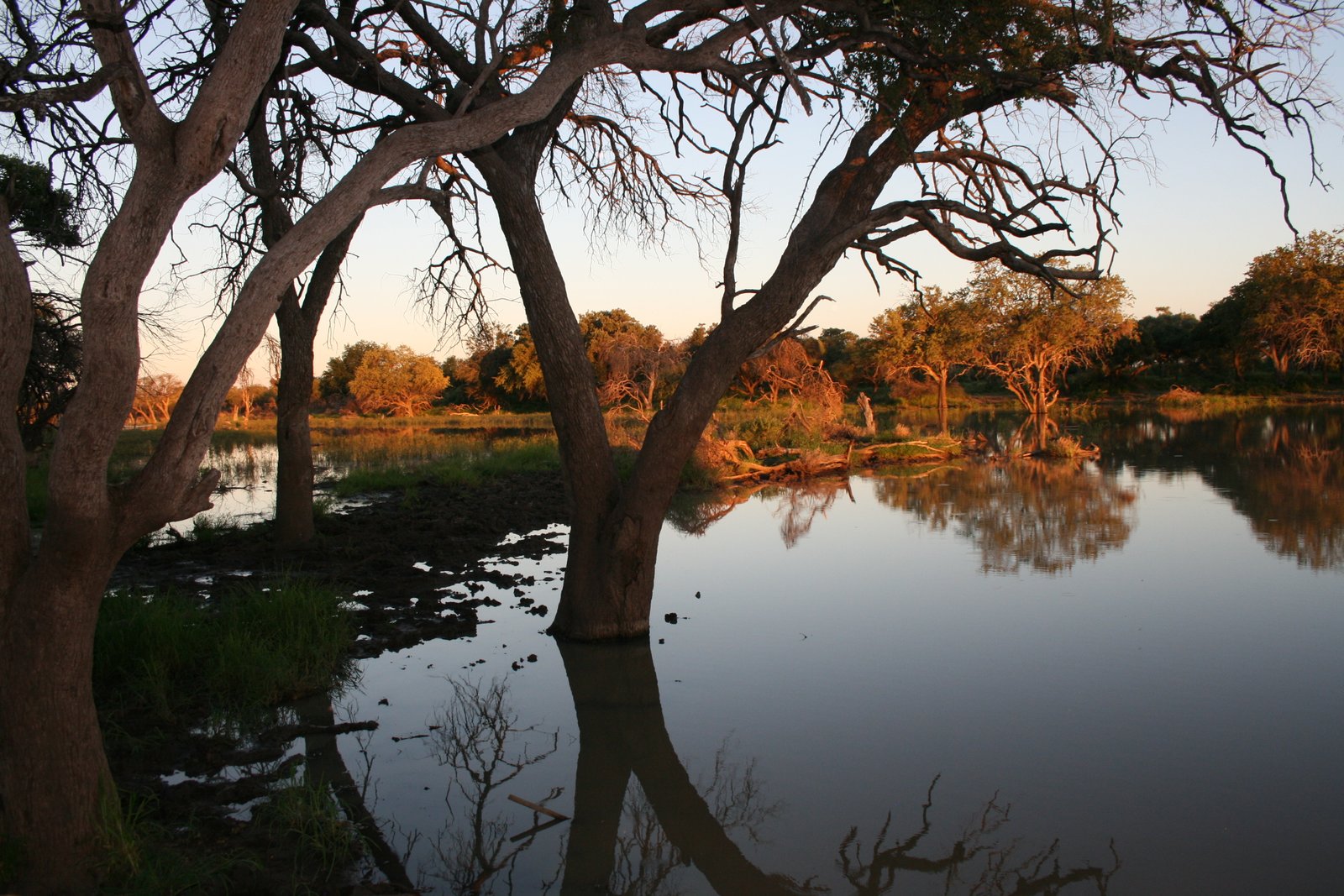
Maloutswa Pan in the late afternoon light, as seen from the hide

Mapungubwe National Park is renowned for its hostile rocky terrain and hardy baobabs, but at 6.25pm on January 25, the sun is setting and casting its rays over a tropical wetland, reflecting off the water and illuminating the drowned Fever Trees in a magical light.

Through this idyllic setting, two small waterfowl come cruising towards the Maloutswa Pan Hide, easing their way through the vegetation on the water’s surface.

Soon the distinctive small white faces, chestnut breasts and dark green upperparts of the Pygmy Goose became clear – a Lifer and just as I had imagined seeing the most beautiful and exotic of our ducks, and a rather scarce tropical visitor at that.

The illustrations of them in the bird guides have always enthralled me with their beautiful colours, and in real life the Pygmy Goose is even cuter with their bright yellow beaks, drifting serenely through the water lilies.

Maloutswa Pan is a superb spot for birding and typical birds seen are Giant and Pied kingfishers, Threebanded Plover, African Pied Wagtail, Blackwinged Stilt, Diederik Cuckoo, Swainson’s Francolin, Whitefaced Duck, Redbilled Buffalo Weaver, Greenbacked Heron, Egyptian Goose, Wood Sandpiper, African Jacana, Sacred Ibis and Blacksmith Plover.

Numerous other species come and go and on this occasion, a Lanner Falcon was flying along the pan and Abdim’s Stork also flew past, while African Mourning Dove were in one of the dead trees. A male was approaching a female all bowing and cooing and currowling … only for the female to simply fly off! Ah, the perils of courtship.

A large herd of Elephant were making their daily late-afternoon trek from Maloutswa towards the Limpopo River, while a Greybacked Camaroptera was chirping away in an Umbrella Thorn at the hide. The Hadeda Ibis which had loudly announced my arrival had begun to settle down.

Mapungubwe NP is divided into eastern and western sections and Maloutswa is in the western portion, on the Limpopo River floodplain. There is another interesting body of water in the eastern section, a little dam close to the park’s main entrance, and there, along with a Common Sandpiper, was a Common Moorhen.

At first I thought it was a family of Common Moorhen because there were smaller ones with it … Closer inspection, however, revealed a mostly yellow bill, rather than red, and I had a second Lifer, the Lesser Moorhen! Again, it was a fantastic sighting, with the Common Moorhen alongside for comparison.

The brilliant waterbirding in this otherwise dry, hostile environment doesn’t stop there. Between the western and eastern portions of the park lie the Den Staat Wetlands, situated on a private farm but apparently now open to people staying in the park.

The large retention dams with varying levels of water are packed with birds and my late afternoon visit provided African Spoonbill, Ruff, Marsh Sandpiper, African Darter and Fulvous Duck on the water, while the rank vegetation around the dams had Yellowcrowned Bishop just chizzling away, Bluecheeked Bee-Eater, a prowling Burchell’s Coucal, Blackshouldered Kite and Steppe Buzzard.

My visit to Mapungubwe coincided with the place going to seed. But in a good way as the grass had grown to over a metre high in some places, higher than the 4×4’s bonnet and laden with seed.

It soon became apparent that there were quails in there but, as they would fly out for one or two seconds and then disappear into the grass again, identifying them was a near-impossible task. Even in short grass, I would mark the spot where one landed, walk there and find nothing! My best guess, based on the white spots on dark brown I saw when I had a brief glance, was Harlequin Quail.

The frustration of the quails notwithstanding, driving through the Acacia woodland with its lush understorey was extremely rewarding. Wattled Starling were busy and conspicuous, as a Kori Bustard marched sternly through the veld. Less obvious were the Lesser Masked Weaver unobtrusively working its way through the canopy of trees and a Eurasian Golden Oriole silently moving through the same area.

A Booted Eagle came flying out of the woodland, with its distinctive chevron on a dark rump, while Redbilled Helmetshrike, European Cuckoo, Melba Finch, Southern Pied Babbler and Purple Roller were also delightful sightings. A Rattling Cisticola was high up on top of one of the Acacias.

The more open country also held some large flocks of Redbilled Quelea, such a common bird but the breeding males are still so beautiful with their bright pink facial wash and black mask. White Stork and Tawny Eagle were soaring overhead and Whitecrowned Shrike, Common Scimitarbill, Namaqua Dove and Longtailed Starling were also present.

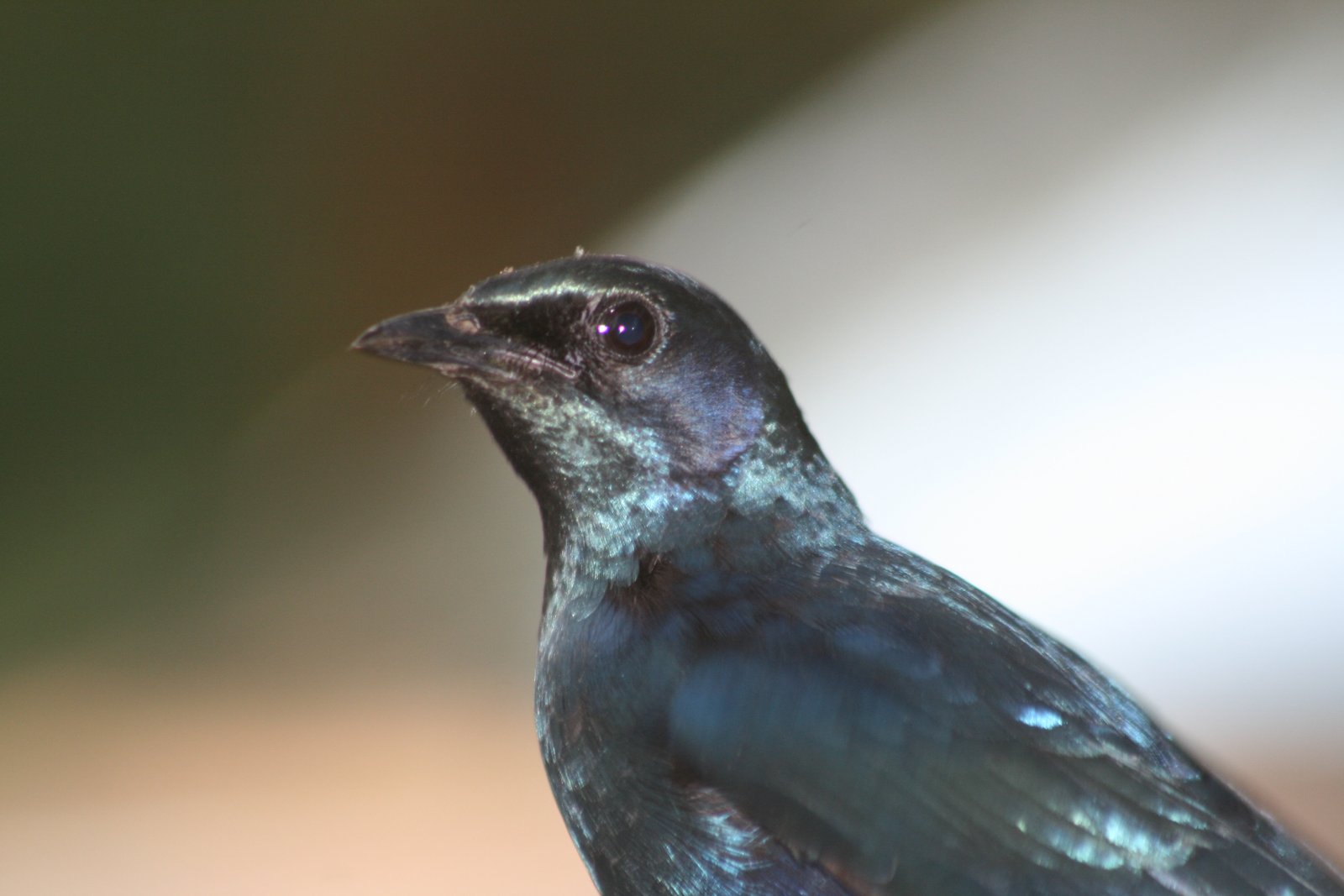
Longtailed Starling

Longtailed Starling

As the sun was setting, a pair of African Hawk Eagle were sitting on a fence (used to keep Elephant out of a regenerating area of woodland), with one descending into the grass next to a big herd of Impala. Ground Hornbill were nearby too.

The Mapungubwe campsite is in the western section and one of the best I have ever had the pleasure of staying in. Mazhou is situated in the dense riverine forest of the Limpopo floodplain and birding is excellent, while various animals also pass through at close quarters.

A pair of Woodland Kingfisher were nesting in a tree at my particular site, with a pair of Crested Barbet in the same tree, in a hole higher up. But they were flying to and from an adjacent tree, so perhaps they had two nests in close proximity, or maybe their trips to the other tree were to divert attention away from their nest?

The delightful White Helmetshrike were visitors to my campsite, one of them struggling to swallow a large caterpillar, while a female Whitebellied Sunbird easily dispatched a spider it caught high in the canopy. A Bearded Woodpecker was also chattering away and easily seen from my chair as was a European Marsh Warbler on my final morning.

When night had just fallen, a Barred Owl flew into a tree above my ‘lounge’; then I heard a ‘chit chit chit’ and the adorable Lesser Bushbaby passed through, leaping acrobatically from tree-to-tree.

From camp it is a short drive to the Limpopo River banks and its huge riverine trees, with Grey Hornbill, Yellowbellied Bulbul and Speckled Mousebird all enjoying the fruiting figs. A Yellowbilled Stork and Bateleur were soaring overhead, while a Nile Monitor pretended to be a log on the side of the road.

Soon the distinctive calls of the African Fish Eagle were heard from overhead, the archetypal riverine raptor also soaring as the temperature reached 36°, the sort of heat that encouraged a Steenbok to go lie under a bush.

For real heat, however, exploring the eastern section, hot, dry and rugged Baobab country with jagged sandstone buttresses, will get you sweating.

Klipspringer, standing motionless like statues, adorn the weathered rocks, while it was so hot (39°) that a Giraffe was lying down under a Baobab chewing on his lunch with his buddy the Blue Wildebeest. It was a very peaceful scene until a biting fly seemingly jabbed the Wildebeest, leading to a typically comical reaction as the Gnu went tearing off in the direction of Zimbabwe.

The Giraffe and the Wildebeest were a slightly odd couple, but there were more regular pairs around like the Black Eagles soaring over a koppie and, at a pan deep in the Mopane in the Kanniedood area, Redheaded Finch amongst a host of queleas. Redbilled Teal were on the water and the surrounding area also held Longtailed Paradise Whydah, Cut-Throat Finch, European Roller and Pale Chanting Goshawk.

Other interesting birds on the “dry” side of Mapungubwe are Monotonous, Sabota and Flappet Larks and Black Kite.

The eastern portion of Mapungubwe also has frontage on to the Limpopo River, with a brilliant treetop boardwalk providing Meyer’s Parrot, given away by its screeching calls before it flew into a tree cavity, meaning it was probably nesting given the time of day. A Marabou Stork was also circling overhead, while beautiful bushveld birds such as the Broadbilled Roller, Brubru, Plumcoloured Starling and Goliath Heron are also present.

Other birds seen in the rich gallery forest were Jacobin Cuckoo, Tropical Boubou and Steelblue Widowfinch.

STAKE-OUT ... An Amur Falcon on the lookout for prey next to a citrus farm.

STAKE-OUT … An Amur Falcon on the lookout for prey next to a citrus farm.

Even the farm roads around Mapungubwe are great for birding with Chestnutbacked Sparrowlark, Whitebrowed Sparrow Weaver, Amur Falcon and African Cuckoo on the dirt road through the agricultural lands and Pearlbreasted Swallow in amongst the European Swallows and Carmine Bee-Eaters all over the telephone wires. Blackchested Snake Eagle also often uses these perches.


Sightings list

Laughing Dove

Whitecrowned Shrike

Natal Francolin

Longtailed Starling

Woodland Kingfisher

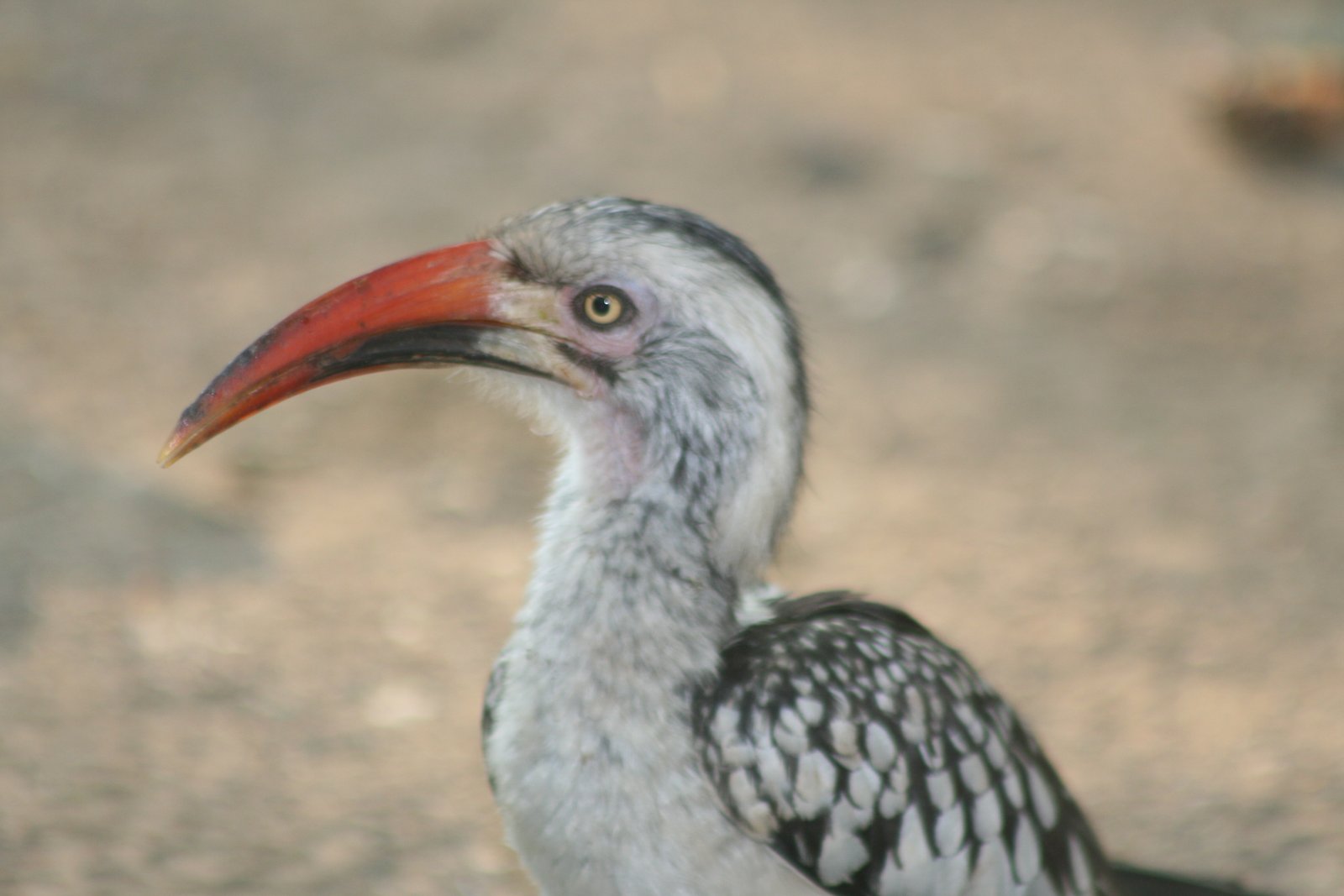
Redbilled Hornbill

Redbilled Hornbill

Redbilled Hornbill

Vervet Monkey

Crested Barbet

Redeyed Dove

Tree Squirrel

Whitebacked Vulture

Spotted Flycatcher

Forktailed Drongo

Tawny Eagle

Redbilled Quelea

Whitefronted Bee-Eater

Blue Waxbill

Redbacked Shrike

Southern Greyheaded Sparrow

Common Scimitarbill

Namaqua Dove

Blue Wildebeest

Impala

Waterbuck

Plains Zebra

Redbilled Oxpecker

Warthog

Lilacbreasted Roller

Emeraldspotted Wood Dove

White Helmetshrike

Bushbuck

Whitebellied Sunbird

Cape Turtle Dove

Cape Turtle Dove

Cape Turtle Dove

Bearded Woodpecker

European Swallow

Carmine Bee-Eater

Boulenger’s Garter Snake

Chacma Baboon

Southern Masked Weaver

Redbilled Helmetshrike

Crowned Plover

Elephant

Cattle Egret

Rattling Cisticola

Greybacked Camaroptera

Hadeda Ibis

Whitefaced Duck

African Mourning Dove

Redbilled Buffalo Weaver

Greenbacked Heron

Egyptian Goose

Wood Sandpiper

African Jacana

Nile Crocodile

Abdim’s Stork

Sacred Ibis

Blacksmith Plover

African Hawk Eagle

Ground Hornbill

Barred Owl

Jameson’s Firefinch

Whitebrowed Scrub Robin

Jacobin Cuckoo

Grey Hornbill

Yellowbellied Bulbul

Speckled Mousebird

Tropical Boubou

Blackeyed Bulbul

Cardinal Woodpecker

Steelblue Widowfinch

Blackbacked Puffback

Whitewinged Widow

Southern Yellowbilled Hornbill

Yellowbilled Stork

Nile Monitor

Bateleur

Grey Heron

Redbilled Woodhoopoe

Dabchick

Hamerkop

African Fish Eagle

Wattled Starling

Steenbok

Kori Bustard

Slender Mongoose

Longbilled Crombec

Lesser Masked Weaver

Eurasian Golden Oriole

Banded Mongoose

Harlequin Quail

White Stork

Booted Eagle

European Cuckoo

Melba Finch

Purple Roller

Fantailed Cisticola

Lanner Falcon

Giant Kingfisher

Pied Kingfisher

Threebanded Plover

African Pied Wagtail

Blackwinged Stilt

Diederik Cuckoo

Pygmy Goose

Swainson’s Francolin

Lesser Bushbaby

Whitebrowed Sparrow Weaver

Chestnutbacked Sparrowlark

Amur Falcon

Pearlbreasted Swallow

African Cuckoo

Yellowthroated Sparrow

Monotonous Lark

Sabota Lark

Marsh Terrapin

Klipspringer

Cinnamonbreasted Rock Bunting

Rock Dassie

Tawnyflanked Prinia

Broadbilled Roller

Meyer’s Parrot

Southern Black Flycatcher

Brubru

Plumcoloured Starling

Wiretailed Swallow

Goliath Heron

Marabou Stork

Redwinged Starling

Flappet Lark

Giraffe

Black Eagle

Black Kite

Gemsbok

Redheaded Finch

Redbilled Teal

Longtailed Paradise Whydah

Cut-Throat Finch

European Roller

Goldenbreasted Bunting

Pale Chanting Goshawk

Helmeted Guineafowl

Common Moorhen

Lesser Moorhen

Common Sandpiper

Grey Lourie

Blackchested Snake Eagle

African Spoonbill

Ruff

Marsh Sandpiper

African Darter

Fulvous Duck

Yellowcrowned Bishop

Bluecheeked Bee-Eater

Burchell’s Coucal

Blackshouldered Kite

Steppe Buzzard

Southern Pied Babbler

European Marsh Warbler


SACA MVP top-ranking will keep Van der Merwe warm through winter 0

Posted on May 18, 2015 by Ken

The winter break is often a good time to consider the talent that is coming through at franchise level, who the players to follow are as they bid for national recognition, and the South African Cricketers’ Association’s MVP Rankings are perhaps the most accurate measure of just who the most valuable stars are just one step below the Proteas.

The franchises play in three very different formats these days, of course, so comparing players can sometimes be a confusing, almost impossible task.

But this is where the Saca MVP rankings are so good: They take into account the four-day Sunfoil Series, the 50-over Momentum One-Day Cup and the RamSlam T20 Challenge. And the points are awarded based on a complex calculation that takes into account far more than just the number of runs scored or wickets taken.

The Saca MVP rankings are weighted so that those performances that really matter in terms of influencing the result of a game earn more points.

“What sets our rankings aside from other rankings or stats is that the MVP rankings take both the stats and the match context into account. For instance, a batsman scoring 100 not out in a total of 634 for three declared is going to earn way fewer points than one who scores 100 out of 150.

“Similarly, a bowler who gets the top-order out will earn more points than someone who gets nine, 10 and jack out.

“There are also different weightings depending on the format. For instance, economy rate and strike rate are more important in T20 cricket. Plus there are more points on offer if your team wins and for the captain of winning teams.

“It’s all about who performs in clutch situations, who pulls the team through and is also a consistent performer,” JP van Wyk, Saca’s player services manager, told the Daily Maverick.

And the 2012/13 rankings tell us that Titans all-rounder Roelof van der Merwe, famed for his tenacity in just those sort of pressure situations, was the most valuable player of last season.

The mere statistics inform us that Van der Merwe scored 515 runs in the Sunfoil Series, the most for the beleaguered Titans, with five half-centuries and he took 12 wickets. The left-arm spinner has always been a top-class performer in the limited-overs formats and 58% percent of his 473.47 points came from the 50 and 20-over competitions.

Van der Merwe was the leading spinner in the One-Day Cup, taking 22 wickets at an average of 19.95 and economy rate of just 4.69, taking five wickets in an innings twice. In the T20 Challenge, he took nine wickets at a good economy rate of 7.09 and his 208 runs were the second-most for the Titans, at a handy average of 23.11 and a strike rate of 107.

The 28-year-old is hardly a promising youngster though, but rather a renowned competitor who revels in the nickname “Bulldog”.

Instead of trying to break into international cricket, Van der Merwe is trying to get back there. The Waterkloof product has played in 13 ODIs and 13 T20 internationals, but has not represented South Africa since June 2010 in the West Indies. He was outstanding in his last game, taking one for 27 in 10 overs and then scoring 10 not out off seven balls to clinch a thrilling one-wicket victory in Port-of-Spain, but was then strangely dropped.

“I don’t think anything went wrong, it was more a case of different combinations being used and different times. Over time we’ll see if those combinations work out… ” Van der Merwe says phlegmatically from Delhi, where he is playing for the Daredevils in the IPL. “You never know in terms of a comeback in international cricket, but I’m not too worried about it. If I perform well, then it has to happen.”

Van der Merwe has been included in South Africa’s preliminary 30-man squad for the Champions Trophy in England in June and it must be a good omen that some of the strongest early challengers for the MVP crown – Kyle Abbott, Rory Kleinveldt, Dean Elgar and Quinton de Kock – all found themselves in the national team before the end of the summer.

Leg-spinner Imran Tahir and fellow orthodox left-armers Robin Peterson and Aaron Phangiso are the other spinners in the squad, but it counts in Van der Merwe’s favour that he is cosy bowling both up front with the new ball and at the death.

“At the death you’re on a hiding to nothing, but it’s all about your attitude. I want to do that job and that helps a lot. I don’t see myself as the most talented cricketer, so I’ve got to have aggression, that Bulldog spirit if you like,” Van der Merwe says.

That same determination has also seen Van der Merwe break out of his pigeonhole as a limited-overs specialist. Having scarcely been used by the Titans in four-day cricket, sitting behind the likes of Paul Harris, Imran Tahir and Shaun von Berg in the queue, he could have fobbed off the longer version of the game, especially since his financial future is secure with his involvement in the IPL.

But the Johannesburg-born fighter played every Sunfoil Series game this season for the Titans (wicketkeeper/batsman Heino Kuhn was the only other player to do so).

“My game has developed the last few years and I’m playing four-day cricket again after a lot of hard work. In the past, the Titans had great longer-form bowlers and I didn’t get much opportunity. But I was told I have to work on my batting if I want to take my career further and being able to bat as well definitely helps.

“Bowling in the longer form also helps my limited-overs bowling. In four-day cricket, there’s a lot more skill involved, you need more pace and variations and that’s what I’m also working on in India,” Van der Merwe says.

Van der Merwe held off a strong challenge from Warriors paceman Andrew Birch (450.89pts) for the MVP title, while De Kock, Hardus Viljoen and Abbott also scored more than 400 points.

The country’s leading players struggle to crack the top 100 because they are off on international duty so often.

The MVP award also comes with the sizeable cash prize of R110,000 for Van der Merwe, with Birch and De Kock winning the runners-up cheques of R66 000 and R50 000 respectively.

The top players in each competition were also the recipients of cash incentives, with Abbott, Johann Louw and Birch being the top three in the Sunfoil Series; Van der Merwe, Richard Levi and Birch dominating the One-Day Cup; and De Kock, Albie Morkel and Sohail Tanvir the pacesetters in the T20 Challenge.

http://www.dailymaverick.co.za/article/2013-04-25-coming-up-through-the-rankings-roelof-vd-merwe/#.VVsjOPmqqko

All agree Glendower will be stern SA Open test 0

Posted on March 09, 2015 by Ken

The leading contenders used various terms to describe the rough at Glendower Golf Club, but one thing they all agreed on was that this year’s South African Open starting on Thursday in Edenvale will be a stern test.

Anything offline and away from the fairway will be punished, with chipping out of the rough often the only option.

Ernie Els, recently announced as the tournament’s ambassador and searching for his sixth SA Open title, is pleased that the Glendower set-up is tough.

“If you stray just off the fairway, you can really get a very tough lie. I hit one at 18 yesterday where I was a metre off the fairway and I could only advance it maybe 100 yards. But it’s what Opens are all about it, isn’t it? I think for a tournament of this stature it needs to be tough.

“Kikuyu is obviously a very thickly-laid grass and they’ve obviously let it go when there’s been a lot of rain, so it’s as thick and as tough as I’ve ever seen rough. But we want to find the best player this week and that’s what we’re going to get. You’re not going to get a guy who’s hitting it offline and getting lucky lies in the rough winning. You’re going to have to play proper golf and that’s what I think a national Open should be like,” Els said on Wednesday.

Charl Schwartzel thought the rough should have been even longer, while Branden Grace hoped it would be cut a bit, and George Coetzee described the course as “a real challenge”.

“If you miss a fairway, there is an 80% chance that you’ll have to chip out and I hit an eight-iron about 15 yards on one hole,” the Joburg Open champion said.

The greens, however, are soft and receptive, so conditions will favour the most accurate golfer rather than the most powerful.

“If there’s no rough then it’s usually a big hitter that wins, but this week is about hitting fairways and greens, which changes things a bit,” Danie van Tonder, the leader of the Sunshine Tour Order of Merit, said. “I won’t be stupid and hit driver everywhere. I’ll take three-wood or four-iron and lay-up before going for the green. To the pins I’ll be aggressive, but not on the tee shots.”

That doesn’t suit a guy like Coetzee, who likes to bomb it off the tee, but the 28-year-old said he will apply himself and look to adapt.

“I prefer tricky greens to tricky rough, but you’ve got to make your game suit the course. Hopefully I’ll hit it straight and make a few putts. You’ve got to hit a lot of fairways, because I don’t think the best putter will win it this week,” Coetzee said.

What is certain is that the leading South Africans – Schwartzel, Els, Coetzee, Grace, Richard Sterne and Hennie Otto – are all extremely hungry to claim their national Open and return the imposing trophy to home soil for the first time since Otto’s triumph in 2011.

Victory would be especially sweet for Ekurhuleni products like Els, Otto, Van Tonder and J’be Kruger.

“It’s wonderful to be back at the SA Open, especially here at Glendower in Ekurhuleni, the city where I’m from,” Els said. “I’ve played a lot of golf at Glendower, I grew up 12km from here and we’ve got a great venue this week. I feel very motivated to win as many as I can before I’m done,” the 45-year-old said.


Still a great divide between Grace & the chasing pack at Leopard Creek 0

Posted on February 11, 2015 by Ken

Branden Grace ensured that there was still a great divide between him and the chasing pack as his 66 in the second round of the Alfred Dunhill Championship at Leopard Creek left him with a five-stroke lead on Friday.

Even though experienced Francesco Molinari, one of the most consistent golfers on the European Tour, climbed rapidly up the leaderboard with a superb seven-under-par 65, Grace built on his phenomenal opening-day 62 and ended the second round on 16-under-par, with the Italian second on 11-under.

Molinari ensured that there is at least still a window of opportunity for Grace to be challenged over the weekend, with Tjaart van der Walt (-10), Shaun Norris, Danny Willett and Lucas Bjerregaard (all on -9) also not a million miles away.

It would have been well-nigh impossible for Grace to raise the bar on his first-round performance, but he still played wonderful golf as he smashed the record for the lowest 36-hole score at this tournament, his 128 improving on the 131 shot by Pablo Martin in 2009 and by Charl Schwartzel and Gregory Bourdy in 2012.

“I’m very chuffed, it was a very good round. It’s always hard after a round like yesterday [Thursday], it’s so easy to come out and try and protect your score, but I didn’t do that, I was out the blocks quickly with birdies on 11 and 13 and I just kept the ball rolling very well,” Grace said after his round, which he began on the 10th hole.

While comfortable with leading from the front – his last win was wire-to-wire at the Alfred Dunhill Links at St Andrew’s in 2012 – Grace warned that there were still plenty of realistic challengers milling around below him on the leaderboard.

“I have a good history when I’m leading, at the Alfred Dunhill I was quite a few ahead after two days, so I’ve done it before. I’m just going to stick to what I’m doing and stay patient. On this course, a 10-under could happen again and guys will come at you,” Grace said.

While Grace is a clear favourite to become the fifth South African winner at Leopard Creek, Molinari is a top-class golfer, having previously been as high as 14th on the world rankings and twice a Ryder Cup winner (2010, 2012), and the 32-year-old took a pragmatic view of his prospects.

“Five shots is obviously still a very good margin, but the greens are firming up nicely and it might be different on the weekend,” Molinari said. “Golf is a strange sport, you do all the right things but you often don’t get the dividends right away. So I work every day of my life, keep trying to improve and just do my best,” Molinari said.

Van der Walt’s 67 was also a marvellous round, marred only by a bogey at the par-four ninth, his closing hole, his putter being the source of much success as he collected six birdies.

“I played well. Leopard Creek is a long golf course for me so I’m not going in with short-irons like some of the other guys, but when I got it on the greens I rolled the putts well. Yesterday and today a couple went in, which kept the momentum going. I’m putting well and if I can get the ball-striking to kick in a bit more then anything can happen at the weekend,” Van der Walt said.

It will obviously take something special, however, to catch Grace, who is playing with the assurance of someone who is enjoying his golf again and feels that he is back to his best.

“I’ve just started enjoying my golf again, I’m playing like in 2012, nice and steady, but it’s going to be two more long days and I just need to push on,” Grace said.

The presence of the in-form Willett in a tie for third place after a 69 that included a double-bogey at the par-three seventh, will no doubt sharpen the mind of Grace.

 http://citizen.co.za/292673/branden-grace-leads-pack-alfred-dunhill-championship/

  • Recent Posts

  • Archives

  • Thought of the Day

    Proverbs 3:27 – “Do not withhold good from those who deserve it, when it is in your power to act.”

    Christian compassion is a reflection of the love of Jesus Christ. He responded wherever he saw a need. He did not put people off or tell them to come back later. He did not take long to consider their requests or first discuss them with his disciples.

    Why hesitate when there is a need? Your fear of becoming too involved in other people’s affairs could just be selfishness. You shouldn’t be afraid of involvement; have faith that God will provide!

    Matthew 20:28 – “The Son of Man did not come to be served, but to serve, and to give his life as a ransom for many.”


↑ Top