for quality writing

Ken Borland


Titans spring a surprise with Swanepoel signing: CEO explains why it’s not an outside-the-box decision 0
Posted on July 27, 2026 by Ken

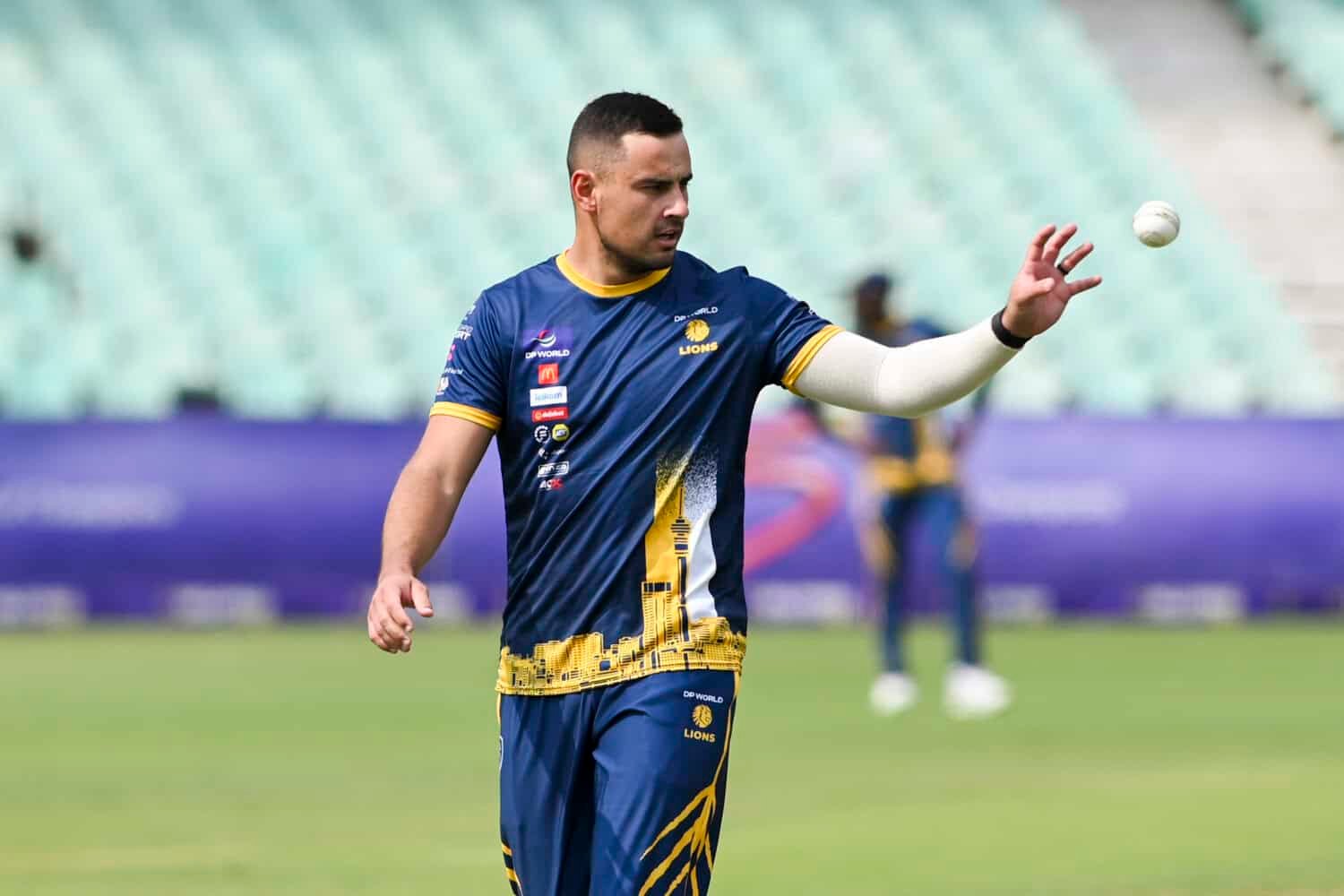
Beyers Swanepoel during his Lions days. (Photo by Darren Stewart/Gallo Images)

Northerns Titans CEO Jacques Faul likes to spring a surprise on the opposition and, on face value, the franchise’s decision to sign Beyers Swanepoel for the coming season will be a shock to some, given the controversial fashion in which the all-rounder’s stint down the road at the Central Gauteng Lions ended.

The final match of last season was the One-Day Cup final between the two Gauteng archrivals and a tightly-contested thriller went the Titans’ way, thanks mostly to the heroics of Keegan Petersen and Duan Jansen.

But Swanepoel’s bizarre decision to leave the field of play in the 43rd over of the Titans chase, having bowled his ration of 10 overs, also played a major part in the visitors to the Wanderers shifting the momentum of the game. Because Swanepoel had not suffered any injury, the Lions were not allowed to substitute him and were left with 10 fielders for the tense finale’, which they lost by three wickets on the penultimate ball of the match.

Swanepoel had chosen to leave early so he could catch a flight to England, where he was due to join Worcestershire for the county season. Astonishingly, he also did not have a No-Objection Certificate (NOC) from his local franchise or Cricket South Africa to play overseas, an incredible oversight by his agents, Tridon Sports Management.

His team-mates were left in a strange state of heartbreak and fury after the game and it did not take long, less than two weeks later, for the Lions to terminate his contract. That did, however, make Swanepoel a free agent and CSA agreed to give him an NOC to play for Worcestershire. The mother body did, however, lay a Level 4 charge of bringing the game into disrepute against him.

That can carry a ban of 10 matches, which would be a sizeable part of next season. The CSA disciplinary hearing has still not been held, however, due to the unavailability of the disciplinary commissioner.

That means there is still a lot of uncertainty over Swanepoel: Not only in terms of his mental state but how much of next season he is going to be missing due to a ban. For Faul and the Titans, however, it is not an outside-the-box signing and the CEO confirmed that he did not even need Board approval to offer the talented 28-year-old a contract.

“Professional sport is cut-throat and we have to sign people who can help us to win. Our information was that four franchises wanted to sign him. He’s 28 years old, so he probably has seven years left as a top cricketer, and he has no track record of this sort of behaviour before,” Faul told kenborland.com.

“I think he just got the date of his flight wrong and to not allow him to play here would be a severe punishment. Everyone’s entitled to one mistake, he has apologised and he has been sanctioned by the Lions.

“He is still a very capable player and it would be wrong to scapegoat a quality cricketer like him. We had to sign him before the CSA disciplinary because the contracting window was closing. But hopefully emotions have died down a bit and he’s not painted into a corner.

“He thought no-one else would want him, but I hope he can redeem himself, I think he will. To be remembered for that one incident would be the saddest thing. And he is the right profile cricketer for us – at this stage he doesn’t play for SA A or the Proteas. And he was schooled here in Titans territory at Garsfontein,” Faul said.

It is believed that the Lions players and coaches did not want to lose a cricketer of Swanepoel’s ability and were willing to forgive him, but the Lions board were adamant that he had to go.

The whole incident will be even more galling for the Wanderers-based team now that Swanepoel has gone across the Hennops River to their great rivals, the same team that snatched the one-day trophy from them after his inexplicable departure. A swing bowler who can be quite phenomenal on his day, both with the red and the white ball, Swanepoel is also a very handy batsman down the order, capable of scoring very quickly.

Our domestic cricket would be the loser without Swanepoel playing and hopefully CSA can sort out his disciplinary hearing soon and therefore finally draw a line under a most unfortunate incident.

Smith’s aim: An SA20 league that changes lives more than most 0

Posted on March 30, 2026 by Ken

T20 franchise cricket has changed the life of more than one cricketer and the IPL, who held their mega auction at the start of the week, has done that more than most. But Betway SA20 Commissioner Graeme Smith wants South Africa’s franchise T20 tournament to do that and revitalise the game in the country he captained with such distinction.

The Indian Premier League is obviously the benchmark all other leagues aspire to, and their auction saw record prices being paid for the next tournament being held from March 14 next year, with the 10 franchises spending more than £60 million overall.

Smith wants the SA20 to continue growing in stature such that it is considered to be part of the top group of T20 tournaments, and the fact that so many South Africans and overseas players who feature in the SA20 are being picked up by the IPL as well, bodes well for the stature of the January/February competition.

Proteas stars Heinrich Klaasen, Marco Jansen (the most expensive overseas player), Quinton de Kock, Anrich Nortje, Kagiso Rabada, Gerald Coetzee, David Miller, Aiden Markram, Faf du Plessis and Lungi Ngidi have all been signed up by the IPL, as well as lesser-known players like Lizaad Williams, Kwena Maphaka, Matthew Breetzke, Donovan Ferreira, Ryan Rickelton and Tristan Stubbs, who have shone in the SA20 and thereby attracted the attention of the Indian franchise owners who all have teams in the IPL too.

Amongst the highest-paid overseas stars who were bought at the IPL auction are players like Josh Buttler, Jofra Archer, Moeen Ali, Noor Ahmad and Rashid Khan, who have all featured regularly in the SA20.

“From an SA20 perspective, it’s lovely to see the platform provided by our tournament to these players and there are a significant number of South African players in the top money-earners list,” Smith told sportsboom.com in an exclusive interview at the Wanderers in Johannesburg on Monday.

“Last year we produced the most players going to the IPL of all the overseas countries, and that shows the growth of our franchise cricket. And that includes a few youngsters, those are the good stories of people’s lives being changed, like Kwena Maphaka going to Rajasthan Royals for £142 000.

“So the exposure from the SA20 is very important but we also hope that the tournament keeps the Proteas strong. They haven’t had a great period in T20 cricket since making the World Cup final, but the IPL auction and the SA20 tournament show that there is still some incredible talent there.

“There is a lot of franchise cricket played around the world and we want to elevate SA20 so that it is one of the No.1 picks. There is like a Tier One of these T20 franchise tournaments and we certainly want to be up there. I think we are establishing ourselves as one of the Tier One events.

“The feedback from the overseas players has been incredible. They love coming to South Africa because of the crowds, they say the tournament is well-run and, most importantly, they say it provides extremely competitive cricket. Two years into the event, there is much higher confidence that we can pull it off and we hope it just keeps developing,” Smith said.

Smith has high hopes that the SA20 will also keep developing South African domestic talent into world-beating international stars. Never mind being able to get them on the phone, the likes of Tristan Luus, an SA U19 all-rounder, can sit in the Mumbai Indians changeroom and chat face-to-face with Ben Stokes about the game. Likewise, Breetzke, who has just set off on his international career, will be chewing the ear off of fellow top-order batsman Kane Williamson in the Durban Super Giants locker-room.

“With our rookie draft and our introduction of the SA20 Schools competition, we’re going to expose a lot of youngsters. Plus the franchises are unbelievable when it comes to their attention to their pipeline and talent. They bring great expertise in terms of the support staff.

“Maybe before SA20, our players were not developing in the right way, they were becoming fully professional late in the day and you were still trying to educate them at national team level. But playing against the best shows you where you need to improve and what it takes to play at that level. They can sit and chat with a Ben Stokes or a Kane Williamson, and you’ll have international physios telling them that these are the levels they need to reach physically,” Smith said.

The bottom line is always commercial, however, and the SA20 continues to be the second-biggest money-spinner for CSA after the Proteas men. That has enabled things like the SA20 Schools competition, an annual camp for U19 girls and an umpire exchange with The Hundred in England, to be introduced.

There was more good news for the SA20 on the commercial front on Monday as they announced a new partnership with DP World, the global smart logistics and supply chain company.

Attention pivots to new Super League after Bulls Daisies win title again 0

Posted on May 05, 2025 by Ken

Another season of the Women’s Premier Division came to an end last weekend with the Bulls Daisies securing back-to-back titles, and the attention in local ladies rugby will now pivot to the newly-announced Super League professional franchise competition recently announced by SA Rugby.

While the Super League would be a boost for the growth of high-performance women’s rugby in South Africa, there are still pivotal questions around when it will start and how it will work, especially in terms of player contracting.

SA Rugby said they intend to contract 150 women players for the new competition, with the provincial unions being invited to submit proposals for inclusion of a franchise in the new Super League.

But the Bulls, who made a groundbreaking move to being fully professional last year, already have 35 players contracted and the vast majority of those will be offered new contracts on September 1.

SA Rugby want the Super League to begin in early 2025 and have said the “centrally contacted players will be shared out among the teams”. Unless the 150 given SA Rugby contracts don’t include any Bulls players, there is going to be a tug-of-war over the services of the players who have dominated the Women’s Premier Division over the last two seasons.

“We will entrench our players,” Thando Manana, the executive in charge of women’s rugby for the Blue Bulls Company, told Rapport. “SA Rugby say they are going to contract 150 players and although it is good to have this innovation, we need to tread carefully in our rush to get this Super League underway. There’s definitely going to be a timing issue if they want to start in January.

“I love anything that develops the game, but we can’t wait for all the details to come out, we will be renewing contracts for the new cycle that starts on September 1, and some of those will be extended to two or three years. We’re not looking at what others do, we will be pushing forward in the months ahead to take women’s rugby to another level,” Manana said.

Blue Bulls Rugby Union president Willem Strauss said he would rather reserve comment on the Super League until they have more information.

“I don’t know much about it, but anything that takes women’s rugby to the next level, I will support. But I need to know the details about the Super League, hopefully it aligns commercially with what we have done with such success over the last two years.

“As a board, we are very happy with what we have achieved in women’s rugby. It was a brave step to go professional in the women’s game because the financial impact was negative. But once we started performing then we started to attract commercial partners.

“Our team has improved a helluva lot and this year we had to use a lot of club players because of national team call-ups. But the number of women taking up the game has expanded by 30% per year, which is fantastic because it shows that going professional is sustainable. There are more and more women’s teams joining the league, as well as youth clubs, which shows that the ecosystem is healthy.

“Plus the Bulls Daisies bring a new audience to Loftus Versfeld which is very important, it’s not a traditional Pretoria crowd. The Bulls Daisies have certainly added value to our brand of excellence and they are inspiring the next generation of women’s stars,” Strauss told Rapport.

Lynne Cantwell, SA Rugby’s High Performance Manager for women’s rugby, praised the Bulls for their top-class programme and said the aim of the Super League was to get the rest of the country’s players to that level of excellence.

“The goal of the competition is to make that leap into where the performance standards align. Once we get there, all the teams will be more competitive and the women’s tournament will go down to the wire, we want to get to the situation where you never know who is going to win.

“The Bulls took that leap two years ago and have led the way, and we’ve seen their big performance leap. You have to give credit to Western Province, and the fact that they pushed the Bulls in the final is testament to their pipeline. There are great signs of growth, they are swelling their player numbers and Boland have done this as well.

“The goal is to have all our premier teams to be like the Bulls, and then that will make for a strong national team. The Super League will be performance-driven, and hopefully that means teams can ask more of sponsors, they can pitch higher because of increased visibility. That will drive game standards and allow teams to employ high-quality coaches, physios, medics and strength-and-conditioning coaches,” Cantwell told Rapport.

The former Ireland star envisages a league with four or five teams, with each side playing eight to 10 matches. The Super League will not replace the Premier Division because it will be played at a different time of year.

Cantwell is keen on a draft system to allocate the contracted players, but she acknowledges the Bulls issue will need to be resolved.

“The Bulls have a significant number of our top players and it will need to be a gradual approach in terms of how we spread the top players around. The Super League will be our top-end competition, but it will take a couple of years for everything to be aligned.

“We want the other teams to have programmes that are the equivalent of the Bulls. With SA Rugby funding the player contracts, there won’t be as much pooling of players at a single union because we can say where they must play,” Cantwell said.

Sharks’ pipeline picked apart after shameful start to the season 0

Posted on August 01, 2024 by Ken

Considering the big money backing them up, the Sharks’ early form this season was shameful and led to their critics picking apart the franchise. And the consensus seemed to be that their pipeline was to blame, with insufficient depth to make up for the erratic availability and form of their many Springbok stars.

The once-vaunted Sharks Academy was a particular focal point and the franchise’s management have confirmed that revamping that feeder is a priority. Critics of the Academy say that it has become too focused on earning money – allowing lesser players to buy their way into the program – rather than being an impactful high performance set-up.

Director of Rugby Neil Powell has pointed to the success of the Sharks’ junior teams as evidence that their contracting and pipeline are perhaps not as bad as many have portrayed.

“Last season the U19s finished second in their competition, the U20s won their’s unbeaten and the U21s were beaten by one point in the semi-finals,” Powell said. “Which shows our rugby strategy revolves around having a sustainable and successful system, not just one team. We believe success in the foundation phases will filter through to the flagship team.

“We are also looking at a rebuild of our Academy. Coenraad de Villiers headed up the Western Province Academy and we want him to create a high-performance environment which is also a feeder into our system. We have two groups of U19 players here – those who are contracted and those who come to the commercial academy, which has not been a big feeder in the past few years. We’re on a journey to turn that around, which is why we’ve got Coenraad.

“We want to change the perception of the academy: we want a quality rugby program, but the teaching must also be holistic. We want to make sure ambitious kids come into the academy, the expectation is that they develop into good rugby players and hopefully kick on.

“In terms of recruitment, we follow a hybrid approach: We identify world-class talent to obtain but we also want to build through our junior structures. The thinking is that recruiting from the outside is more specific, it’s about certain positions. In a couple of years we hope to be recruiting more from our own systems than from outside.

“It’s crucial that the junior system understands what it takes to be professional, so we can make sure they can filter into the senior system. Players will also not leave if they have love for the Sharks, if they feel at home here. The plan is to bring players through from U21 to the Currie Cup, blood them there, and if they pass that test then they can move on to the United Rugby Championship,” Powell said.

Sharks chief executive Eduard Coetzee, who will vacate his position in July to take up a post in Europe with MVM Holdings, the franchise’s majority investors, has said, however, that they will continue to target high-profile signings as well. He says big-name signings are good for the brand and encourage further investment from commercial partners.

“The market perception is that we contract from the top down, but other teams do this too. The schoolboy pathway is unbelievably important for us too. We have 10 schools in KZN who play at the elite level and they have probably been over-aggressive in scouting for players. In terms of rugby scholarships, R75 million is spent annually by those schools. It’s not healthy, but it’s not just in KZN that it is happening.

“We have to build a programme in conjunction with what the schools are doing. We track players from U12 and we filter in the ones good enough to play professional rugby. From U15 they come through our system and junior structures and they become Sharks. It’s important to have numbers in our academy, while Neil Powell and John Plumtree focus on high performance, and there needs to be a synergy between those two. Just filling in numbers is not good enough for what we require. The academy was owned by third parties, but that has now all been bought back and we hope that it will be an environment that young kids want to be part of.

“Sometimes we do bring in someone with celebrity power, but our focus is definitely our pipeline, so hopefully that dispels that myth. We do have so many Springboks and that has led to long discussions at Board level. It’s wonderful for the Sharks to have World Cup winners walking around Kings Park. Pre-Covid, we had R60 million worth of sponsorship and in the last four years we have doubled that. I believe people and businesses see something different about us: I would say it’s the way we treat each other and the reach of our brand.

“But we are almost victims of our own success having so many Springboks, and there has been a shortfall in terms of our rugby. We are planning the whole make-up of our squad totally differently next season,” Coetzee said.

Former Springbok wing JP Pietersen is an integral part of that planning.

“Our focus points are our coaching structure – to have the right people in the right places; the recruitment and elevation of senior players; a long-term succession plan for our junior group; and the culture and environment of the Sharks,” Powell said. “We want consistency across our structures in terms of coaching and culture. If possible, we would like to fill all coaching vacancies from within the system. JP Pietersen is the head of our junior structures and is also very passionate about the Sharks. He came here as a 19-year-old and went on to play 70 Tests. This is his home.”

While a group of happy players is obviously a positive, some critics say the Sharks are all about the good vibes and culture but are lacking the hunger and grit that comes from hard work.

“The aim is to have a culture that is tough but enjoyable, and to ensure that all the players we recruit can fit into that culture. If we make things too easy, then there won’t be a high enough work ethic and the players will not get fulfilment. Healthy internal competition is how you get the best out of the players,” Powell said.

  • Recent Posts

  • Archives

  • Thought of the Day

    Have a fulfilled life by caring about the feelings of others. Show interest in the welfare of others, listen to their problems.

    Be tolerant of people and allow for their mistakes, because no-one is perfect.

    Follow the example of Christ, who showed sympathy and understanding towards all people.


↑ Top