for quality writing

Ken Borland


Ricked necks from watching the Lions go from train wrecks to comeback kings 0

Posted on December 16, 2019 by Ken

Coming into the new year, the Cape Cobras were so far above them on the Four-Day Domestic Series log that the Highveld Lions players almost had to rick their necks to see them. That was after the Lions had made such a train wreck of their first game back after the Mzansi Super League triumph that they had been thrashed by 279 runs by the Dolphins at the Wanderers.

But they managed to chase down the high-flying Cobras and then showed the same never-say-die spirit to seal the deal and claim the four-day title in the most dramatic fashion in the penultimate over of their final game, in Potchefstroom this week.

So how exactly did they pull off one of the most remarkable comebacks in South African first-class history?

“It was a great, spirited effort and we toiled hard, plus it is never easy to get a result in Potchefstroom. It took a massive effort because things have not been all rosy here for the last couple of years but the new management and leadership has restored confidence. It was important that we all just stayed with each other.

“We kept our energy and focus and we had to keep believing we still had a chance. You’ve just got to keep in the game, even though I saw some heads drop when the rain came in Potchefstroom. We’ve tried to be a lot more positive this season, to always try and take the game forward. It’s mostly the same personnel, so it’s just been the approach and the language we use that has made the difference,” captain Temba Bavuma said as the Lions celebrated their success at the Wanderers on Friday.

Head coach Enoch Nkwe has now robed himself in two major trophies since taking over at the Wanderers, but on Friday had flown to the Netherlands to be with his family. Assistant coach Wandile Gwavu spoke in his place about how trusting the 21 players they used in the four-day competition had been a key ingredient in their success.

“Enoch’s most important word was ‘trust’ and he must take a lot of credit. When new players came in and performed so well it was because they knew they were trusted and what was expected of them. We believed from the start of the year that we could still win. The Cobras are a very inexperienced unit in four-day cricket and we thought they might have a blip.

“So we just wanted to make sure we were right behind them, we just wanted to stay as close as possible to them. But you still have to give them and Ashwell Prince a lot of credit because they led the competition for 39 out of 40 days, so we have a lot of respect for them still. Having our experienced players like Temba, Stephen Cook and Malusi Siboto went a long way for us,” Gwavu said.

New players who have announced themselves in this campaign have been batsmen Kagiso Rapulana (average 84.40) and Wihan Lubbe (two centuries), left-arm quick Nandre Burger (18 wickets at 22.38) and all-rounder Delano Potgieter, with his remarkable century and four wickets on debut in the final game.

Having stuck to their task with great resilience, the Lions are now enjoying the sweet smell of success.

Pilanesberg National Park 2

Posted on May 12, 2019 by Ken

A wonderful Leopard sighting near Kubu Dam

A wonderful Leopard sighting near Kubu Dam

Being in the bush and birding is always such a special time for me, real soul-food, and a time of replenishment before heading back into the hectic ‘real’ world. So I have a small obsession about what my last sighting is, always wanting to end on a high note, preferably with something exotic, something I don’t see every day in my garden.

It is also a source of motivation to stay sharp and keen-eyed at the end of what are normally long, hot days in the bushveld.

Pilanesberg National Park may be one of the most popular reserves in the country and is attached to a tourist hot-spot in Sun City, but it is Big Five country and genuine bushveld. It has a ruggedness about it with its hills lying at angles (after the massive volcanic eruptions that shaped the landscape), its rocky outcrops and the densely-wooded gorges where few people would have ventured.

It is normally also blisteringly hot in summer but this October day had been pleasant: a beautiful sunny day with barely a cloud in the sky and a lovely cooling breeze. The temperature did not get above 31 degrees.

I had concentrated my efforts on the southern half of the park, doing a half-circle from KwaMaritane to Bakubung, and I was 10 minutes from the exit gate when sighting number 53 appeared – a pair of Common Mynahs flying along!

These aliens are all over our towns, cities and neighbourhoods and are considered a scourge in our wild places, like game reserves. So you can imagine my dismay at the very real possibility now that this invasive would be my last sighting of the day … Oh, the horror!

But this was a happy day (it had included a Leopard sighting next to the road) and Mother Nature was kind to me.

Just when I thought the Mynahs would be my last bird, a magnificent pair of Violeteared Waxbills popped up in the bush next to me on the side of the road!

Now these waxbills are really exotic-looking with their incredible combination of violet, red, bright blue and chestnut colours. It is one of my favourites, not only because it is exquisite but also because it eluded me for many years before my first sighting. I even had to put up with my birding colleague Stidy seeing it as a passenger in my car while I dipped on it!

It would have been a dream last bird, but Mother Nature had another trick up her sleeve for me. At Bakubung Gate, amongst the buildings – which I guess make fairly authentic copies of the boulders found on the koppies that are normally their home -were a pair of Mocking Chat.

I had no problem with these cute, somewhat mischievous birds being my last sighting. They are real characters and I watched them a bit before finally departing the peaceful, but wild, hills and valleys of the Pilanesberg.

I was still buzzing though from my Leopard sighting, which had been in the vicinity of Kubu Dam, just before I turned west off the tar and on to the Kgama Drive that goes past Lengau Dam and then rejoins the tar just before the Bakubung Gate.

The Leopard was lying with typical insouciance under a shady bush, about 20 metres from the road, but quite hard to see due to the combination of dappled light and the rosettes on its body. What a gorgeous young specimen it was though.

The insouciant Leopard

The insouciant Leopard

While the Leopard was, typically, a loner, there were lovely family sightings of 10 African Elephant marching along the flanks of the Magare Hills, away in the distance as the Tsepe Drive turned to the north-west, having skirted along the south-eastern border of the park for nearly 10km from the KwaMaritane entrance.

It was also most pleasing to see three different family groups of Squarelipped Rhinoceros, numbering 10 in all of these critically endangered animals.

The group theme had started at the beginning as I entered KwaMaritane gate and was immediately bombarded by three Blackchested Prinia dashing around and calling loudly in some sort of furore.

Two Greater Kudu youngsters down by the Maritane River were much more peaceful, and some Little Swift were also swirling around merrily, without a care in the world.

Blackcollared Barbets are normally seen amongst the trees at the picnic sites, so it was nice to see one at the hills and plains of the Tshepe Drive. Further down the road, a Kalahari Robin was conspicuous as it posed on top of a bush, behaving more like a Chat. Which is not surprising because the Scrub Robins (Genus Cercotrichas) are in the same Subfamily – Saxicolinae – as things like the Familiar and Mocking Chats, both characteristic birds of the Pilanesberg.

Close by, a juvenile Blackshouldered Kite was also posing nicely on top of a tree,

Juvenile Blackshouldered Kite

Juvenile Blackshouldered Kite

while both Redfaced and Speckled Mousebirds were in close proximity to each other as the Tshepe Drive crossed the Mankwe River, where, as is often the case, a purposeful Cape Wagtail was doing a thorough inspection.

The Lengau Dam was hosting a big flock of Sacred Ibis, and there were also Redbilled Teal, which I have only seen infrequently in the Pilanesberg.

Where is Pilanesberg National Park?

Sightings list

Blackchested Prinia

Greater Kudu

Little Swift

Blue Waxbill

Blackcollared Barbet

Neddicky

Kalahari Robin

African Elephant

Sabota Lark

Blackshouldered Kite

Rattling Cisticola

Grey Lourie

Redfaced Mousebird

Speckled Mousebird

Cape Wagtail

Cinnamonbreasted Rock Bunting

Glossy Starling

Southern Yellowbilled Hornbill

Southern Yellowbilled Hornbill

Southern Yellowbilled Hornbill

Blackeyed Bulbul

Impala

Marico Flycatcher

Blue Wildebeest

Helmeted Guineafowl

Giraffe

Redbilled Oxpecker

Natal Francolin

Capped Wheatear

Springbok

Pied Crow

Squarelipped Rhinoceros

Lesser Striped Swallow

Common Waxbill

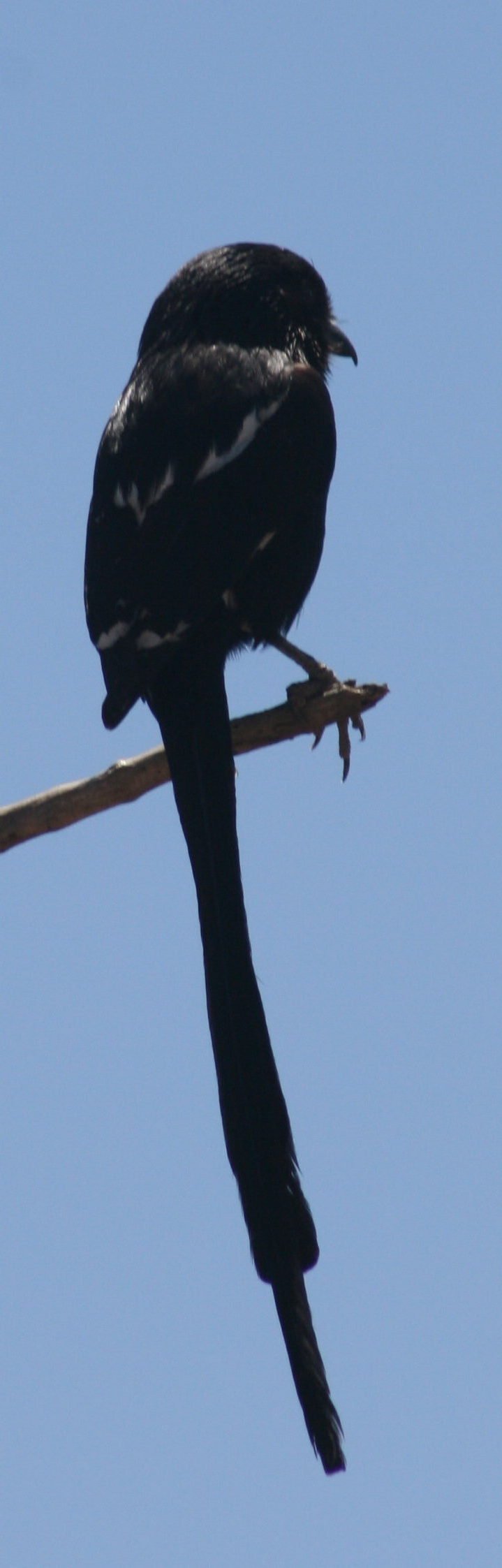
Longtailed Shrike

Longtailed Shrike

Arrowmarked Babbler

Whitebreasted Cormorant

Reed Cormorant

Southern Masked Weaver

Blackbacked Puffback

Laughing Dove

Great White Egret

Browncrowned Tchagra

Warthog

A Warthog strolling along

A Warthog strolling along

Leopard

Familiar Chat

Plains Zebra

Waterbuck

Blacksmith Plover

Redbilled Teal

Dabchick

Sacred Ibis

Egyptian Goose

African Darter

Common Mynah

Violeteared Waxbill

Mocking Chat

Beast has 157 reasons to savour that summons to Dick Muir’s office in 2006 0

Posted on April 06, 2019 by Ken

Tendai Mtawarira is no doubt today savouring the fact that he became South Africa’s most-capped SuperRugby player last night at Ellis Park, and his mind will probably wander back to the past, starting with when he was summoned to then Sharks head coach Dick Muir’s office back in 2006.

The Beast had arrived at Kings Park the year before, a talented Zimbabwe U19 star given an opportunity at the Sharks Academy. While playing for the provincial U21 side, Mtawarira had already impressed with his work ethic and drive. Having arrived in Durban with basically a suitcase, he initially used to walk to training until he had saved up enough money to buy a bicycle.

But he was a loose forward, occasionally even playing at lock. But Muir, in consultation with Swys de Bruin, now head coach of the Lions team against whom Mtawarira played his record 157th SuperRugby game last night, and Grant Bashford, his U21 coaches, made a tough call made even harder by how popular Beast was.

Muir felt that Mtawarira was not quick enough to really make it as a loose forward and not tall enough at 1.83 metres to excel at lock. But he recognised the immense power and raw strength of the young man.

“It’s quite funny to think about it now, but it wasn’t very pleasant at the time. I was called into his office in the U21 season in 2006 and I’d been enjoying my rugby in the loose trio. But then Dick presented his case and said he saw me as only becoming a provincial player as a loose forward, if I wanted to become a Springbok then I had to change to prop.

“It was really hard to accept and I was quite upset. I couldn’t believe that so early in my career, my dream to be a professional rugby player was going to end. I was really shook. But some of my mentors said I must go for it, they said I must not be negative about it because it means the head coach is looking at you and has a plan for you,” Mtawarira recalled when talking to Saturday Citizen this week about how his long journey to the top all began.

But as we now know, Mtawarira always meets his challenges head-on and in 2007 he was already proficient enough at loosehead prop to play SuperRugby for the Sharks.

“I was under Balie Swart’s wing and he taught me everything about scrummaging, I decided to take it all on board and make it work. Balie is right at the top in terms of mentors for me, as well as John Plumtree. And then there were fellow Sharks players like Deon Carstens, BJ Botha, Bismarck du Plessis and John Smit who had big input in my career, they guided me into this world of scrummaging.

“There were some tough lessons at the beginning and sometimes I couldn’t feel my neck for a few days! But it changed my life and the Sharks have been a great organisation since I came here as a young boy with a dream and got my first contract. I was underprivileged and came to Durban with nothing, but now I am something, Durban has become who I am, it is home,” Mtawarira said.

Loyalty is another characteristic of Mtawarira that stands out, both to the Sharks and his family. Not many players stay at one union these days, especially when they are amongst the world’s best in their position, but all 157 of those SuperRugby games have been for the Sharks.

“For me it’s about playing the game and focusing on the next job, it’s never been about counting games, just about using every opportunity. I try to stay humble and hungry, take on good criticism and I’ve had good mentors and team-mates at the Sharks. I’m very privileged to be part of this set-up, which I think of as home.

“Durban is a beautiful city, with the beach, and the people are very warm and welcoming. Although my roots are in Zimbabwe, this is home for us – my family, my wife [Kuziva] and kids [daughter Talumba and son Wangu], they go to school here,” Mtawarira said.

Even once he became a Springbok in 2008, putting one of the biggest dents in a legendary prop’s career when he dismantled veteran Phil Vickery at Kings Park in the first Test against the British and Irish Lions in 2009, there were still hard times ahead.

In 2010, he missed the June Tests due to a controversy over his citizenship, and in 2012 he was admitted to hospital with heart palpitations on the eve of a Test in Ireland, which required surgery.

“I’ve had a lot of challenges, the heart scare back in the day and the citizenship issue, but the prayers of my family and my faith have got me through. I’m very outspoken about my faith, it’s my foundation and I give praise to God and try and use rugby as a platform to honour him. Angels are looking after me, but I’m not perfect,” Mtawarira said.

We might not see Beast on a rugby field again after this year and, apart from winning the World Cup with the Springboks, he also has some unfinished business with the Sharks.

“I’d like to pursue the SuperRugby title, I’m disappointed to have not won one yet, I’ve been in three finals but zero titles. That’s been my motivation to stay here and I will give everything to win SuperRugby because this season might be my last one,” Mtawarira said.

Coaching the coaches – the important role of Anton Ferreira in SA cricket success 0

Posted on July 18, 2018 by Ken


Back in 2000 when Anton Ferreira took ownership of the director of coaching role in the then United Cricket Board of South Africa, the national team were desperately trying to hang on to the coat-tails of an Australian side that was fast disappearing over the horizon.

That there has always been great talent within South African cricket is well known, but developing that talent into world-class cricketers requires expert coaching and for that, the coaches need coaching themselves.

Which is where Ferreira’s job was so important and one of the first things the former Northern Transvaal, Warwickshire and South Africa all-rounder did after he retired from playing in 1992 was to go to Australia and do an Australian Cricket Board coaching qualification. He would have been especially pleased with the Proteas’ emphatic series win over Australia at the end of the summer.

It was a great way to sign off as, disappointingly for the numerous people he has touched and influenced, Ferreira retired from his post, renamed manager of coaching and coaching education, this month.

But there are few people more passionate about cricket than ‘Yogi’ and he will remain in the game on a consultancy basis. The Africa Cricket Association are the first to benefit from his wisdom and enthusiasm as he has now turned his attention to training their coaches.

Passion is a priceless commodity in sport – consider how it has driven Asian cricket to pre-eminence in the game – but so is humility and, even as he was climbing the ladder both as a player and coach, Ferreira never forgot the lessons of his youth and in particular the tremendous example of his father, who was heavily involved in boxing.

“I am humbled and I can never repay the game for all the wonderful enjoyment it has given me. I learnt, as a young boy, about the importance of sportsmanship and treating everyone with respect from my wonderful father and about the game from Northern Transvaal legends like Denis Lindsay, Jackie Botten and Tiger Lance. They taught me about enjoying the pleasure of risk,” Ferreira said recently when he was honoured by Titans cricket for 40 years of service to cricket in the province and in South Africa.

Ferreira was able to not only develop the cricketing talents but also plant those life-skills in hundreds of South African players; although he has left the formal structures of South African cricket, there is no doubt he will continue to make an impact.

“Yogi has done it all in cricket, he has made an incredible contribution to the game, and was one of the people who laid the foundation for our current success as a franchise. What he has done for cricket in this area and around the country during his 18 years with Cricket South Africa has been phenomenal and his passion for the game is what sets him apart. And it was all done without any tendency for self-promotion, you won’t find a more humble, down-to-earth man,” Titans CEO Jacques Faul said in paying tribute to Ferreira.

From a personal perspective, this legend of the game (he was possibly more appreciated in English county cricket than here) was always approachable, usually smiling and keen to chew the fat over the great game of cricket. Given his marvellous sense of humour, it is always a pleasure to hear Yogi’s tales from a cricket career that has taken him around the globe.

Another former Northern Transvaal all-rounder, Hein Raath, has been a close friend of Ferreira’s dating back to when they both studied and played for the University of Pretoria.

Ferreira then took over the running of the club and, as Raath, a former chairman of Tuks cricket, pointed out, this job is now done by 17 people while Yogi did it all himself back then. Which rather sums up the man.


  • Recent Posts

  • Archives

  • Thought of the Day

    Colossians 3:13-14 – “Bear with each other and forgive whatever grievances you may have; forgive as the Lord forgave you. And over all these virtues put on love, which binds them all together.”

    “When the Holy Spirit lives in you, you reflect the qualities of Christ in your life. Love and courtesy are basic characteristics of the Christian life. … If Chris lives in you, you will be kind and patient toward others.

    “A person who is truly courteous is humble, … His attitude is the same regardless of whether he is talking to kings or beggars. He treats everyone alike, no matter what race, colour or creed they are. He rejoices in making the path through life easier for others to travel.

    “It is impossible to say that you love and serve God while at the same time treating your neighbour with contempt and disrespect.” – Solly Ozrovech, A Shelter From The Storm


↑ Top