Lungi Ngidi is not just simply a fitter bowler these days, but a more skilful and canny one as well, and he said on Monday that he will go into the new season with confidence based on how he ended the 2019/20 campaign.
Having burst on to the scene in 2017, Ngidi has endured some frustrating injuries over the last couple of years. He has played just two Tests in the last two years and was only able to play four World Cup matches last year before breaking down again. But the 24-year-old came storming back in limited-overs cricket this year, taking 12 wickets in four ODIs and 13 wickets in six T20 Internationals, winning both the 50-over and 20-over Cricketer of the Year honours at the CSA Awards at the weekend.
“I put a lot of hard work in and I felt I had a point to prove. In ODI cricket I really backed myself and in white-ball cricket I was used as an impact player, trying to take wickets or defend runs, just be versatile and able to bowl in any situation. That has given me a lot of confidence. I know some guys are quicker than me, so I look to produce other skills at certain stages of the game.
“But I was very disappointed not to play more Test cricket and I definitely want to get back into that team. I believe I’ve improved my skills and the mental side of the game. I’m always striving to do well in all three formats, so doing well in Test cricket again is definitely a personal goal of mine. You have to be much more patient in Test cricket though,” Ngidi said in a teleconference on Monday.
While the towering, well-built Durbanite has always been an impressive physical specimen, there have been times when Ngidi has not exactly been a finely-honed athlete, which has also made him more injury-prone and more of a risk for five-day cricket. But he spent much of the second half of 2019 getting into peak physical shape and is certain that his conditioning will now stay at that level, the enforced Covid-19 break helping him to solidify that work over the last three months.
“I just need to continue the work we started last year, it’s about being consistent in training and eating healthily, it’s nothing extraordinary. Going forward, I feel like I’m now in a better position to do well in Test cricket. I feel now that with the conditioning block I’ve done, injury is something that’s now right at the back of the mind, it’s no longer a big deal. If I do happen to get injured again then so be it, I’ll just have to come back again,” Ngidi said.
In the meantime, Ngidi admits that it has been difficult to get his head around some of the protocols required for the return to training.
“It’s been different and difficult. You have to book sessions, train in small groups of no more than five and the bowlers have their own net and balls, gyms have to be sanitized before and after use. It feels weird as a team sport to be doing everything by yourself. We’re being tested regularly, temperatures taken, hand sanitizers everywhere and we have to fill out forms. It’s a whole process before you even bowl a ball but very necessary.”
Once Cricket South Africa had sent their plan for a return to play to the Department of Health as well, and also provided additional information on how they would handle any positive tests, getting approval has proved to be a breeze and 3TCricket is set to mark the first bit of on-field action in a few weeks.
Government announced at the weekend that cricket was one of seven sports to be granted approval to return to training and play. So the hiccup that caused the original launch of 3TCricket on June 27 to be postponed has only lasted a week and fans can expect the new format, which features three teams competing at the same time in a 36-over contest, to be unveiled soon.
CSA’s procedures to mitigate the risk of Covid-19 infection are apparently good enough to allow them to continue with plans to hold the 3TCricket opener at SuperSport Park, even though Centurion is in a hotspot for the pandemic. There had been speculation that the event could be moved to Potchefstroom, which is not a hotspot.
“Because Centurion is a hotspot, we had to run our plans through the Department of Health and the National Institute of Communicable Diseases as well as the Department of Sport, Arts and Culture. The health authorities went through our plan and then requested additional information around testing and what would happen with positive tests.
“Once we provided them with that, they were subsequently happy and we added those details into our original plan. The event can still be held at Centurion, the government has no objection to that, and we can expect to have an announcement on the venue in the next few days,” Dr Shuaib Manjra, CSA’s chief medical officer, told The Citizen on Monday.
And, if cricket comprising 12 overs an innings does not blow your hair back, then there is a strong possibility that the Proteas will be returning to international action in August.
South Africa are scheduled to play two Tests and five T20 Internationals against the West Indies and they are proceeding with their plans as if that series will still go ahead. What still needs to be decided, however, is if it will take place as it was meant to in the Caribbean – on one island – or be held either in England, where the West Indians are currently preparing in a bio-bubble for a three-Test series, or here in South Africa.
The lucrative T20 series that CSA were hoping to host against India, also in August, now looks more likely to be postponed to early next year.
I’m sure I speak for most birdwatchers when I say it’s funny how the memory of spotting a Lifer is often permanently seared on the brain with the details of the moment immediately springing to mind.
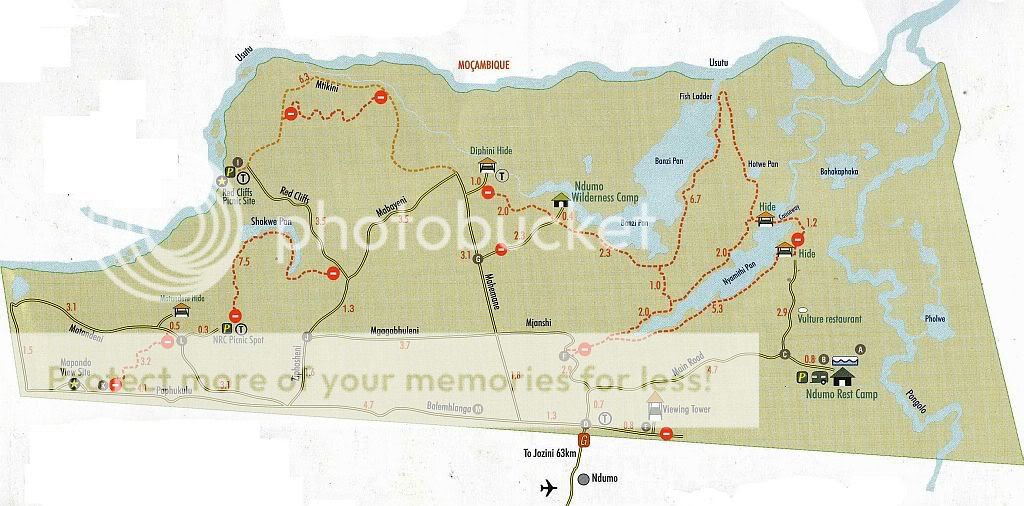
So much so that when I came across this sightings list from a February 2006 trip to Ndumo Game Reserve in northern Zululand, I could immediately picture in my mind’s eye the little loop off the Paphukulu road that goes around a corner and then crosses a dry river bed before going slightly uphill again and returning to the main road.
As one approaches the dried up river, there is a thorn tree on the other side that hangs over the bank and there, in the gathering gloom of dusk, was a massive owl perched on the edge of the branches, surprisingly exposed.
By its large size I was immediately thinking Giant Eagle Owl and a quick squizz through the binoculars confirmed the diagnostic pink eyelids of the bird now known as Verreaux’s Eagle Owl, annoyingly because those French naturalists had nothing to do with the discovery nor naming of the bird.
The Giant Eagle Owl normally spends its days perched inside a leafy tree along a watercourse and they often begin their nightly hunting forays along an open, dry riverbed.
So perhaps my Lifer Giant Eagle Owl was eager to get going with what would have been its ‘breakfast’. For which I was very grateful and shall always remember my first sighting of what is truly a magnificently impressive bird. Not for nothing are they known as the Martial Eagles of the night sky.
The Paphukulu road runs along the south-western border of Ndumo and is always a very interesting drive as the sand forest and dense thorn thicket of the central regions of the reserve grades into dry savanna woodland, a more bushveld type area dominated by Knobthorn Acacias.
On that steamy February day, there were typical savanna woodland birds present like the Eurasian Bee-Eater, Masked Weaver, Redbacked Shrike, Cardinal Woodpecker, African Hoopoe, Little Bee-Eater, Sabota Lark and Crested Francolin.
The boundary fenceposts along the Paphukulu road are always worth keeping an eye on and Pallid Flycatcher, which is found in the Acacia woodlands of Zululand but is replaced by the Marico Flycatcher in that habitat further west, was spotted as well and then further down the road an interesting-looking raptor was seen perched.
It was a medium-sized brown bird, initial thoughts revolving around a Steppe Buzzard, which often perch on these fence poles. But this bird seemed a bit bigger and then, when it turned around to show its underparts they were all-rufous brown with no hint of white on the breast.
It was an immature Jackal Buzzard, which is not often seen in the tropical north-eastern lowveld, but juveniles do sometimes wander over from the escarpment, in this case probably the nearby (less than 100km) Lebombo Mountains.
An immature Steppe Buzzard was seen later on and Sombre Bulbuls also make their way into this area, on the fringes of the thorn thicket.
Icterine Warbler was also seen in the thorn trees close to the Giant Eagle Owl spot, a good sighting because it is scarce in these parts and sparsely distributed in KwaZulu-Natal as a whole.
The next day, on a small track leading to the NRC Picnic Spot, an even more seclusive but much bigger warbler was spotted. The Olivetree Warbler is a very uncommon and often overlooked Mediterranean summer visitor and I managed to get a glimpse of one foraging in a dense grove of acacias.
Heading back from west-to-east on the Paphukulu-Balemhlanga roads, the more open knobthorn woodlands allowed one to tick other typical bushveld gems like African Cuckoo and both the Eurasian and Lilacbreasted Roller.
It’s an under-rated but always good drive. Ndumo is more famous for the Nyamithi Pan and its guided walks.
But on this occasion in mid-summer, the pan was full to the brim, meaning a much lower waterbird count. There were egrets patrolling the shoreline and Wiretailed Swallows flew overhead along with passing groups of Trumpeter Hornbills.
A full Nyamithi Pan
Closer observation of the fringes of the pan, with bushy cover now right up to the edge of the water, provided sightings of Purple and Greenbacked Heron and Water Dikkop. Where there were some muddy edges, Wood Sandpiper was seen.
African Fish Eagles were seen in the Fever Trees on the other side of the pan, while both Pied and Giant Kingfisher were present, and a Hamerkop came yelping past as Hippopotamus frolicked in the water.
The road back from Nyamithi Pan to camp takes one past the reserve’s vulture restaurant, an open patch in which carcasses of deceased large mammals like Giraffe are dumped. There’s almost always something interesting hanging around and occasionally some real specials wander into this area.
On this occasion a Lesser Spotted Eagle, a Palearctic migrant which, given its preference for savanna and open woodland you wouldn’t fancy seeing at Ndumo, was strolling around on the ground. A real raptor special.
A Reedbuck was also pottering around.
The most famous of the Ndumo guided walks is probably North Pongolo, which takes one through the climax riverine forest of the beautiful dark brown river that has flown from Utrecht in Northern Natal, crossed the Lebombo Mountains and is now close to its confluence with the Usutu and its journey to Maputo Bay.
But the fullness of the Nyamithi Pan was a hint to the conditions of the Pongolo floodplain in general and the North Pongolo forest had been flooded and was temporarily off the roster for guided walks.
So instead a guide and I went to Shokwe Pan, an ear-shaped, generally shallower pan nearly seven kilometres long and in the western portion of Ndumo.
This turned out to be an excellent move because we came across, there in the thickets below the majestic Sycamore Fig trees, an African Broadbill, one of the Ndumo specials that is especially challenging to find.
But on this occasion this largely black, grey, brown and white oddity was just sitting on its display perch and allowed us to approach close enough for me to get a photo.
African Broadbill
Other typical forest birds seen at Shokwe were Squaretailed Drongo, Collared Sunbird and Blackheaded Oriole, while Samango Monkey were enjoying themselves high in the trees, keeping their distance as they usually do.
A couple of Darter flew over and there were also a few flocks of Whitefaced Duck which passed by.
The route to and from camp, which is in the south-east of the park, to Shokwe takes you right through the centre of Ndumo and the densest, most impenetrable thickets probably anywhere in the country.
Birding is difficult but there are always surprises for the keen-eyed.
On this occasion the biggest surprise was coming around a corner and finding a thorn tree had toppled over and was blocking the road. Refusing to be denied my route through the wonderful sand forest in the middle of the park, prime birdwatching territory and known for the rare birds that are in residence, I was forced to tow the offending tree out of the road with my car!
Tree v Car … and the Car won
My determination was partly rewarded with good sightings of Crested Guineafowl, Orangebreasted Bush Shrike, Dwarf Mongoose and Scimitarbilled Woodhoopoe, while little pans secluded in the forest provided Woollynecked Stork, Common Sandpiper and Greenspotted Dove.
The woodlands on the southern, hilly side of the park are also rich in birdlife. In the thickets and rank grass under the trees one gets the beautiful Melba Finch busily going about its business, normally with a Rattling Cisticola shouting the odds nearby. Neddicky (especially where there are fallen trees), Bronze Mannikin and Common and Blue Waxbill share this habitat too and Tawnyflanked Prinia is often around as well.
Bleating Warbler prefers thicker cover and will often call from a perch two-to-three metres up a tree. While looking for this secretive little bird, the likes of Paradise, Spotted and Black Flycatchers, Redfaced and Speckled Mousebird, Longbilled Crombec, Brownhooded Kingfisher, Puffback, Blackbellied Starling, Crowned Hornbill, Southern Black Tit and Purplecrested Lourie can also be spotted in the trees.
Searching carefully in the canopies threw up African Green Pigeon and Eurasian Golden Oriole.
Birding around the main camp, set in typical Maputaland woodland, is also good and the highlights from there on this trip were a Lanner Falcon, a regionally threatened bird that happened to fly by, probably heading to nearby grasslands to forage, while I was patiently watching the sky from my camp chair, and a Grey Sunbird, an Important Bird Area trigger species, that popped in for some nectar from the flowering hedge and a drink from a birdbath.
Hilton Moreeng has completed his second term as national women’s coach with his reputation intact but whether he continues in charge of the Proteas or not will depend on how new Director of Cricket Graeme Smith sees the long-term future of the team. And captain Dane van Niekerk said on Thursday that she has full faith in Smith’s judgement, even if she may not entirely agree with his viewpoint that the women’s game requires specialist input.
Moreeng, who first became South Africa coach in December 2012, has led the team to the semi-finals of both of the most recent T20 and 50-over World Cups, in both cases losing narrowly to the eventual champions, Australia and England respectively. They have also already automatically qualified for the next 50-over World Cup, in New Zealand early next year, after the points from their postponed series with Australia were shared.
Smith said last week that the post of national women’s coach has been advertised and that he saw it as being “different to the men’s game so we need to improve the pipeline to the national side, as we grow, getting more players who have played for that national team”. The 42-year-old Moreeng is believed to have re-applied for the post.
Van Niekerk said, however, in a teleconference on Thursday that she did not believe in treating the men’s and women’s games differently.
“Graeme came to Australia to meet with me and Mignon du Preez during the ICC World T20, to see where the team was at and where we wanted to go. He’s certainly passionate about the game and we are excited to work with him. It’s more CSA’s job to decide on the coach and we will respect their decision, either to keep Hilton or to make a change. Our relationship with CSA is good enough that we can talk about anything.
“But I believe cricket is cricket, the principles stay the same, although in the women’s team you have to deal with different personalities and hormones, of course, while the men tend to be more cool, calm and collected. But I’m a big believer that looking at the men’s and women’s games differently is not the way to go forward, I would like to change that stigma because we train just as hard as the men,” Van Niekerk said.
The Covid-19 pandemic not only caused the series with Australia to be called off but it is playing havoc with South Africa’s planning leading into the World Cup starting on February 6. A tour of the West Indies scheduled for the end of May is almost certainly not going to go ahead, while the tour to England in August/September is also under threat.
“Hopefully we get back on the park sooner rather than later and the next World Cup is very important for us and our sole focus at the moment. We have unbelievable talent and I wouldn’t be captain if I didn’t believe we could win a World Cup, we’ve been very close twice and we just need to stay patient.
“But Covid-19 has affected the momentum we created at the last World Cup, which was so successful for women’s cricket in general, it would have been nice to continue that hype, especially since it was going to be us against the world champions a couple of weeks later. But we have the World Cup next year to create that hype again and I think there are a lot of special things still waiting for this team,” Van Niekerk said.
Colossians 3:13-14 – “Bear with each other and forgive whatever grievances you may have; forgive as the Lord forgave you. And over all these virtues put on love, which binds them all together.”
“When the Holy Spirit lives in you, you reflect the qualities of Christ in your life. Love and courtesy are basic characteristics of the Christian life. … If Chris lives in you, you will be kind and patient toward others.
“A person who is truly courteous is humble, … His attitude is the same regardless of whether he is talking to kings or beggars. He treats everyone alike, no matter what race, colour or creed they are. He rejoices in making the path through life easier for others to travel.
“It is impossible to say that you love and serve God while at the same time treating your neighbour with contempt and disrespect.” – Solly Ozrovech, A Shelter From The Storm