for quality writing

Ken Borland


Time for club rugby to fix this broken system 0

Posted on June 28, 2018 by Ken


This has been a season of renewal for the Bulls and one of the fresh faces to have really come to the fore in SuperRugby has been loose forward Marco van Staden, a man of frenetic energy, great physicality and no little skill in doing his ball-pilfering job at the rucks.

A couple of the writers who regularly cover the Bulls were fortunate enough to get to interview the 22-year-old recently and he revealed that he played no provincial schoolboy rugby. This is probably largely due to the fact that he went to Hoerskool Bekker in Magaliesburg, not one of the traditional rugby powers.

He has made it this far – now being rated as one of South Africa’s most promising young forwards – thanks to his single-minded determination to fulfil his dream of being a professional rugby player and a bursary to study sports science from the University of Pretoria. Van Staden graduated last month and is the exception to the rule when it comes to how rugby players move through the development pipeline.

This got me thinking about the numerous, who knows how many, talents that fall through the cracks in South African rugby because of our obsession with a handful of elite rugby schools and provincial U19 and U21 competitions and the Varsity Cup.

Our results whenever we get to play against other countries – whether in the Pro14, SuperRugby or at Springbok level – show that our rugby is not well. The main reason for that is the terrible structure of our game. We desperately need a system that includes as much as possible of the undeniable talent that comes flooding through every year.

Instead, our rugby is elitist and there are barriers everywhere. It starts at school level where a few elite schools just get richer and richer through the ridiculous amount of attention that is lavished on them. Just turn on the rugby channel and you are very likely to be watching a schoolboy game.

These youngsters are fawned over from a young age and if you didn’t go to the ‘right’ school then chances are you won’t be playing in Craven Week, which means you won’t get snapped up by a province or university; in other words you are out of the system, generally for good.

Having been taught win-at-all-costs rugby at school level, to the detriment of skills development, these cloistered kids become professional rugby players at the age of 19, big fish in a small pond just going to another small pond. Many of them play in a Varsity Cup that shares little resemblance to the sort of rugby they will need to play if they are going to make it with the Springboks.

That rugby is being jealousy guarded as the preserve of a few was rammed home by two recent incidents.

Wanderers U21 players laid a complaint of vicious racism and assault against Roodepoort, with the disciplinary hearing held on May 9 by the Golden Lions Rugby Union. Seven weeks later and this issue has still not been resolved.

If South African rugby wants their sport to be played and enjoyed by most people in this country then incidents like this cannot be tolerated. If a blind eye is turned to what happens at club level, SA Rugby are discarding the probable solution to their structural crisis. By growing a healthy club rugby culture between the junior and professional ranks, there will be a pipeline that provides opportunity for way more talent.

But this lack of inclusivity is even seen at school level. Hilton College and Paul Roos (still sponsored by a Steinhoff subsidiary) fielded lilywhite teams in their Premier Interschools matches against Maritzburg College and Grey High respectively. Encouraged by blanket television coverage, they are allowed to get away with this gross dereliction of duty.

Both those schools spend a fortune on recruitment, so it is obvious making sure their teams reflect the demographics of our country by obtaining Black talent does not even register on their radar. And these are the schools which are meant to be preparing our children for a future South Africa!
Chatty Saltpans, Swartkops Estuary 0

Posted on May 08, 2018 by Ken


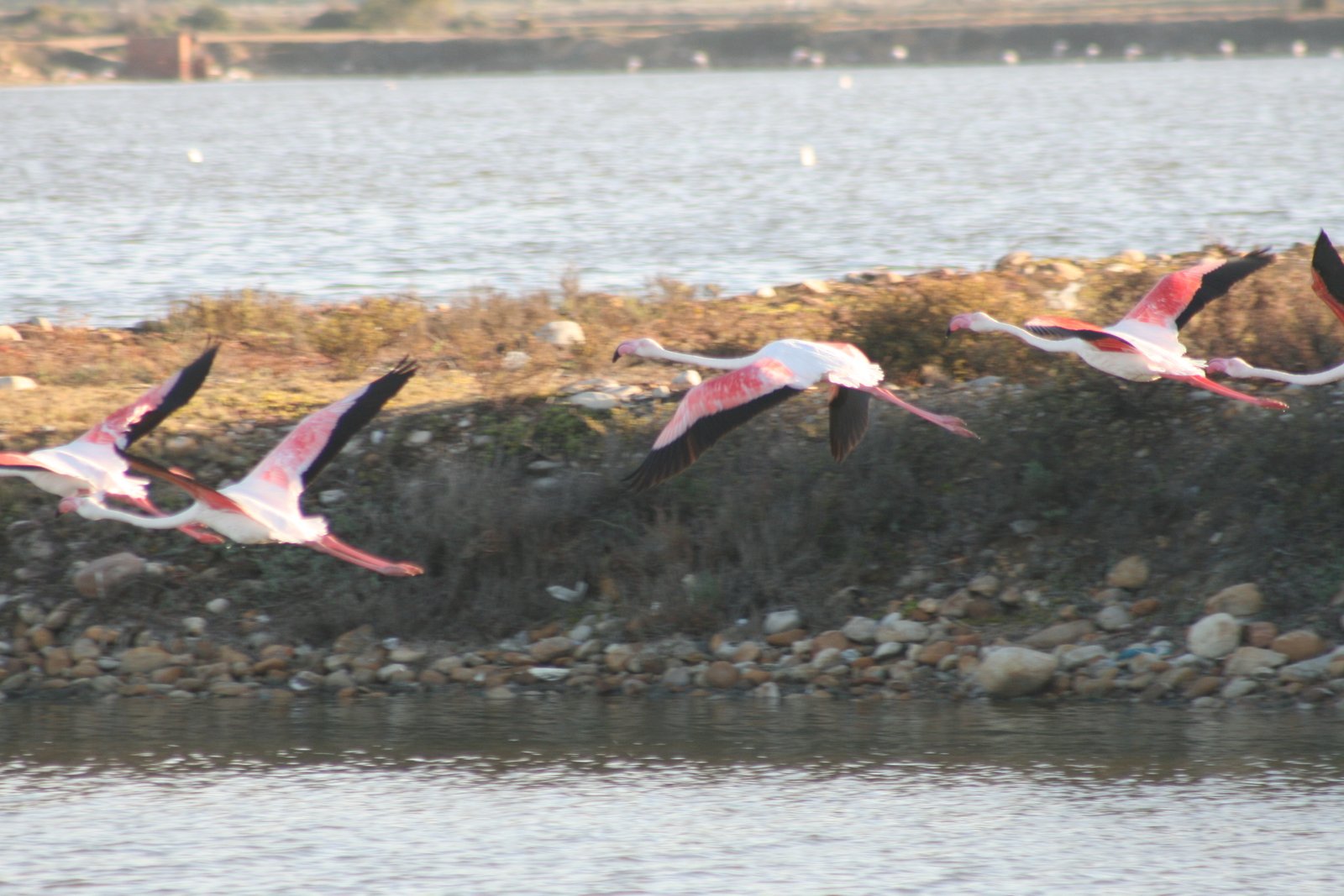
Greater Flamingo flying over the Chatty Saltpans

Greater Flamingo flying over the Chatty Saltpans

The Swartkops Estuary in Port Elizabeth is well-known as one of South Africa’s 112 Important Bird & Biodiversity Areas (IBAs) and while the river and mudflats have the greatest density of birds and hog the limelight as the most natural areas, my sunset visit on December 30 was to the salt pans and threw up a special that is often difficult to find elsewhere.

The Chatty River flows from the west into the Swartkops River and alongside it, next to the R367 main road, there are commercial saltpans which can provide quality foraging opportunities for many birds, especially when the salinity and water level are just right for a host of invertebrates to be crawling around in the benthos.

The elegant flamingos – both Greater and Lesser – immediately catch the eye and I was also drawn to the Pied Avocets, one of my favourite birds, sweeping and scything around in the water.

But dotted around the pan were smaller birds – the Blacknecked Grebe.

The Chatty Saltpans hold globally significant numbers of this uncommon nomad, which has the propensity to suddenly colonise a flooded area and start breeding. There are usually good numbers of this cute little diving bird at Swartkops though, and I did not notice any birds in breeding plumage, so perhaps they were moulting, with the widely-distributed Blacknecked Grebe known to utilise saline lakes overseas for this purpose.

Another special that can be picked up at the Swartkops Estuary is the Hartlaub’s Gull, which has a recently-established breeding colony in the area. It was previously considered a bird of the Western Cape, its distribution tied to that of Kelp, with only vagrant birds moving east of Cape Agulhas, and it interbreeds with Greyheaded Gulls in this river valley. Being omnivorous, it seems to have adapted to new foraging opportunities around human settlements.

Nicely built-up embankments between the pans allow one to approach the vulnerable Flamingos and their friends reasonably closely as they continue their search for invertebrates, and other birds that have adapted well to man-made wetlands were also busy foraging for their dinner in the gathering gloom – Blackwinged Stilt, African Spoonbill, Cape Cormorant, Kelp Gull, Egyptian Goose, Blacksmith Plover, Cape Wagtail and Sacred Ibis.

Where are the Chatty Saltpans?

Sightings list

Greater Flamingo

Kelp Gull

Pied Avocet

Blacknecked Grebe

Blackwinged Stilt

Lesser Flamingo

Egyptian Goose

Cape Cormorant

Blacksmith Plover

Hartlaub’s Gull

Cape Wagtail

Sacred Ibis

African Spoonbill


Woods chasing records while Grace & Coetzee make debuts 0

Posted on August 15, 2017 by Ken


While the revitalised Tiger Woods is favoured to close to within three of Jack Nicklaus’s record 18 major titles when the Masters gets underway this evening, Branden Grace and George Coetzee will make their debuts at Augusta, lifting South Africa’s representation in one of golf’s most hallowed events to an all-time high of eight.

The pair will join compatriots Tim Clark, Louis Oosthuizen, Ernie Els, Charl Schwartzel, Richard Sterne and Trevor Immelman in an event that has seen five South African triumphs – Gary Player in 1961, 74 and 78; Immelman in 2008 and Schwartzel in 2011.

The last player to win on his Masters debut was Fuzzy Zoeller in 1979 and, although Oosthuizen was edged into second by Bubba Watson in a playoff last year and Els is the reigning British Open champion, the spotlight has been elsewhere.

Woods, who has risen like the phoenix back to number one in the world, is the clear favourite, bringing both great form – three wins in his last five starts – and tremendous pedigree, having four previous Masters titles, to the tournament.

Even Nicklaus backs Woods to kick-start his quest for 19 major titles again.

“If Tiger doesn’t figure it out here, after the spring he’s had, then I don’t know. I’ve said, and I continue to say it, that I still expect him to break my record. I think he’s just too talented, too driven and too focused on that. From this point, he’s got to win five majors, which is a pretty good career for most people to start at age 37. But I still think he’s going to do it, he’s in contention every year,” Nicklaus said.

The other contenders are Rory McIlroy, who returned to form with a second-place finish in last weekend’s Texas Open, three-time champion Phil Mickelson and, if you believe the British press, perennial favourite Ian Poulter, even though the Ryder Cup star is battling allergies as practically everything is blooming at Augusta at the moment.

This year’s Masters will also see the emergence of a stunning new talent who could not only be the successor to Woods but also the precursor to the Chinese dominance of the game many have predicted.

The 14-year-old Guan Tianlang will smash Matteo Mannesero’s record of being the youngest golfer to play in the Masters by two years and the youngster has impressed all and sundry in the build-up to the Major.

The son of a keen seven-handicap golfer, who knew his boy was something special when he beat him aged seven, Guan qualified for the Masters by winning the Asia-Pacific Amateur Championships in November.

Woods and two-time champion Tom Watson were among the legends he played practice rounds with, and both came away with the impression they were in the presence of future greatness.

“I enjoyed playing with Guan, he has good tempo, his rhythm is very good. Once he grows a little bit, he will be able to get the club faster. He will use a different swing plane when he gets taller and stronger,” Watson said.

“He’s so consistent,” said Woods. “He was hitting a lot of hybrids into the holes yesterday, hitting them spot-on, right on the numbers. He knew what he was doing, he knew the spots he had to land the ball and to be able to pull it off. Good scouting, good prep, but also even better execution.”

The importance of course knowledge is magnified at Augusta, where the slopes on the fairways and greens are far steeper than the television coverage portrays. It really is the thinking man’s golf course.

“There isn’t a single hole out there that can’t be birdied if you just think, but there isn’t one that can’t be double-bogeyed if you ever stop thinking,” was the famous quote of Bobby Jones, the Masters co-founder and winner of seven Majors as an amateur.

The veteran Els gave the rookie Grace some words of advice before the tournament and he used the Jones quote.

“Overall I’d say it’s a tough golf course to learn in a hurry. I’m sure this will be the first of many visits to Augusta in your [Grace’s] career, so try to enjoy it and soak it all up. There are certain ‘crunch shots’ at Augusta where the tariff is very high and from one to 18 there is no other course where the margins between a birdie and a bogey are so small. You have to commit to your shots and be aggressive to your spots, even if that’s 25-feet right of the pin.

“You’ll know already that the slopes are more severe than they appear on television, so you hit a lot of iron shots from sloping lies and you’ve got the big elevation changes coming into some of those greens. The wind can switch around, especially in Amen Corner.

“The short game is the biggest thing at Augusta, though. The grass around the greens is mowed very tight and against the direction of play, so you have to be very precise with your strike. Obviously the speed and the slope of the greens get your attention, as well. Other than that, it’s really pretty straightforward!”

In Grace’s case, his short game, especially his lob-wedge, is impressive, but what is also relevant is that he is comfortable playing a high draw, which Augusta favours.

Apart from the advice from Els, Grace has also played a practice round with no less of an authority on Augusta than Player.

“I’m hitting the ball like I did in January again and I’m ready. Excitement will take care of the rest. It’s an experience I’ve never had before, Augusta and the Green Jacket is the most special of them all because of the history and South Africans having done well in the Masters in the past.

“I’ve been given some great insights in the practice rounds and everyone has just tried to help George and I as much as possible. Obviously I was disappointed to miss the cut in my last Major, but there was a little bit of extra pressure then because I had come in from nowhere really.

“Now I’m not worried that I have to go out and play well, I’m not worried about what people think because I’m number 32 in the world and I can just go out and enjoy myself. I’m in a good place,” Grace said.

Whatever the result, many would say he is in the best place of all for a golfer: beautiful Augusta in the springtime.

https://www.dailymaverick.co.za/article/2013-04-11-masters-preview-tiger-tiger-burning-bright/#.WZLvBlUjHIU

A new maturity behind De Kock’s top-class season 0

Posted on May 26, 2017 by Ken


A top-class season resulted in a handful of trophies for Quinton de Kock at the Cricket South Africa Awards over the weekend, and the wicketkeeper/batsman said he is approaching his game with a new maturity that befits his evolution into one of the senior players.

“I think I’ve slowly grown up and I’m being more mature about the game now, being more clever in the way I do things and prepare. I’m going to keep trying to learn and hopefully become even better. I don’t know as much as guys like AB and Hash, they are true geniuses and they teach me.

“I’m really focusing on my batting because in the next couple of years we’re going to have to start replacing some senior batsmen and I will have a more senior role. Sometimes you just need to do things yourself and I think I’m a fairly fast learner. Sometimes it’s all about trying to read what the bowler is trying to do or reading the situation,” De Kock said after he was named the overall Cricketer of the Year.

“To get all these individual accolades is nice, it feels good, but being able to just change the momentum or do something to keep the momentum for your team is the ultimate.”

The ICC ODI Cricketer of the Year is now off to England to try and help the Proteas to Champions Trophy glory. Although South Africa go into the tournament as the number one ranked side, suggesting they have the inside lane to success, De Kock downplayed expectations.

“We have a lot of backing at every ICC tournament, it seems whenever we go into a big tournament we’re always the favourites, but we don’t want to say too much about that. We don’t want to be the favourites, we just want to go and do our best, take it game-by-game,” De Kock said.

In addition to the main award, De Kock was also named Test Cricketer of the Year and ODI Cricketer of the Year, was honoured by his peers by being named SA Players’ Player of the Year and by the fans as the SA Fans Player of the Year.

De Kock scored 761 Test runs last season at an average of 54.35 and 805 ODI runs at an average of 50.31 and a strike-rate of 115.


  • Recent Posts

  • Archives

  • Thought of the Day

    Proverbs 3:27 – “Do not withhold good from those who deserve it, when it is in your power to act.”

    Christian compassion is a reflection of the love of Jesus Christ. He responded wherever he saw a need. He did not put people off or tell them to come back later. He did not take long to consider their requests or first discuss them with his disciples.

    Why hesitate when there is a need? Your fear of becoming too involved in other people’s affairs could just be selfishness. You shouldn’t be afraid of involvement; have faith that God will provide!

    Matthew 20:28 – “The Son of Man did not come to be served, but to serve, and to give his life as a ransom for many.”


↑ Top