for quality writing

Ken Borland


It’s agreed! Spin is the way to target the Aussies 0

Posted on September 29, 2026 by Ken

What happened on Pink Day sealed the deal for Ken Borland

The Ball in Play

Temba Bavuma celebrates his superb century at the Wanderers.

Both the Proteas and Australia agreed at the end of their Pink Day ODI at the Wanderers on Sunday that it had been the South African spin bowlers who had once again been the difference between the two great rivals.

Sure, Temba Bavuma scored a masterful century and David Miller smashed a career-best (statistically and maybe in terms of what it meant personally too) 142 to take South Africa to 365 for nine after being sent in to bat.

But when Mitchell Marsh and Travis Head had added 130 for the first wicket in just 17 overs and Australia were ahead of the required run-rate, it was the spinners who turned the tide once again for the home team.

Left-arm spinners Keshav Maharaj and Bjorn Fortuin repeated their heroics of the first ODI in Durban on Heritage Day [September 24), and this time they had the support of part-time off-spinner Aiden Markram.

Together, that triumvirate of twirlers all bowled their full ration of overs and took five wickets for 179 in 30 overs. Not only did they go for less than a run-a-ball at a venue which can be very tough on spinners, but they also removed five of Australia’s top six.

Having been the key factor in the ODI series win with a game to spare, I believe Proteas coach Shukri Conrad should also look to spin for the Test series that starts on October 9.

When the fixtures were announced for this Australian tour back in February, the fact that the three Tests were being played at Kingsmead, St George’s Park and Newlands got me thinking.

All three matches being played at coastal venues made me wonder if Conrad, who often dissents with the popular or cliched view, was planning to attack the Australians with spin. South Africa’s coastal venues, especially Durban in recent years, are the most spin-friendly in the country.

Keshav Maharaj is based at Kingsmead and Prenelan Subrayen and Senuran Muthusamy all made their Test debuts while playing for the KZN Dolphins, such has been the success of spin in Durban.

St George’s Park in Gqeberha, formerly Port Elizabeth, can also be very spin-friendly depending on the wind. When thinking of the Test venues, my mind immediately went back to April 2022 when Maharaj and Simon Harmer destroyed Bangladesh, taking all 10 second-innings wickets at Kingsmead as they bundled them out for just 53, and then repeating the feat further down the coast in the next match, where they shot the tourists out for just 80. They are the only pair of bowlers to have achieved this in back-to-back Tests in the history of the game.
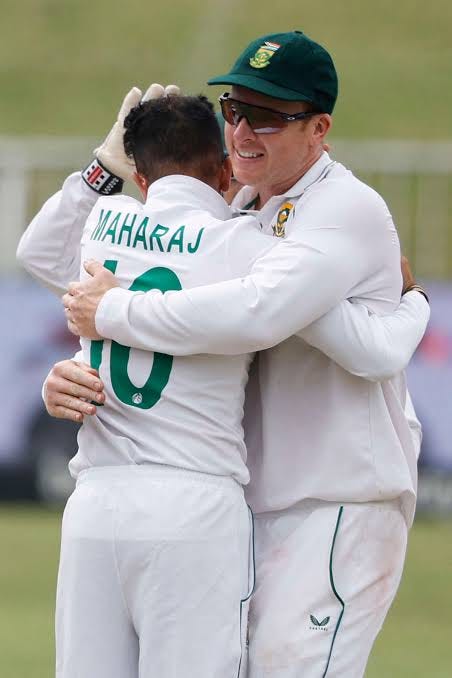
SPIN TWINS … Keshav Maharaj and Simon Harmer celebrate their success together.

Newlands in Cape Town has also traditionally been a favoured venue for the spinners, Paul Adams and England’s Colin Blythe are both in the top-10 wicket-takers in Tests there, while Paul Harris, Shane Warne, Nicky Boje, Johnny Briggs, Hugh Tayfield and Maharaj are all in the top-20. When I was growing up, Western Province leg-spinner Denys Hobson was always a threat for visiting teams in domestic cricket, and I remember Transvaal’s slow left-armer Alan Kourie routinely winning games there on the third day, using the wind superbly.

The best red-ball return at Newlands in the last four seasons is left-arm spinner Kyle Simmonds’s seven for 39 against the KZN Dolphins in 2023/24.

My learned colleague Stuart Hess, whose coverage of South African and domestic cricket for TimesLive and the Sunday Times should be compulsory reading for cricket fans, did rather dampen my spinner daydreams when he informed me Conrad had told him the thinking around the fixtures was early-season pitches on the coast seaming around, the coach mentioning when Marco Jansen took seven for 13 at Kingsmead as he bowled Sri Lanka out for a measly 42.

But that match was actually at the end of November in 2024. Normally when I have disagreed with coach Shukri, he has invariably proven me wrong, but I would be very surprised if, having seen what has transpired in the ODI series, he is not thinking of attacking Australia with both Maharaj and Harmer.

Conrad did say this week that the double-spinner tactic, planned before what he called the “hamstring pandemic” amongst the quick bowlers, had “exposed” some weaknesses in the Australian ODI team, but he added that their Test batting line-up is very different to their limited-overs personnel.

But just to strengthen my argument, I can report that marvellous Miller agreed with my idea when he spoke to the media after his magnificent 142 off just 93 balls.

“I would love to see us test the Australians on days three and four with turn because we have great spinners. Playing our spinners has probably been a weakness for them. Our spinners are extremely good at holding a good length and asking questions. When the surface holds a bit, it takes a lot to hit them off that length,” Miller said.

Australian all-rounder Jack Edwards, who was their best bowler with five for 67 in just his second ODI and then scored 25 to give them a sliver of hope, explained why facing the Proteas spinners has been such a problem.

“The spinners are both really good at controlling their length and when the pitch is a bit dry and the ball a bit softer, one delivery will turn sharply and the next one skids through. So it’s a considerable risk to try and hit boundaries, they are quality bowlers,” Edwards said.

But let’s go back to Bavuma and Miller, who are both such inspirational figures in the batting line-up.

Captain Bavuma had to come in after the shock of Aiden Markram, back in the team for the first time since the T20 World Cup, being dismissed first ball of the match courtesy of a spectacular Cooper Connolly catch. A lengthy delay before the opening delivery was bowled – either due to SuperSport delaying things or the event managers getting their timings wrong – probably did not help him.

Bavuma looked in fine touch from the get-go and played some of the most elegant strokes of the day, while also showing he is capable of brutal dispatching too as he collected 10 fours and two sixes in his 103. Bavuma now averages 49 against Australia in ODIs, striking at 85, and averages 41 in Tests.

Whether he is still batting at number three in the next World Cup will become more clear in the months ahead, but what is certain is that he will be the lynchpin in the South African batting line-up, allowing the strokeplayers and boundary-hitters to bat around him.

Just like Miller did at the Wanderers. Their ground-record partnership of 156 off 135 balls for the fourth wicket featured timing as sweet as the most invigorating balsam, and just as medicinal for South Africa’s health after they had slipped to 93 for three after a difficult first 15 overs when the ball moved around and there was some steep bounce.

The previous fourth-wicket record for the Proteas at the Wanderers was 105 between AB de Villiers and JP Duminy, against India in 2013/14.
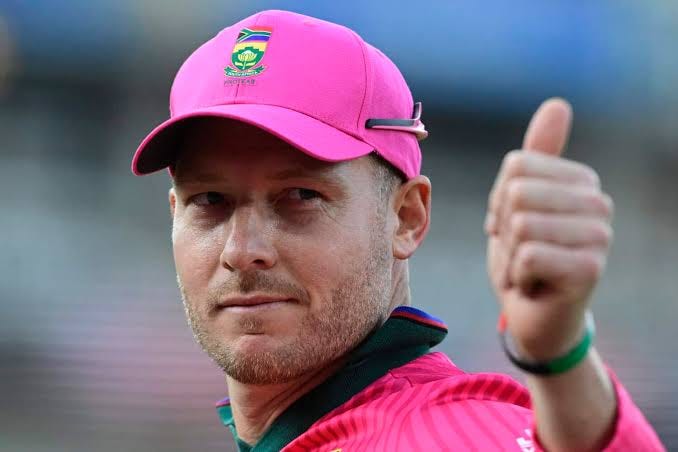
Thumbs up for David Miller!

There are some who have written off the 37-year-old Miller’s chances of making the 2027 World Cup squad, but he has not averaged below 40 in his last four seasons of ODI action, while striking at 114. He has scored three centuries and seven half-centuries in that time.

His strokeplay had the large Pink Day crowd purring with delight, especially when he sent the Australian bowlers over the boundary fencing on nine occasions. His record against South Africa’s greatest rivals is extraordinary: He now averages 59.20 against them, at a strike-rate of 106, with four centuries.

“I just want to contribute in the best way I can, make an impact. I just try to stick to my processes, I’ve been around for a long time so it’s also time for me to lead from the front and stick my hand up.

“I was pretty hungry today. You can never 100% guarantee that you’re going to make the World Cup squad and I still have a lot of hard work to do. This is a very important series because we haven’t played at home for a long time. It’s going to be very nice to have a big summer here against some really good opposition before we host the World Cup next year.

“The key for us leading up to the World Cup is to find our balance and ensure our depth is good. There are a lot of batsmen coming through, and it’s similar with the bowlers,” Miller said.

WARNING: Global cricket is currently unsustainable 4

Posted on September 29, 2025 by Ken

Tony Irish.

“The current structure of global cricket is unsustainable and countries outside of the ‘Big Three’ (India, England and Australia) will play less and less bilateral series cricket, with some in danger of disappearing altogether from the Test cricket scene,” Tony Irish, who is an independent director of cricket’s global players’ body, the World Cricketers’ Association, has warned.

The only international cricket that really makes money now is India at home and abroad, and England and Australia tours. Any other bilateral cricket loses money. Bilateral cricket is those tours between countries playing Tests, ODIs and T20 matches.

The Future Tours Program previously ensured every team would play each other twice in a four-year cycle, home and away. But Narayanaswami Srinivasan [India], Giles Clarke [England] and Wally Edwards [Australia] deregulated everything in 2016, making bilateral tours a free-for-all. There are no rules, and therefore there is no context to so much international cricket.

It has become like Liverpool playing Arsenal and Chelsea five times a year and Bournemouth just once. But the BCCI [Board of Control for Cricket in India] don’t want more regulation and a well-structured calendar. That would mean they cannot wheel-and-deal, give and take games away from countries depending on whether they vote with them or not.

They want the status quo to continue so they can maximise their own revenues. England and Australia just go along with them and no-one stands against them.

There also needs to be a more equitable distribution of ICC revenues. India take nearly 40% of the revenues and they already get huge pots of money through the IPL and bilateral cricket.

There is huge financial inequality across the game with India at the top of the pile. India has resources of approximately $1.5 billion dollars per year; the country in 13th place gets $6 million per year yet these two teams must compete against each other. How do they expect this to be a contest? There are 108 International Cricket Council (ICC) member countries and 50% of ICC revenues go to the ‘Big Three’, 87% of bilateral revenues are retained by England, Australia and India; while countries ranked 13 to 108 get 2% of total cricket revenues. ICC revenues are those generated from ICC events i.e. world cups, and is different to bilateral revenues which are the aggregate of what all of the countries generate from their series against each other.

Why must the ‘Big Three’ take such a huge slice? The system is just so inequitable and so incoherent. The whole structure, even ICC events, is set up for them and they have won 19 of the last 22 major ICC events.

While life is obviously good for Indian cricket, and they do deserve consideration for being the biggest market in the game, the second-biggest sport in the world is in danger of becoming like gridiron or baseball, which are minor sports in all but a couple of countries.

The ‘Big Three’ are just maximising revenue for themselves now, but it’s very short-sighted because in five or six years they might have no-one else to play against. People will get bored of just watching England-versus-Australia-versus-India. It’s a bad strategy and it’s one of the reasons the players are gravitating towards franchise leagues.

The ICC held their AGM in late July and set up a working group to make recommendations to the ICC board on an improved system of playing international cricket. But Irish, who is also a former chief executive of the South African Cricketers’ Association, told kenborland.com that despite this initiative and the phenomenal interest created by the magnificent five-Test series between England and India, “bilateral international cricket for other countries is highly endangered unless structural changes are recommended by this group and those structural changes are implemented”.

“The current system is broken,” said Irish, “primarily because there is no coherent playing schedule centrally controlled by the ICC, and bilateral cricket consists of a matrix of individual deals between countries, with no rules.

“This allows the ‘Big Three’ to play more and more against each other and less and less against the smaller countries. In a landscape where the global media rights revenue pie is also getting smaller, the commercial value of series between the smaller countries is dropping and these countries will soon no longer be able to afford to play bilateral series, which includes Test matches.

“This is also happening in a system where there is an inequitable sharing of revenues from ICC events. The combined effect is that in the current system the rich get richer and the poor get poorer. The smaller countries will, in addition, struggle to retain their best players for bilateral cricket as these players can earn more playing in T20 leagues around the world than they can playing bilateral cricket for their countries.

“The ICC sees all these franchise T20 leagues purely as domestic cricket, but in reality they are not – they all use international players and because of that they compete with bilateral cricket for players. In an unregulated schedule they also compete for calendar space. For a number of the small countries, the leagues are winning this battle against bilateral cricket; and Test cricket being the longest format, and the most expensive to stage, will suffer the most.

“In South Africa, despite the Proteas being the world Test champions, the team is scheduled to play only four Test matches over the next 12 months and there is no home Test cricket in the coming season,” Irish pointed out.

Amidst this pessimistic outlook, however, the World Cricketers Association released its Game Structure Report (https://theworldca.com/wp-content/uploads/2025/03/Global-Game-Structure-Report-Final-1.pdf) in March. The report is the only holistic review of the structure of cricket and is based on over 60 detailed interviews with game stakeholders (including administrators, media and commercial partners, players, team owners and broadcasters and journalists), extensive player surveys, statistical and scheduling data, and financial and economic data. Among the recommended structural solutions are:

  1. A centrally controlled (by ICC) global calendar which includes all bilateral cricket, ICC events (eg World Cups) and T20 leagues using international players
  2. Simpler and easier to follow competition structures across all formats with credible points systems to provide context
  3. Workable windows for core international bilateral (including Test) cricket
  4. A more equitable distribution of ICC event revenues
  5. A regulatory framework across the cricket system.

“This shouldn’t be all doom and gloom because there are solutions to this. They however require structural change to the whole system and not a tinkering with the current system. The introduction of windows for bilateral cricket is part of a workable solution to ensure bilateral cricket, including Test cricket, can co-exist with T20 leagues rather than compete with them,” Irish said.

“In the current system, no top countries play during the IPL, so that effectively has its own window. The IPL is fantastic for the game, but that window will continue to grow because of the billion-dollar investments in it and its insatiable market. It’s already gone from six weeks to nine weeks and this growth cuts into the playing calendar of other countries.”

“In addition, we’re now seeing cross-ownership of teams with the IPL franchises having sides in the SA20, The Hundred, Caribbean Premier League and Major League Cricket (USA). Eventually we’ll get to the stage where T20 franchises will offer the best players contracts to play for all of their teams across multiple leagues.

“If this happens, the national Boards will lose contractual control over their most important assets, being their players. If anything should act as a warning sign to the national Boards that the system must change, it is this.

“In a restructured system, the World Test Championship could also be improved. Currently it is confusing because the points system is contrived to fit the existing matrix of bilateral deals which has some teams playing more matches than others and some countries not playing others at all.

“Very good Test teams like the Proteas and New Zealand are playing fewer and fewer Tests, which will translate into less and less domestic four-day cricket – the breeding ground of Test cricketers. A four-day domestic first-class competition is one of the biggest cost items for every national Board, but if Test cricket loses money and less and less of it is played, then it is obvious that Boards will cut back more and more on four-day domestic competitions,” Irish said.

“We believe, said Irish, “that by making these changes it would significantly improve the global cricket product and that this would result in additional annual global revenues of approximately $250 million. The Boston Consulting Group, which has done a significant amount of work on the economics of the game, believes that the global cricket industry revenues should be about double what they currently are.

“We presented the World Cricketers Association Game Structure Report at the World Cricket Connects conference at Lords in June (just before the World Test Championship final) and it was well-received by the majority of those present at the conference.

“We know however that our proposals are being met with resistance at the ICC level. I think that most countries know that the current system is either broken or that it should be significantly improved. If the ICC group looking into the global structure don’t like our proposals, then it will be interesting to see what recommendations they make to deal with the current problems.

“I don’t believe the current system can carry on much longer without some countries being forced to abandon aspects of bilateral cricket or them losing their most important assets as the game continues in the current direction of travel,” Irish said.

If we want international cricket to be a healthy product then we can’t just go on doing the same thing. Even the richer countries will eventually fall off the edge, it’s a downward spiral. It’s all going in the wrong direction, especially if you’re a smaller country, and no-one is stopping the train.

The Global Game Structure Report calls for four 21-day protected windows reserved for bilateral cricket in which no T20 leagues can be held. It would mean every country would play at least one match per format against all other teams. Promotion and relegation between two divisions would provide greater context and jeopardy.

To save bilateral cricket, we need structural change, not a little plaster. Day/night Tests, pink balls, four-day Tests – none of it has worked to meaningfully change things.

Previously, the Woolf Report was specifically about ICC governance, but India didn’t like it and so the ICC dismissed it. It was the same three countries getting their way because India don’t want to lose their bargaining chips. Remember when Haroon Lorgat stood up to them and India cut their tour to South Africa in half and CSA lost a billion Rand?

The ICC and the ‘Big Three’ seem intent on allowing such great cricketing nations as South Africa, New Zealand and the West Indies to fade into obscurity, their heroes and entertainers seen only in dusty old archival film footage.

SA missing express pace, but still confident they can bowl Australia out twice 0

Posted on May 13, 2025 by Ken

Proteas coach Shukri Conrad is comfortable with the bowling attack for the World Test Championship final despite a couple of notable absentees.

Being able to bowl consistently at speeds in excess of 140km/h is obviously a great asset in Test cricket and South Africa have had two of their prime express pace options in Anrich Nortje and Gerald Coetzee removed from the equation, but the Proteas are content they have all their bowling bases covered for the World Test Championship final against Australia at Lord’s next month.

South Africa announced their 15-man squad for the showpiece final on Tuesday and Nortje and Coetzee were both excluded based on concerns over their match fitness and their ability to last all the days of what could be a six-day Test. Nortje has played just once for Kolkata Knight Riders in this year’s Indian Premier League, while Coetzee returned to action this month and has played twice for Gujarat Titans. But four-over spells are hardly a base in terms of conditioning for the demands of Test cricket and coach Shukri Conrad has wisely left both out of the final squad, however much he would have wanted them there.

Dane Paterson and Lungi Ngidi have been called up instead and both have the experience to deal with the pressures of a final and the skills to bowl effectively at Lord’s. And Corbin Bosch, the most like-for-like bowler to Nortje and Coetzee, has also been named in the squad.

“We all enjoy sheer pace, but unfortunately Anrich’s return to the Test squad just did not pan out the way we hoped. He was due to play in the Centurion Test against Pakistan but then suffered a broken toe and is now in no position to play a Test match,” Conrad said at Cricket South Africa headquarters in Johannesburg on Tuesday.

“Gerald has been able to make his way back on to the field as well, but he’s in a similar boat as Anrich when it comes to bowling loads. But if you look at what Corbin has done against Pakistan, then you’ll know he’ll provide really good cover and could even make the starting XI depending on conditions.

“Corbin certainly doesn’t lack pace, so we are not too compromised on that front, he brings really good balance to the squad. The medical staff have been in touch with all the bowlers since the IPL started. They might not get the necessary workloads in the matches, but they are at the nets and we are all very happy that they’re doing the necessary work, they report regularly to us and we are very comfortable with where we are at. And Australia are in a similar position to us,” Conrad said.

Bavuma said he was very happy to have Ngidi and Paterson, both more fast-medium practitioners but with plenty of seam-bowling skills that will suit English conditions very well, in his attack. Especially Ngidi, even though the 29-year-old has not played a Test since last August in the West Indies.

“Playing in Australia or South Africa, the conversation about extra pace is definitely bigger, but there’s a different view for fixtures elsewhere. Control and skill is a lot more of a thing in England and having Lungi and Dane will definitely benefit the team.

“With Lungi, if he’s fit and motivated then you know what you’re going to get, whether he’s been playing for six months or not. So there’s no massive risk with him, I know what I’m going to get and he’s a senior player. The team listen to what he has to say and there’s a lot of backing and confidence in him in the team,” Bavuma said.

While the coach conceded that Australia were probably favourites for the one-off final, he and captain Temba Bavuma were still full of fighting talk about their prospects.

“We probably go in as underdogs, not in terms of ability but experience. But I’m very confident that if we play to our best then we have every chance of beating them. We never just want to compete and, while reaching the final was a goal, so was winning it. That was the goal Temba and I set out once the Test side started to get some momentum.

“We have very good players, our bowling attack is always a threat and we have batsmen who have the ability to put the Australians under pressure. Every Test for us lately has almost been a must-win and the players have shown they can deal with those pressures.

“And it’s great that the final is against Australia because we haven’t played them for a while and they are the one side we always want to topple and show the world that we belong at the top table. Test cricket is the lifeblood of the game around the world, the other formats rely on it and the ICC need to take it in hand and look after it rather than the whims and fancies of a few nations,” Conrad said.

Bavuma said another opportunity to secure some long-awaited ICC silverware should not be seen as added pressure, but rather a reward for playing very good cricket in the World Test Championship.

“We have some experience in knockout games now and getting into these positions shows that we have been playing very good cricket, playing well enough to get into those matches. Now it’s about what we need to do to get over the line, what exactly do we need to do differently? Or, what happens to us emotionally that we do something different when we should just stick to what we’ve been doing.

“But we are not really feeling any extra pressure, we have a 50/50 chance and we will make sure it stays that way by preparing as well as we can and making sure we leave no stone unturned. We have found ways to be successful and we take confidence from that. We respect Australia, but we have certainly earned our place in the final,” Bavuma said.

WTC Final squad: Temba Bavuma, Aiden Markram, Tony de Zorzi, David Bedingham, Tristan Stubbs, Kyle Verreynne, Ryan Rickelton, Lungi Ngidi, Keshav Maharaj, Corbin Bosch, Kagiso Rabada,  Dane Paterson, Senuran Muthusamy, Marco Jansen, Wiaan Mulder.

Akona not surprised Rassie has not massaged Boks but made massive changes 0

Posted on April 09, 2025 by Ken

DULLSTROOM (Mpumalanga) – Vodacom Bulls legend Akona Ndungane is clearly comfortable with change and, having mastered the gales around Highland Gate Golf and Trout Estate, he turned his attention to rugby and said it was no surprise Springbok coach Rassie Erasmus has not just massaged his starting line-up for their second Rugby Championship Test against Australia but made a massive 10 changes to the run-on XV.

Ndungane is an avid golfer who plays off a five handicap, but playing in the Vodacom Origins of Golf Pro-Am Series is a first for the 43-year-old. It was also the first time he has played at Highland Gate, the 6717m course perched 2000m above sea level in the valleys and mountains of the Steenkampsberge. And then to make the challenge even more daunting, the wind blew at 30km/h on the first day of the pro-am.

“This is the first Vodacom Origins of Golf Pro-Am I’ve played in and it’s wonderful,” Ndungane said. “I love golf, both watching it and playing, and to be around the pros is really special. Just to be here at this beautiful course is amazing, especially for me, being my first time playing here.

“What an experience, especially with the wind blowing so hard it felt like the Western Cape or a coastal course. But our pros, Cara Gorlei and Keenan Davdise, were great company and I got to play with my mate OG Molefe. So it was a great outing, and we managed to lead after the first round.

“When conditions are tough, the quality comes through because you have to be more focused. If you hit it in the rough, then it was very tough, even to just try and find your ball. But the greens are firm and nice,” the former Springbok wing said.

Quality is also something the 2007 Rugby World Cup winner sees in the Springbok set-up at the moment. Ndungane believes the squad has advanced well in the development of their more attacking game, allowing Erasmus more flexibility in selection ahead of Saturday’s match against the Wallabies in Perth.

“In a way I expected that sort of start last week because we have seen the game-plan they are trying to implement. Sacha Feinberg-Mngomezulu is in amazing form and starting at flyhalf allows him to free himself, to express himself. They all seem to be really enjoying their rugby at the moment.

“They beat Australia 33-7, but the Wallabies were fortunate not to concede fifty points the way the Springboks dominated first phase, defence and attack. Those yellow cards at the end helped them.

“But it’s no surprise Dr Rassie has made so many changes. He’s trying to build depth and give players quality opportunities to see if they can cope. When you’re in a good place then you’re able to make changes. And I don’t think this team is really any weaker than last weekend’s.

“I’m really looking forward to seeing Lukhanyo Am playing at 12. We saw how good he was in his comeback against Portugal, even though injury has unfortunately slowed him down a bit. It’s an exciting combination in the backline with Sacha, Lukhanyo and Jesse Kriel playing together,” Ndungane said.

  • Recent Posts

  • Archives

  • Thought of the Day

    Colossians 3:13-14 – “Bear with each other and forgive whatever grievances you may have; forgive as the Lord forgave you. And over all these virtues put on love, which binds them all together.”

    “When the Holy Spirit lives in you, you reflect the qualities of Christ in your life. Love and courtesy are basic characteristics of the Christian life. … If Chris lives in you, you will be kind and patient toward others.

    “A person who is truly courteous is humble, … His attitude is the same regardless of whether he is talking to kings or beggars. He treats everyone alike, no matter what race, colour or creed they are. He rejoices in making the path through life easier for others to travel.

    “It is impossible to say that you love and serve God while at the same time treating your neighbour with contempt and disrespect.” – Solly Ozrovech, A Shelter From The Storm


↑ Top