for quality writing

Ken Borland


Everitt wants Sharks to lift their focus after ‘easier’ games 0

Posted on August 17, 2018 by Ken


On paper, the Sharks have already played most of their ‘easier’ games and assistant coach Sean Everitt is hoping the challenge of taking on the big guns in the competition will cause them to lift their game.

The Sharks have played the Pumas twice, both sides winning their home game, and have scraped home twice against the Eastern Province Kings, while probably their best performance in terms of quality came in the loss against the Golden Lions at home, where they were on top for three-quarters of the match.

The KwaZulu-Natalians are currently fourth on the log, two points ahead of the Free State Cheetahs, but they have a tough run-in to the semi-finals starting with their match against Western Province this Saturday in Durban. They then travel to Johannesburg to take on the Lions, host the Blue Bulls and then end the round-robin phase with visits to Kimberley and Bloemfontein.

“The players are working hard and are frustrated that they just can’t get that consistency. If we concentrate then we can put things together, but we have got to cut out those errors we saw again last weekend against the Pumas. The competition is pretty much in two parts for us, the first part is done where there were a couple of banana peels, and now we’re looking forward to the challenge against the top teams.

“Western Province also have a young side so there’s no hiding behind inexperience for us, and the Lions and Bulls are also waiting for us. Hopefully it brings out the best in us. I think we’ll hit our straps this weekend, teams like Western Province bring out the best in us. We’re two points behind them on the log, so a win will elevate us to third,” Everitt said.

There has obviously been some improvement in the Sharks team since that opening loss to the Pumas in Nelspruit, particularly in the defensive work of the side, and the spirit of the team is good given how they came back to win last weekend in Durban.

“Some people might think that there are few positives, but the defence has got better and the guys showed a lot of character to come back from going down again against the Pumas. That certainly wasn’t planned but there’s a lot of fight in the side and we’ll take that as a positive,” Everitt said.

The likelihood of changes to the team for this weekend is high, however, with Everitt saying “there are certainly things that are not working for us”.

Chief among those is the attacking fluidity of the backline and flyhalf Lionel Cronje’s place is probably top of the list of selection issues to be discussed. The Sharks lineout, despite the superb direction of Marco Wentzel, also seems to stumble at key moments and a change at hooker may also be considered.


The John McFarland Column: Why are there so few Lions backs in the Springbok squad? 0

Posted on May 30, 2018 by Ken


The Lions have an unbelievable record against all other South African SuperRugby franchises since 2015 and they have consistently been our best team. It really is an amazing record, their dominance of South African rugby is the reason they have been in two successive finals and they have consistently scored the most tries in the competition, so you have to ask why they have so few backs in the new Springbok squad?

With only Aphiwe Dyantyi and Elton Jantjies named in the 43-man squad, there may be no Lions back in the starting line-up against England, which is quite interesting when you consider they have been beating everyone else in South Africa convincingly, and especially with their coach, Swys de Bruin, now with the Springboks as a backline consultant.

There have been suggestions that new Springbok coach Rassie Erasmus is concerned with the defensive prowess shown by our SuperRugby franchises, but the Lions in 2016 had one of the best defences in the competition and you have to play, you can’t just kick the ball downfield and defend.

It’s also interesting that none of the first-choice back three from last year’s Springboks – Andries Coetzee, Raymond Rhule and Dillyn Leyds – have been selected by Erasmus.

It is true to win big competitions you need a rock-solid defence.

If you look at the points conceded figure for our teams, the four South African outfits have all leaked between 381 and 392 points, an average of 27.2-29.8 points per match. In terms of tries conceded, the figures are 49 to 52 per side, which amounts to an average of 3.5-3.7 per game.

In comparison, the Jaguares, who are strong contenders to win the South African Conference, are conceding just 26.2 points and 3.4 tries per match. Only the Sunwolves, the bottom team in SuperRugby, have worst stats than the South African franchises.

What is causing our teams to concede so many points? You can’t just say it’s because we now have an attacking mindset. Not one of our sides has been really convincing defensively, which perhaps reflects where most of them are on the overall log. At Test level, the Springboks used to work on trying to concede less than an average of 15-16 points per game, and 11-12 at the World Cup, with just one try. Then, more often than not, you would be on the winning side. It is imperative to get back to these sort of stats now going forward because big Test matches are often gain-line arm-wrestles.

The really good news for the Springboks though is that England have just conceded nine tries and 63 points against a scratch BaaBaas XV, both record lows for them at Twickenham. So their defence is in real trouble and in their last four games one began to notice some real cracks both in terms of their system and individual tackles.They really are sitting before the tackle which causes them to miss so many and any ‘backdoor’ second-line plays cause total disconnection and confusion.

Eddie Jones turned on his players viciously, saying some of them couldn’t cope with the pace of international rugby, but he picked them in the first place, and it will be even harder on super-fast highveld fields with altitude as a factor.

To get back to our Lions, their win over the Stormers at the weekend was so vital because it maintains a buffer between them and the Jaguares, who have a game in hand but are six points behind. It was an exciting battle with the Stormers exploiting the Lions fullback getting into the defensive line early with attacking kicks and the Lions exploiting the home side’s flimsy defence of the rolling mauls and around the edges – the way Nic Groom dummied Ramone Samuels to score was way too easy.

There is also a difference in the way the Lions use the rolling maul these days, they are prepared to wheel it more in order to exploit space and take out the defenders stopping the maul. It is really good use of forces and you have to credit Philip Lemmer for bringing in something different and innovative.

You have to praise the Lions for the win, but the Stormers will rue the red card to Raymond Rhule. You just can’t do what he did anymore on a rugby field, although the nature of his suspension and those of other players in recent weeks does raise fresh questions over exactly how the judiciary works in SuperRugby. How can the ban cause them to effectively miss no rugby?

The Sharks were really outplayed by the Jaguares in Buenos Aires but they also did some sloppy things.

Coach Robert du Preez also made a massive statement during the week that they would be in the final either this year or next, which smacked of desperation and false news from a side scrambling for a quarterfinal place, and about to come up against one of the form teams in SuperRugby.

The Sharks’ pillar defence was just not good enough last weekend, the guys were either too wide or too upright. You can’t allow yourself to just be cut so easily next to the ruck, that should be the strongest part of your defence because that’s where the ball is, but for the Sharks, it was their weakest area.

The Jaguares did finish well and wing Ramiro Moyano scored three tries and they were backing up the ball-carrier well. The try they scored just before halftime to go 17-0 up would have hurt the most for the Sharks because they were slow to react, players had their backs to the ball and conceding a try from a quick-tap penalty is the sort of thing you can’t afford away from home.

It’s a very long trip to Buenos Aires and they had a quick turnaround from their last game, but the Sharks looked sluggish. The Bulls had similar problems the week before and how to manage that trip is something the South African teams have to sort out. When I was involved with the Springboks, we found it better to train in South Africa for two sessions, then fly over, have a captain’s run and play.

It is pleasing, however, to see the Jaguares hit their straps and when SuperRugby resumes they will have three vital games left in which to clinch their playoff place. Their Australasian tour proved that they can win on the road and they have been really impressive in their recent bonus point wins at home, so they are building nicely. It will still, however, be a big test for them to host the Stormers and then play the Bulls and Sharks away after they have played Tests against Wales and Scotland.

The Bulls were also really disappointing last weekend and they will look at their game against the 14-man Brumbies and really rue their defeat – it will probably be the game that loses them a playoff place.

They did some really good things on attack – Handre Pollard’s show-and-go try and Roelof Smit scoring out wide – but their defence is just not good enough for them to be playoff contenders. An example of that was when they had three defenders on two attackers after the restart turnover, but they all just rushed up and opened the space for the Brumbies on the outside. They will also be disappointed with the try when fullback Tom Banks ran the whole length of the field to score.

The Bulls are just not able to stop momentum close to the rucks, their opponents get go-forward too easily, and especially in the 22 that generally means seven points against you because it leads to space around the pillars, something which Brumbies scrumhalf Joe Powell exploited.

The Bulls have certainly been more entertaining this season but they need to step up over the next few weeks. Pretoria only really comes out to the stadium for winning rugby. The Bulls have a lot of talent in key areas, the locks are the envy of every team and the fetchers are second to none, and they have real X-factor in their outside backs.

Pollard has played plenty of Tests and is at the peak of his powers, Jesse Kriel too, and they have more players in the Springbok squad than the Lions, so how come are the Southern Gauteng side so far ahead of them? The Bulls are certainly an enigma, they do a lot of good things in every game, they just need that consistency of performance, they are too up-and-down at the moment.

On a parting, more positive note, my heartiest congratulations to Siya Kolisi on his well-earned appointment as captain for the England series. I am sure he will fly the South African flag high and do the position proud.


John McFarland was the Springbok defence coach from 2012 through to the 2015 World Cup, where they conceded an average of just one try per game and the least line-breaks in the tournament. He is now the assistant coach of the Kubota Spears in Japan and before that, McFarland won three SuperRugby titles (2007, 09, 10) with the Bulls and five Currie Cup crowns with the Blue Bulls. In all, he won 28 trophies during his 12 years at Loftus Versfeld.
Events in Durban the catalyst for inspirational Proteas comeback 0

Posted on May 09, 2018 by Ken


There were many inspiring individual performances in the Proteas’ 3-1 win over Australia in what was an incredible series, but the events in Durban on the fourth afternoon of the first Test may have been the most important catalyst for the impressive comeback.

It’s fair to say that the Proteas probably weren’t in the good books of their fans after they were walloped 5-1 in their ODI series against India and lost the T20 rubber as well, and then they were decidedly flat at Kingsmead as Australia put themselves in an unassailable position.

And then David Warner behaved as if he had a hornet in his pants, never mind sandpaper, after AB de Villiers was run out in the second innings, with an unhinged display of angry, crass celebration in the face of young Aiden Markram. It was clear Australia’s attack dog in chief had lost control, but insipid umpiring ensured nothing was done.

Much of the afternoon session was spent verbally abusing Markram and Quinton de Kock, who eventually decided to respond to all the personal taunts with a verbal volley of his own. Of course, according to the Australian team rules, that crosses the line and Warner was now threatening physical harm.

All of this drama had the effect of making the Proteas angry, as captain Faf du Plessis admitted, and from that moment on they were a different beast, and the South African public rallied behind their cause. It was like an unstoppable wave and all because of Warner’s sledging, a tactic which Du Plessis considers counter-productive, due to its motivational effects on the opposition.

The Australians were also angry, Warner’s exposure, Kagiso Rabada winning his appeal in Port Elizabeth and then the crowd in Cape Town making them feel more and more victimised. Warner, who was made vice-captain to bring positive energy into the camp, then crossed over onto the dark side because of how unfair he felt it all was. Ironically, it was he who had set all this in motion.

On the outside, Cricket Australia have seemingly been very upfront in dealing with the issue. But, as the dust has settled, it has become clear that they have merely stage-managed the whole fiasco, they have been doing their utmost to control the narrative and ringfence themselves from any major damage.

They have their three scapegoats in Smith, Bancroft and Warner, who have now accepted major penalties, but what of the organisation itself which has promoted the win-at-all-costs attitude in crass social media posts and that awful gloating podium presentation set-up after the Ashes?

Cricket Australia have not made the whole truth accessible, leaving questions unanswered such as how was it possible that not a single bowler knew what was going on? South African media were deliberately excluded from Darren Lehmann’s first press conference after the scandal and I was effectively banned from asking questions at Australian press conferences – whenever my hand was up, a firm shake of the head by their media manager would follow.

It should also incense South Africans that Cricket Australia came into this country, which holds democratic ideals so dear after our dark past, and tried to interfere in the rights of free speech of spectators. In Cape Town, several spectators were evicted for using abusive or foul language, the kind that is commonplace in Australia, at the behest of the tourists’ management, who had their security manager practically in the field of play.

There has, however, been a lot of soul-searching in Australian cricket this past two weeks, which is a positive, and in Tim Paine they have a captain who can lead them into the new brand of cricket they say they want to play.

But there are already murmurs in Australia that perhaps some leniency should be showed to the culprits, so whether they really do head in a new direction is by no means certain.

https://www.pressreader.com/south-africa/the-citizen-gauteng/20180407/282475709397424

Chatty Saltpans, Swartkops Estuary 0

Posted on May 08, 2018 by Ken


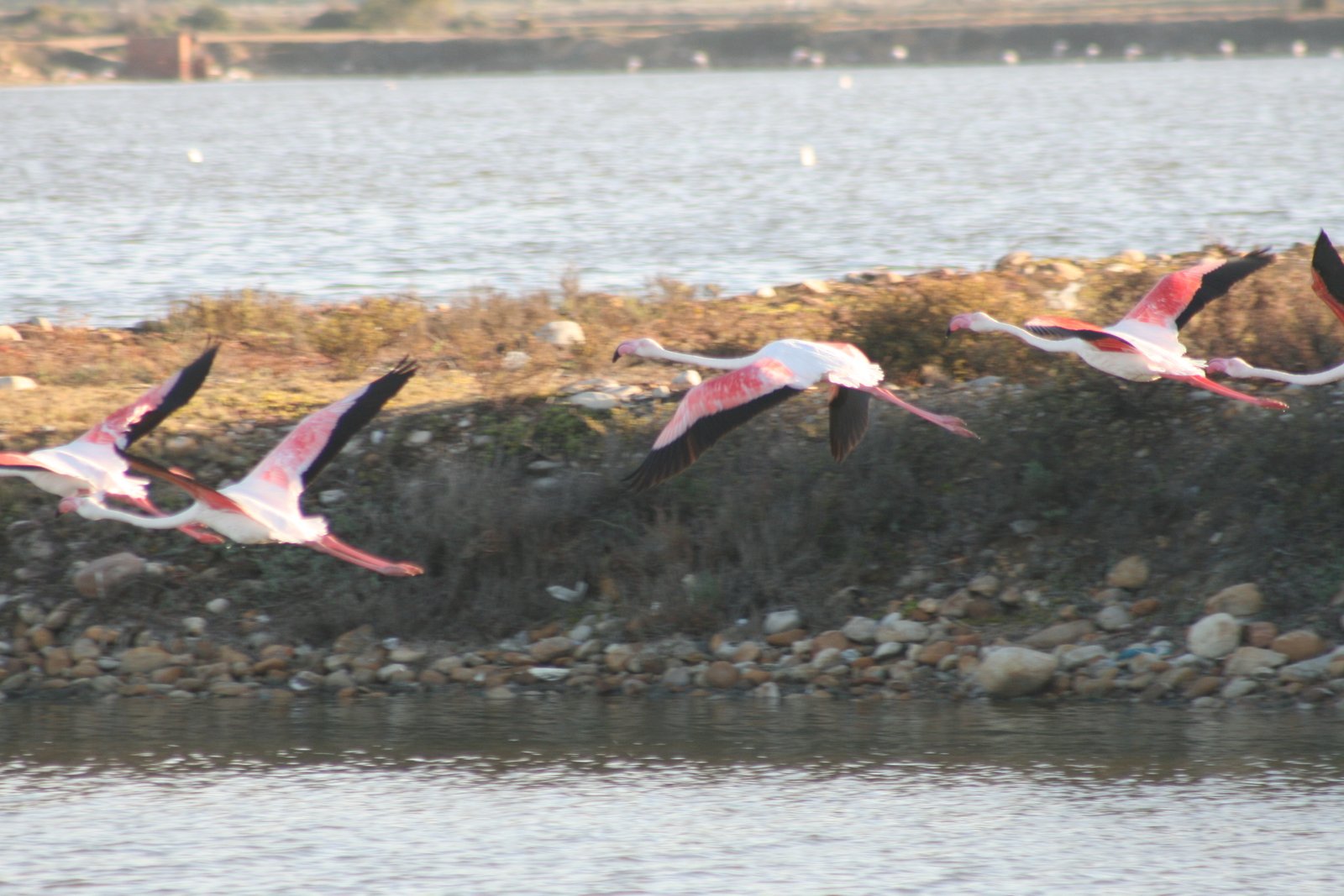
Greater Flamingo flying over the Chatty Saltpans

Greater Flamingo flying over the Chatty Saltpans

The Swartkops Estuary in Port Elizabeth is well-known as one of South Africa’s 112 Important Bird & Biodiversity Areas (IBAs) and while the river and mudflats have the greatest density of birds and hog the limelight as the most natural areas, my sunset visit on December 30 was to the salt pans and threw up a special that is often difficult to find elsewhere.

The Chatty River flows from the west into the Swartkops River and alongside it, next to the R367 main road, there are commercial saltpans which can provide quality foraging opportunities for many birds, especially when the salinity and water level are just right for a host of invertebrates to be crawling around in the benthos.

The elegant flamingos – both Greater and Lesser – immediately catch the eye and I was also drawn to the Pied Avocets, one of my favourite birds, sweeping and scything around in the water.

But dotted around the pan were smaller birds – the Blacknecked Grebe.

The Chatty Saltpans hold globally significant numbers of this uncommon nomad, which has the propensity to suddenly colonise a flooded area and start breeding. There are usually good numbers of this cute little diving bird at Swartkops though, and I did not notice any birds in breeding plumage, so perhaps they were moulting, with the widely-distributed Blacknecked Grebe known to utilise saline lakes overseas for this purpose.

Another special that can be picked up at the Swartkops Estuary is the Hartlaub’s Gull, which has a recently-established breeding colony in the area. It was previously considered a bird of the Western Cape, its distribution tied to that of Kelp, with only vagrant birds moving east of Cape Agulhas, and it interbreeds with Greyheaded Gulls in this river valley. Being omnivorous, it seems to have adapted to new foraging opportunities around human settlements.

Nicely built-up embankments between the pans allow one to approach the vulnerable Flamingos and their friends reasonably closely as they continue their search for invertebrates, and other birds that have adapted well to man-made wetlands were also busy foraging for their dinner in the gathering gloom – Blackwinged Stilt, African Spoonbill, Cape Cormorant, Kelp Gull, Egyptian Goose, Blacksmith Plover, Cape Wagtail and Sacred Ibis.

Where are the Chatty Saltpans?

Sightings list

Greater Flamingo

Kelp Gull

Pied Avocet

Blacknecked Grebe

Blackwinged Stilt

Lesser Flamingo

Egyptian Goose

Cape Cormorant

Blacksmith Plover

Hartlaub’s Gull

Cape Wagtail

Sacred Ibis

African Spoonbill


  • Recent Posts

  • Archives

  • Thought of the Day

    Revelation 3:15 – “I know your deeds, that you are neither cold nor hot. I wish you were either one or the other.”

    How can you expect blessings without obeying?

    How can you expect the presence of God without spending time quietly before him?

    Be sincere in your commitment to Him; be willing to sacrifice time so that you can grow spiritually; be disciplined in prayer and Bible study; worship God in spirit and truth.

    Have you totally surrendered to God? Have you cheerfully given him everything you are and everything you have?

    If you love Christ, accept the challenges of that love: Placing Christ in the centre of your life means complete surrender to Him.


↑ Top