for quality writing

Ken Borland


Pilanesberg National Park 0

Posted on September 12, 2018 by Ken


A mid-winter afternoon drive in the Pilanesberg National Park might not be the time hardened twitchers are expecting to see loads of exciting birds, but it was still a very rewarding jaunt on a sunny day that quickly dropped to just 13 degrees once the sun started setting.

My route took me from the Bakgatla gate at the top of the park, a Familiar Chat giving me the familiar greeting to the Pilanesberg as it flew into a tree and began flicking its tail, and was focused on the Dithabeneng Drive and the Acacia shrubs and thickets that characterise that route and prove very attractive to birds.

As is often the case in winter, the best birding happens when you chance upon a bird party – a flock of foraging birds comprised of mixed species. I had just turned on to the Dithabaneng Drive from the Moruleng link road when I hit one of these bird parties.

A pair of Marico Flycatchers on either side of the road were the initial birds spotted, but some non-breeding Southern Masked Weavers were also hopping about, there was a Forktailed Drongo aloofly surveying proceedings higher up on the trees and the obligatory Blackeyed Bulbuls were noisily jerking around the leaves.

And then two long-tailed birds went darting into the undergrowth. Closer inspection revealed the superb colours of the beautiful Violeteared Waxbill – the blue, chestnut, violet and red contrasting spectacularly with the general drab colours of thornveld in winter.

The Dithabaneng Dam was the next stop, but it was rather dry with just a couple of muddy pools left. A pair of Blacksmith Plover and a Forktailed Drongo playing sentinel was all that was left in terms of birdlife.

Still, the Dithabaneng Drive was providing enough to keep one interested: Chestnutvented Tit Babbler, Rattling Cisticola and Sabota Lark on the bushes, while a Kalahari Scrub Robin was perched in the open and singing away cheerfully.

The Malatse Dam is also off the Dithabaneng Drive, and here at least there was more activity with African Spoonbill, Whitebreasted Cormorant, Yellowbilled Duck, Threebanded Plover and Egyptian Goose on or next to the water. The hide at Malatse is east-facing so it is an ideal spot in the afternoon, as peaceful and tranquil as can be. The dead trees rising out of the shallows complete the scenic picture and also provide useful perches for birds, with a few Rock Pigeon using them as a stopover on this occasion.

Pearlbreasted Swallows and Grey Hornbill were also hanging around in the vicinity of the dam on the way back to the Dithabaneng Drive, where a Cape Bunting was being unusually secretive lurking in the thickets and not scratching around on the open ground as it normally does.

The Salty Springs are patches of water that run between Dithabaneng Drive, the eastern border of the park and Manyane camp, and they often throw up interesting sightings; today there were Blackwinged Stilt foraging and Blue Wildebeest had come to drink.

With a bit of time in hand, I veered off back west along the Potokwane Road, where another bird was hiding in a tree instead of being in its typical place on the ground – a Groundscraper Thrush. Perhaps something had scared it up there.


Map


Sightings list

Familiar Chat

Cinnamonbreasted Rock Bunting

Grey Lourie

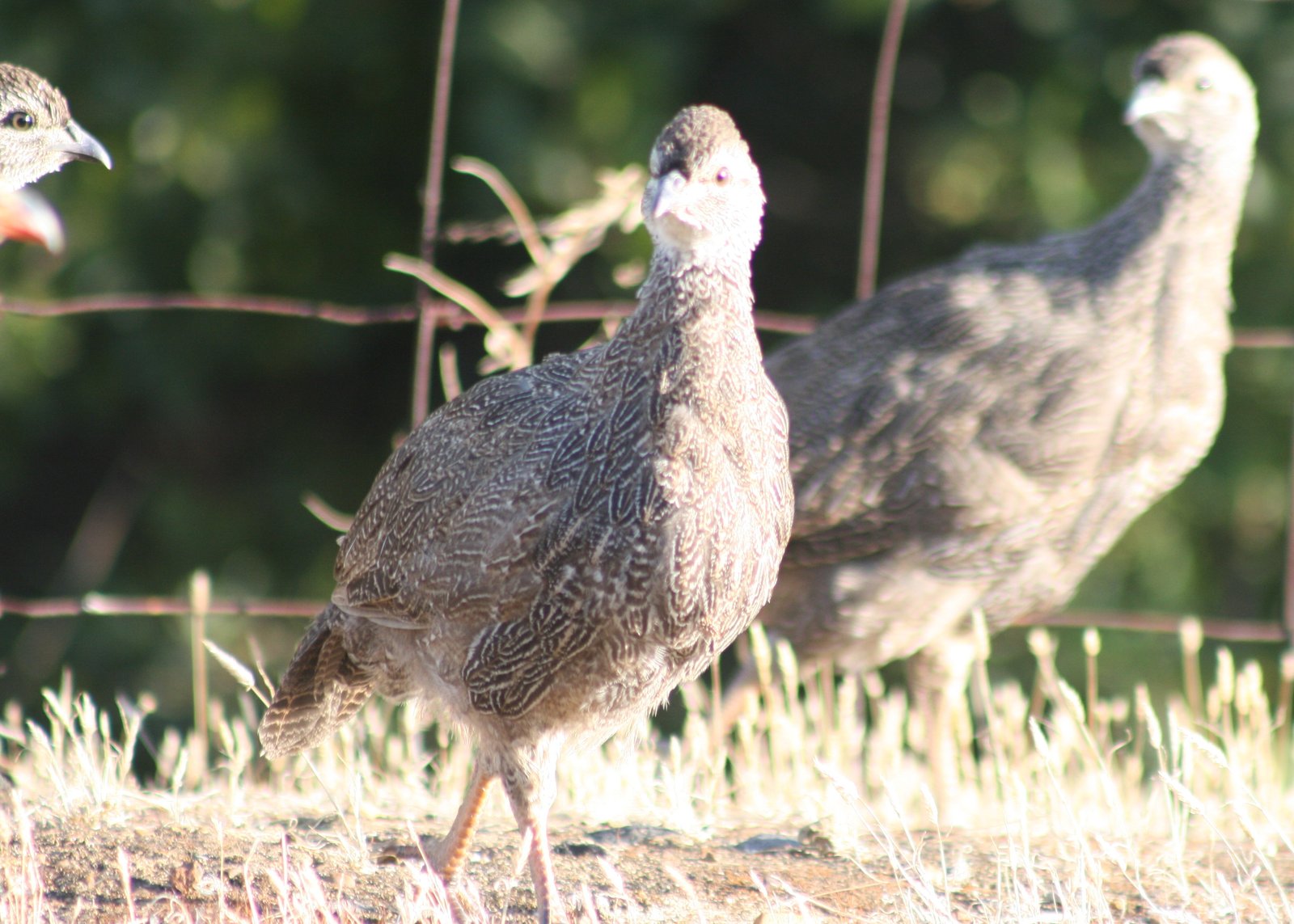
Natal Francolin

Blackeyed Bulbul

Southern Yellowbilled Hornbill

African Elephant

Lilacbreasted Roller

Giraffe

Redbilled Oxpecker

Blacksmith Plover

Forktailed Drongo

Marico Flycatcher

Southern Masked Weaver

Violeteared Waxbill

Chestnutvented Titbabbler

Rattling Cisticola

Sabota Lark

Impala

Kalahari Scrub Robin

Plains Zebra

Cape Turtle Dove

Greater Kudu

Crested Francolin

African Spoonbill

Whitebreasted Cormorant

Rock Pigeon

Yellowbilled Duck

Threebanded Plover

Egyptian Goose

Pearlbreasted Swallow

Grey Hornbill

Crowned Plover

Crested Barbet

Cape Bunting

Blackwinged Stilt

Blue Wildebeest

Laughing Dove

Longtailed Shrike

Groundscraper Thrush


Boks look in good hands with emboldened Erasmus 0

Posted on August 08, 2018 by Ken


Whenever a governing body hands a coach a long-term contract it is an expression of faith in that person’s ability to succeed, whatever the vagaries of sport or that old chestnut that there are only two types of coaches – those that have been fired and those that are still going to be fired. Remembering of course that the longer a contract, the bigger the payout should it be prematurely terminated.

So to say SA Rugby have faith in new Springbok coach Rassie Erasmus is an understatement, given that they have given him a six-year contract, the longest in any sport in the world, longer than Pep Guardiola or Jose Mourinho.

But their extraordinary decision has certainly had a positive effect judging by the bravery with which Erasmus and his team approached their first four assignments.

Given that he has such job security and knows his buddies in the SA Rugby boardroom want him to have the job, Erasmus was able to make some bold selection calls against Wales and England, and his courage certainly seemed to have rubbed off on the players, given the ambitious rugby they produced and the way they bounced back from big deficits to win the first two Tests against the English.

The fear of failure that characterised the Allister Coetzee years has seemingly gone and a young, inexperienced team showed signs of blossoming into something wonderful. Coetzee had good reason to believe the administrators were waiting for him to fail and it showed in his conservative selections and game plan.

Judging by his first month as coach, it seems the Springboks are in good hands with Erasmus.

The players certainly seem to have enjoyed his coaching and, most importantly, you had to give them 10/10 for character with the way one of the most inexperienced sides in Springbok history overcame a horror start at Ellis Park and another poor opening quarter in Bloemfontein.

Which is not to say everything is perfect in the Springbok camp ahead of the Rugby Championship starting in August. But given the number of players who are just starting out on their international careers, who knows whether what we saw against England is 50% or 80% of their potential.

Probably the area which requires the biggest improvement is the mental side of the game and their ability to adapt to conditions that don’t suit them. Although it was heartening to see the intensity and pace with which they played in the first two Tests, there are times – such as when Newlands is a sodden quagmire – when you have to play the percentages better.

Ellis Park and Bloemfontein – both on the highveld and with weather suiting a quick game – are obviously very much in the Springboks’ comfort zone. The indiscipline and basic errors of the Newlands display indicated a team that was just a bit freaked out by very different conditions.

Since the last World Cup, South Africa have won just three of their last 14 games away from home. The challenges of playing in Mendoza, Brisbane and Wellington lie ahead. Mendoza is the heartland of Argentinean rugby and they pump up the passion even more there, making it a hostile place for visiting teams. The Springboks have won just once in 12 attempts in Brisbane and they have not been able to beat the All Blacks in Wellington since 1998.

But given the honesty of the straightshooting Erasmus in dealing with the negative aspects of his first four games in charge, I’m sure he will not be shying away from the tough questions that need to be asked in order to sort out the Springboks’ issue with playing in foreign conditions.

https://www.pressreader.com/south-africa/the-citizen-kzn/20180630/282574493816989

Cook stands down to enjoy new role as senior pro 0

Posted on July 25, 2018 by Ken


Stephen Cook on Wednesday stood down as the Highveld Lions captain after their disappointing 2017/18 season but the franchise are still going to enjoy the benefits of his leadership and experience, with the 35-year-old set to fulfill the role of a senior pro as new coach Enoch Nkwe looks to rebuild.

“I have captained the side for the better part of five years and we had some success, but I’ve been thinking of standing down. At the back end of last season, with all the uncertainty over coaches, would not have been the right time though, but with the changing of the guard it’s a good time now for a fresh start.

“I spoke to Enoch and my leadership will not be lost. I know what has worked effectively in the past is to have the benefit of a senior player who is not the captain, and in my career, guys like Adam Bacher and Neil McKenzie are examples of that. So it’s just a different position I’ll be filling and I certainly don’t see it as the end of my career,” Cook told The Citizen on Wednesday.

Cook denied that the captaincy had distracted him from his batting, after a mixed season in 2017/18. Although he had many failures, when he occupied the crease for some time he still scored heavily and a return of 632 runs at an average of 37.17, including three centuries, was still solid.

“I’ve played some of my best cricket while I’ve been captain, but last season was a bit patchy, I was not as consistent as I would have liked but I still felt it was a good campaign. Of course cricket is a performance sport and if I don’t get the numbers on the board now I will be in trouble like anyone else.

“But I’m excited about next season, Enoch and I played together from when we were 11, we came through the ranks together. My resigning might actually help him because I might not have been his first-choice skipper and he can now go ahead freely with the new way he wants to bring in,” Cook said.


Tygerberg Nature Reserve 0

Posted on April 24, 2018 by Ken


IMG_2021[1]

Fiscal Flycatcher

The Tygerberg Nature Reserve conserves nearly 300 hectares of Renosterveld, the only refuge of this critically endangered member of the unique Cape Floral Kingdom still surviving in the South-Western Cape.

Renosterveld is an amazingly diverse habitat featuring numerous shrubs and scrubby trees and, historically, a very high grassy component. In fact, many scientists believe that, before European settlers brought their stock and overgrazed the area, these were the grasslands of the Cape, boasting large herds of game, including the now extinct Bluebuck and Quagga, as well as the Bontebok, which was reduced to just 17 wild animals before being rescued as a species.

The scenic reserve, which most visitors to Cape Town fly over en route to the airport, boasts several walking paths and the Induli Trail winds its way up from the Plattekloof entrance to the top of the hill, where there is a picnic site and several tall Eucalyptus trees.

One does not usually enjoy the sight of alien vegetation in nature reserves, particularly in the light of the damage done to the globally threatened Renosterveld by the planting of vines and wheat, but these Blue Gums are a great magnet for raptors.

And on this occasion there was a small group of a raptor species that is scarce in the South-Western Cape using them as a perch.

Lesser Kestrels are generally a species of dry grasslands so in the South-Western Cape they are occasionally found in Renosterveld, which is, after all, the grasslands of Cape Town, once again showing the importance of this narrow strip of fertile vegetation that lies between the Fynbos of the mountains and the Strandveld of the coast.

Eucalyptus trees are actually closely associated with Lesser Kestrels because it is they that almost always host the communal roosts of thousands of birds close to little Karoo or Highveld towns in central South Africa, where the large migrant flocks congregate in their preferred open habitats.

There were just a handful on this sunny and warm January afternoon in Tygerberg, wheeling away on the cooling wind and then returning to their perches.

Jackal Buzzard is a more typical raptor of the Tygerberg Hills and soon after setting off on the trail, one became visible sitting on top of the power pylons and later perching on top of another alien, the pine tree.

A friendly Fiscal Flycatcher greets one at the entrance gate while Little Swift, Pied Crow and Whitethroated Swallow are the other birds seen catching the breezes blowing over the tops of the hills.

The Southern Doublecollared Sunbird is another bird that is particular to hanging around Eucalyptus trees, but with plenty of flowers around in the reserve, they were seen all over and I had a particularly nice sighting of a female.

Cape Francolin

Cape Francolin

The Cape Quartet of Cape Weaver, Cape Turtle Dove, Cape Sparrow and Cape Francolin were all seen, with the Francolin way more elusive than the others. I also heard Cape Robin around, but there are nine other ‘Cape’ birds recorded for Tygerberg Nature Reserve which I saw no sign of sadly.

On the way back down the hill, a solitary Bontebok was plodding along, reminding one of what is at stake in these threatened habitats. Recently re-introduced, this endearing, beautiful antelope was hunted to the verge of extinction but has now recovered to a few thousand in number, with 11 of those in Tygerberg Nature Reserve where it was absent for almost a century.


Where is Tygerberg Nature Reserve?


Sightings list

Fiscal Flycatcher

Jackal Buzzard

Cape Weaver

Little Swift

Fiscal Shrike

Cape Turtle Dove

Cape Sparrow

Redeyed Dove

Cape Francolin

Blackheaded Heron

Pied Crow

Lesser Kestrel

Whitethroated Swallow

Southern Doublecollared Sunbird

Bontebok


  • Recent Posts

  • Archives

  • Thought of the Day

    Revelation 3:15 – “I know your deeds, that you are neither cold nor hot. I wish you were either one or the other.”

    How can you expect blessings without obeying?

    How can you expect the presence of God without spending time quietly before him?

    Be sincere in your commitment to Him; be willing to sacrifice time so that you can grow spiritually; be disciplined in prayer and Bible study; worship God in spirit and truth.

    Have you totally surrendered to God? Have you cheerfully given him everything you are and everything you have?

    If you love Christ, accept the challenges of that love: Placing Christ in the centre of your life means complete surrender to Him.


↑ Top