New book details how Erasmus was always in full possession of his faculties & emotions 2
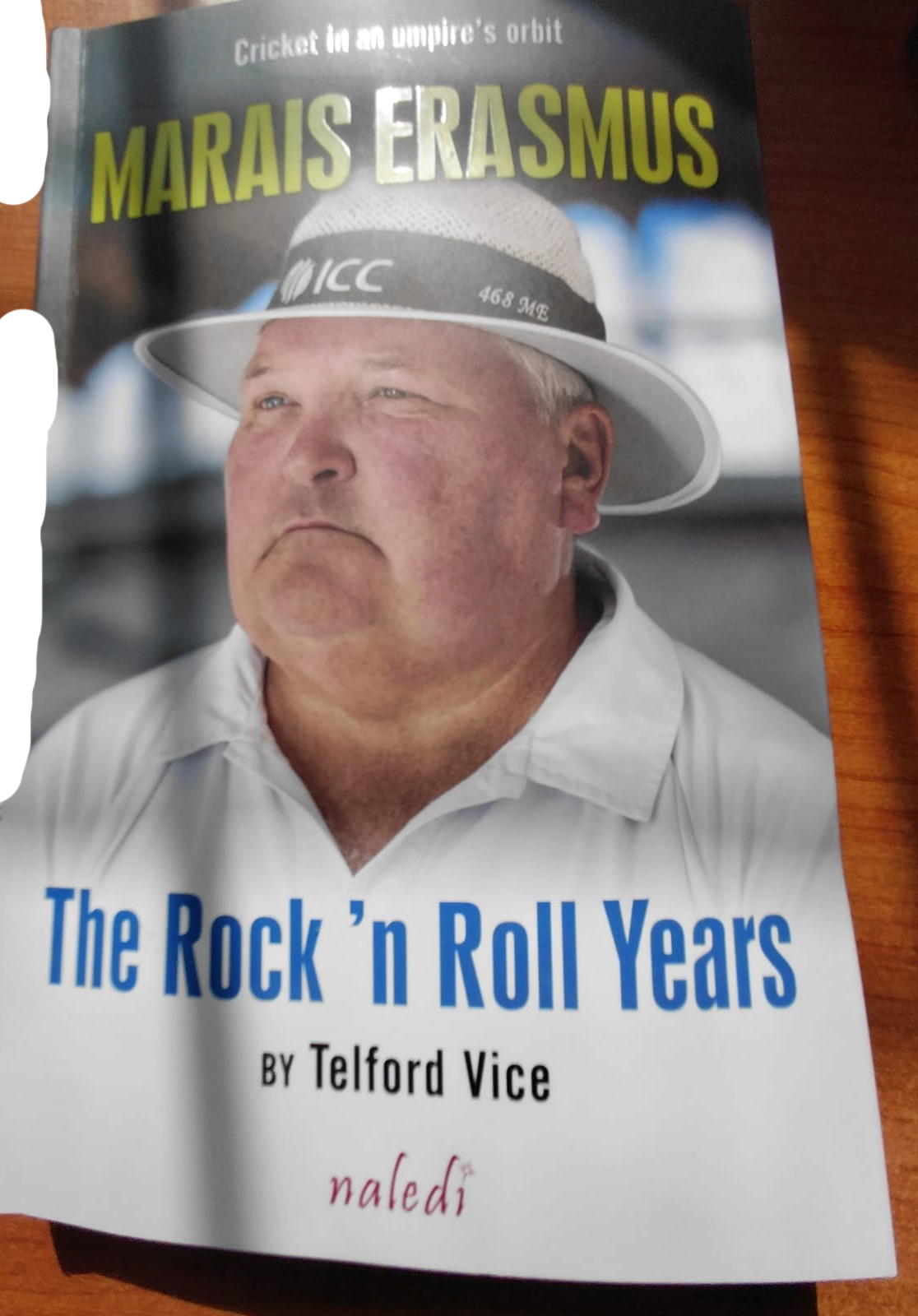
Staying calm under pressure is probably the most necessary attribute needed to succeed at the highest level of sport and Marais Erasmus always gave the impression when he was umpiring out in the middle that he was in full possession of his faculties and emotions.
Getting 94% of your decisions correct – the general benchmark for being on the International Cricket Council’s Elite Panel of umpires – requires great composure and equanimity, as well as the ability to maintain credibility and authority in the highly-charged arena of the game at its pinnacle.
They are the qualities that Erasmus was most known for during his 16-and-a-half years as an international umpire. As renowned Indian commentator Harsha Bhogle says in the Foreword to the biography Telford Vice has written on the South African umpire – Marais Erasmus: The Rock ‘n Roll Years – “Apart from everything else, umpires, like doctors, must radiate confidence and a sense of calm. Marais Erasmus had that. When he walked out on to the field, you felt secure. You knew you were in safe hands.”
While the former Boland bowling all-rounder’s ‘bedside manner’ was imperturbable, Erasmus himself says it is a bit of an illusion.
“I didn’t set out to have a straight face all the time, and I did struggle sometimes not to show my emotions. But I couldn’t give away to the players that I was shitting myself, they do pick up that sort of thing.
“I just tried to apply the laws, even though sometimes a law is controversial. There are some grey areas in cricket, although less so than in rugby. I think it helps immensely to have been a former player, although it’s not a given that if you played good cricket you will become a good umpire – there are lots of other skills involved.
“Simon Taufel was one of the best umpires ever and he didn’t play first-class cricket, so potential umpires shouldn’t be discouraged if they didn’t play to a high level. But at the Elite level, on average 10 of the 12 on the ICC panel will have played first-class cricket, a lot of them have played international cricket. In South Africa, about 40% of our umpires are former first-class players. It means you’ve been in pressure situations before, the players will accept you more and that gives you confidence,” the former Boland flyhalf/fullback says.
The cricket world changed dramatically while Erasmus was progressing from a player who retired in 1996/97 to making his international debut as an umpire in 2006, standing in his first Test in 2010. In that time, the television umpire has become crucial, and the IPL arrived, making India the global superpower of the game. But, unfortunately, India have also not been shy to exert a “Might Is Right” philosophy on cricket and they are used to getting what they want. Which included not using DRS for their games until the absence of it had burned them too often.
Hostile crowds are matched by over-stimulated players like Virat Kohli, who occasionally lose their impulse control. One of India’s greatest captains infamously shouted into the stump-mics at Newlands in January 2022, accusing broadcasters SuperSport and the umpires of bias. Erasmus was standing in that match alongside compatriot Adrian Holdstock due to the Covid pandemic and the difficulties it caused in terms of international travel.
Erasmus had to give Sachin Tendulkar out lbw in his debut Test, thankfully not in India, where international cricket’s leading run-scorer is literally considered to be a god. These are also the days of social media allowing millions of people to dissect and criticise every decision. The officials can be crucified in the court of public opinion should they get the wrong decision wrong at the wrong time. Just think of how we South Africans curse referee Bryce Lawrence to this day for giving David Pocock free rein in the breakdowns during the 2011 Rugby World Cup quarterfinal.
So Erasmus experienced pressure right from the outset and his ability to handle it saw him appointed to the middle for seven World Cup finals across the formats, including the greatest of them all, the 2019 finale’ at Lord’s when England and New Zealand tied and England won the super over.
“Virat was like some of the kids when I was teaching. You give him Ritalin in the morning and you’ll have a good day. But sometimes by second break it’s gone … But we had a good relationship. David Warner is a dangerous man because he doesn’t understand when he’s being stupid and Ricky Ponting always wanted to fight with umpires,” Erasmus says.
Nathan Lyon is someone Erasmus singles out as a favourite, the Australian off-spinner saying on a live television interview that “Marais is a great man and an even better umpire,” when former captain Mark Taylor asked pointed questions about decisions that did not go their way.
Ben Stokes is another who Erasmus found to be likeable and the recently-retired England captain was, of course, pivotal in that 2019 World Cup final.
“Ben is one of my favourites. When you go to a team’s practice, some of the players ignore you but others come up to you. Ben would always ask how the last few months have been, how’s your family? He’s a good human being, although he has got himself in trouble and been through some fires on occasion.”
The details of the drama of the overthrows off Stokes’s arm and the full explanation as to why England were credited with an extra run they shouldn’t have been, are all in the book. Typically, Erasmus does not shy away from accountability.
“The overthrow incident was just a mistake. Kumar Dharmasena and I looked at each other and said ‘Six? Yeah’. Rod Tucker, the TV umpire, asked over the comms whether it was six and Peter Manuel, who was our umpires coach, was trying to explain that where the ball was released was crucial. But that was impossible for me to see.
“Part of the romance of our sport is that the umpires are not without blemish. The only way to survive as an umpire is not to dwell on your wrong decisions. Our coaches used to tell us to park them; my one New Zealand colleague then said ‘but my parking lot is full’.”
In Marais Erasmus: The Rock ‘n Roll Years, the subject brings that same voice of reason and gentle humour to corruption in cricket, the rise of technology and the many memorable Ashes clashes he was involved with.